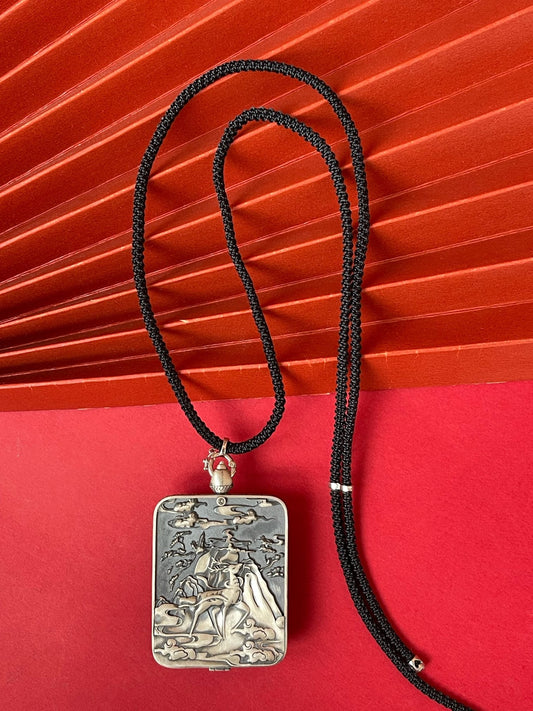
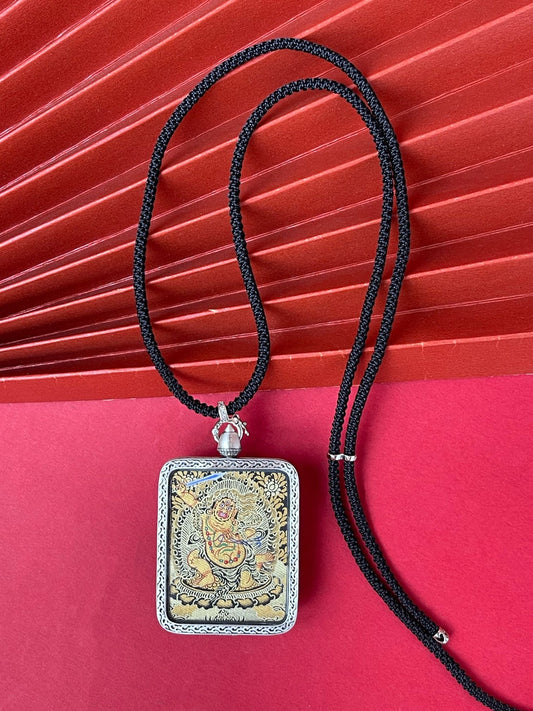
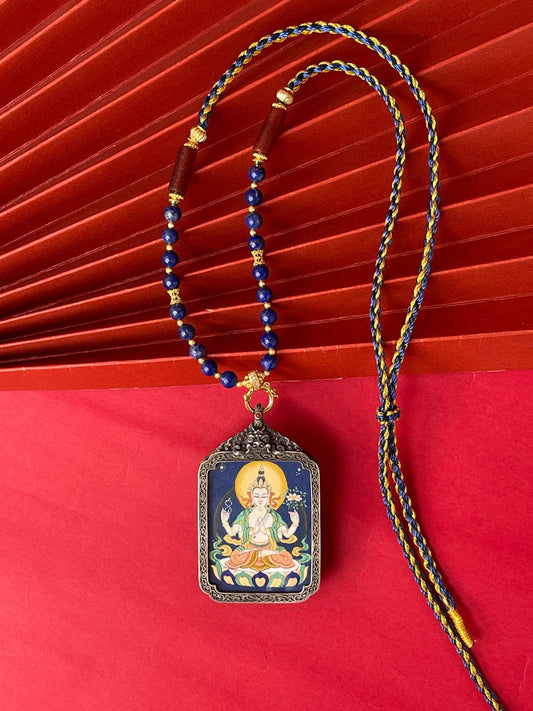
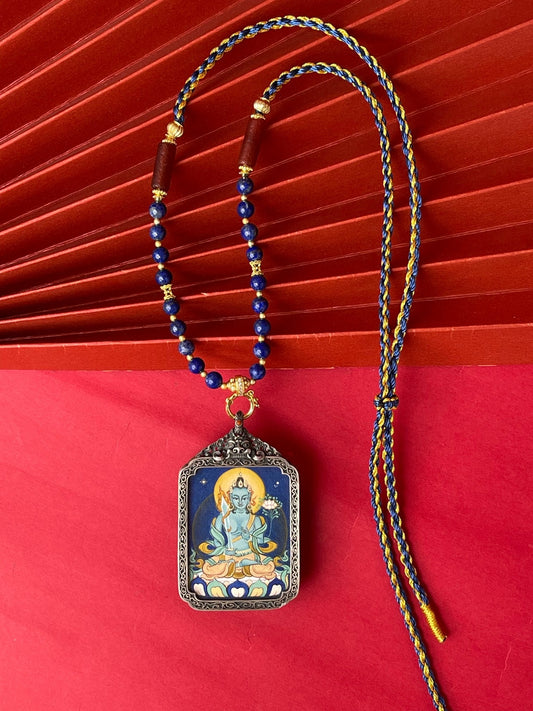
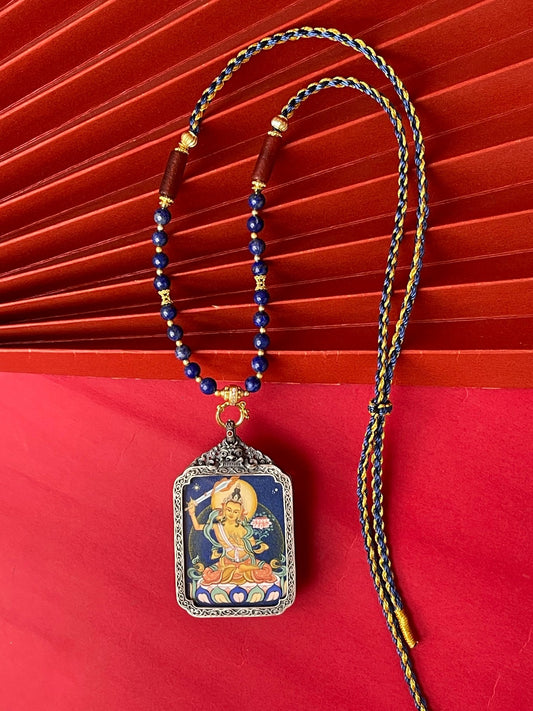
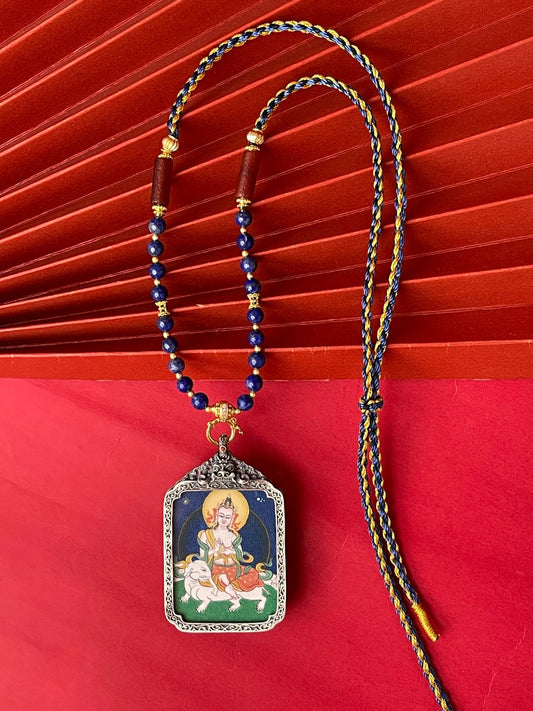
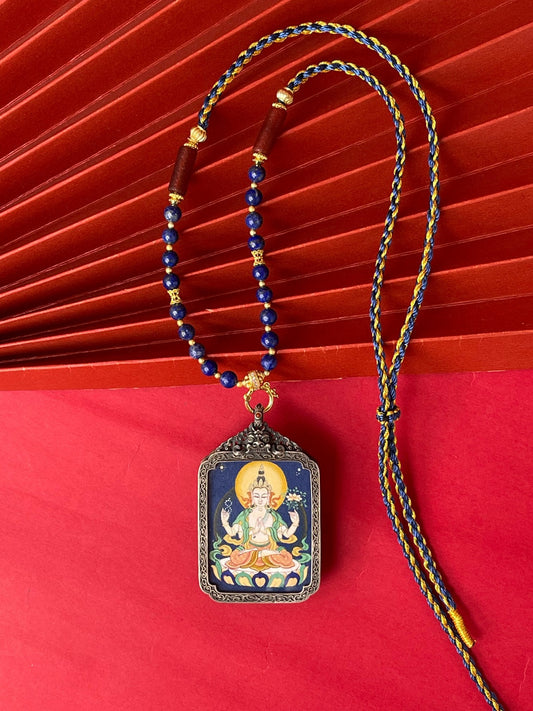
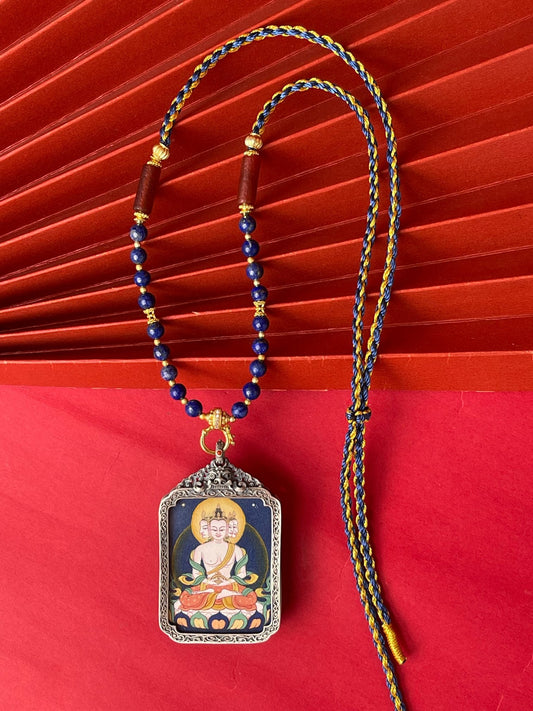
White Tara Buddha Hand Thangka Pendant: The Goddess of Longevity and Liberation

Why White Tara?
In Tibetan Buddhism, White Tara (Sanskrit: Sitatārā; Tibetan: Drölkar) is one of the most beloved female deities. She is invoked for longevity, liberation from the eight fears (lion, elephant, fire, snake, thief, drowning, demon, bondage), health, and the fulfillment of wishes. She is one of the Longevity Triad (with Amitayus and Ushnishavijaya) and is particularly revered as a protector and bestower of longevity—especially by women. A 4x5cm Buddha Hand format Thangka pendant of White Tara brings her blessing into daily life—a support for those who wish to cultivate health, longevity, and liberation from fear. This article covers her role, her image in Thangka art, the materials used in Nepal pendants, and how to wear and care for your pendant.
White Tara: Serene Liberator and Bestower of Longevity
White Tara is typically depicted with a serene, compassionate expression. Her complexion is white, symbolising purity and longevity. She has seven eyes (on the face, palms, and soles), symbolising her ability to see and relieve suffering in all directions. She may hold a lotus or make a gesture of granting. In the Buddha Hand motif, her image is rendered within the form of a hand—a symbol of blessing and protection. In Nepal Thangka painting, the emphasis is on clarity of expression and correct iconography. Practitioners invoke her for longevity and for liberation from the eight fears. Wearing her image is a way to connect with that compassion and to remind yourself that longevity and health are possible and that fear can be overcome.
The Image: What to Look For in a White Tara Buddha Hand Pendant
In authentic Nepal Thangka iconography, White Tara in the Buddha Hand format should be clearly recognisable: serene expression, compassionate bearing, and correct attributes (lotus, gesture, or seven eyes if visible). When painted on a small 4x5cm pendant, the artist must keep proportions and iconography correct without losing detail. A good pendant should convey both her longevity-bestowing role and her role as a liberator from the eight fears. When choosing one, look for clear facial features, a serene expression, and careful mineral pigment work. Avoid pendants where the expression or attributes are vague or where colours look flat or synthetic; these may not follow lineage standards.
Mineral Pigments and Titanium Steel Casing
Authentic Nepal Thangkas use mineral pigments—lapis lazuli, malachite, cinnabar, and gold—with traditional binders. These pigments are chemically stable and can last for decades or more with proper care, so the blessing of the image endures. The pendant is typically mounted in dual-face titanium steel casing, which protects the painting from moisture, impact, and daily wear while keeping the piece lightweight. When selecting a White Tara Buddha Hand pendant, ask about the pigments and the painter's lineage; this helps you assess both authenticity and longevity. A certificate or documentation from the supplier can provide additional assurance.
Wearing and Caring for Your White Tara Pendant
A White Tara Buddha Hand Thangka pendant is suitable for daily wear as a support for longevity and liberation. Respect and clear intention matter more than elaborate ritual. Many practitioners wear it over the heart or under the collar when seeking health and longevity for themselves and loved ones. Avoid wearing it in the shower, while swimming, or during heavy exercise to protect the casing and the painting. When not worn, keep it in a soft pouch or a clean, dry place, away from direct sunlight. The pendant can serve as a reminder of the goddess of longevity and the possibility of health and liberation from fear for oneself and others.
A White Tara Buddha Hand Thangka pendant is both a symbol of longevity and liberation in Tibetan Buddhism and a durable sacred object when made with mineral pigments and titanium steel. From her role and iconography to materials and care, each aspect affects its meaning and its lifespan. If you are looking for a wearable support for longevity and health, start by understanding White Tara's role, then choose a pendant that reflects solid craftsmanship and a clear Nepal lineage.
#WhiteTara #NepalThangka #Longevity #TibetanBuddhism #SacredJewelry #LongevityAmulet #ThangkaPendant #BuddhaHand #TibetanBuddhistArt
Schlagwörter:
Vorherige
Vajrabhairava (Yamantaka) Nepal Thangka Pendant: The Conqueror of Death
Nächste
Amitabha Buddha Karma Kagyu Thangka Pendant: The Buddha of Infinite Light and Life (2.5x3.5cm)