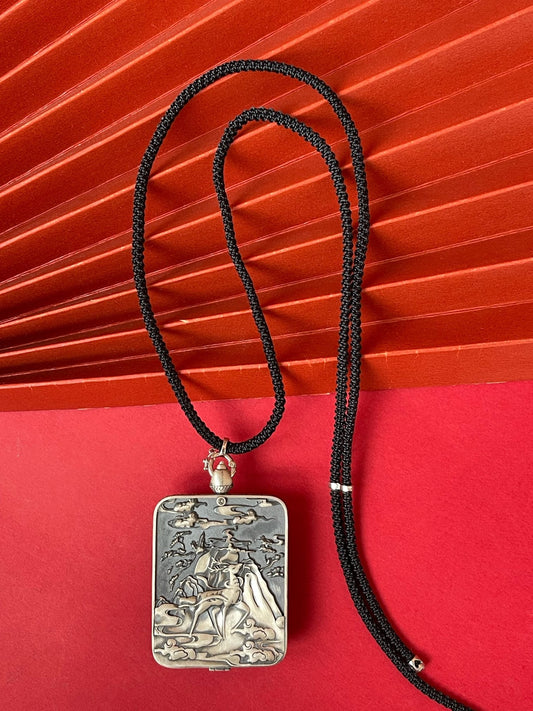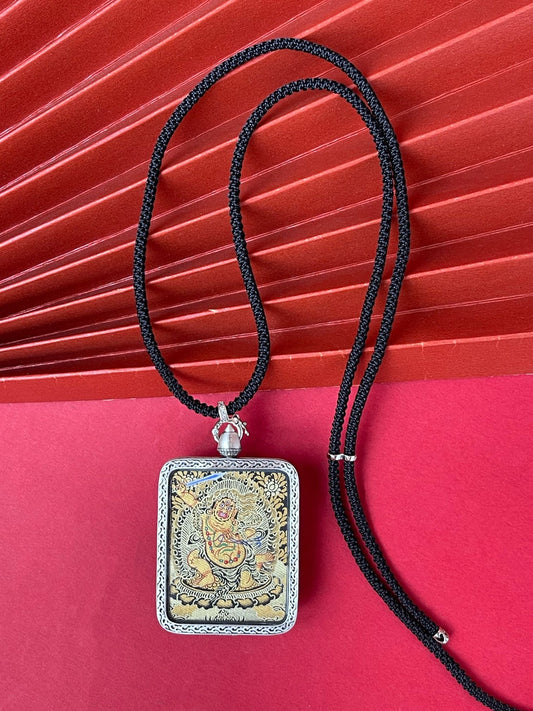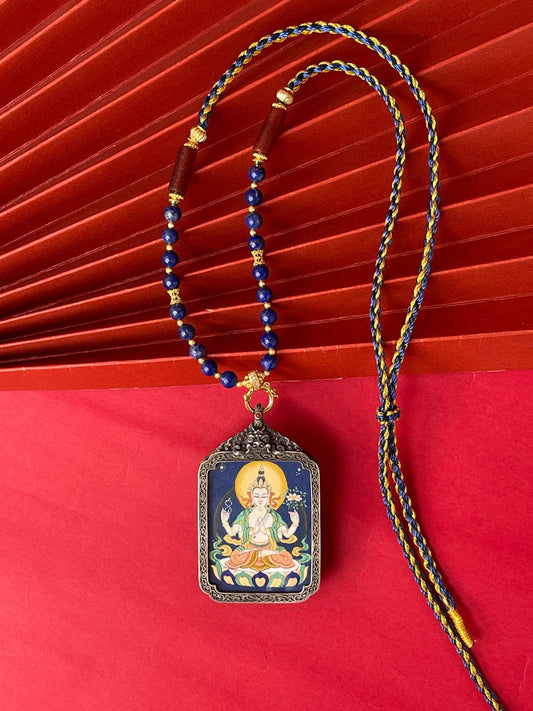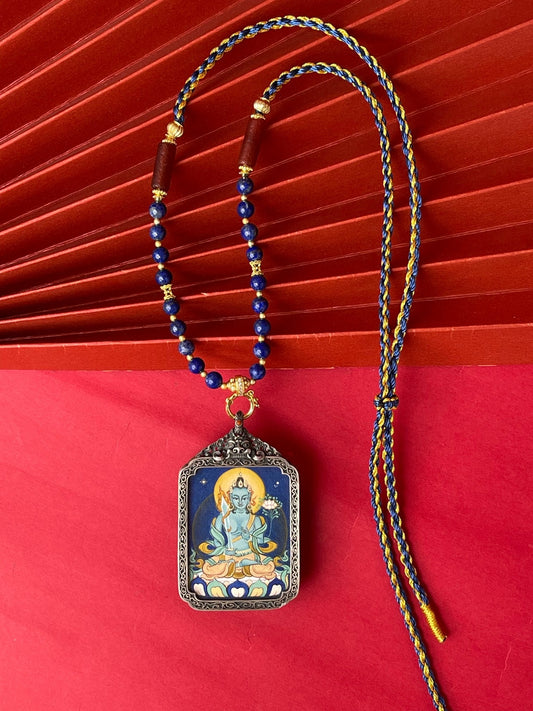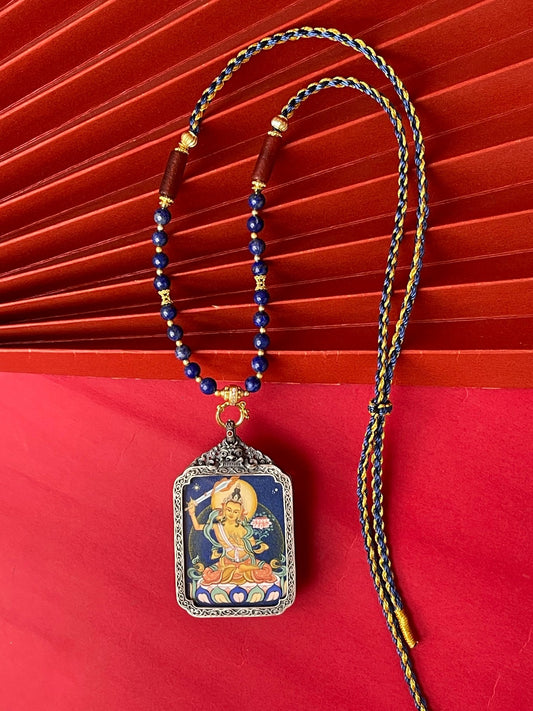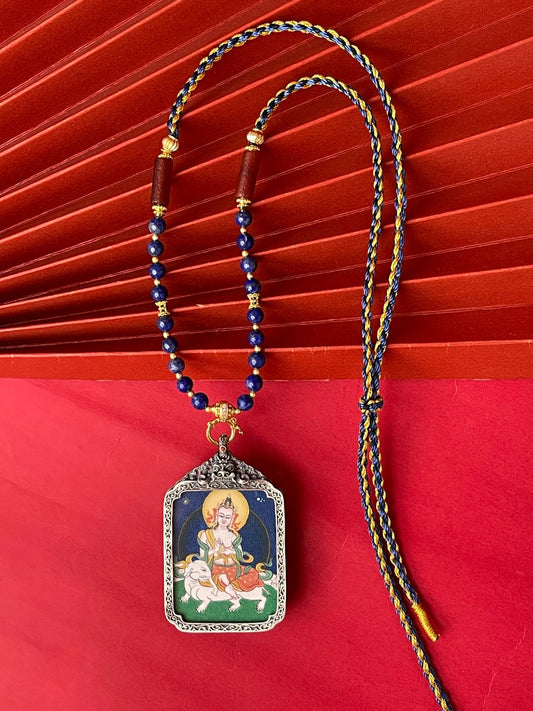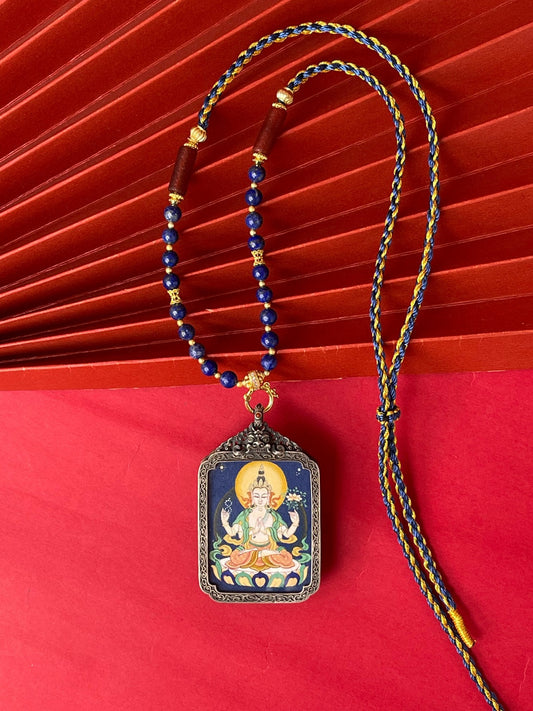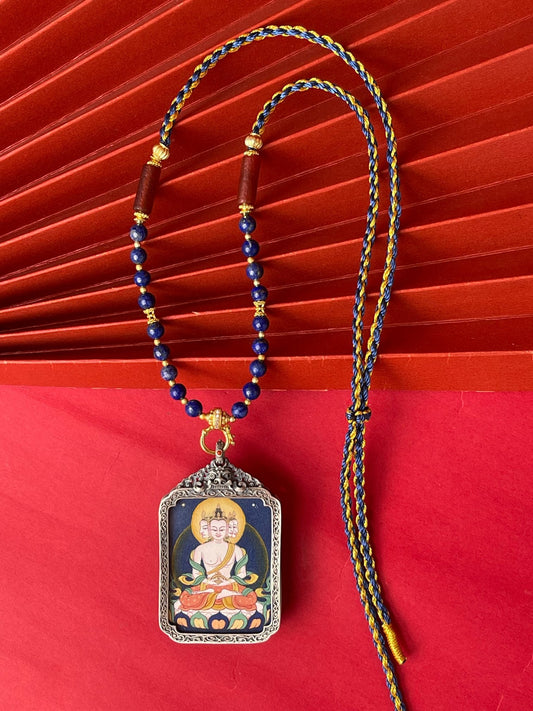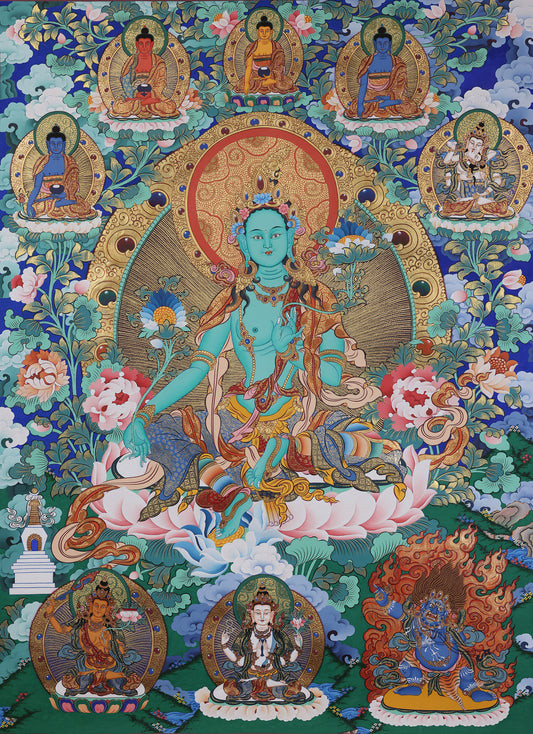
4x5cm Nepal Dual Yellow Jambhala Thangka Pendant: The Lord of Wealth with Vasudhara, Goddess of Abundance

Introduction: Why Wear a Dual Yellow Jambhala Nepal Thangka Pendant?
In Tibetan and Nepali Buddhism, Yellow Jambhala (黄财神) is one of the five wisdom kings of wealth, and Vasudhara (财源天母) is revered as the goddess who presides over wealth in the human realm and is the mother of the five directional wealth kings. Together they represent the full spectrum of wealth blessing—material and spiritual, masculine and feminine. The dual form is especially powerful for those who wish to combine the king's granting power with the goddess's continuity of abundance. A Nepal Dual Yellow Jambhala Thangka pendant offers a portable connection to this energy, allowing you to carry the blessing close to your body throughout the day. This article explains who they are, why the Nepal style matters, how to recognise authentic iconography, and how to wear and care for your pendant so it remains a lasting support for wealth and merit.
Who Are Yellow Jambhala and Vasudhara?
Yellow Jambhala (Jambhala) is invoked for increasing fortune, longevity, wisdom, and material and spiritual abundance; he upholds the Dharma and is said to bestow wealth upon those who practise with sincerity. Vasudhara (Wealth Continuity Mother, 财源天母) is the mother of the five directional wealth kings and ensures the uninterrupted flow and continuity of wealth in the human realm. Practitioners wear the dual image for comprehensive wealth blessing—both the granting and the sustaining aspects—and to ease economic pressure so that one can pursue the path with peace of mind. In many traditions, Wednesday is considered an auspicious day for making offerings to Yellow Jambhala and Vasudhara. The pairing is especially valued by those seeking both immediate wealth blessing and long-term karmic conditions for prosperity.
Why the Nepal Style Matters
The Nepal (尼泊尔系列) style preserves vibrant colour and clear deity iconography, with a strong emphasis on recognisable attributes and balanced composition. Even on a 4x5cm pendant, the dual form remains legible and potent: Yellow Jambhala's mongoose and Vasudhara's jewels or grain are typically rendered with care. Nepal Thangka artists often use rich reds, golds, and greens that stand out on small formats, making the pendant both a devotional object and a striking piece of wearable art. Collectors and practitioners value Nepal Thangkas for their accessibility and the way they preserve Himalayan iconographic traditions in a form that can be carried and displayed with ease.
Iconography: What to Look For
In authentic Nepal Thangka iconography, Yellow Jambhala is typically shown with golden or yellow complexion, a corpulent body symbolising abundance, and wealth attributes such as the mongoose (which vomits jewels) and sometimes a citron or gem. Vasudhara may hold jewel vessels, grain, or display the gesture of giving (varada mudra). The two figures may be depicted side by side or in a hierarchical arrangement according to lineage. Look for clear, careful mineral pigment work, correct pairing of the two deities, and consistent proportions. Avoid pieces where the faces or attributes are blurred or where the colour palette looks flat or synthetic; hand-painted Thangkas show the depth and precision that support genuine devotion and the aspiration for wealth in accord with the Dharma.
Craftsmanship: Natural Mineral Pigments and Titanium Steel Casing
Natural mineral pigments with traditional binders (such as animal glue) are chemically stable and can last over a hundred years with proper care; they are also resistant to fading from light. The pendant is typically mounted in dual-face titanium steel casing, which protects the painting from moisture, impact, and scratches. Titanium steel is lightweight and hypoallergenic, making it comfortable for daily wear. When storing, keep the pendant in a soft pouch or a dry place away from direct sunlight and humidity to preserve both the pigments and the casing. Choose a pendant that reflects solid craftsmanship—clear iconography, stable pigments, and a well-fitted case—so it can serve as a long-term support for your practice and aspirations.
How to Wear and Care for Your Dual Yellow Jambhala Thangka Pendant
A Dual Yellow Jambhala Nepal Thangka pendant is suitable for daily wear as a support for wealth and abundance. Many practitioners wear it over the heart or under the collar. Avoid wearing it in the shower, swimming pool, or sea, as prolonged exposure to water and chemicals can damage the casing and, over time, the painting. When not worn, keep it in a soft pouch or a clean, dry place, away from direct sunlight. Periodically check the casing for tightness so the painting remains secure inside. With proper care, your pendant will serve for years as a reminder of the dual blessing of wealth and abundance and the aspiration to combine prosperity with virtue and the Dharma.
A Nepal Dual Yellow Jambhala Thangka pendant is both a symbol of wealth and abundance in Tibetan and Nepali Buddhism and a durable sacred object when made with natural mineral pigments and titanium steel. Choose a pendant that reflects solid craftsmanship—clear iconography, stable pigments, and a well-fitted case—so it can serve as a long-term support for your practice and aspirations.
#DualYellowJambhala #YellowJambhala #Vasudhara #NepalThangka #TibetanThangka #WealthDeity #BuddhistArt #MineralPigment
Schlagwörter:
Vorherige
Nepal Rough Zhagilamu Thangka Pendant: The Female Wealth Guardian of Lhasa
Nächste
Nepal Rough Zhagilamu 925 Silver Thangka Pendant: The Female Wealth Guardian of Lhasa