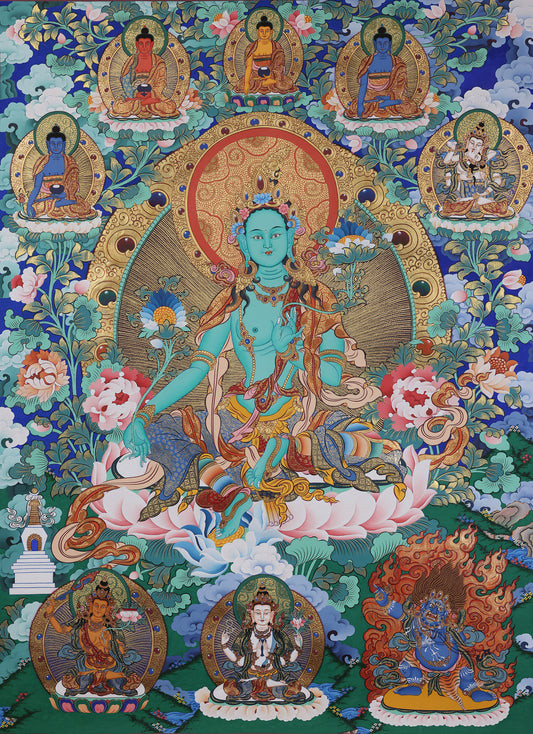

Discover the 3.5cm × 4.5cm Shakyamuni Buddha thangka pendant—a masterpiece of Nepalese Newari craftsmanship from Bhaktapur. Housed in a rust-resistant titanium steel case, this portable gau shrine blends authentic Tibetan Buddhist iconography, 7th-century thangka heritage, and modern durability. It’s more than jewelry; it’s a daily meditation tool, cultural keepsake, and ethically crafted Himalayan art piece.
Introduction: The Portable Wisdom of Shakyamuni Buddha in Nepalese Thangka
At the heart of Tibetan Buddhism lies Shakyamuni Buddha—the historical founder whose enlightenment journey continues to guide practitioners worldwide. Now, his sacred presence is condensed into a 3.5cm × 4.5cm thangka pendant, handcrafted by Nepalese Newari artisans in Bhaktapur, the cradle of thangka art. This piece reimagines the traditional gau shrine with a titanium steel case, merging ancient devotional rigor with modern practicality.
Unlike mass-produced spiritual accessories, this pendant adheres strictly to Tibetan Buddhist canons and Nepalese thangka traditions, from the Buddha’s Bhumisparsha Mudra to the 32 auspicious marks (Lakshanas) outlined in sacred texts. For practitioners, cultural enthusiasts, and ethical shoppers alike, it’s a rare fusion of spiritual purpose, artistic heritage, and everyday functionality. Let’s explore the cultural depth, craftsmanship, and unique value of this wearable Buddhist icon.
Cultural Core: Shakyamuni Buddha—Symbolism in Every Detail
This thangka pendant depicts Shakyamuni Buddha in the iconic Bhumisparsha Mudra (Earth-Touching Gesture), a posture that freezes the moment he called upon the earth to witness his victory over Mara (temptation) at enlightenment. Every element of the design follows Tibetan Buddhist iconographic rules, turning the pendant into a visual guide to Buddhist philosophy.
Iconographic Symbols & Their Meanings
Each detail carries profound spiritual significance, rooted in centuries of Buddhist tradition:
-
Ushnisha (Cranial Protuberance): The soft bulge atop the Buddha’s head represents transcendent wisdom—one of the 32 auspicious marks of an enlightened being, signifying his mastery over ignorance.
-
Elongated Earlobes: A reminder of the Buddha’s pre-enlightenment life as Prince Siddhartha, who renounced royal luxury (including heavy earrings that stretched his lobes) to seek spiritual truth. They symbolize detachment from worldly comforts.
-
Lotus Throne: The multi-petaled lotus base is a central Buddhist metaphor—representing purity and enlightenment rising untainted from the muck of worldly suffering.
-
Alms Bowl (Patra): Held in the Buddha’s left hand, the alms bowl embodies the monastic vow of simplicity, humility, and dependence on lay community offerings—a testament to the Buddha’s life of austerity after enlightenment.
For practitioners, the pendant functions as a portable gau shrine—a tool for daily visualization, merit accumulation, and connection to the Buddha’s core teachings on impermanence, compassion, and liberation. It serves as a quiet reminder to align actions with Buddhist principles, even amid the chaos of modern life.
Nepalese Artisan Heritage: The Cradle of Thangka Art
Nepal’s Bhaktapur Valley is widely celebrated as the birthplace of thangka art, with traditions dating back to the 7th century—when Nepalese artisans accompanied Princess Bhrikuti to Tibet, spreading their craft across the Himalayas. This pendant embodies the distinct legacy of the Nepalese Thangka School, crafted by Bhaktapur’s Newari communities—masters of thangka art for generations.
The Mark of Newari Craftsmanship
Newari artisans are renowned for their meticulous attention to detail, honed in family workshops or traditional thangka schools. This pendant reflects their signature style:
-
Intricate Linework & Color Blending: Newari craftsmen use fine brushes to create crisp, flowing lines and vibrant, layered colors—bringing the Buddha’s form to life with reverence and precision.
-
Strict Iconometric Rules: The Buddha’s proportions, from the size of his ushnisha to the length of his fingers, follow ancient texts like the Sadhana Mala, ensuring the piece meets spiritual authenticity standards (critical for devotional use).
-
Layered Background Symbolism: Floral motifs (roses, lotus vines) and gold scrollwork (karma patterns) adorn the background, representing the interconnectedness of all phenomena in Buddhist cosmology—adding depth to both the art and its spiritual message.
Nepalese thangkas are globally prized for balancing devotional rigor and artistic elegance, and this pendant condenses that legacy into a wearable form—making a centuries-old craft accessible for modern use.
Titanium Steel Case: Tradition Meets Modern Practicality
While the thangka itself honors ancient tradition, the pendant’s titanium steel case reimagines the traditional gau (wooden or metal shrine box) for contemporary life—blending cultural respect with practical innovation.
Durability & Protection for Daily Wear
Traditional gau cases (copper, silver, or wood) are prone to rust, tarnish, or damage—limiting their suitability for daily wear. The titanium steel case addresses these flaws:
-
Rust-Resistant & Durable: Titanium steel resists rust, tarnish, and scratches, ensuring the pendant withstands daily wear, travel, and exposure to moisture (unlike traditional metals).
-
Airtight Sealed Protection: An airtight enclosure shields the delicate hand-painted thangka from dust, moisture, and UV damage—preserving its colors and details for years to come (a critical feature for a piece meant to be passed down).
-
Culturally Respectful Design: The case’s engraved border features the Ashtamangala (eight auspicious symbols of Tibetan Buddhism), honoring traditional design while adding modern functionality. This blend ensures the pendant remains spiritually meaningful without compromising on practicality.
Spiritual & Practical Value: More Than a Pendant
This Shakyamuni Buddha thangka pendant transcends its role as a piece of jewelry, serving multiple purposes for practitioners, cultural enthusiasts, and gift-givers alike.
For Practitioners
-
Daily Meditation Tool: Wearers use the pendant for visualization meditation—focusing on the Buddha’s image to cultivate mindfulness, wisdom, and bodhicitta (the aspiration to liberate all beings).
-
Blessed Amulet: Many practitioners have the pendant blessed by Tibetan monks in a "lung" ceremony, infusing it with spiritual energy and transforming it from a work of art into a personal amulet for protection and guidance.
For Cultural Enthusiasts & Gift-Givers
-
Wearable Heritage: As "living art," the pendant allows non-practitioners to engage respectfully with Tibetan Buddhist culture. Note: Traditional guidelines advise avoiding wear in impure spaces (e.g., bathrooms, bars) to honor its sacred nature.
-
Meaningful Gifting: In Himalayan cultures, thangka pendants are cherished gifts for milestones (birthdays, weddings, spiritual initiations), symbolizing wishes for peace, health, and spiritual growth—making this piece a thoughtful, culturally rich present.
What Makes This Pendant Unique: Authenticity & Ethics
Amid a market flooded with machine-printed "spiritual jewelry," this pendant stands out for its authenticity, portability, and ethical craft:
-
Handmade Authenticity: Crafted entirely by Nepalese Newari artisans (not machine-printed), with strict adherence to religious iconography—ensuring it’s a genuine thangka, not a mass-produced imitation.
-
Perfect Portable Size: The 3.5×4.5cm dimensions balance sacred symbolism and everyday wearability—small enough to wear as a necklace, yet detailed enough to showcase the artistry of Nepalese thangka.
-
Ethical Craft: Most Nepalese thangka workshops prioritize fair wages for artisans and sustainable sourcing of materials, supporting local Bhaktapur communities while preserving a endangered cultural heritage. By choosing this pendant, you’re investing in both art and people.
Final Thoughts: Bridging Ancient Wisdom & Modern Life
The Shakyamuni Buddha thangka pendant is a testament to the enduring power of Himalayan traditions—condensing 1,400 years of Nepalese thangka art, Tibetan Buddhist philosophy, and devotional practice into a piece that travels with you. It’s a bridge between ancient wisdom and modern life, reminding wearers to seek compassion, mindfulness, and authenticity in every moment.
Whether used as a meditation tool, a cultural keepsake, or a unique accessory, this pendant carries more than beauty—it carries the teachings of Shakyamuni Buddha and the legacy of Nepalese artisans. For those who value authenticity, meaning, and ethical craft, it’s a piece that enriches both the wearer and the communities that created it.
Tags
#TibetanBuddhistThangkaPendant #ShakyamuniBuddhaGau #NepaleseHandmadeThangka #TitaniumSteelGauShrine #NewariArtisanThangka #BhumisparshaMudraShakyamuni #PortableGauPendant #HimalayanArtisanCraft #BuddhistSpiritualJewelry
Schlagwörter:
Vorherige
Acala in Tibetan Buddhism: The Wrathful Compassion of a Protector Deity — Exploring the Hei Jin Thangka Adorned with the Six-Syllable Mantra
Nächste
Hand-Painted Tibetan Black-Gold Thangka: The Faith System and Craftsmanship of the Four-Armed Avalokiteshvara