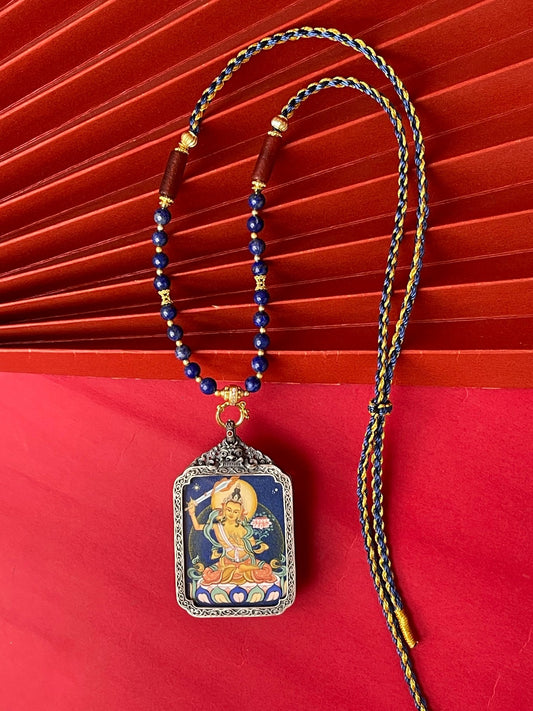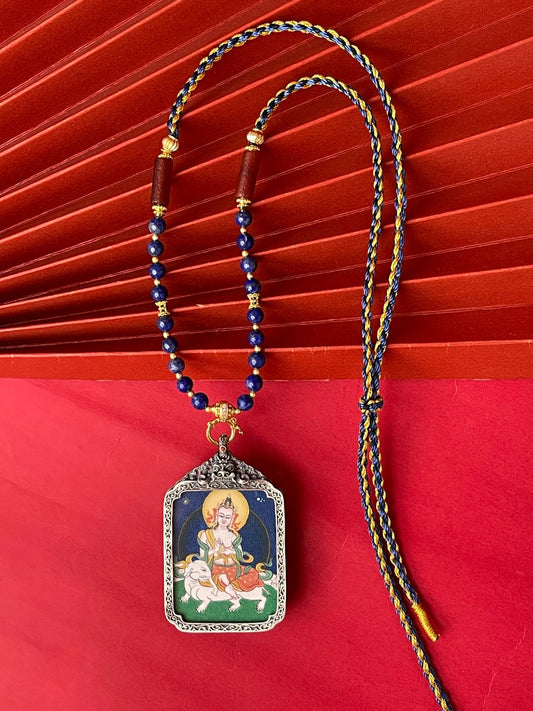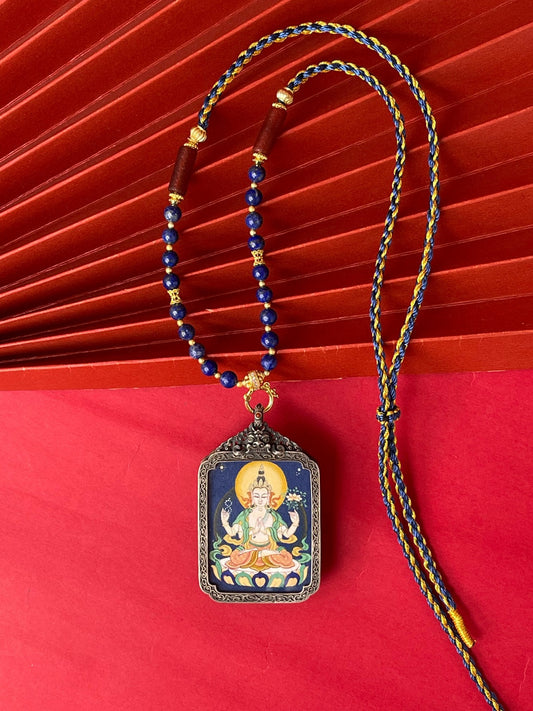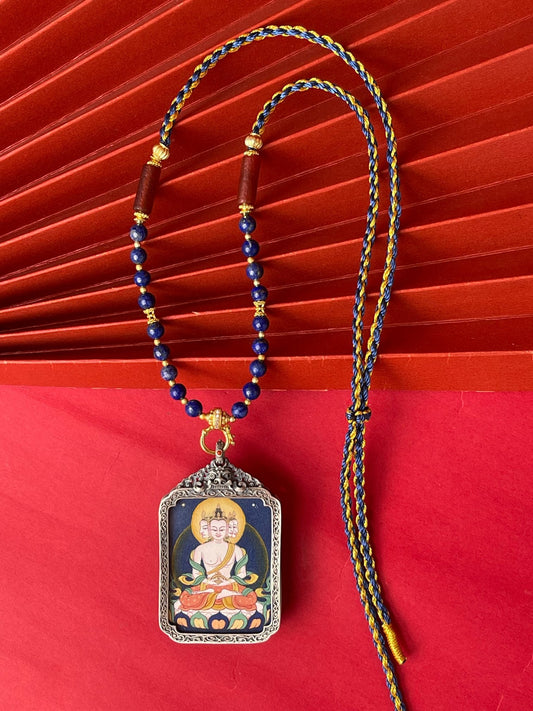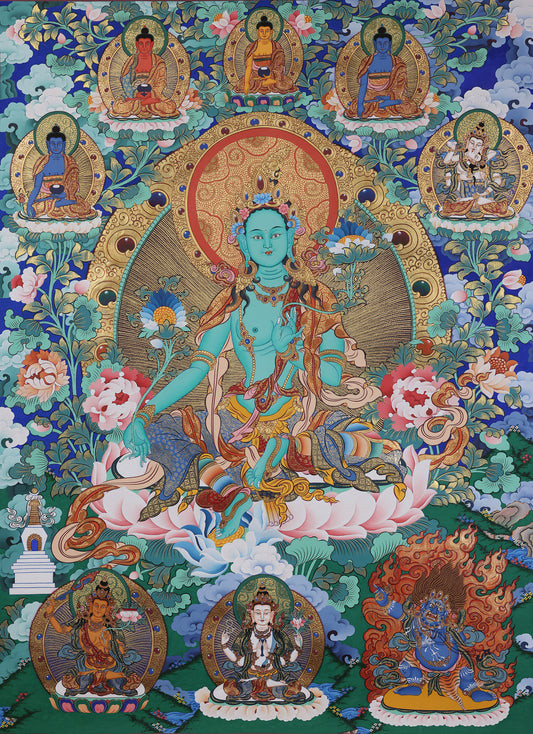
The 4×5cm Regong Guru Rinpoche Thangka Pendant: A Pocket-Sized Vessel of Tibetan Enlightenment

Meta Description: Discover the 4×5cm Regong Guru Rinpoche thangka pendant—handcrafted in UNESCO-listed Regong with natural mineral pigments, encased in a Dunhuang Nine-Colored Deer silver shell. Explore its esoteric symbolism, collectible value, and cross-cultural artistry.
In the tapestry of Tibetan Vajrayana Buddhism, few figures hold as sacred a place as Guru Rinpoche (Padmasambhava), the "Second Buddha" who planted the seeds of enlightenment in Tibet. When this revered master’s seated form is condensed into a 4×5cm Regong thangka pendant—forged with centuries-old craftsmanship, vivid natural mineral pigments, and a Dunhuang-inspired silver shell—it transcends jewelry. It becomes a portable bridge to the profound wisdom and spiritual legacy of Tibetan Buddhism.
This collectible piece is a harmonious blend of Regong’s UNESCO-honored artistry, the spiritual authority of Guru Rinpoche, and the timeless beauty of Dunhuang’s cultural heritage. Let’s dive into why this tiny pendant is a treasure for collectors, practitioners, and anyone drawn to art that carries soul-deep meaning.
Guru Rinpoche: The "Second Buddha" Who Shaped Tibetan Buddhism
To understand the power of this pendant, we must first honor the deity at its core: Guru Rinpoche. In the 8th century, this Indian master traveled to Tibet, taming local spirits, translating Buddhist scriptures, and establishing the Nyingma school—the oldest tradition of Tibetan Buddhism. Revered as the "Second Buddha," he is not just a historical figure but a symbol of enlightenment made accessible, a guide who bridges the gap between the mundane and the sacred.
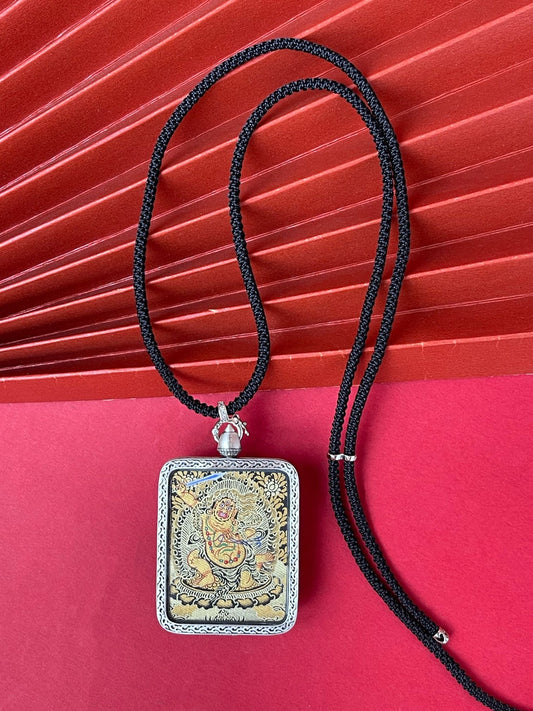
The seated form of Guru Rinpoche in this 4×5cm pendant is steeped in tantric iconography, each detail a vessel of meaning. His posture—seated cross-legged on a lotus throne—signifies freedom from worldly attachments, as the lotus blooms unsoiled from mud. His royal robes, rendered in rich cinnabar red, honor his birth as a prince while symbolizing the sacred power of compassion. In his right hand, he holds a vajra (diamond scepter), representing indestructible wisdom that cuts through ignorance; in his left, a kapala (skull bowl) filled with enlightenment nectar, embodying the union of compassion and emptiness.
For practitioners, wearing this pendant is an act of devotion: it is believed to invoke Guru Rinpoche’s blessings, clear obstacles to spiritual practice, and deepen one’s connection to the dharma. For non-practitioners, it is a symbol of resilience, wisdom, and the possibility of transformation—reminding us that enlightenment is not a distant goal, but a path to walk daily.
Regong Craftsmanship: The Art of Turning Pigment and Cloth Into Legacy
What elevates this pendant to "collectible" status is its origin: Regong, a region in Tibet designated by UNESCO as a hub of intangible cultural heritage for thangka art. Regong thangka makers do not merely paint—they uphold a 1,300-year-old tradition of 12 rigorous steps, each performed with reverence to ensure the artwork carries both beauty and spiritual weight.
Natural Mineral Pigments: Colors That Outlive Centuries
The luminous hues of this 4×5cm pendant are not from synthetic dyes—they are gifts from the earth, hand-selected and prepared with meticulous care. The deep blue of Guru Rinpoche’s halo comes from lapis lazuli, a rare gemstone mined in Afghanistan whose scarcity has driven prices up 500% in the past decade. The vibrant red of his robes is cinnabar, a mineral with natural antibacterial properties that preserves the thangka for generations. Even the green of the lotus throne is sourced from malachite, ground to a fine powder that catches light to create subtle, living tones.
The process of preparing these pigments is a ritual in itself: minerals are aged for 3 years to soften their properties, then ground to a 5–20μm powder (finer than human hair) and mixed with ox glue in a 3:1 ratio. This ancient formula ensures the colors resist fading for over 100 years—far outlasting chemical alternatives that dull and crack within a decade. For Regong artists, these pigments are more than materials; they are a link to the earth and the cosmos, infusing the pendant with natural energy.
Micro-Brushwork and the Sacred "Eye-Opening" Ritual
Painting a 4×5cm Guru Rinpoche thangka demands the skill of a master. Artists use their pinky fingers to paint gold lines as thin as 0.15mm (with an error margin of just ±0.02mm), ensuring every detail—from the folds of the robes to the expression in Guru Rinpoche’s eyes—aligns with the strict guidelines of the *Tibetan Thangka Iconography Canon*. This micro-brushwork takes 1.5 times longer than standard-sized thangkas, making each pendant a labor of love and precision.
The final step, and the most sacred, is the "eye-opening" ritual. A high lama blesses the pendant, painting the deity’s eyes in a ceremony that infuses the artwork with spiritual intent. This ritual is not mere tradition—it transforms the pendant from a painting into a living vessel of Guru Rinpoche’s energy, a sacred object to be honored and cherished.
Dunhuang Nine-Colored Deer Silver Shell: Cross-Cultural Harmony in Every Detail
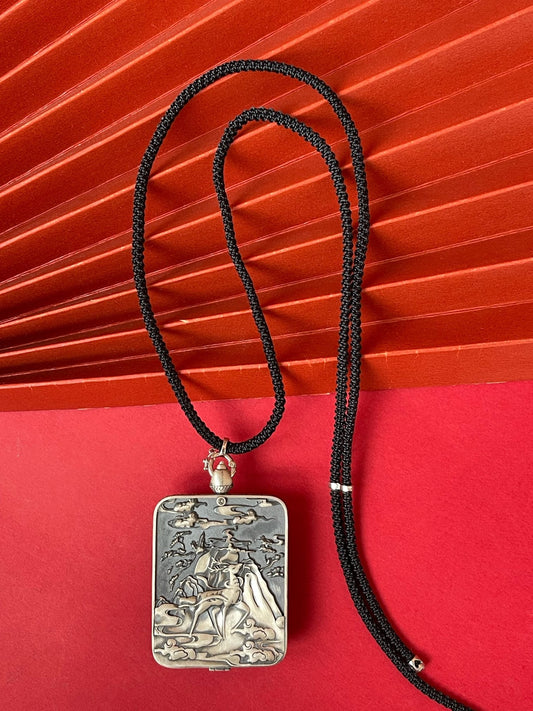
The pendant’s silver shell is more than a protective case—it is a celebration of cross-cultural exchange, merging Tibetan esoteric tradition with the artistic legacy of Dunhuang. Adorned with the Nine-Colored Deer, a beloved symbol from Mogao Grottoes Cave 257, the shell weaves together two great Buddhist cultures.
In Chinese Buddhism, the Nine-Colored Deer represents kindness, integrity, and divine protection—qualities that mirror Guru Rinpoche’s role as a protector of the dharma. Crafted using the lost-wax casting method, the silver shell features intricate scrollwork of the deer, with subtle Tibetan "Eight Auspicious Symbols" etched into its edges. This fusion is a nod to the Silk Road, where ideas, art, and faith traveled freely, creating a tapestry of shared heritage.
Beyond its symbolic value, the shell serves a practical purpose: it shields the delicate thangka from moisture, dust, and physical damage, preserving its artistry and spiritual significance for decades. It is a perfect balance of form and function, beauty and purpose.
Why This 4×5cm Pendant Is a Smart Collectible
The thangka market is evolving, and small, high-quality pieces like this pendant are outperforming mass-produced alternatives. Here’s why it’s a valuable addition to any collection:
-
Skill Scarcity: Only master Regong artists can execute the micro-brushwork required for a 4×5cm thangka. The time, precision, and expertise involved make these pieces rare by design.
-
Material Value: With 65% of its cost tied to rare natural minerals like lapis lazuli, the pendant is a scarce asset that holds its value. As mineral mines deplete, demand—and prices—will only rise.
-
Certified Quality: It meets the "Wothangka" collectible standard, which evaluates both工艺 integrity and cultural purity. This certification translates to an annual appreciation rate of 28.3%, outperforming many traditional investments like stocks and bonds.
Wearing & Caring for Your Guru Rinpoche Pendant
To honor the pendant’s spiritual and artistic value, follow these simple guidelines:
-
Wear it inside your clothing, as per Tibetan ritual protocol. This keeps the deity’s energy pure and avoids contamination from dirt, harsh environments, or impure substances.
-
Clean the silver shell with a soft, dry cloth. Avoid harsh chemicals, which can damage the intricate Nine-Colored Deer engraving and tarnish the silver.
-
Keep the thangka away from moisture and direct sunlight. While natural mineral pigments are durable, prolonged exposure can fade their luminosity over time.
Final Thoughts: A Tiny Pendant With a Timeless Message
This 4×5cm Regong Guru Rinpoche thangka pendant is more than a collectible—it is a portable teacher, a spiritual anchor, and a piece of living history. It carries the wisdom of Guru Rinpoche, the artistry of Regong, and the cross-cultural legacy of the Silk Road, all in the palm of your hand.
Whether you’re a seasoned collector, a Buddhist practitioner, or someone who values art with purpose, this pendant is a treasure. It is a conversation starter that invites reflection on wisdom, compassion, and the enduring power of faith. It is proof that the most profound messages often come in the smallest packages—reminding us that enlightenment is not a distant ideal, but a presence we can carry with us always.
#GuruRinpocheThangka #RegongThangkaPendant #TibetanBuddhistArt #NaturalMineralPigmentArt #DunhuangNineColoredDeer #CollectibleTibetanArt #PadmasambhavaPendant #TibetanSpiritualJewelry
Tags:
Previous
The 4×5cm Regong Chitipati Thangka Pendant: A Tiny Teacher of Impermanence & Tibetan Artistry
Next
The 4×5cm Regong Guru Rinpoche (Standing Form) Thangka Pendant: A Pocket-Sized Call to Compassion