Nepalese Hand-Painted White Tara Thangka: Compassion and Millennium-Old Craft in Tibetan Buddhist Art

$499.00 USD
Thangka Name: Blue Tang White Tara
size: 20cm×30cm
origin: Nepal
Eine Frage stellen

Beeil dich! Nur noch [Anzahl] auf Lager!

Geschätzte Lieferzeiten: 12–26 Tage (International), 3–6 Tage (USA).

Rückgabe innerhalb von 45 Tagen nach dem Kauf. Zölle und Steuern werden nicht erstattet.

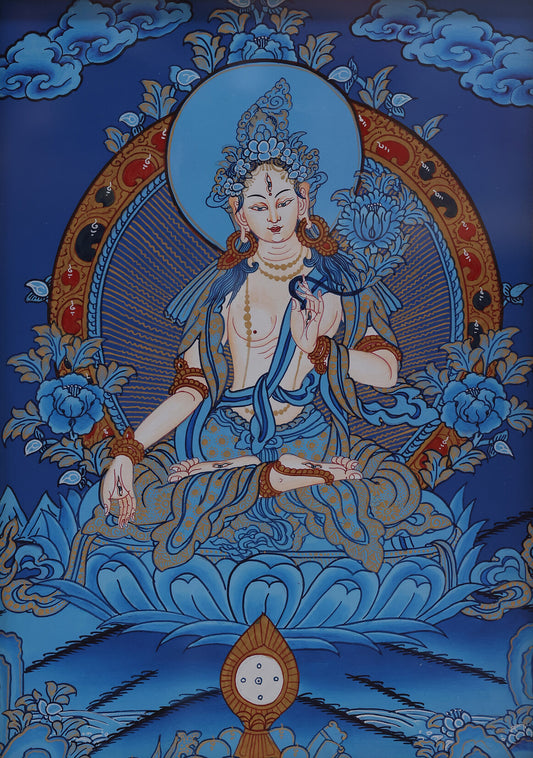
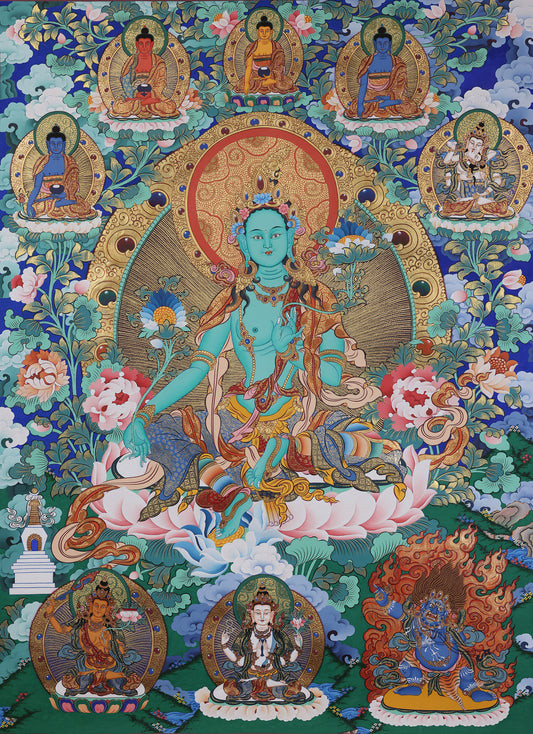
A hand-painted Blue Thangka depicting White Tara, the Tibetan Buddhist goddess of longevity, compassion, and healing energy.
Nepalese Hand-Painted White Tara Thangka: Compassion and Millennium-Old Craft in Tibetan Buddhist Art
$499.00 USD
When a 20×30cm hand-painted Nepalese thangka unfolds before your eyes, what you see is more than a layering of colors and lines—it is a materialized carrier of Tibetan Buddhist compassion, a living heritage of Nepal’s millennium-old craftsmanship, and a microcosm of the coexistence of "faith and aesthetics" in the Himalayan cultural sphere. Today, we unpack every detail of this White Tara-themed thangka through the lens of Tibetan Buddhism.

I. The Central Deity: White Tara—The "Mother of Compassion and Longevity" in Tibetan Buddhism

The core of this thangka is White Tara, one of the most widely venerated female deities in Tibetan Buddhism.
As an emanation of Avalokiteshvara’s compassionate heart, White Tara is known as the "Mother of All Buddhas" in Tibetan Buddhist tradition, embodying three virtues: pacifying afflictions, increasing merit, and fostering loving-kindness. She is particularly associated with life extension and the alleviation of suffering—this is why she is a central figure in the "Three Longevity Deities" (White Tara, Amitayus, and Ushnishavijaya).
In terms of iconography, this thangka strictly adheres to the Iconometric Sutras:
  • Form: Her skin is pure white (rendered with chalk or pearl powder mineral pigments), and she bears three eyes (one on the forehead, one in each eye socket), symbolizing "watching over all beings in the three realms." Her proportions follow the "seven-head height" standard, a marker of sacred dignity in Tibetan Buddhism.
  • Mudra and Implements: Her right hand forms the varada mudra (palm outward, fingers slightly spread), representing "bestowing ease." Her left hand holds an utpala (blue lotus), its stem extending to her shoulder—a symbol of "Bodhicitta untainted by samsara."
  • Lotus Seat and Aura: She sits on an eight-petaled white lotus (white lotus = purity). Behind her, a circular blue halo (head aura) and a radiating golden-rayed aura (body aura) are framed by "Seven Treasures" patterns. This aligns with the Nepalese thangka convention of "centralizing the deity" while metaphorically conveying "the illumination of Buddha’s light."

II. Implicit Attendants: Tibetan Cosmology in a Miniature Thangka

At 20×30cm, this is a "miniature thangka." Due to space constraints, it does not explicitly depict the other members of the Three Longevity Deities (Amitayus, Ushnishavijaya), but the artist uses symbolic devices to echo Tibetan Buddhism’s "three realms and five directions" cosmology:
  • The dharmachakra (wheel of dharma) pattern beneath the lotus seat symbolizes "Amitayus preaching the dharma," implying "blessings of the dharma body."
  • The blue cloud patterns and padma (lotus) motifs in the background correspond to the visual symbols of Ushnishavijaya’s pure land, representing "purifying karmic obstacles and extending life."
  • The three-layered composition (celestial clouds above, deity in the middle, wave patterns below) mirrors Tibetan Buddhism’s "three realms of samsara," with a cool-to-warm color gradient enhancing spatial order.

III. Millennium-Old Craft: Nature and Craftsmanship in Mineral Pigments

This thangka uses Nepal’s traditional "handmade mineral + earth pigment technique," with every step steeped in time:
  1. Canvas Preparation: Coarse cotton fabric is used as the base, coated 5–6 times with a mixture of cowhide glue and stone powder, then polished with pebbles until it "sounds like cowhide when tapped and feels like silk to the touch." This is a distinctive Nepalese process (Tibetan thangkas often use linen), ensuring pigment adhesion and century-long durability.
  2. Pigment Production:
    • Blue comes from Afghan lapis lazuli (ground to 5–20μm particles), white from chalk or pearl powder, and gold from 24K gold leaf ground into paste.
    • Red is derived from cinnabar ore, while yellow is a blend of realgar and turmeric (plant + earth).
    • Pigments are mixed with aged cowhide glue in a 3:1 ratio, then processed through pounding, grinding, filtering, and drying—resulting in saturated colors that "do not fade for over a century" (lapis lazuli pigments have a lightfastness of over 100 years, per Oxford University tests).
  3. Painting Process: First, the outline is sketched with charcoal according to the Iconometric Sutras to ensure precise proportions. Colors are applied from cool to warm: lapis lazuli blue (background) first, then the lotus seat, then the deity’s skin. Details are blended using the Newari "wheat-awn brush dotting method," with saliva used to dilute pigment paste for gradual transitions (e.g., the blue-gold gradient of the robes). A single miniature thangka can take dozens of hours to complete.

IV. Artistic Style: The Unique Aesthetic of the Nepalese Newari School

This thangka belongs to the Nepalese Newari School (a branch of the court school), with distinct stylistic differences from Tibetan thangkas:
  • Color Palette: Centered on blue, white, and gold (corresponding to Tibetan Buddhist symbols of "tranquility" and "compassion"), the colors are soft and unobtrusive—unlike the high-contrast palettes of Tibetan thangkas. Gold paste is matte-finished (gold powder + honey) to avoid a garish metallic sheen.
  • Lines and Form: Lines are straightforward and concise; robes use "curves + gold patterns" to convey elegance, unlike the intricate scrollwork of Tibetan thangkas. The face features the Newari school’s signature "infant-like appearance" (concentrated features, gentle expression), embodying the core of "compassion and purity."
  • Composition Rhythm: While adhering to the religious norm of "centralizing the deity," the composition avoids overcrowding through balanced ornamentation (e.g., padma beside the lotus seat). The negative space of the blue cloud background conveys "emptiness and elegance"—a departure from the Tibetan thangka tradition of "filling the frame as an act of reverence."

V. Cultural Value: The Dual Identity of a Miniature Thangka (Faith + Art)

This 20×30cm thangka is both a "portable protector" for Tibetan Buddhist practitioners (easy to carry and venerate; meditating on the deity’s three eyes grants wisdom blessings, while touching the thangka brings longevity protection) and a living carrier of Nepal’s intangible cultural heritage. Its "wheat-awn dotting" and "mineral pigment techniques" are unique creations of the Himalayan cultural sphere, blending "religious solemnity" and "artistic appeal."
From Tibetan Buddhist spiritual symbols to Nepal’s millennium-old craftsmanship, this miniature thangka carries humanity’s pursuit of "compassion and eternity" in a small frame. It is not just a work of art, but a cultural crystallization of the coexistence of nature, craftsmanship, and faith.

 #NepaleseThangka #WhiteTaraThangka #TibetanBuddhistArt #NewariSchool #MineralPigmentThangka #WhiteTaraBuddhistArt #TibetanBuddhismThangka
Entdecken Sie das perfekte tibetisch-buddhistische Thangka, das zu Ihren Wünschen, Ihrem Lebensstil und Ihrem Raum passt. Jedes Thangka hat eine spirituelle Bedeutung und bringt Segen, wenn es richtig platziert wird.

1. Definieren Sie Ihre Absicht

Reichtum & Erfolg → Gelber Dzambhala (Gottheit des Reichtums)

Mitgefühl und Frieden → Avalokiteshvara, Grüne Tara

Weisheit & Lernen → Manjushri

Gesundheit & Heilung → Medizinbuddha

Langlebigkeit und Familienschutz → Weiße Tara

2. Wählen Sie nach Identität

Unternehmer und Geschäftsinhaber → Reichtumsgottheiten für Wohlstand.

Studenten und Gelehrte → Weisheitsgottheiten für Konzentration und Klarheit.

Heiler und Yoga-Praktizierende → Medizinbuddha für Energie und Gleichgewicht.

Familien und Hausfrauen → Tara-Gottheiten für Harmonie und Sicherheit.

Sammler und Kunstliebhaber → Seltene Mandalas oder Meisterwerk-Thangkas.

3. Passen Sie Ihren Raum an

Heimschrein / Meditationsraum → Mittlere Thangkas (60–80 cm).

Büro / Geschäftshalle → Große Thangkas für Wohlstand und Autorität.

Wohnzimmer / Arbeitszimmer → Dekorative Thangkas für Frieden und Schönheit.

4. Authentische Handwerkskunst

Jedes Thangka ist mit natürlichen Mineralpigmenten und feiner Leinwand handbemalt und spiegelt tibetische Kunstfertigkeit und spirituelle Kraft wider. Überprüfte Quellen gewährleisten Qualität und Respekt für die Tradition.

✨ Wählen Sie Ihr Thangka mit Herz – es ist nicht nur Kunst, sondern ein Segen für Ihr Leben.

Jeder Mensch hat unterschiedliche Bedürfnisse. Die Wahl des richtigen Thangkas kann spirituelle Unterstützung, Schutz, Glück und Segen bieten. Nachfolgend finden Sie Thangka-Empfehlungen für verschiedene Rollen:

1. Unternehmer

  • Bedürfnisse : Weisheit, Reichtum, Gesundheit, beruflicher Erfolg.
  • Empfohlene Thangkas :
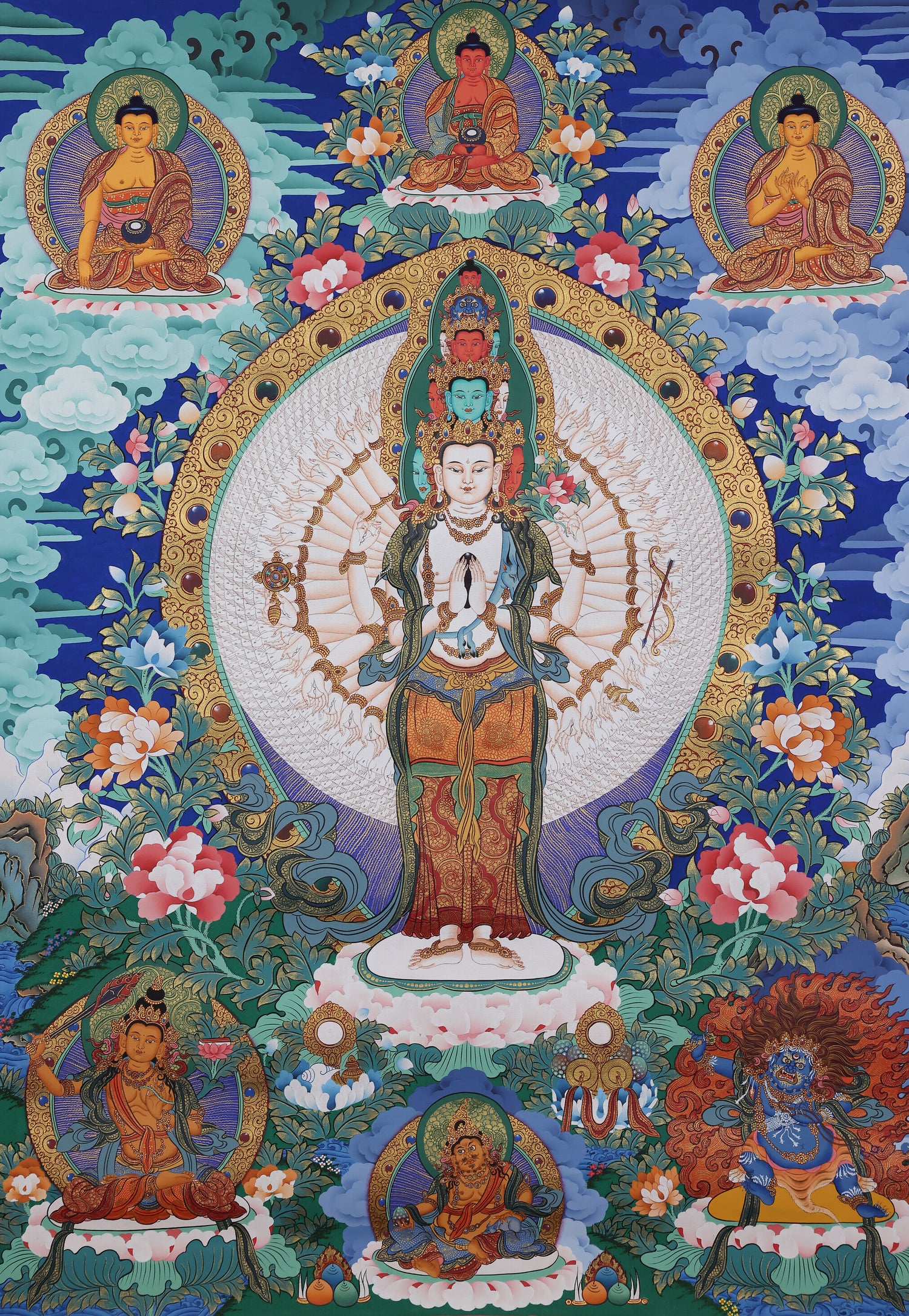
    Manjushri : Verbessert die Entscheidungsfindung und Geschäftsweisheit.
    Gottheit des Reichtums : Bringt Reichtum und Wohlstand.
    Medizinbuddha : Unterstützt die Gesundheit und reduziert Stress.
    Mahakala : Schützt Unternehmen vor Konkurrenz und Herausforderungen.

2. Erfolgreiche Einzelpersonen

  • Bedürfnisse : Innerer Frieden, Familienharmonie, Langlebigkeit.
  • Empfohlene Thangkas :
    Amitabha Buddha : Bringt inneren Frieden und Ruhe.
    Avalokiteshvara (Guanyin) : Fördert Harmonie und Glück in der Familie.
    Amitayus (Langlebens-Buddha) : Betet für gute Gesundheit und ein langes Leben.
    Manjushri : Stärkt weiterhin die Weisheit.

3. Hausfrauen/Ehemänner

  • Bedürfnisse : Familienharmonie, Schutz, Gesundheit.
  • Empfohlene Thangkas :
    Avalokiteshvara : Steigert das Familienglück und die Harmonie.
    Schutzgottheiten : Beschützen die Familie vor äußeren Störungen.
    Weiße Tara : Segnet die Familie mit Gesundheit.

4. Studierende und Wissenschaftler

  • Bedürfnisse : Weisheit, Konzentration, akademischer Erfolg.
  • Empfohlene Thangkas :
    Manjushri : Fördert Lernfähigkeit, Gedächtnis und Weisheit.
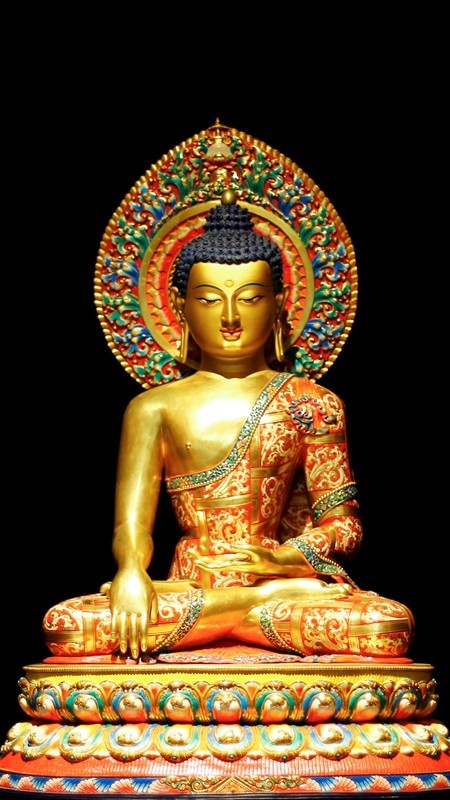
    Shakyamuni Buddha : Hilft bei der Konzentration und spirituellen Praxis.
    Jixiang Tianmu : Bringt akademisches Glück und Prüfungserfolg.

5. Künstler und Kreativprofis

  • Bedürfnisse : Inspiration, Kreativität, künstlerische Leistung.
  • Empfohlene Thangkas :
    Manjushri : Regt kreatives Denken und Inspiration an.
    Vajrapani : Hilft, kreative Blockaden zu überwinden.
    Maitreya : Sorgt für eine entspannte und optimistische Einstellung und baut Stress ab.

6. Reisende und Abenteurer

  • Bedürfnisse : Schutz, Glück, Erfolg bei Abenteuern.
  • Empfohlene Thangkas :
    Hayagriva : Bietet starken Schutz auf Reisen und beseitigt Hindernisse.
    Mahakala : Bringt Glück und Schutz, insbesondere für Abenteurer.
    Vajrasattva : Hilft, Schwierigkeiten und Herausforderungen während der Reise zu überwinden.

7. Ältere Menschen

  • Bedürfnisse : Gesundheit, Langlebigkeit, spiritueller Frieden.
  • Empfohlene Thangkas :
    Amitayus : Betet für ein langes Leben und gute Gesundheit.
    Medizinbuddha : Fördert Heilung und körperliches Wohlbefinden.
    Avalokiteshvara : Bringt Mitgefühl und inneren Frieden in späteren Jahren.

8. Führungskräfte

  • Bedürfnisse : Führung, Weisheit, Teamarbeit und geschäftlicher Erfolg.
  • Empfohlene Thangkas :
    Manjushri : Verbessert Führungsqualitäten und Entscheidungsfindung.
    Gottheit des Reichtums : Bringt dem Unternehmen und dem Team Erfolg und Wohlstand.
    Avalokiteshvara : Fördert Harmonie und Gleichgewicht innerhalb des Teams.

9. Gesundheits- und Fitnessbegeisterte

  • Bedürfnisse : Gute Gesundheit, Vitalität, Energie.
  • Empfohlene Thangkas :
    Medizinbuddha : Verbessert die körperliche Gesundheit und Vitalität.
    Weiße Tara : Bringt Gesundheit und Verjüngung.
    Vajrasattva : Beseitigt gesundheitliche Probleme und steigert die Energie.

10. Politiker

  • Bedürfnisse : Führung, Weisheit, Frieden.
  • Empfohlene Thangkas :
    Manjushri : Verbessert Führungsqualitäten und Entscheidungsfindung.
    Vairocana Buddha : Hilft, inneren Frieden und Weisheit zu bewahren.
    Avalokiteshvara : Fördert den gesellschaftlichen Frieden und die Harmonie in der Familie.

Für alle Bestellungen über 100 USD ist der Versand kostenlos.

Rücksendungen werden bis zu 10 Tage nach Erhalt des Kaufbelegs bzw. der Sendungsnummer (bei ungetragenen Artikeln) akzeptiert. Sie als Kunde sind verpflichtet, uns vor der Rücksendung des Artikels per E-Mail zu informieren.

Andernfalls fallen die Standardversandkosten an. Weitere Informationen finden Sie in unseren Lieferbedingungen .

Rücksendungen werden bis zu 10 Tage nach Erhalt des Kaufbelegs oder der Sendungsnummer (bei ungetragenen Artikeln) akzeptiert. Sie als Kunde sind verpflichtet, uns vor der Rücksendung des Artikels per E-Mail zu informieren, nur in folgenden Fällen:

– Den falschen Artikel erhalten.
– Artikel kam nicht wie erwartet an (z. B. beschädigte Verpackung).
– Artikel hatte Mängel.
– Über die Lieferzeit hinaus.
– Der Spediteur gestattet keine Besichtigung der Ware vor der Bezahlung.

Die zurückgesendeten Produkte müssen in der Originalverpackung, sicher verpackt, unbeschädigt und ungetragen sein. Dies bedeutet, dass die Artikel zum Schutz während des Transports sicher in einem Karton verpackt sein müssen, möglichst im selben Karton, in dem sie an Sie als Kunde versendet wurden.

Kürzlich angesehen

Nicht vergessen! Die Produkte, die Sie angesehen haben, legen Sie jetzt in den Warenkorb.

Passt gut zu

Erweitern Sie Ihre Auswahl mit perfekt abgestimmtem Zubehör und ergänzenden Produkten.

Leute kauften auch

Hier sind einige unserer ähnlichsten Produkte, die die Leute kaufen. Klicken Sie hier, um den Trendstil zu entdecken.