Tibetan Thousand-Armed, Thousand-Eyed Avalokiteshvara Thangka: A Deep Analysis of Theme, Deity, and Craftsmanship

Tibetan Thousand-Armed, Thousand-Eyed Avalokiteshvara Thangka: A Deep Analysis of Theme, Deity, and Craftsmanship
Within the Tibetan Buddhist artistic tradition, a Thangka is never merely a religious painting. It is a “portable scripture hall” that embodies Buddhist philosophy, cosmology, and spiritual practice. Each Thangka serves simultaneously as a visual expression of faith, a meditative aid, and a sacred object passed down through generations.
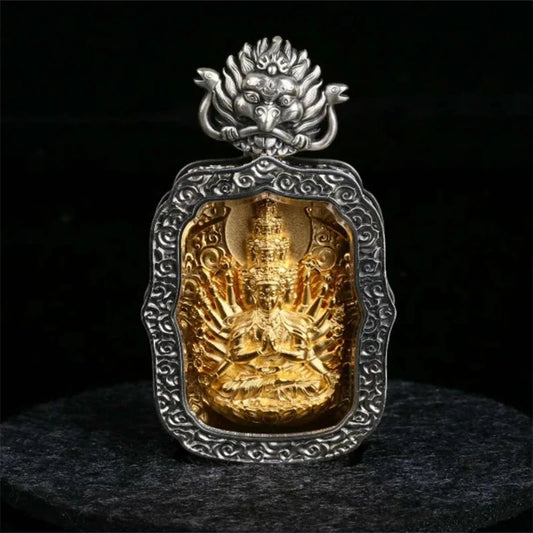
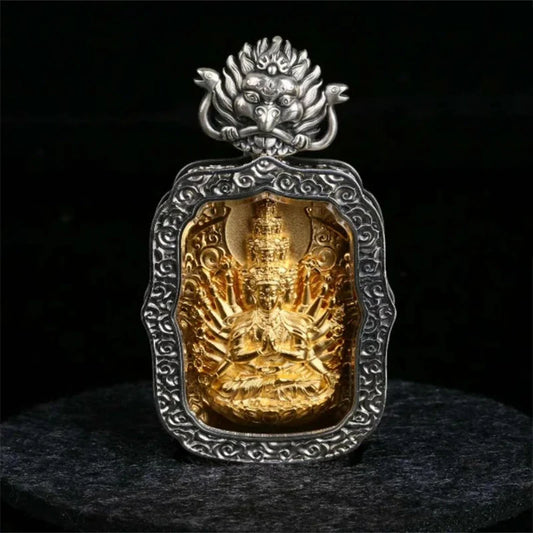
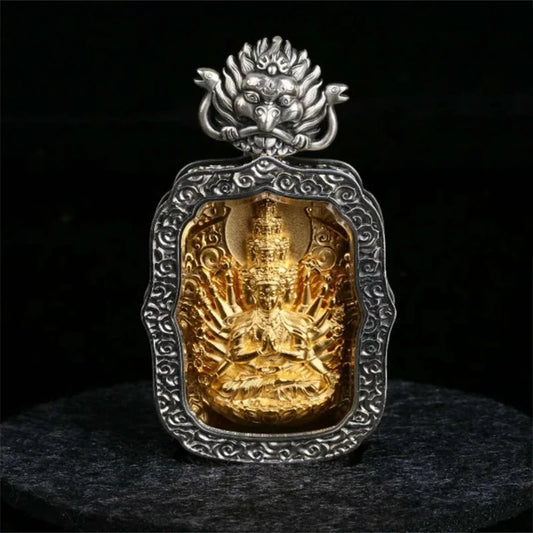
Among all Thangka subjects, the Eleven-Faced Thousand-Armed, Thousand-Eyed Avalokiteshvara Thangka is regarded as one of the most complete visual representations of the Buddhist system of compassion and salvation. Created in strict accordance with the Sutra on Buddhist Iconometry, this type of Thangka constructs a highly structured and symbolic salvific universe through its imagery. Its theme, principal deity, attendant figures, and hand-painted craftsmanship together reveal the core spiritual essence of Tibetan Buddhism—the union of compassion and wisdom.
I. Core Theme: The Philosophy of Universal Great Compassion
The central theme of the Thousand-Armed, Thousand-Eyed Avalokiteshvara Thangka is “the all-pervading salvation of great compassion.” This philosophy originates from the Great Dharani Sutra of the Thousand-Armed, Thousand-Eyed Avalokiteshvara Bodhisattva and represents the Tibetan Buddhist principle of compassion united with wisdom.
In Buddhist teachings, compassion is not mere emotional sympathy, but an active, enlightened vow grounded in insight into suffering and its causes.
-
The thousand hands symbolize innumerable skillful means through which Avalokiteshvara aids sentient beings.
-
The thousand eyes represent omniscient awareness of suffering throughout all realms.
-
The eleven faces signify multiple dimensions of salvation, allowing the Bodhisattva to respond appropriately to beings of different capacities.
In Tibetan culture, Thousand-Armed Avalokiteshvara is considered the most direct embodiment of compassionate intervention in the present world. Particularly within the Gelug and Nyingma traditions, this form of Avalokiteshvara serves as a central focus for cultivating compassion. Through its solemn main figure and protective attendants, the Thangka transforms the doctrine of “compassion pervading the three realms and liberating beings across the six realms” into a powerful visual language for meditative practice.
II. The Principal Deity: Ritual Structure and Symbolism of the Eleven-Faced Avalokiteshvara
At the center of the composition stands the Eleven-Faced Thousand-Armed, Thousand-Eyed Avalokiteshvara, meticulously painted according to the canonical proportions prescribed in the Sutra on Buddhist Iconometry, following the sacred 37:25 ratio. Every detail carries precise symbolic meaning.
1. The Hierarchy of Eleven Faces
The head of Avalokiteshvara is arranged in five tiers comprising eleven faces:
-
The topmost face is Amitabha Buddha, serene and tranquil, signifying Avalokiteshvara’s ultimate origin as an emanation of Amitabha’s boundless compassion.
-
The four lower tiers manifest compassionate, wrathful, joyful, and fierce expressions, corresponding to the doctrine of the Five Buddha Families.
This multi-faced iconography conveys Avalokiteshvara’s ability to manifest in forms suited to the spiritual disposition of each being—gentle compassion for the receptive, fierce determination for those resistant to transformation.
2. The Functional Symbolism of Thousand Hands and Eyes
Radiating behind the deity, the thousand hands form a luminous halo of compassionate activity. Each palm contains an eye, and several hands hold ritual implements:
-
Prayer beads symbolize the continuity of compassionate intention;
-
The water vase represents the purification of afflictions;
-
The Dharma wheel signifies the turning of the teachings for liberation;
-
The lotus embodies purity arising unstained from suffering.
This design—hands expressing action, eyes perceiving conditions—transforms the abstract vow of great compassion into a vivid and accessible visual language.
3. Posture and Attire in Ritual Context
Avalokiteshvara is adorned in Bodhisattva garments, with flowing scarves and a jeweled waist cloth, standing upon a lotus pedestal.
-
The lotus throne symbolizes purity beyond defilement;
-
The standing posture reflects ceaseless readiness to assist sentient beings;
-
The hands joined at the heart represent the unity of compassion and wisdom, consistent with Tibetan iconographic traditions where Avalokiteshvara embodies compassion and Manjushri embodies wisdom.
III. Attendant Deities: Visualizing the Three Realms and the Lineage System
Thousand-Armed Avalokiteshvara Thangkas typically employ a Three Realms and Five Directions composition, expressing the Tibetan Buddhist structure of principal deity, protectors, and lineage.
Upper Realm: Buddhas and Lineage Masters
At the top of the Thangka appears Amitabha Buddha, the source of Avalokiteshvara’s enlightened essence. He is often flanked by great lineage masters such as Padmasambhava and Je Tsongkhapa, reflecting the Tibetan tradition of teacher and doctrine as inseparable. The surrounding clouds blend Chinese-style motifs with Tibetan scrollwork, subtly reflecting historical cultural exchange.
Lower Realm: Taras and Wrathful Protectors
The lower section commonly features Green Tara and White Tara, female manifestations of Avalokiteshvara symbolizing swift and compassionate rescue. Alongside them appear wrathful protectors such as Six-Armed Mahakala and Hayagriva, whose fierce forms safeguard the Dharma and subdue obstacles.
The coexistence of gentleness and wrath reflects a fundamental Tibetan Buddhist principle: compassion and forceful protection operate together in the work of liberation.
IV. Craftsmanship: The Pursuit of Permanence Through Sacred Materials
Authentic Thousand-Armed Avalokiteshvara Thangkas are created using pure hand-painted mineral pigment techniques, where craftsmanship itself becomes a spiritual discipline.
1. Preparing the Sacred Canvas
Pure cotton cloth is stretched on a wooden frame and treated with cowhide glue, lime priming, and repeated polishing with river stones. This process transforms the cloth into a sacred base worthy of receiving the divine image. The artist traditionally observes ritual purity, recitation, and mindfulness during preparation.
2. Mineral Pigments: Colors from the Earth
-
Cinnabar red symbolizes the warmth of compassion;
-
Lapis lazuli blue represents emptiness and clarity;
-
Malachite green signifies growth and salvation;
-
24K gold powder embodies the radiance of Buddha-nature.
These minerals are refined using the traditional water-floating method and mixed with aged animal glue, ensuring pigments remain vibrant for centuries. In Tibetan belief, minerals contain the essence of the earth, allowing faith and nature to coexist within the artwork.
3. Ritualized Painting Process
-
Sketching must adhere to strict iconometric accuracy;
-
Color application proceeds from dark to light in multiple thin layers;
-
Gold outlining employs finger-rubbed gold, with lines as fine as 0.15 mm;
-
Eye-opening is the final and most sacred step, performed with concentrated awareness and followed by consecration by a high lama.
Only then does the Thangka become a true object of devotion.
Conclusion: Thangka as a Vessel of Faith
The Thousand-Armed, Thousand-Eyed Avalokiteshvara Thangka is far more than an artistic masterpiece. It is a visual embodiment of compassionate philosophy, a structured map of spiritual salvation, and a material anchor for enduring faith.
In Tibetan regions, such Thangkas are often enshrined at the heart of household altars, accompanying families across generations. Every gold line and mineral layer carries the aspiration to allow compassion and faith to transcend time and space—making the Thangka not only an artwork, but a living spiritual legacy.
#ThousandArmedAvalokiteshvara
#ThousandEyedGuanyin
#TibetanBuddhistThangka
#AvalokiteshvaraThangka
#BodhisattvaThangka
#TibetanBuddhistArt
#SacredThangka
#HandPaintedThangka
#MineralPigmentThangka
#BuddhistCompassion
#TibetanBuddhistIconography
#SpiritualArt
#MeditationThangka
#HimalayanArt
#BuddhistSacredArt
Schlagwörter:
Vorherige
The Protector of the Snowy Lands: The Compassion Code in the Four-Armed Chenrezig Thangka of Tibetan Buddhism
Nächste
The Seven-Eyed Compassion in Blue Thangka: White Tara in Tibetan Buddhism