Discover the Sacred Realm of Akshobhya Buddha’s Eastern Pure Land – A Thangka Combining Faith, Symbolism, and Artistic Mastery
1. Theme Interpretation: Pure Land of Eastern Vaidurya and Sakya Doctrine
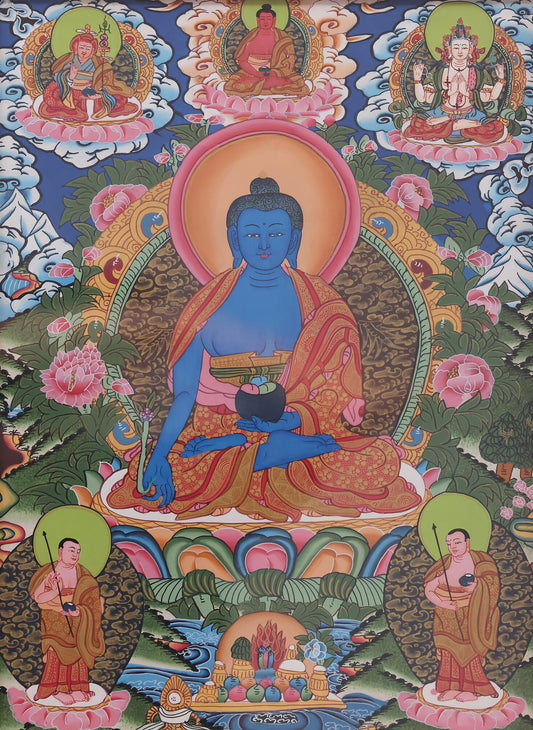
This exquisite Tibetan hand-painted thangka centers on “Akshobhya Buddha presiding over the Eastern Vaidurya Pure Land”, a key manifestation within the Five Dhyani Buddhas’ Pure Lands system, with Akshobhya as its principal deity. The Eastern Akshobhya Pure Land is distinguished by its core vow: “eliminating the karmic forces of anger and hatred.” According to the Akshobhya Buddha’s Sutra on the Pure Land, this realm is free from the three lower realms of existence and conflict, where sentient beings practicing with a pure heart swiftly attain the “immovable Buddha” realization. It embodies the Tibetan Buddhist doctrine of transforming afflictions into wisdom, providing both a visual representation of faith and a practical guide for spiritual cultivation.
The thangka also incorporates the Sakya school’s Path-Result (Tib. Lamdré) teachings: Akshobhya’s immovable quality symbolizes the practitioner’s ability to remain steadfast amidst anger. The hierarchical arrangement of attendant deities reflects the gradual path from ordinary beings to Buddhahood, making this thangka not only a symbol of Pure Land devotion but also a visual instruction for practice.
2. Main Deity Analysis: Akshobhya Buddha, the “Immovable Tathagata”
The central figure, Akshobhya Buddha (Tib. “Jongdan Khabu”), is meticulously rendered according to the Canonical Proportions for Buddha Images, with every detail reflecting the doctrinal emphasis on transforming anger:
-
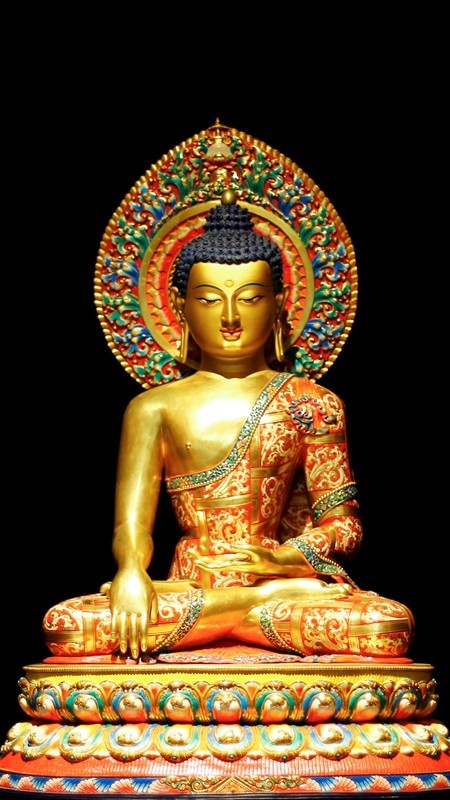
Physical Features: The cranial protuberance (ushnisha) is depicted in deep blue, symbolizing steadfast wisdom undisturbed by afflictions. Long earlobes signify past cultivation of patience and tolerance. The serene facial expression, with slightly open eyes and calm lips, conveys the immovable yet compassionate nature of this Pure Land. The deep blue body color, characteristic of Akshobhya in Tibetan iconography, embodies the element of water in esoteric teachings, representing the calming of anger and the purity of karmic force.
-
Mudra and Implements: Both hands rest in the Dhyana Mudra over the abdomen, holding an alms bowl filled with nectar. The bowl represents the compassionate containment of sentient beings’ afflictions, while the nectar symbolizes the purification of karmic anger. Together, they signify immovable patience and compassionate liberation.
-
Lotus Seat and Halo: Akshobhya sits on a thousand-petaled blue lotus, symbolizing purity arising untainted from the waters of anger and delusion. The inner halo is orange, representing wisdom illuminating those consumed by anger; the outer halo is a golden dharma wheel, symbolizing the Buddha’s power to eradicate afflictions. The edges are adorned with vajra patterns, denoting steadfastness and immovability.
3. Attendant Deities: Hierarchical Structure of the Pure Land
The thangka presents a center-focused hierarchical arrangement of deities, visualizing the systematic transformation of anger:
-
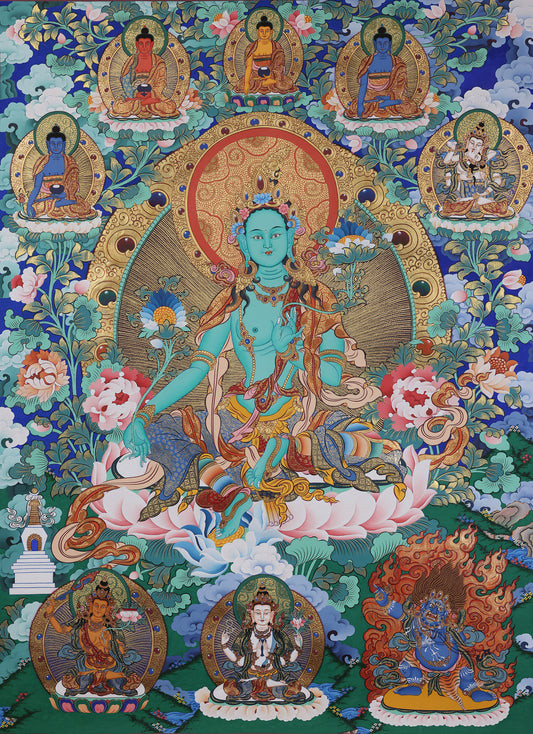
Upper Deities: Three upper Buddhas, part of the Five Dhyani Buddhas, are positioned above the main figure: Vairocana (center), Ratnasambhava (south), and Amoghasiddhi (north). They represent the five wisdoms of the Buddhas. Their selective depiction illustrates the Tibetan artistic approach of emphasizing essential elements while implying completeness. This conveys the notion that Akshobhya’s Pure Land encompasses all Buddha wisdom, capable of transforming all afflictions.
-
Bodhisattva Attendants: Flanking Akshobhya are Manjushri (left) and Vajrapani (right). Manjushri wields a sword, symbolizing the severing of anger through wisdom, while Vajrapani holds a vajra, signifying the destruction of afflictions through strength. These attendants are central to supporting Akshobhya’s transformative power, reflecting the Sakya practice of employing intelligence and compassion to overcome mental defilements.
-
Lower Saints: Close to the main deity, Shariputra (holding a scripture) and Maudgalyayana (holding a staff) are depicted. Shariputra represents supreme wisdom, illustrating the discernment of the essence of anger; Maudgalyayana represents supreme spiritual powers, safeguarding practitioners from afflictive states.
-
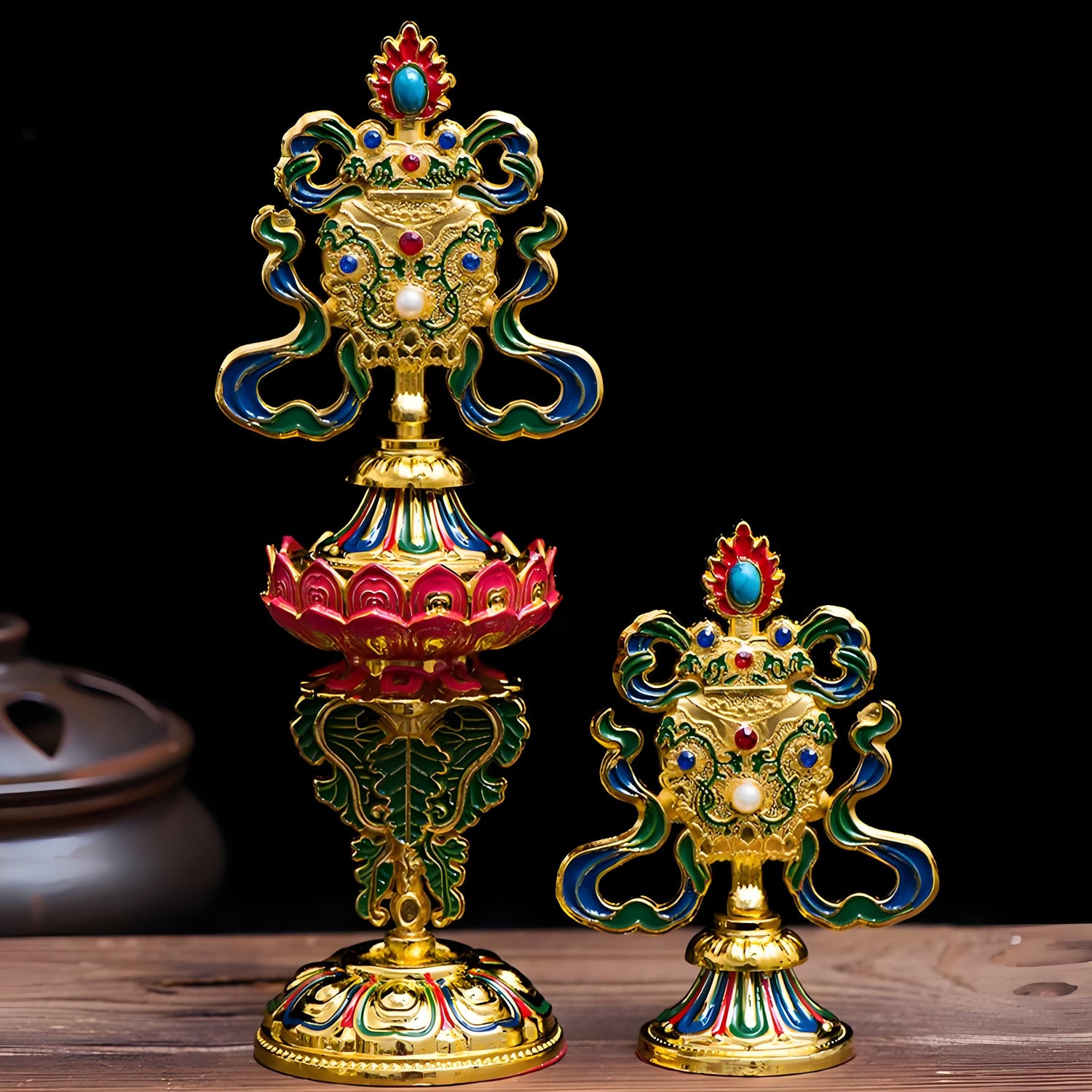
Sacred Offerings: Lotus ponds contain offerings such as vases, conch shells, and parasols, symbolizing the nourishment of beings in the Pure Land and the natural pacification of anger. The Eight Auspicious Symbols represent eight virtuous results of transforming anger, e.g., the Dharma Wheel signifies the power of dharma to eradicate affliction, and the lotus symbolizes a heart purified of hatred.
These elements are not mere decoration; they serve as a visual guide for the practice of transforming anger, encompassing Buddha wisdom, bodhisattva support, the exemplary conduct of disciples, and symbolic merits to provide a comprehensive doctrinal map.
4. Artistic Craftsmanship: The Fusion of Skill and Devotion
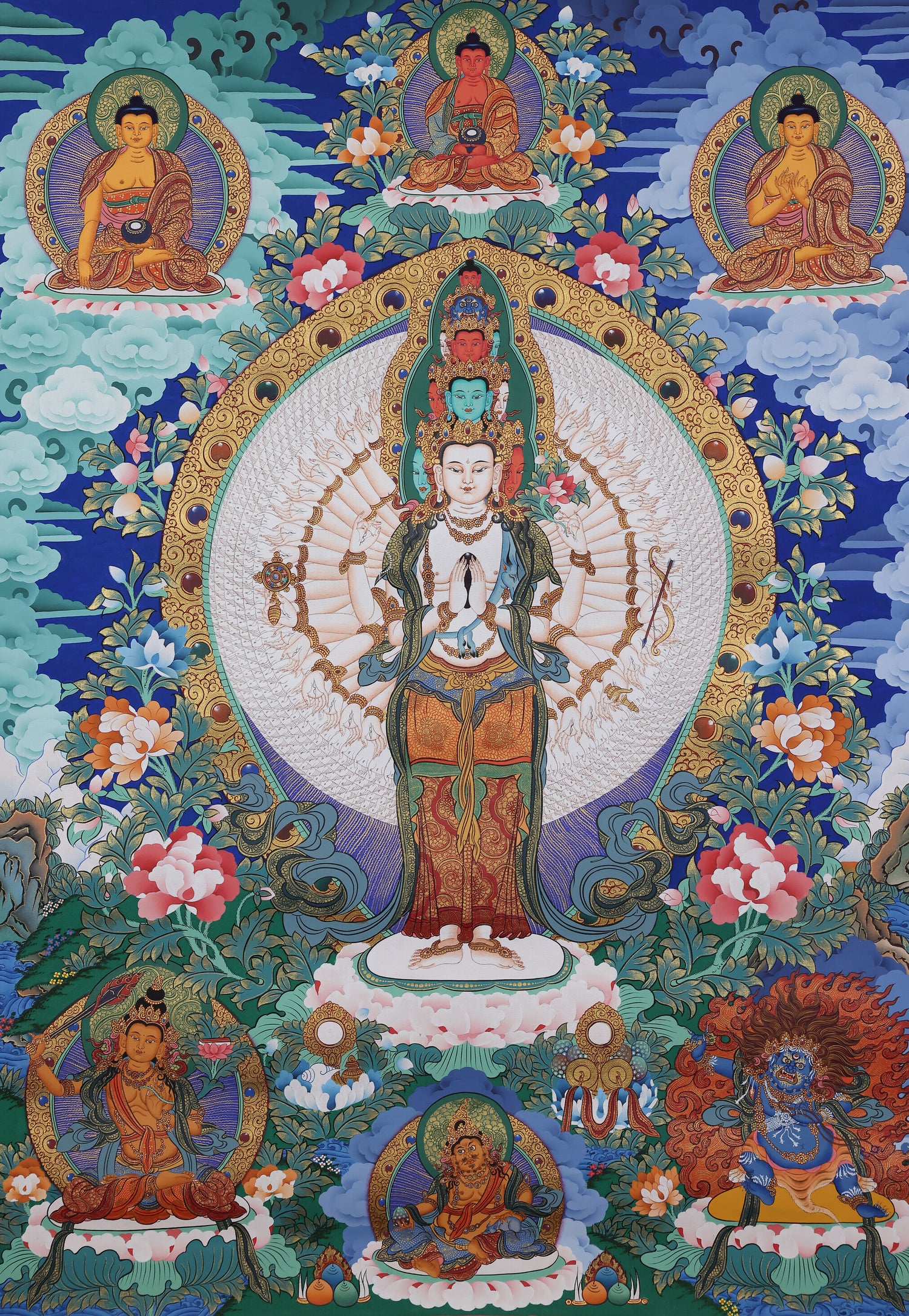
This thangka is a hand-painted work of the Karma Gadri school, renowned for its elegant colors and dynamic linework. Each brushstroke represents a devotional practice of patience:
-
Canvas Preparation: Fine cotton canvas is soaked thrice in a mixture of cowhide glue and Tibetan medicinal herbs, stretched onto a wooden frame, and polished with agate stones over approximately 12 days. This process ensures a smooth, insect-resistant surface. The precise glue-to-herb ratio symbolizes harmonizing afflictions with wholesome methods.
-
Pigment Preparation: Natural mineral and plant pigments are used: deep blue from lapis lazuli, gold from 24K gold leaf, red from cinnabar, and green from malachite. The pigment-to-glue ratio (3:1) ensures century-long color retention, signifying the permanence of Akshobhya’s vow.
-
Painting Technique:
-
Line Drawing: Outlined with medium wolf-hair brushes, the lines are fluid yet controlled, combining solidity and transparency to symbolize the softening of anger through practice.
-
Color Application: Subtle layering of 3-4 washes, with light blue base, lapis powder, and soft purple glazes, achieves a refined depth reflecting the serene quality of Akshobhya’s Pure Land.
-
Facial Painting (Opening the Image): The most sacred step; executed with focused, non-angry intention, using fine purple-hair brushes to create calm, luminous eyes, embodying the Buddha’s “immovable yet perceiving all beings” quality.
-
Composition Logic: The main deity occupies the center, with attendants and sacred objects arranged naturally amidst stylized mountains, water, and lotuses. This composition reflects the Pure Land’s natural serenity and allows practitioners to feel immersed in the meditative environment. Background elements incorporate Chinese-inspired landscape realism, highlighting Karma Gadri’s synthesis of Tibetan and Chinese techniques.
5. Conclusion: A Thangka as a Spiritual Tool for Transforming Anger
The “Akshobhya Buddha Eastern Vaidurya Pure Land” thangka unites art and mobile spiritual altar. Its theme conveys the Pure Land narrative of anger transformation; the central figure and attendants form a symbolic system for overcoming afflictions, while the artistic process itself is an enactment of patient practice. In Tibetan culture, such thangkas are not mere decorative items—they are tools for visualizing Akshobhya, cultivating patience, and purifying the mind from anger.
Every mineral pigment, every line, carries the aspirational force of liberating beings from the suffering of anger and attaining immovable bliss. This thangka embodies the Tibetan Buddhist principle of harmonizing form and spirit, essence and function, merging artistic beauty with spiritual efficacy.
#TibetanThangka #AkshobhyaBuddha #EasternPureLand #KarmaGadri #HandPaintedThangka #BuddhistArt #TibetanBuddhism #MeditationArt #SpiritualPractice #TransformAnger #PureLandBuddha #SacredArt #BuddhaWallArt #MindfulnessArt #BuddhistThangka