Product Core Specifications
- Deity: Medicine Buddha (Sangye Menla, Tibetan Buddhism’s principal healing deity)
- Origin: Nepal (heritage center of traditional Thangka craftsmanship)
- Dimensions: 3.5×4.5cm (portable "spiritual healing shrine")
- Case Material: Titanium steel (scratch-resistant, corrosion-proof, hypoallergenic)
1. Medicine Buddha: The "Healing Buddha" in Tibetan Buddhism
In Tibetan Buddhist tradition, Medicine Buddha (known as Sangye Menla) is the central deity of the "Healing Sutras," revered as the embodiment of physical and spiritual wellness. His lineage traces to the Buddha’s teachings on "alleviating suffering"—not just bodily illness, but the "afflictions of the mind" (ignorance, attachment).
Iconographic Symbolism
This pendant’s Medicine Buddha adheres to Tibetan Thangka Iconometric Canons:
-
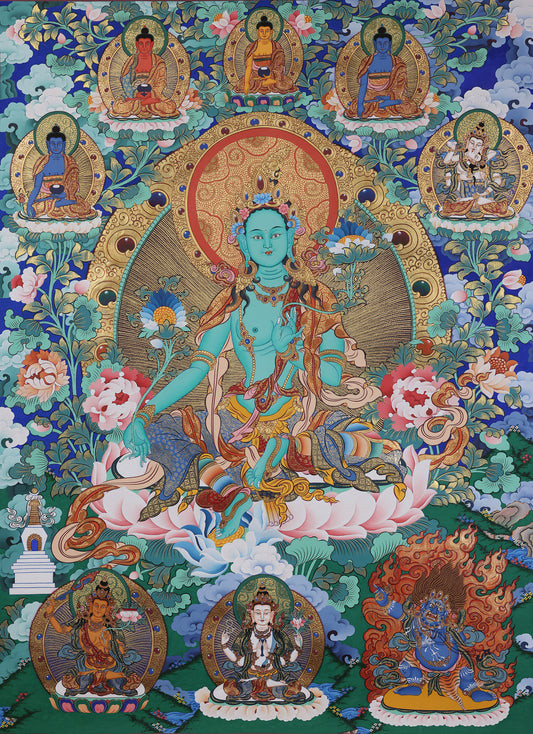
Form & Color: Deep blue body, symbolizing "the healing light of the sky" (encompassing all beings) and "purification of negative karma" (root cause of suffering). His calm, compassionate expression reflects "serenity that dispels fear of illness."
-
Posture & Attributes: Seated in full lotus (symbolizing spiritual enlightenment), he holds a medicine bowl (Bhaiṣajyagarbha) in his left hand (filled with nectar of healing and immortality) and his right hand rests on his knee in the Varada Mudra (gesture of granting blessings for wellness).
-
Background & Ornaments: Surrounded by pink lotus flowers (purity) and green foliage (vitality), his golden halo and robes (Nepalese Thangka hallmarks) represent "divine radiance that heals all suffering."
Spiritual & Practical Significance
Medicine Buddha is venerated for dual healing benefits:
-
Spiritual Wellness: Practitioners chant his mantra ("Tadyatha Om Bhaiṣajye Bhaiṣajye Bhaiṣajya Samudgate Svaha") to purify "karmic illness" (mental afflictions like anxiety) and cultivate "inner peace."
-
Physical Well-Being: He is regarded as the protector against disease—wearing his image is believed to support physical healing, reduce harm from toxins, and bring comfort during illness.
2. Nepal Origin: Crafting the Healing Symbol
Nepal is the birthplace of Tibetan Thangka art (introduced to Tibet in the 7th century), and this pendant carries the region’s centuries-old commitment to sacred craftsmanship:
Nepalese Thangka Craftsmanship
-
Traditional Process: Even at 3.5×4.5cm, the pendant follows Nepal’s rigorous Thangka workflow:
-
Base Preparation: Artists use hand-made cotton canvas (treated with mineral paste for durability) as the base, ensuring the Thangka resists warping.
-
Mineral Pigment Application: Colors (e.g., blue from lapis lazuli, gold from 24k powder) are ground from natural materials—these retain vibrancy for decades (unlike synthetic dyes) and carry symbolic weight (blue = healing, gold = divine light).
-
Detail Work: The medicine bowl’s nectar, lotus petals, and halo patterns are painted with fine squirrel-hair brushes—skills honed over 10+ years of training (standard for Nepalese Thangka artists).
-
Cultural Authenticity: Nepal’s Bhaktapur region (known as the "Thangka Capital") is home to master artists who preserve the Medicine Buddha’s iconography exactly as described in ancient texts—no creative deviations (a mark of sacred art).
The "Gau" Tradition: Portable Healing Shrines
In Tibetan culture, this size of Thangka pendant is called a Gau ("small box"), a sacred "portable shrine" designed to keep healing blessings close:
- Traditional Gaus are hollow (holding medicine relics or healing mantras) and blessed by lamas, but modern mini Thangkas like this one balance religious symbolism and wearability (suitable for non-practitioners as wellness-focused jewelry).
- The 3.5×4.5cm size aligns with the Gau’s original purpose: to carry Medicine Buddha’s healing energy during travel, work, or daily routines—making spiritual wellness accessible in modern life.
3. Titanium Steel Case: Merging Tradition with Modern Utility
The titanium steel case is a deliberate choice that enhances the pendant’s purpose:
-
Durability: Titanium steel resists scratches, tarnish, and moisture—critical for protecting the delicate hand-painted Thangka (traditional paper Thangkas degrade quickly with wear).
-
Comfort: Lightweight (50% lighter than brass cases) and hypoallergenic, it avoids skin irritation—ideal for continuous wear (a key need for those seeking ongoing healing symbolism).
-
Aesthetic Harmony: The polished gold-toned frame complements the Thangka’s golden accents, amplifying Medicine Buddha’s "divine light" symbolism while fitting modern jewelry trends (versatile enough for casual or formal wear).
Symbolic Alignment
Tibetan culture views healing blessings as needing "protection"—the sealed titanium steel case echoes the Gau’s role as a "guardian of wellness," symbolizing that "healing energy is safely carried with you."
4. Cultural Value & Market Positioning
This pendant’s appeal lies in its fusion of sacred healing tradition and modern wellness culture:
-
Cultural Resonance:
- For practitioners: It’s a "mobile altar"—a way to integrate Medicine Buddha’s healing practice into daily life (aligning with Tibetan Buddhism’s emphasis on "wellness as spiritual practice").
- For wellness enthusiasts: It’s a tangible symbol of "intentional healing"—a unique alternative to generic wellness jewelry, rooted in 1,000+ years of Himalayan spiritual tradition.
-
Market Differentiation:
-
Target Audience: Crosses spiritual practitioners, wellness collectors, and anyone seeking meaningful jewelry for health/comfort.
-
Unique Selling Points: Unlike mass-produced "healing" accessories, this pendant offers authentic Nepalese handcraftsmanship + sacred Tibetan healing symbolism + durable modern materials—a rare combination in the wellness jewelry market.
Conclusion: A Portable Symbol of Holistic Healing
This Nepal Medicine Buddha Thangka pendant is more than an accessory: it’s a convergence of Tibetan Buddhist "holistic healing" teachings, Nepalese artisanal heritage, and modern wellness needs. The 3.5×4.5cm frame condenses centuries of spiritual wisdom about physical and mental well-being, while the titanium steel case ensures that this "blessing of healing" can be carried seamlessly through daily life. Whether worn for spiritual practice, wellness intent, or cultural appreciation, it embodies the idea that true healing combines physical comfort with inner peace.
#MedicineBuddhaThangkaPendant
#NepalHandPaintedHealingThangka
#TibetanGauWellnessAmulet
#3.5x4.5cmTitaniumSteelThangka
#SangyeMenlaTibetanBuddhism
#AuthenticNepalThangkaCraft
#SpiritualHealingJewelry