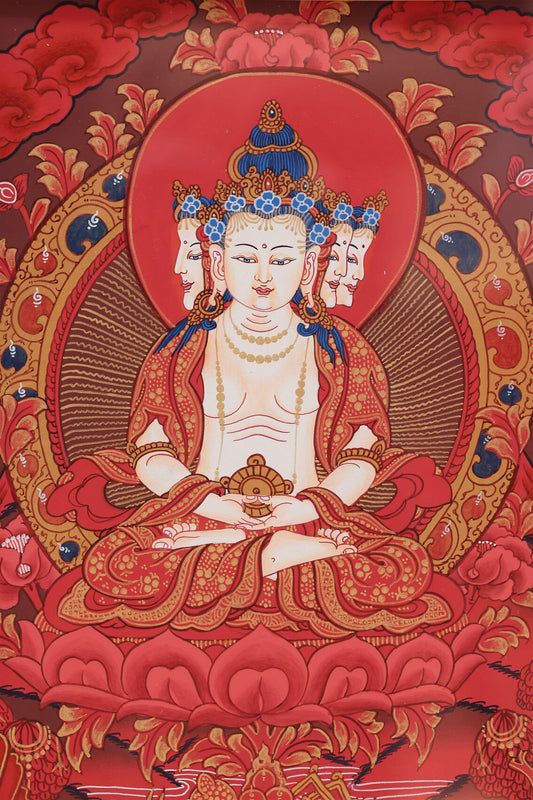
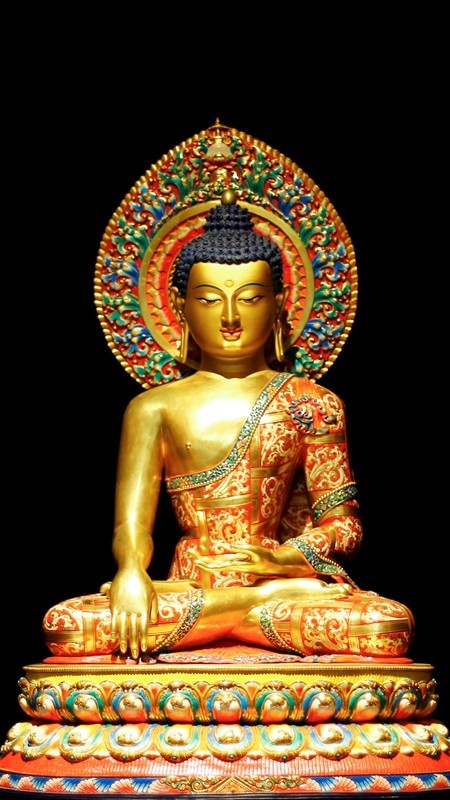
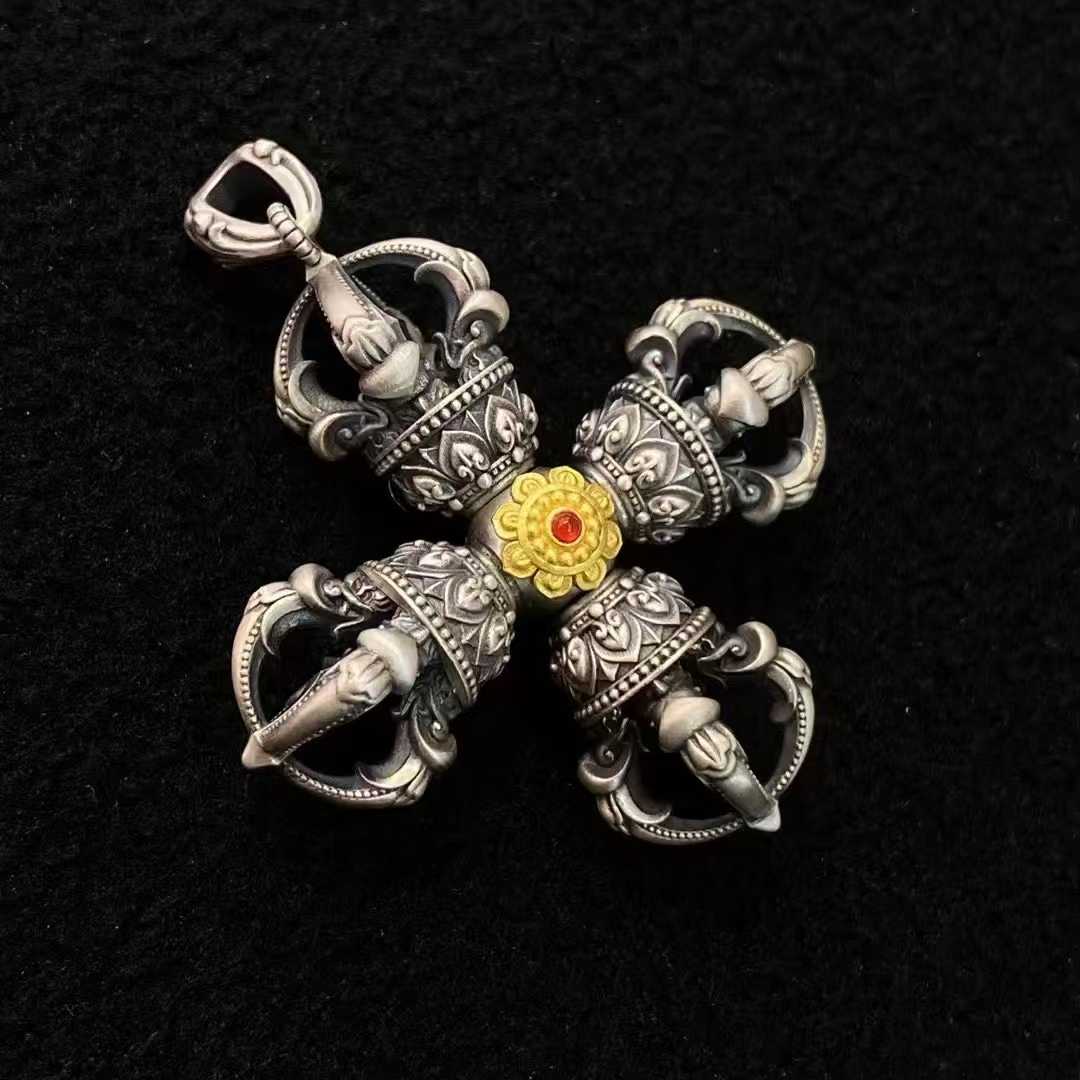
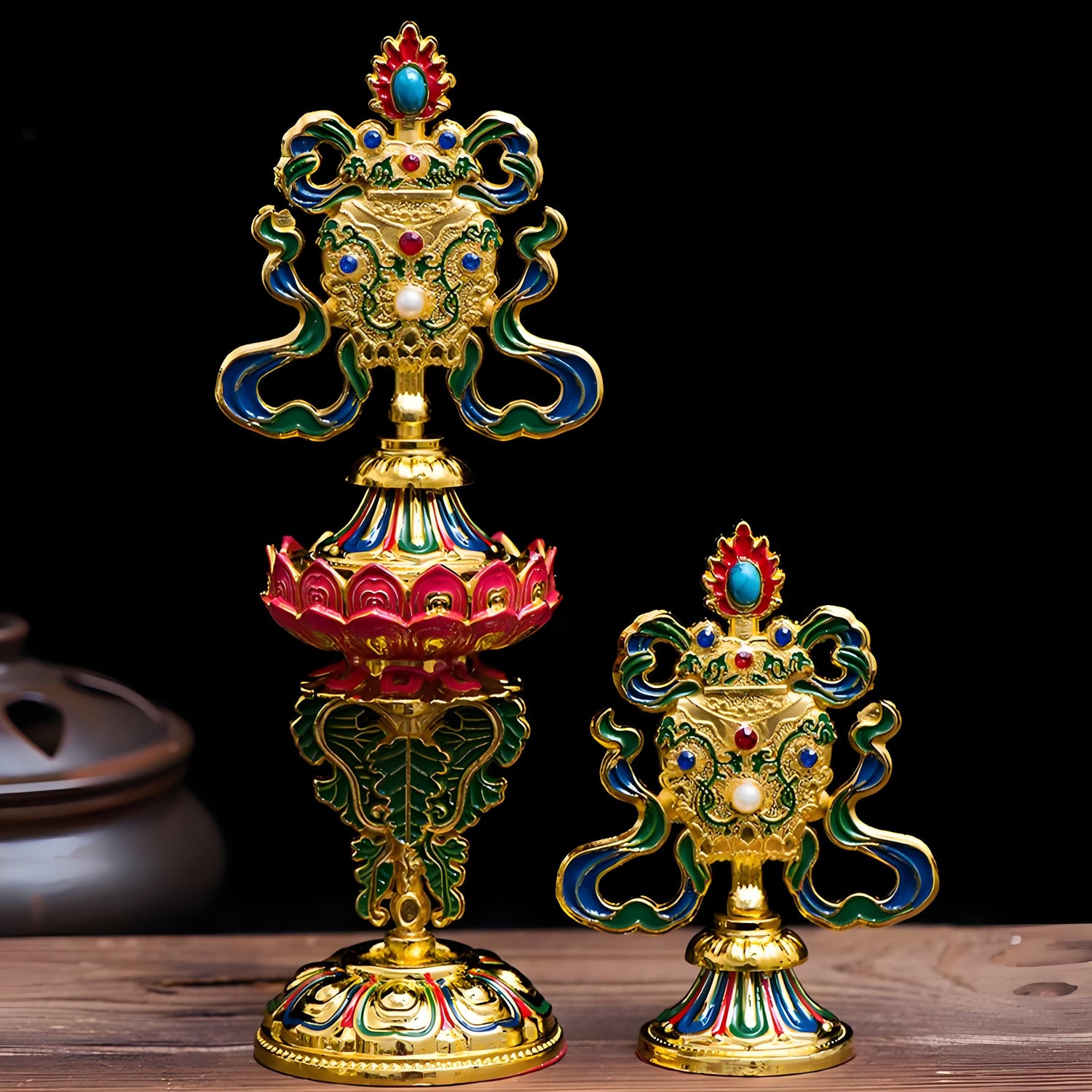
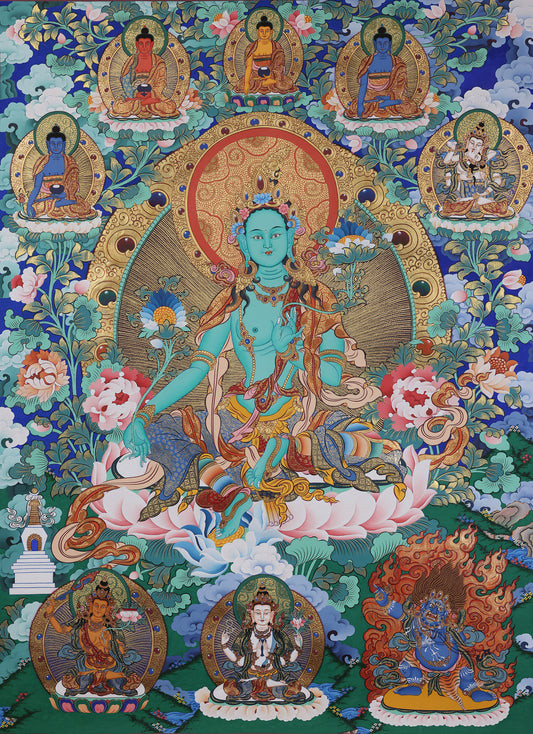
In Tibetan Buddhism, thangkas are carriers where "faith and art coexist"—they serve as both worship ritual objects and visual expressions of esoteric Buddhist teachings. The 20×30cm hand-painted Nepalese Red Thangka of Vairocana Buddha we’re featuring today is a quintessential example of this dual identity: with a rich cinnabar base and its dharmakaya form outlined in mineral pigments, it condenses the core doctrines of Tibetan Esoteric Buddhism and the traditional hand-painting wisdom of Nepal within a palm-sized frame.
In Tibetan Esoteric Buddhism, a "mandala" is defined as a tangible altar representing the Buddha, Dharma, and Sangha. The core theme of this Red Thangka is the condensation of the fundamental esoteric doctrine "the perfection of the Five Wisdoms of the Five Buddhas", with Vairocana Buddha as the central dharmakaya.
As a distinct category of Tibetan thangkas, "Red Thangkas" use cinnabar (a mineral pigment called "stone red") as the base color—in Tibetan Buddhism, cinnabar red symbolizes "purifying obstacles and pervasive blessing power," which aligns with Vairocana Buddha’s doctrine of "dispelling ignorance and illuminating all realms." The 20×30cm small size designates it as a "portable worship mandala": unlike large monastery thangkas with full retinue configurations, it replaces complex mandala structures with the "dharmakaya manifestation" of the main deity, allowing practitioners to carry it in a gau box (amulet case) or worship it in a small shrine—embodying the regional trait of "faith integrated into daily life" in Nepalese thangkas.
Vairocana Buddha is the "fundamental dharmakaya Buddha" in Tibetan Esoteric Buddhism (the esoteric manifestation of Vairocana, the dharmakaya Buddha). The "four-faced cross-legged form" of the main deity in this thangka is a visual condensation of its dharmakaya traits:
According to the Mahāvairocana Sūtra and Vajraśekhara Sūtra, Vairocana Buddha is the "self-nature of the dharmadhatu"—all Buddhas and Bodhisattvas in Esoteric Buddhism manifest from its wisdom virtues. It occupies the central position in both the Vajra Realm and Womb Realm mandalas, representing the absolute truth of "intrinsic purity and all-encompassing inclusion."
-
Form: Adorned in "Bodhisattva attire" (the standard iconography of Vairocana Buddha in the Vajra Realm), wearing a "Five-Wisdom Crown" (topped with five Buddhas, corresponding to the Five Wisdoms of the Five Buddhas), and adorned with necklaces and armlets—embodying both the solemnity of a Buddha and the compassionate adaptability of a Bodhisattva.
-
Posture: Seated on a "thousand-petal red lotus throne"—the red lotus symbolizes "purity born from afflictions," aligning with the Esoteric Buddhist doctrine that "afflictions are identical to enlightenment"; the full-lotus (cross-legged) posture symbolizes "right concentration," corresponding to the meditative nature of Vairocana Buddha’s "Dharmadhatu Samadhi Mudra."
-
Held Object and Mudra: The hands form the "Dharmadhatu Samadhi Mudra" (or hold a dharmachakra)—the dharmachakra symbolizes "the circulation of the Dharma and the accomplishment of worldly and transcendental deeds," consistent with the Commentary on the Mahāvairocana Sūtra’s record that "the Tathagata’s sunlight illuminates all realms, enabling the accomplishment of both worldly and transcendental deeds."
-
Four-Faced Feature: This is the core identifier of the deity—the four faces are not four separate beings, but four manifestations of the same dharmakaya, corresponding to the first four of the "Five Wisdoms" (Dharmadhatu Wisdom, Great Perfect Mirror Wisdom, Equalization Wisdom, and Discriminating Wisdom). They also encompass the Four Directional Buddhas (Aksobhya in the East, Ratnasambhava in the South, Amitabha in the West, and Amoghasiddhi in the North), embodying the dharmakaya logic that "one is all": one face represents Vairocana’s own dharmic nature, while the other three are manifestations of its wisdom virtues as the Four Directional Buddhas—symbolizing that the dharmakaya pervades all directions and wisdom embraces all sentient beings.
Due to its 20×30cm size, this thangka does not adopt the full "thirty-seven deities" configuration of the Vajra Realm mandala. Instead, it achieves esoteric ritual perfection through "symbolizing retinues via the main deity’s form":
-
Core Retinue Substitution: The main deity’s "four faces" directly correspond to the Four Directional Buddhas (wisdom manifestations of Vairocana Buddha)—this design simplifies the composition while preserving the esoteric logic that "Vairocana Buddha encompasses the Four Directional Buddhas."
-
Symbolic Retinue Symbols: The "Five-Buddha crown ornaments" imply the Five Buddhas, symbolizing the "unity of the main deity and its retinues"; the necklaces correspond to the "Four Paramita Bodhisattvas" (Vajra Paramita, Ratna Paramita, etc.); the "thousand-petal pattern" on the lotus throne alludes to the "Eight Offering Bodhisattvas" (Svara, Sparsa, etc.)—these decorative details allow the small thangka to carry a complete esoteric retinue symbolism.
This thangka adopts traditional Nepalese hand-painting techniques, with mineral and earth pigments as core materials—each process combines "artistic skill" and "religious sacredness":
-
Cinnabar Base: Ground high-purity cinnabar is applied in multiple thin layers—cinnabar symbolizes "purifying obstacles" in Tibetan Buddhism, and the red base not only fits the Red Thangka category but also aligns with Vairocana Buddha’s doctrine of "dispelling ignorance."
-
Auxiliary Pigments: The skin tone is blended with "Rinbung white earth" (an earth pigment), symbolizing "intrinsic purity"; the blue in the crown and hair ornaments comes from lapis lazuli (a mineral pigment), symbolizing "emptiness wisdom"; the gold in the patterns is made from ground 24K gold, symbolizing "perfect wisdom virtues"—Nepalese thangkas commonly use real gold to enhance visual richness and embody the esoteric ritual of "worshipping the Buddha with treasures."
-
Material Properties: Mineral and earth pigments have exceptional stability, enabling "fading resistance for millennia"—this aligns with the thangka’s attribute as an "eternal worship ritual object."
-
Canvas Preparation: Nepalese white cotton cloth undergoes "cow glue application, polishing, and white earth brushing" (a simplified version for small thangkas) to ensure a smooth, non-absorbent surface— the white earth base symbolizes a "pure foundation."
-
Drafting: Strictly follows the Iconometric Canon of Buddhist Art (Tibetan iconographic standards)—the main deity’s proportions and four-face placement fully comply with esoteric rituals (e.g., the spacing between faces and eye proportions must match "Buddha body measurements").
-
Coloring and Gradation: The cinnabar base is laid first, then layered with mineral pigments: the skin tone requires 3–5 thin coats for a 温润 texture; the red and gold of the attire are repeatedly blended to ensure rich color without muddiness.
-
Linework and Gold Gilding: A "lynx tail hair brush" (a traditional Nepalese thangka tool) is used to outline patterns—scrollwork and lotus petal lines are soft and agile, distinct from the sharpness of Regong thangkas; gold powder is then applied to decorative details, creating a strong contrast between the red base and gold patterns to embody "sacred richness."
-
Eye-Opening Ritual: The main deity’s eyes are painted last—a sacred process in Nepalese thangkas: the painter chants scriptures before starting, symbolizing the deity’s "manifestation" and transforming the thangka from a "painting" into a "worship ritual object."
This thangka embodies the typical style of Nepalese thangkas, distinct from Central Tibetan and Regong thangkas:
-
Color Palette: Centered on "cinnabar red + real gold," it has strong visual impact—unlike the "calm solemnity" of Central Tibetan thangkas, Nepalese thangkas have more lively folk art vibrancy; the red-gold combination fits both esoteric "sacred richness" aesthetics and Nepalese public visual preferences.
-
Linework and Face Painting: The lines are free and agile (distinct from the sharpness of Regong thangkas); the main deity’s face is round and gentle, with slender eyes and soft lip lines—embodying the "humanized" face-painting style of Nepalese thangkas, balancing Buddhist solemnity with secular aesthetic softness.
-
Size Adaptability: The 20×30cm size is standard for Nepalese "portable thangkas," focusing on the main deity and simplifying retinues to fit the needs of "carrying in a gau box" or "worshipping in a small shrine"—reflecting the regional cultural trait of "faith integrated into daily life" in Nepalese thangkas.
This Nepalese Red Thangka of Vairocana Buddha is more than a hand-painted work: it is a miniature carrier of the "perfection of the Five Wisdoms" doctrine in Tibetan Esoteric Buddhism, a sacred practice of traditional Nepalese craftsmanship, and a microcosm of regional culture where "faith merges with daily life."
#NepaleseRedThangka #VairocanaBuddhaThangka #TibetanEsotericBuddhismThangka #ThangkaCraftsmanshipExplained #MineralPigmentThangka #HandPaintedThangkaArt