Within the visual and devotional system of Tibetan Buddhism, a thangka is far more than a work of art. It is a visible doctrine, a sacred object meant to be contemplated, venerated, and practiced with. This hand-painted Manjushri Bodhisattva thangka embodies the Tibetan Buddhist principle of “teaching the Dharma through images”, integrating strict iconographic standards, a complete deity hierarchy, and traditional mineral-based painting techniques to transform wisdom faith into a tangible, contemplative form.
I. Core Theme: Wisdom as a Visual Vehicle of Faith
The central theme of this thangka is Manjushri Bodhisattva (Manjushri), the supreme embodiment of transcendent wisdom in Tibetan Buddhism. Revered as the “Teacher of All Buddhas” and the “Primordial Wisdom Deity”, Manjushri represents prajñā—the wisdom that cuts through ignorance and illusion. He is a principal object of meditation, particularly within the Gelug tradition, where the cultivation of insight and intellectual clarity is essential.
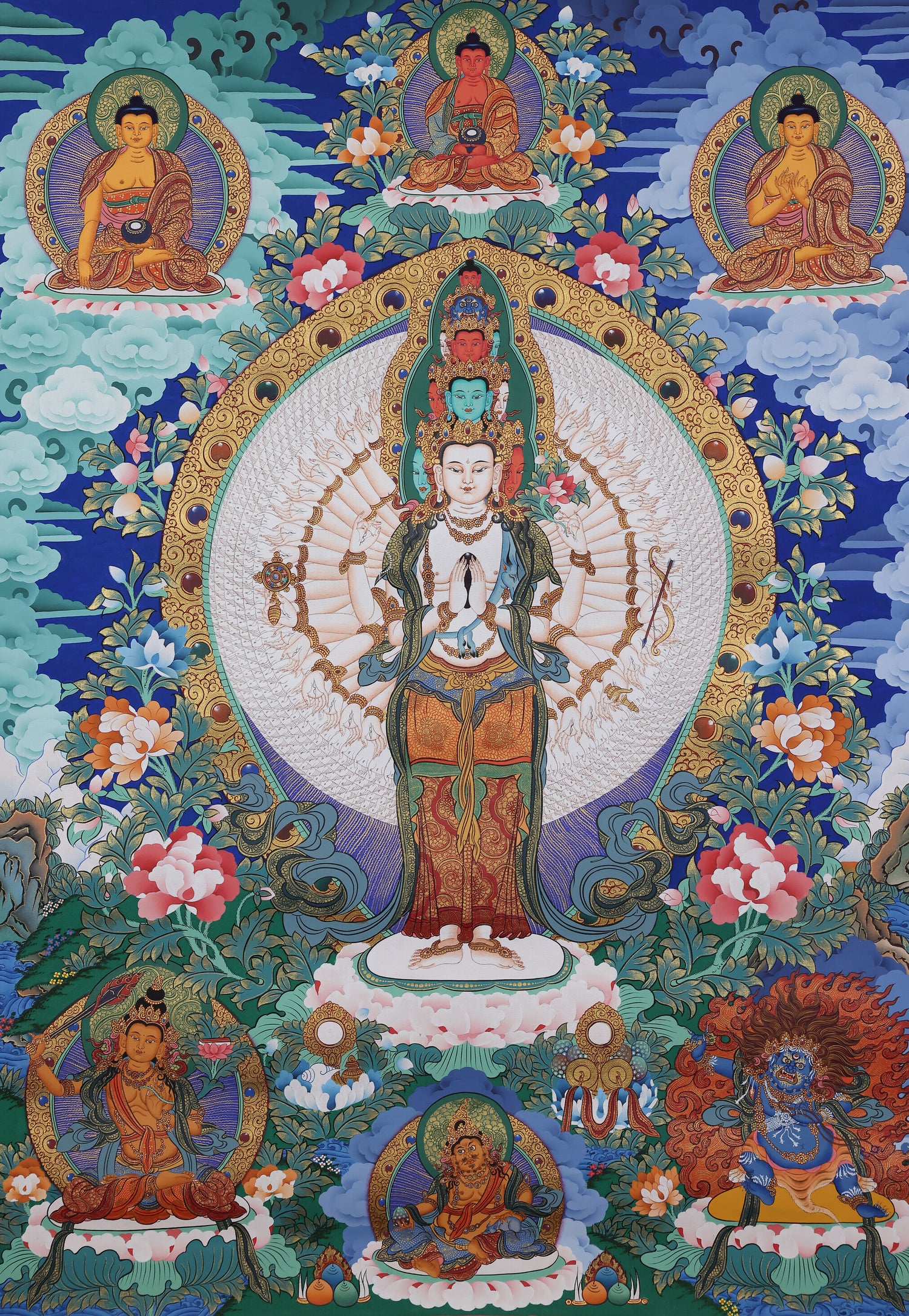
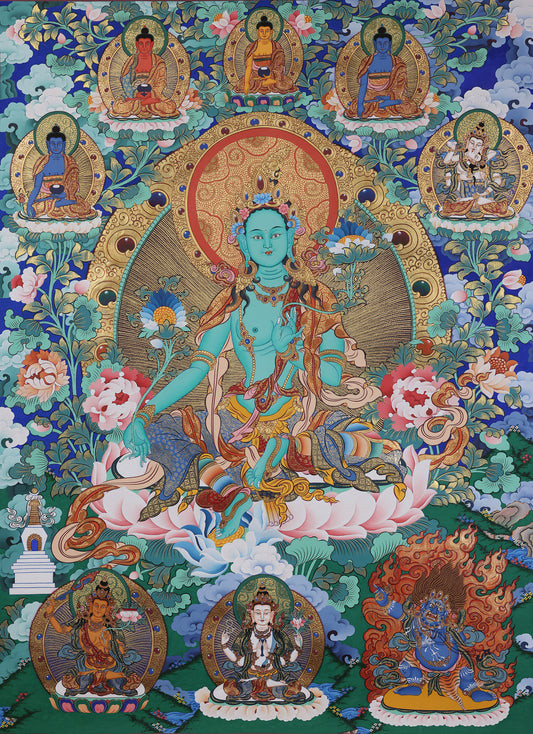
This thangka establishes Manjushri as the main deity, supported by attendant figures, protective deities, and auspicious symbols, forming a complete devotional cycle of “Wisdom – Protection – Auspicious Fulfillment.” Through the raised sword of wisdom, the thangka communicates the doctrine of cutting through mental afflictions, while the surrounding figures reinforce spiritual protection and worldly harmony. The result is a visual projection of the Tibetan spiritual worldview, where wisdom and worldly completeness coexist in balance.
II. The Principal Deity: Iconography and Symbolic Meaning of Manjushri
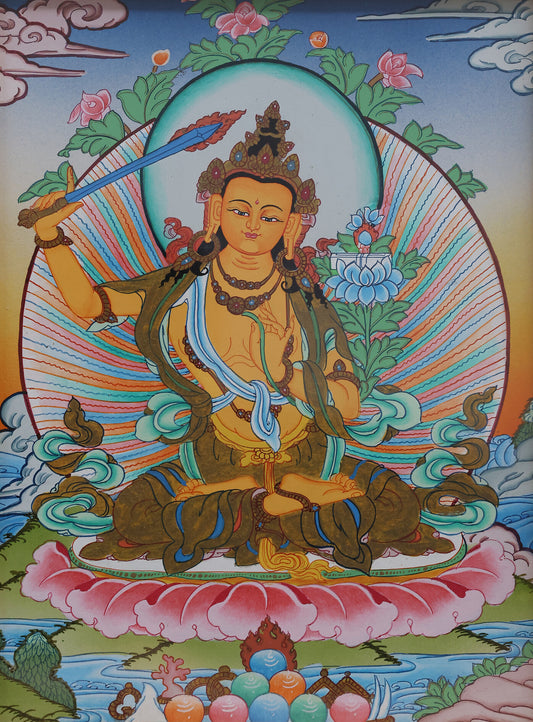
At the center of the composition stands Yellow Manjushri (also known as Lion’s Roar Manjushri). His form strictly adheres to the canonical standards of the Iconometric Treatises, ensuring doctrinal accuracy. Every detail is intentional and symbolically charged.
1. Physical Attributes
Manjushri’s body appears in a radiant orange-yellow hue, the traditional color of Yellow Manjushri, symbolizing wisdom as radiant as sunlight—dispelling darkness and ignorance. His serene facial expression and gently lowered gaze convey the union of wisdom and compassion (prajñā and karuṇā).
He wears the Five-Buddha Crown, representing mastery over the wisdom of the Five Dhyani Buddhas. A wish-fulfilling jewel adorns his topknot, symbolizing wisdom’s power to generate all virtuous qualities and spiritual attainments.
2. Ritual Implements and Hand Gestures
In his right hand, Manjushri raises the flaming sword of wisdom, representing the cutting away of ego-clinging and conceptual delusion.
His left hand forms the teaching mudra at the heart or holds a lotus flower that supports the Prajñāpāramitā scripture, symbolizing the transmission of supreme wisdom through sacred teachings.
This pairing of sword and scripture is the quintessential iconographic identity of Manjushri—wisdom that both destroys ignorance and illuminates truth.
3. Lotus Throne and Halo
Manjushri is seated upon a double lotus throne:
Behind him radiates a layered halo: the inner white circle represents the Dharmakāya (ultimate truth body), while the outer multicolored aura represents the Sambhogakāya (enjoyment body). This structure visually expresses the Tibetan Buddhist doctrine of the Three Bodies of Enlightenment, imparting profound sacred presence to the composition.
III. Attendant Deities: The Hierarchical Structure of Tibetan Faith
The attendant figures within the thangka are not decorative elements; they represent the structured hierarchy of Tibetan Buddhist devotion—main deity, attendant manifestations, and protective forces—each serving a specific spiritual function.
1. Attendant Manifestations: Multiplicity of Wisdom
Figures such as Four-Armed Manjushri or White Manjushri often appear above or beside the main deity. These manifestations represent the doctrine that one wisdom may appear in many forms to suit the diverse capacities of sentient beings.
-
Four-Armed Manjushri symbolizes the union of wisdom and compassionate skillful means.
-
White Manjushri represents pure, undefiled wisdom and is commonly invoked for learning, examinations, eloquence, and intellectual clarity.
2. Protective and Auspicious Deities
Lower sections of the thangka may include Yellow Jambhala or Saraswati (Yangchenma), reinforcing worldly and spiritual harmony:
-
Yellow Jambhala embodies the union of wisdom and material abundance, reflecting the Tibetan belief that spiritual cultivation need not reject worldly resources.
-
Saraswati, Manjushri’s consort, holds a lute and symbolizes the purifying sound of wisdom, protecting arts, speech, scholarship, and creativity.
3. Background Elements: A Microcosm of the Buddhist Universe
Clouds, lotus flowers, jewels, and landscapes are symbolic rather than ornamental:
-
Multicolored auspicious clouds represent the celestial realms.
-
Lotus flowers and jewels derive from the Eight Auspicious Symbols and Seven Precious Treasures.
-
Blue-green mountains reflect Chinese gongbi landscape influence, highlighting centuries of cultural exchange between Tibetan and Han artistic traditions.
IV. Sacred Craftsmanship: Art as a Spiritual Discipline
This thangka is entirely hand-painted, embodying the Tibetan concept of “Sacred Craft (Śilpa Vidyā)”, where artistic creation itself is a form of spiritual practice.
1. Canvas Preparation
The base is made from pure cotton cloth, coated repeatedly with a mixture of chalk and animal glue, then polished with smooth stones until it becomes luminous and paper-like. This process symbolizes the transformation of ordinary materials into a sacred vessel worthy of divine imagery.
2. Natural Mineral Pigments
Only traditional mineral and botanical pigments are used:
-
Yellow-orange tones from ochre symbolize grounded, enduring wisdom.
-
Azurite and malachite yield blue and green hues, extracted through prolonged grinding and sedimentation, ensuring color permanence for centuries.
-
Gold detailing is created from hand-ground 24K gold, mixed with natural binders to outline ornaments and ritual implements. Gold’s imperishability symbolizes the eternal nature of wisdom.
3. Ritualized Painting Process
Before painting, the artist observes purification practices, abstains from meat, and recites the Manjushri mantra. Proportions are meticulously laid out according to iconometric ratios. Coloring proceeds from background to main deity, from light to dark.
The final step, “Opening the Eyes,” is the most sacred moment—symbolizing the awakening of the deity within the image and establishing a spiritual connection between the thangka and the viewer.
Conclusion: A Living Vessel of Wisdom
This hand-painted Manjushri thangka is not a static artwork but a living spiritual medium.
For practitioners, it serves as a contemplative focus and source of wisdom and protection.
For collectors, it represents the culmination of centuries-old artistic and devotional traditions.
For modern spaces, it introduces a timeless spiritual order rooted in clarity, balance, and insight.
Every layer of mineral pigment and every line of gold carries the weight of faith, craftsmanship, and time—transforming this thangka into a true vessel of wisdom, culture, and awakened consciousness.
#Manjushri
#ManjushriThangka
#TibetanBuddhistArt
#TibetanThangka
#HandPaintedThangka
#BodhisattvaOfWisdom
#TibetanBuddhism
#SacredBuddhistArt
#BuddhistWallArt
#SpiritualArtwork
#MineralPigmentArt
#HimalayanArt
#BuddhistWisdom
#MeditationArt
#AuthenticThangka