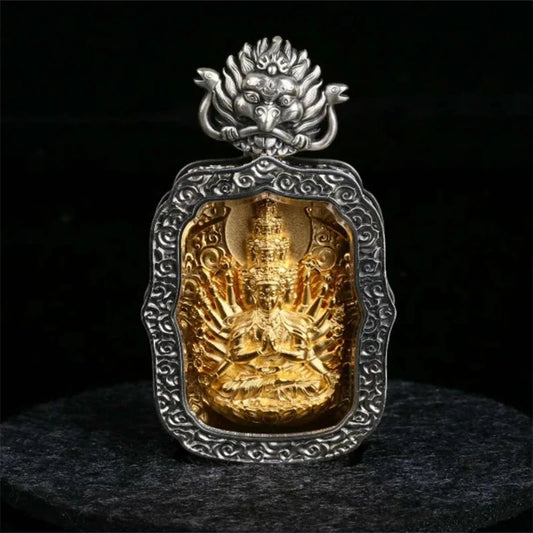
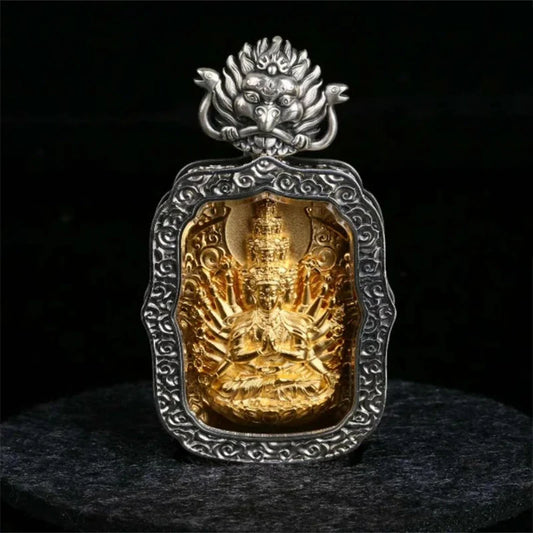
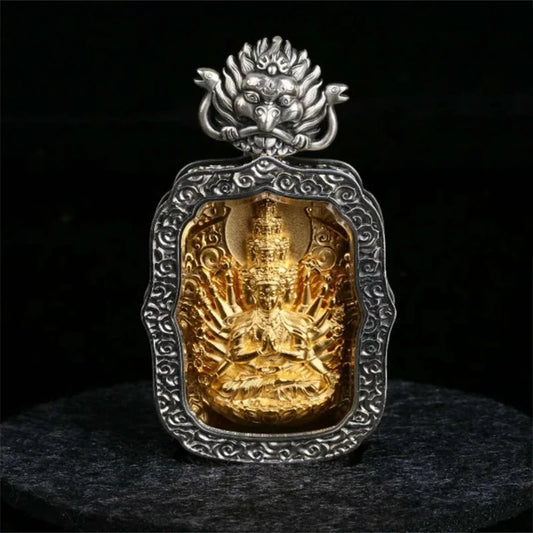
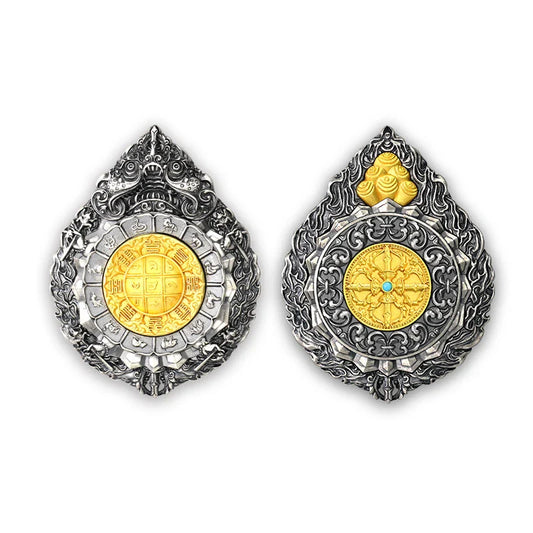
When you gaze at a vivid Tibetan color thangka, the radiant white goddess at its center—with bright eyes embedded in her forehead, palms, and feet—is White Tara, whom Tibetan believers call "she who sees all sentient suffering with a single glance." She is not a distant mythic deity, but a spiritual totem in Tibetan Buddhism that embodies compassion and longevity through a feminine form. From the legend of Gampopa’s life-extending blessings to modern practitioners’ spiritual solace, this seven-eyed Buddha-Mother holds the code to a thousand years of faith.
Tibetan scriptures The Origins of Tara recount White Tara’s origin: In the distant past, Yeshe Dawa, princess of the ancient Indian kingdom of Naktso, refused to "transcend to Buddhahood as a male" and vowed to "liberate sentient beings in female form," eventually becoming the Mother of Liberation. A more widely told legend claims she emerged from a tear shed by Avalokiteshvara’s left eye: When Avalokiteshvara wept at sentient beings trapped in suffering, the tear fell to form a lake, where a lotus bloomed and manifested the 21 Taras—White Tara being the one most defined by patience and protection.
This "female bodhisattva" archetype holds unique meaning in Tibetan Buddhism: Unlike the majesty of male buddhas, White Tara centers motherhood, embodying compassion as gentle nurturing. She and Green Tara are called the "Two Taras"—if Green Tara is "the lightning of swift rescue," White Tara is "the moonlight that nourishes body and mind." This explains why she is honored as the "Longevity Goddess," standing alongside Amitayus and Ushnisha Sitatapatra as one of the "Three Longevity Deities."
The White Tara thangka before you is not mere decorative art, but a spiritual tool where "seeing the image is seeing the Dharma". Every detail carries philosophical metaphors of Tibetan Buddhism:
White Tara’s most iconic feature is her seven eyes (on her face, palms, and feet): The forehead eye perceives "past, present, and future karma"; the palm eyes illuminate "present suffering"; the foot eyes penetrate "the six realms of samsara." This is not mythic exaggeration, but a symbol of "pervasive awareness": Her "seeing" is not mortal sight, but the wisdom to "recognize suffering without attachment, liberate without claiming merit."
Tibetan lore tells of a meditator on the brink of death who spontaneously recalled White Tara’s mantra—this is not a "miracle," but the resonance between sentient beings’ minds and compassion, as represented by the seven eyes.
In the thangka, White Tara sits in half-lotus posture on a thousand-petaled lotus throne: The lotus symbolizes "enlightenment beyond samsara," while the half-lotus (one leg folded, one foot slightly lowered) represents the promise to "rise at any moment to liberate beings." Her left hand holds a utpala blue lotus (its bud just opening) symbolizing "enlightenment growing from suffering"; her right hand forms the "wish-fulfilling mudra," palm outward, signifying "granting sentient beings’ virtuous wishes."
This thangka uses a black background with a golden halo to symbolize "Buddha-light shining through affliction." White Tara’s milky-white form, accented with blue and red, aligns with Tibetan color philosophy: White represents "purity without defilement," blue "emptiness wisdom," and red "compassionate warmth." The dragon and phoenix in the background (a fusion of Han Chinese elements in Tibetan art) symbolize "subduing obstacles and protecting the Dharma."
White Tara is often associated with legends of "rejuvenation" and "life extension"—Tibetan masters taught, "When facing life-threatening obstacles, first recite White Mother’s mantra," and there are accounts of practitioners regaining dark hair after chanting. But this is not a "fountain of youth" secret; it is a different understanding of impermanence:
White Tara’s mantra—"Om Tare Tuttare Ture Soha"—is called the "mantra that breaks the three death obstacles." In practice, practitioners visualize "White Tara manifesting from the mantra wheel, her seven eyes emitting light, and nectar raining down to merge with their own being." This is not "begging for a longer life," but "dissolving fear of death through compassionate intention."
As The Concise Sadhana of White Tara states: The core of practice is "transforming one’s mind into emptiness, where White Tara and oneself are inseparable." In this state, "what grows is not physical longevity, but the courage to face impermanence."
In Tibetan Buddhism’s male-dominated deity system, White Tara’s presence is a spiritual projection of feminine power. As a "mother," she lets believers feel that "compassion is not a stern command, but gentle acceptance"—which is why she is often regarded as "the principal deity for female practitioners," symbolizing "awareness that overcomes hardness with softness."
Today, White Tara thangkas are not just household shrines in Tibet, but spiritual symbols for Tibetan Buddhism enthusiasts worldwide. Her popularity stems from humanity’s eternal longing to be cared for:
- For Tibetan herders, she is "shelter in the storm";
- For urban practitioners, she is "calm amid anxiety";
- For cultural researchers, she is "a living fossil of Tibetan-Han artistic fusion."
As this thangka reveals: White Tara’s seven eyes see not only ancient suffering, but modern spiritual struggles. When you gaze at her face in weariness, you suddenly understand: Compassion was never a distant myth—it is the warmth of "someone seeing your pain and choosing to bear it with you."
#WhiteTara #TibetanBuddhism #ThangkaArt #BuddhistSymbols #ThreeLongevityDeities #CompassionateDeity #TibetanCulture #BuddhistPractice #FemaleBodhisattva #EasternAesthetics