Hand-Painted Four-Armed Avalokiteshvara Thangka: The Spiritual Fabric of Compassion and Rebgong Art

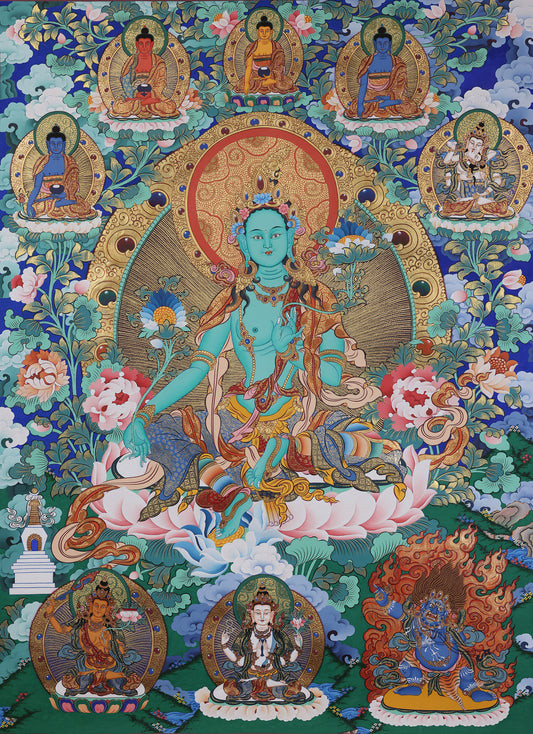
In the Tibetan Buddhist artistic system, thangka paintings are not only a visual feast but also a vessel for spiritual practice and religious devotion. This article delves into a hand-painted Four-Armed Avalokiteshvara Thangka, analyzing its thematic essence, main deity depiction, attendant deities, and craftsmanship, revealing its cultural and artistic significance.
1. Core Theme: The Compassion-Centered Tibetan Buddhist Practice System
The central theme of this thangka is “The Compassionate Power and Protective Network of the Four-Armed Avalokiteshvara”, reflecting the deep localization of Avalokiteshvara worship in Tibet. Revered as the “Lord of the Snowy Land,” the Four-Armed Avalokiteshvara embodies ultimate compassion. By combining the main deity with attendant deities and auspicious elements, the painting constructs a practice mandala where compassion is central, with wisdom, merit, and protective deities as support.
From a doctrinal perspective, the thangka conveys three levels of meaning:
-
Four Arms Represent the Four Immeasurables: “Pacifying” suffering, “Increasing” merit, “Embracing” sentient beings, and “Destroying” obstacles, demonstrating that the power of compassion can meet all needs.
-
Mandala Layout: The central deity is surrounded by attendants, symbolizing the path of practice where the main deity is the core and supportive forces act as wings.
-
Visualization Tool: Practitioners can meditate on the image to align their minds with Avalokiteshvara’s compassionate vow, reflecting the Tibetan Buddhist principle of “expressing the Dharma through form and embodying the teachings through images.”
The thangka serves not only as an artwork but also as a spiritual tool for meditation and contemplation.
2. Main Deity: Four-Armed Avalokiteshvara – Ritualized Image of Compassion and Purity
The central deity, Four-Armed Avalokiteshvara (Tibetan: Chikung), strictly follows the Measurement Sutra for Sacred Images and Avalokiteshvara practice rituals. Every detail visually translates complex Buddhist teachings.
2.1 Physical Symbolism
The deity’s body is pure white, symbolizing “intrinsic purity and freedom from defilements,” untouched by afflictions or dualistic obstacles. The five-Buddha crown represents the wisdom blessings of the Five Dhyani Buddhas, and the top of the crown depicts Amitabha Buddha, signifying the path to Sukhavati Pure Land through Avalokiteshvara’s compassionate vow.
2.2 Mudras and Attributes
-
Hands in Namaskara Mudra holding a Cintamani Pearl: Represents the union of wisdom and skillful means, both perceiving reality and responding to sentient beings’ capacities.
-
Upper Right Hand Holding a Crystal Mala: Each bead represents saving a sentient being from samsara, symbolizing the infinite cycle of compassion.
-
Upper Left Hand Holding an Eight-Petaled White Lotus: Rising unstained from mud, symbolizing purity while engaging the world, embodying Avalokiteshvara’s pure body guiding beings.
2.3 Posture and Lotus Seat
Seated in Vajra Posture on a thousand-petaled lotus with a moon disk, the pose signifies stability, transcendence of worldly defilements, and the cooling, calming effect of compassion. This posture embodies the bodhisattva ideal of maintaining inner purity amidst worldly challenges while practicing boundless compassion.
3. Attendant Deities and Auspicious Elements: The Support Network of Compassion
Surrounding the main deity are attendant deities and auspicious symbols forming a complete Avalokiteshvara Compassion Protection System, following the “Three Realms” order of Tibetan mandalas.
3.1 Upper Deities
The top features Amitabha Buddha (root guru of Avalokiteshvara), emphasizing lineage transmission. Surrounding clouds and celestial birds—dragons and Garuda—symbolize auspiciousness and protective forces: dragons nourish sentient beings, Garuda subdues negative forces, reflecting the compassionate overcoming of obstacles.
3.2 Lower Protectors
At the bottom are wealth and wrathful protectors:
-
Yellow Jambhala: Protector of merit and wealth, aligning with the Tibetan Buddhist principle of using material prosperity to support spiritual practice.
-
Wrathful Deity (Blue Form): Subdues obstacles and negative forces, balancing Avalokiteshvara’s serenity with wisdom-powered force, exemplifying ultimate compassion.
3.3 Side Deities and Decorative Elements
Lotus vines and vibrant green leaves around the main deity symbolize eternal compassion and vitality. These elements are not mere decoration; they visually extend the teachings of compassion, infusing every area of the thangka with spiritual significance.
4. Painting Craftsmanship: Rebgong Hand-Painting – Rituality Meets Artistry
This thangka is a Rebgong hand-painted masterpiece, blending ritual compliance with exquisite artistry. Every step represents both devotion and technical mastery.
4.1 Base Preparation
The sacred canvas is made of three-year-aged cotton, treated for pests, coated, plastered, and polished to a mirror-like finish. This foundation symbolizes carrying sacred images on a pure base.
4.2 Drafting
The artist follows strict ritual measurements using red cords to mark centerlines and proportions, with an error margin less than 1mm. Each stroke is made with full concentration and reverence.
4.3 Coloring
Using 108 natural minerals including cinnabar (red for compassion), lapis lazuli (blue for wisdom), malachite (green for vitality), and gold leaf (sacred), pigments are hand-ground for seven days and mixed with herbal glue. Layers of pearl powder and white clay produce a moonlight-like glow for the deity, while contrasting background colors convey boundless compassion.
4.4 Outlining
Rebgong iron-line and gold-line techniques produce fluid, expressive outlines. Garments are drawn in single strokes with rhythmic variations; 24K gold is applied to ritual objects, with over 2000 strokes per square inch, symbolizing both sacred grandeur and the illumination of wisdom.
4.5 Eye Opening
The final step, done in meditation retreat, involves outlining features in red and dotting the eyes in black ink. The deity’s expression reflects benevolence toward sentient beings and serene joy, imbuing the thangka with spiritual vitality, synchronized with temple rituals.
5. Conclusion: Beyond Art – A Vessel of Compassion
This Four-Armed Avalokiteshvara Thangka is more than a religious painting; it is a three-dimensional expression of Tibetan Buddhist compassion:
-
The Deity: Embodiment of compassion.
-
Attendants: Support network for compassion.
-
Rebgong Craftsmanship: Medium of compassion.
It serves as a tool for meditation and practice, and a cultural exemplar of “art carrying faith.” Observing this thangka, one appreciates not only technical mastery but also the Tibetan spirit of facing suffering with compassion and transcending obstacles with wisdom.
#FourArmedAvalokiteshvara #TibetanBuddhistThangka #RebgongArt #HandPaintedThangka #TibetanBuddhistArt #MeditationTool #BuddhistMandala #CompassionPractice #FaithAndArt #BuddhistCraftsmanship #TibetanCulture #SpiritualArt #VisualizationThangka #BodhisattvaThangka #ReligiousArt
Schlagwörter:
Vorherige
Tibetan Buddhism Hand-Painted Thangka: The Faithful Vision and Craft Decoding of Vaishravana and the Five Directional Wealth Gods
Nächste
Tibetan Buddhist Yab-Yum Thangka: The Visual Secret of Compassion and Wisdom — A Case Study of Vajrasattva in Union with His Consort