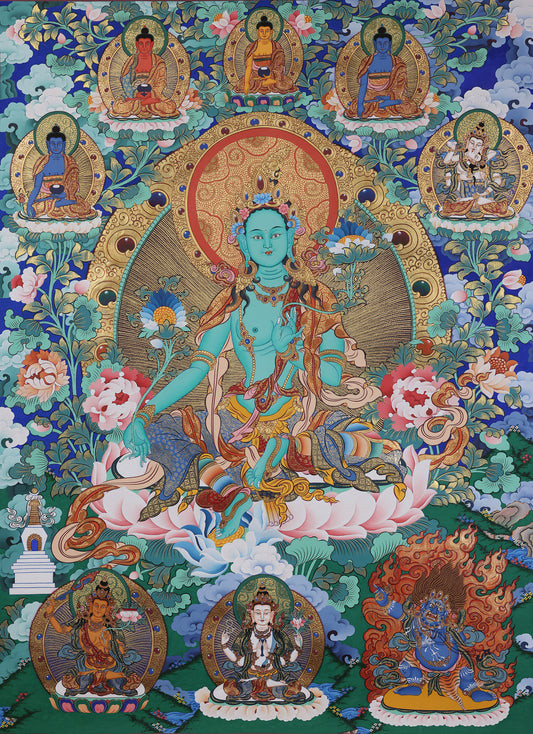
The core of this thangka is the thousand-armed, thousand-eyed wrathful form of Sitatapatra (the White Umbrella Goddess), a classic thangka in Tibetan Esoteric Buddhism that represents "ultimate protection and purification of obstacles." Below is a comprehensive analysis covering its imagery, composition, and cultural value:
I. The Central Deity: Symbolic Details of Sitatapatra (Thousand-Armed, Thousand-Eyed Wrathful Form)
Sitatapatra is the "collective embodiment of all Buddhas’ activities," and this form centers on "powerful protection." Every detail corresponds to the symbolic system of Esoteric Buddhism:
Form and Symbols:
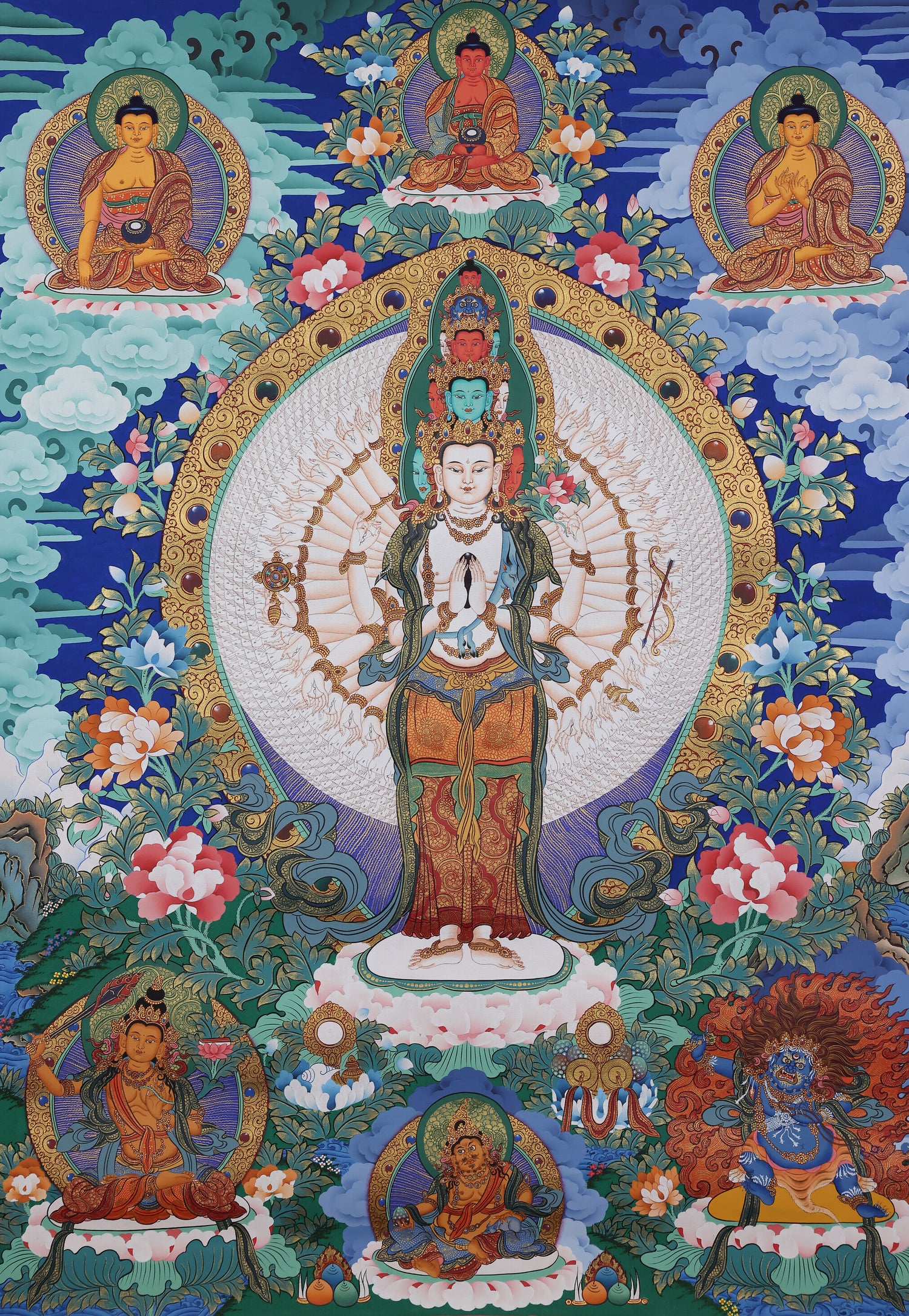
Her white body symbolizes untainted Buddha-nature, capable of purifying all karmic obstacles; her main face bears a "serene-wrathful expression" (calm yet majestic), representing "embracing beings with compassion while subduing demons with power." A thousand arms fan out around her, each with an eye ("thousand arms" signify universal protection of beings across the six realms; "thousand eyes" signify omniscience of worldly joys and sorrows).
The Great White Umbrella atop her head is her core symbol: shaped like a multi-tiered canopy with a thousand petals, it represents "covering all three realms with the pure virtues of Dharma, warding off disasters, wars, evil spirits, and all negative obstacles."
Implements and Mudras: Her main hands hold a "noose and vajra" (the noose binds afflictive demons; the vajra crushes all obstacles). Each of her thousand hands holds a unique implement (e.g., lotus, sword, treasure vase), corresponding to dispelling different types of suffering (the lotus symbolizes purity; the sword represents cutting through delusions).
II. Composition: The "Deity-Retinue" System of Esoteric Thangkas
This thangka strictly follows the compositional logic of Tibetan Esoteric Buddhism, creating a complete "protective field":
Upper Section: Features the Five Dhyani Buddhas (blue, red, yellow, white, and green-bodied Buddhas), signifying that Sitatapatra is the "collective embodiment of the Five Buddhas’ virtues," while also symbolizing the blessings of all Buddhas for her protective power.
Central Deity: Sitatapatra occupies the visual center in her thousand-armed, thousand-eyed form, emphasizing the core meaning of "universal protection and omniscience."
Lower Section: Includes wrathful Dharma protectors (e.g., the blue-bodied protector) and beings of the six realms: the protectors represent "assisting the Goddess in subduing demonic obstacles," while the six-realm beings symbolize "the Goddess’ protection extending to all sentient beings." Auspicious motifs such as lotuses and clouds are also incorporated, echoing wishes for "purity and perfection."
III. Cultural and Artistic Value: The Unity of Religious and Artistic Significance
Religious Meaning:
The thousand-armed, thousand-eyed form of Sitatapatra is the core deity of the "disaster-calming and obstacle-warding" practice in Tibet. When worshipped or practiced, she can protect nations and people, resolve catastrophes, and purify karmic obstacles—making her a key object of faith in monasteries and among the public for "major blessings and obstacle removal."
Artistic Style:
From its rich mineral pigments, intricate detailing of the thousand arms, and symmetrical, solemn composition, this thangka belongs to the traditional Tibetan monastery-style thangka—a genre that combines the "sacredness of religious ritual" with the "excellence of artistic craftsmanship," and is a typical representative of Tibetan Buddhist art.
Craftsmanship:
Made with hand-painting and natural mineral pigments (e.g., lapis lazuli, malachite, gold powder), it has long-lasting colors and a rich texture. It not only meets the ritual requirements of Esoteric thangkas but also holds high collection and cultural heritage value.
#SitatapatraThangka #ThousandArmedSitatapatra #TibetanEsotericArt #MonasteryStyleThangka #BuddhistThangkaSymbolism