The Four-Armed White Avalokiteshvara Thangka: A Window into Compassion in Tibetan Buddhism
wudimeng-Dec 12 2025-
0 comments
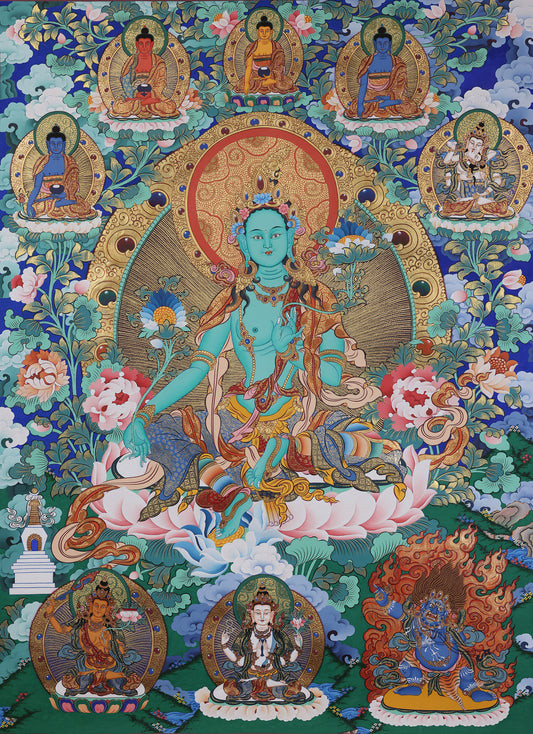
In Tibetan Buddhist art, few works carry the quiet power of a Four-Armed White Avalokiteshvara (Chenrezig) Thangka—and the handpainted piece featured here is a masterclass in how sacred iconography, traditional craft, and spiritual purpose converge. More than a painting, it’s a visual promise: that compassion is not just a feeling, but a force that can heal, protect, and guide.
Known as the “Bodhisattva of Compassion,” Chenrezig is one of Tibetan Buddhism’s most revered figures. His four-armed form (depicted here in luminous white) is a symbol of his ability to extend mercy to countless beings at once. Every detail of his design is intentional:
-
White Body: Represents pure, untainted compassion—free from ego or prejudice, focused solely on relieving suffering.
-
Five-Buddha Crown: Adorned with tiny statues of the five Dhyani Buddhas, merging the wisdom of enlightenment with the warmth of compassion.
-
Four Arms & Symbols:
- His central hands clasp a blue lotus (a sign of purity amid hardship) in prayer.
- One outer hand holds a crystal rosary (to count prayers and never forget a single being in need).
- The other outer hand grips a white lotus (symbolizing the purification of suffering into peace).
-
Lotus Throne: Perched on a full-bloomed red lotus, he transcends suffering while remaining rooted in care for all living things.
Surrounding Chenrezig are figures that amplify his mission:
-
Top Deities: Three smaller beings (in white, red, and green) are his “compassionate emanations” (like Green Tara, the Bodhisattva of swift rescue), each specializing in easing different types of pain.
-
Bottom Guardians: Two vibrant 护法 (protectors) flank a central altar—these beings clear obstacles (illness, fear, bad luck) so Chenrezig’s mercy can reach those who need it most.
Even the background tells a story: blooming peonies (for worldly joy), rolling clouds (for compassion’s boundless reach), and flowing waters (for healing that moves like a river) wrap the scene in a sense of gentle hope.
This Thangka isn’t mass-produced—it’s the work of a master Tibetan artisan trained in the Menri School (a lineage of thangka painting dating back 700 years). The process is meticulous:
-
Base & Pigments: Painted on hand-prepared Tibetan cotton (treated with glue and clay for smoothness), using only natural materials: pearl powder for white, lapis lazuli for blue, and cinnabar for red. These pigments don’t fade—they age gracefully, just like the compassion they represent.
-
Gold Leaf: Thin layers of real gold line Chenrezig’s halo and jewelry, symbolizing compassion’s unshakable radiance.
-
Iconographic Precision: Every curve of his robes, every gesture of his hands, follows strict ancient guidelines—ensuring the Thangka is not just art, but a sacred tool for connection.
In a world that often feels divided or overwhelming, this Thangka offers something tangible:
-
For Homes: Hang it to wrap your space in calm, protecting loved ones and fostering kindness.
-
For Practice: Use it as a meditation focal point—gaze at Chenrezig’s soft expression to deepen your own capacity for compassion.
-
For Culture: It’s a living piece of Tibetan heritage, preserving a craft and a philosophy that centers care for all beings.
This isn’t just a painting. It’s a reminder that compassion is a superpower—one we can all access, if we choose to look.