
Art & Symbolism — The Essence of Tibetan Buddhist Visual Culture
Tibetan Buddhism expresses philosophy, faith, and practice through art. Its visual culture is not only aesthetically rich but also serves as a practical tool for meditation and devotion.
Thangka Paintings
Thangkas are essential for devotion and practice. With precise proportions and detailed depictions of Buddhas and Bodhisattvas, they guide practitioners in visualization and merit accumulation.
Buddha Images & Mudras
Buddha statues follow strict proportions, and hand gestures (mudras) symbolize wisdom, compassion, and blessings. Facial expressions and postures inspire inner reflection and spiritual focus.
Mandalas
Mandalas represent the structure of the universe and the path of practice. The central deity embodies enlightenment, surrounded by protective deities and emanations, illustrating the unity of emptiness and manifestation.
The Eight Auspicious Symbols (Ashtamangala)
Umbrella, fish, vase, lotus, dharma wheel, conch, victory banner, and endless knot symbolize blessings, protection, and auspiciousness in Buddhist practice.
Color Symbolism
- White: purity and wisdom
- Red: compassion and energy
- Blue: emptiness and calm
- Yellow: merit and abundance
- Green: growth and protection
Colors in Thangkas, murals, and ritual implements convey deeper spiritual meanings.
Monastery Architecture & Murals
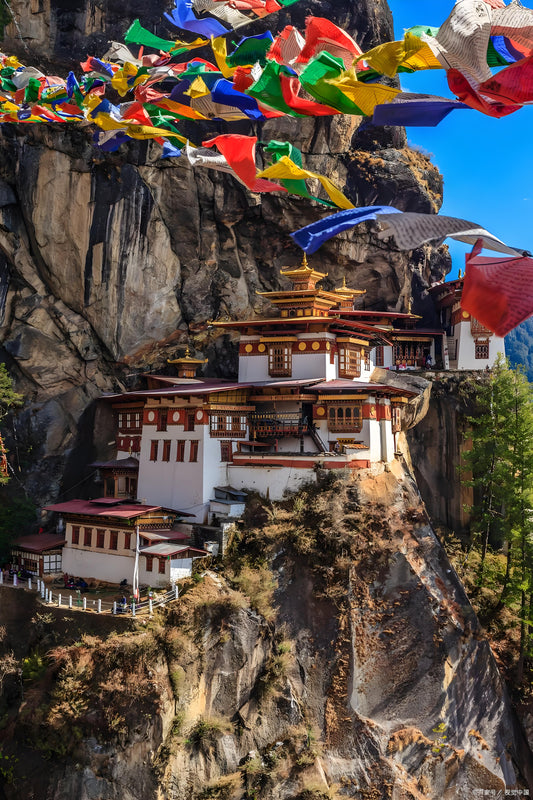
Monasteries and murals reflect cosmic structure and Buddhist philosophy, combining art with spiritual practice.
Ritual Implements (Vajra, Bell, Prayer Wheel, Conch)
Ritual tools are not only practical but also symbolic, conveying wisdom, compassion, and the path to enlightenment through their form and decoration.