Tibetan Buddhist Four-Armed Avalokiteshvara Thangka: In-Depth Analysis of Theme, Deity, Attendants, and Craftsmanship

In the Tibetan Buddhist art system, Thangka paintings are not only visual carriers for meditative practice but also condensed expressions of cultural and spiritual values. Each Thangka embodies profound Buddhist teachings and Tibetan cultural heritage, serving as both a devotional tool and a collectible artwork. This article takes a hand-painted blue-background Four-Armed Avalokiteshvara Thangka as an example and provides an in-depth exploration of its theme, central deity, attendant figures, and artistic craftsmanship, offering readers a comprehensive understanding of its religious and artistic significance.
1. Theme: The Compassionate Guardian of the Snowy Region
In Tibetan Buddhism, the Four-Armed Avalokiteshvara is regarded as the protector deity of Tibet, symbolizing both compassion and wisdom. The core theme of this Thangka is “the compassionate salvation of sentient beings by the Four-Armed Avalokiteshvara.”
According to Tibetan tradition, Avalokiteshvara is not only a savior of all beings but also deeply connected with the origin myths of the Tibetan people—Tibetan ancestors are said to descend from the divine monkey and Rakshasa maiden, blessed by Avalokiteshvara. Therefore, the deity embodies both universal compassion and the cultural identity of the Tibetan people.
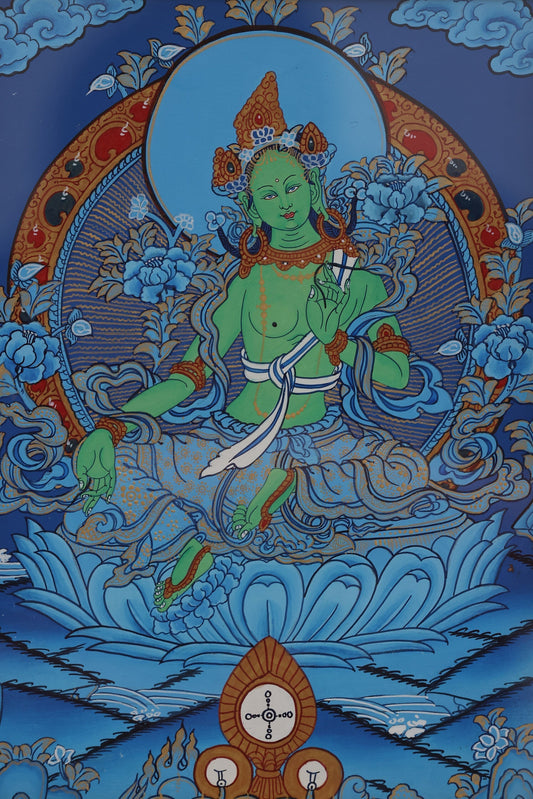
The blue-and-gold design itself carries symbolic meanings:
-
Lapis-lazuli blue background represents emptiness, purity, and transcendence;
-
Gold floral motifs symbolize “Bodhi blossoming amid worldly afflictions,” reflecting the path of liberation.
This combination not only echoes Avalokiteshvara’s vow to save beings in samsara but also resonates with Tibetan devotees’ desire for protection in this life and liberation in the next. Typically displayed as a household offering, the Thangka serves to invoke the Bodhisattva’s compassionate protection, helping beings overcome suffering and accumulate merit and wisdom.
2. The Central Deity: Symbolism and Religious Meaning of the Four-Armed Avalokiteshvara
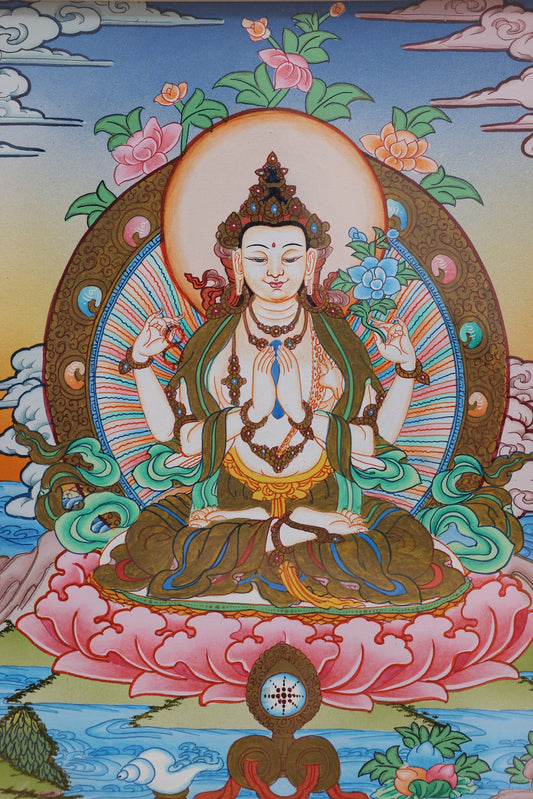
At the heart of the Thangka is the serene Four-Armed Avalokiteshvara, with every detail carrying deep symbolic significance—a perfect example of “visualized doctrine” in Tibetan art.
2.1 Body, Attributes, and Mudras
-
One face and four arms
-
The single face symbolizes realization of ultimate truth and freedom from worldly disputes;
-
The four arms correspond to the Four Immeasurables:
-
Equanimity (息): alleviating suffering
-
Increase (增): cultivating merit and wisdom
-
Acceptance (怀): embracing all beings
-
Eradication (诛): removing harmful thoughts
-
-
-
Body color and ornaments
-
Pure white body symbolizes innate purity and freedom from afflictions;
-
Five-Buddha crown represents the wisdom of the Five Buddhas;
-
Black hair tied in a topknot, adorned with Amitabha Buddha, indicates that compassion arises from wisdom.
-
-
Attributes and hand gestures
-
Hands at the chest hold a wish-fulfilling jewel, representing the fulfillment of all virtuous wishes;
-
Upper right hand holds a crystal mala, each bead symbolically liberating one being;
-
Upper left hand holds an eight-petaled white lotus, signifying purity and freedom from defilements.
-
These elements are not mere decoration—they are tangible representations of Avalokiteshvara’s compassionate and wise power for devotees’ visualization practice.
2.2 Posture and Lotus Throne
The deity sits in Vajra posture on a double-layered lotus throne:
-
The lotus seat symbolizes purity;
-
The moon-shaped base represents skillful means in compassion.
Together, they convey Avalokiteshvara’s wisdom of “neither abiding in samsara nor leaving Nirvana” and suggest the dual function of compassion and wisdom in saving beings.
3. Attendant Deities: A Structured Network of Blessings
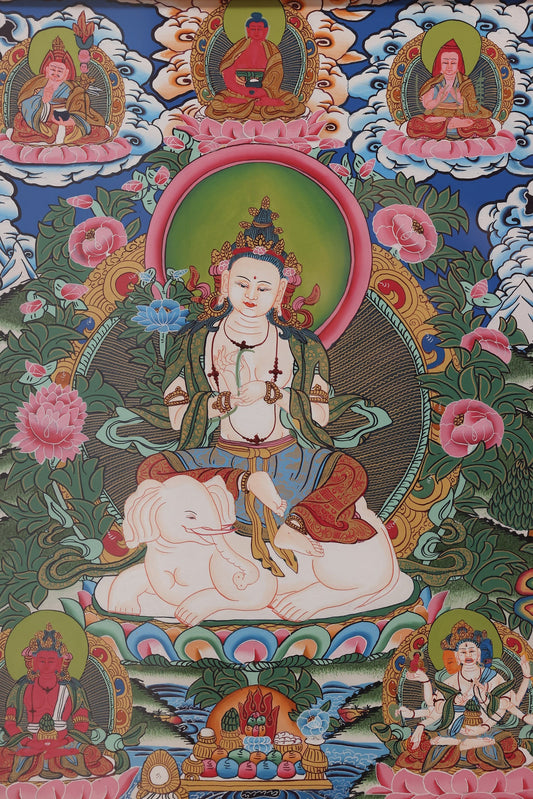
In Tibetan Thangkas, attendant figures are carefully arranged to form a functional network centered on the main deity. Although this Thangka does not fully display attendants, traditional configurations and the Three Roots (Trikaya) system allow us to categorize them into three types:
3.1 Core Attendants: The Three Roots of Compassion, Wisdom, and Power
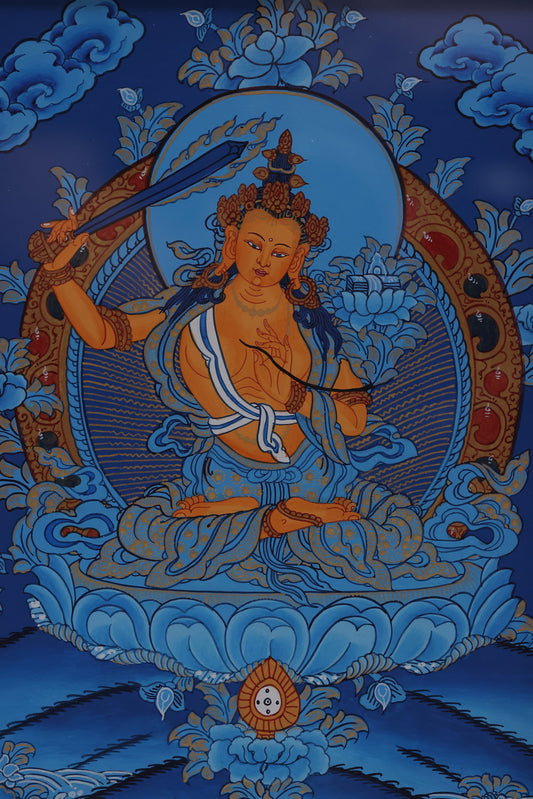
The Four-Armed Avalokiteshvara is often accompanied by Manjushri (Wisdom) and Vajrapani (Power), forming the Three Roots of Tibet:
-
Avalokiteshvara embodies compassion, embracing all beings;
-
Manjushri offers wisdom and guidance in Dharma;
-
Vajrapani provides the power to eliminate obstacles.
This triad represents a complete path from aspiration to practice to attainment, serving as a structured focus for meditative visualization.
3.2 Supporting Deities: Extending Blessings and Merit
-
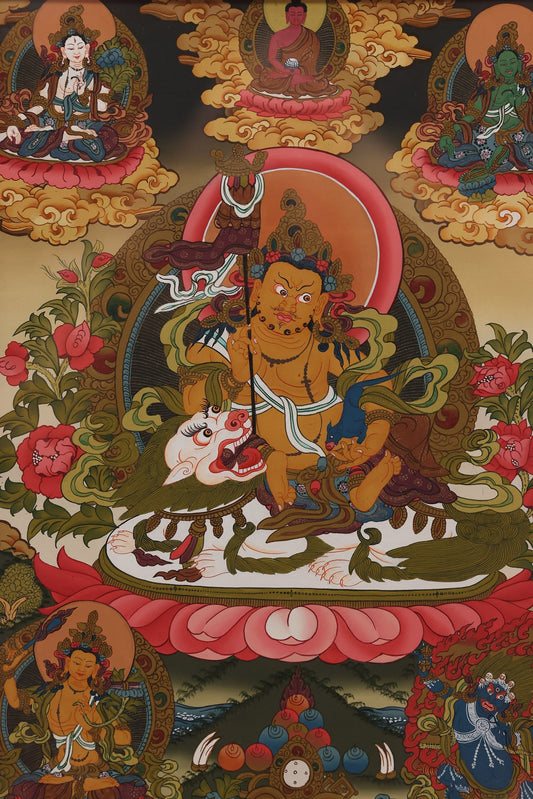
Upper section: Amitabha Buddha (the dharmakaya source of Avalokiteshvara), Green Tara (savior of beings)
-
Lower section: Yellow Jambhala (wealth and resources), Mahakala (protector deity)
This layout reinforces Avalokiteshvara’s compassionate energy while addressing devotees’ worldly wishes, exemplifying the integration of spiritual practice and worldly life in Tibetan Buddhism.
3.3 Implicit Attendants: Symbolic Spiritual Empowerment
Background motifs such as scrolling vines and clouds symbolize Dakini and protector spirits, creating a hidden layer of spiritual support. This design forms a three-dimensional network of main deity, attendants, and symbolic motifs, enhancing the visual and psychological impact of the Thangka.
4. Painting Craftsmanship: Nature, Skill, and Devotion
The hand-painted craftsmanship exemplifies the Tibetan Buddhist principle of “art as spiritual practice.” Each step embodies devotion and meditative focus.
4.1 Canvas and Pigments
-
Canvas preparation: Linen or cotton base, repeatedly coated and polished with lime water, symbolizing purification of mind and consciousness.
-
Mineral pigments: Lapis-lazuli blue for the background (finely ground and layered); gold made from 24K gold leaf powder mixed with yak bone glue. The star-like specks of lapis and gold shimmer not only ensure durability but symbolize Bodhi light shining amid afflictions.
4.2 Linework and Layering
-
Linework: Wolf-hair brushes trace precise contours of the deity; line precision corresponds to clarity of visualization, with each stroke blessed through ritual chanting.
-
Layered shading: Applied gradually, such as white body tones mixed with white clay and ox bile, layered 5–7 times to achieve a luminous, moon-like purity, symbolizing gradual cultivation of merit and wisdom.
4.3 Gold Detailing and Facial Painting
-
Gold detailing: Scrolling patterns outlined in gold powder with “polishing method,” creating subtle layers of matte and shine, symbolizing refining the mind through wisdom.
-
Facial painting: Painted last, after ritual purification. Fine brush strokes create a gentle smile and half-closed eyes, in accordance with canonical measurement texts, conveying Avalokiteshvara’s compassionate gaze—the core of visualization practice.
5. Spiritual Value and Contemporary Relevance
The Four-Armed Avalokiteshvara Thangka is more than an artwork; it is a visualized teaching and meditative tool. The main deity embodies compassion, attendants extend the network of blessing, and craftsmanship integrates spiritual practice.
-
Household devotion: Protects family, promotes health and merit accumulation.
-
Meditation practice: Enhances mindfulness, visualization, and purification of consciousness.
-
Art collection: Hand-painted mineral pigments and gold detailing ensure longevity and aesthetic value.
-
Healing environments: Provides mental and emotional balance, suitable for yoga, meditation, or therapeutic spaces.
In modern society, where spiritual culture, art appreciation, and wellness converge, Four-Armed Avalokiteshvara Thangkas serve as high-value cultural and spiritual artifacts, suitable for homes, temples, meditation rooms, and public cultural spaces.
6. Conclusion
This Four-Armed Avalokiteshvara Thangka exemplifies the visualization of Buddhist teachings and art as spiritual practice. The deity conveys compassion, attendants create a functional blessing network, and hand-painted craftsmanship embodies devotion and meditation.
Displaying and meditating on this Thangka allows practitioners to plant seeds of compassion and wisdom in their hearts. Its aesthetic, religious, and cultural values elevate it beyond a mere artwork, making it a vital medium for transmitting Tibetan Buddhist culture and enriching spiritual life in contemporary society.
#FourArmedAvalokiteshvara
#AvalokiteshvaraThangka
#TibetanBuddhistArt
#TibetanThangka
#BodhisattvaArt
#SacredBuddhistArt
#HandPaintedThangka
#MineralPigmentThangka
#CompassionAndWisdom
#BuddhistIconography
#MeditationArt
#SpiritualPractice
#ThangkaPainting
#HimalayanArt
#BuddhistCulture
Tags:
Previous
Tibetan Yellow Jambhala Thangka: Cultural Analysis of Theme, Iconography, Craftsmanship, and Spiritual Essence
Next
A Prayer for Life Painted in Snowland Colors Decoding the Cultural Meaning of the White Tara Thangka