Vermilion Vows of Life: Cultural and Artistic Decoding of the Longevity Buddha Thangka

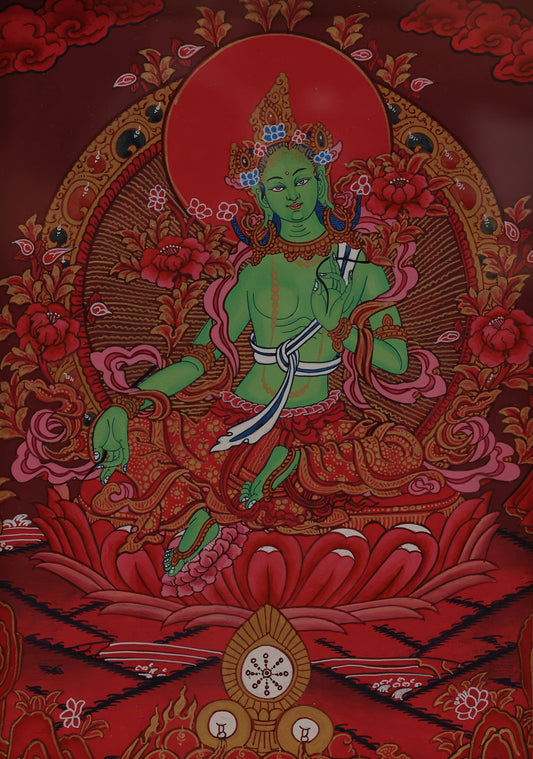
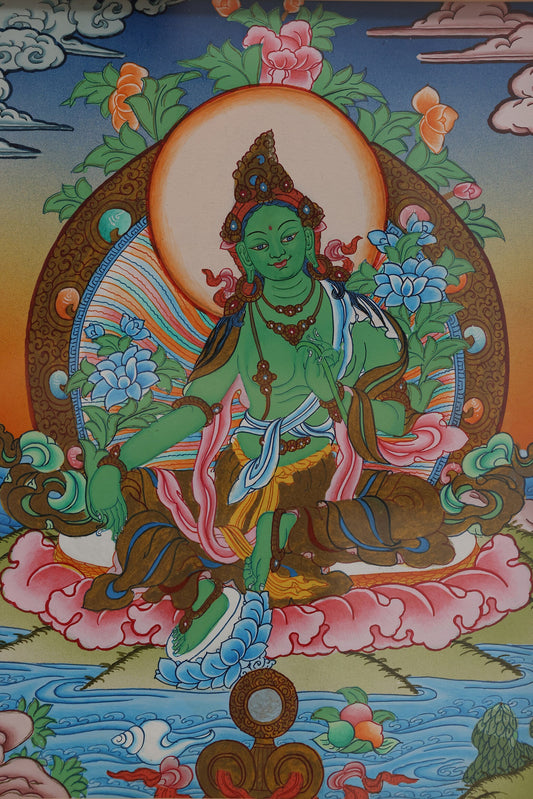
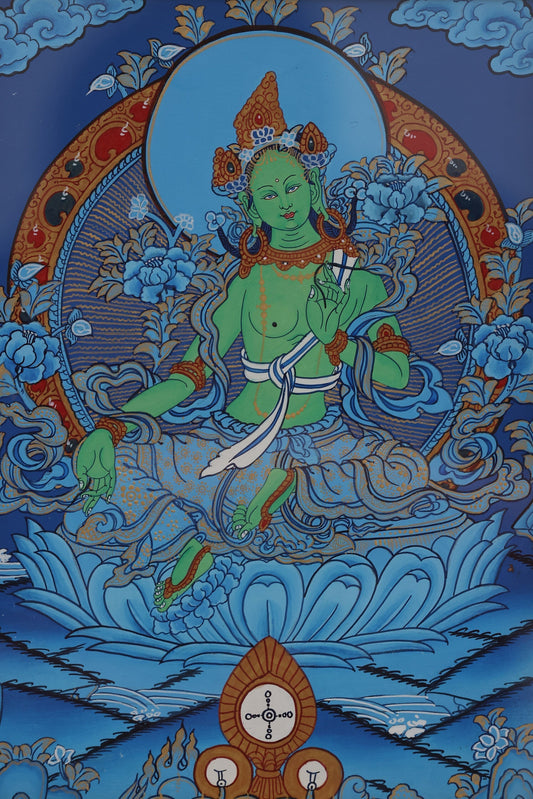
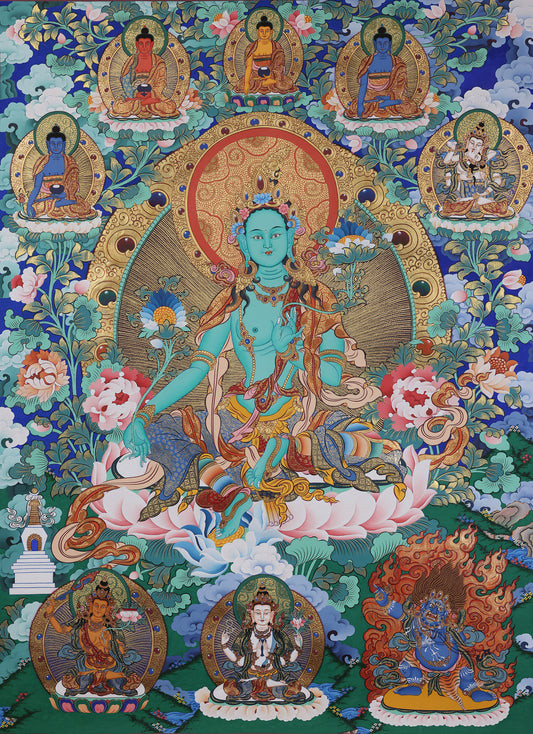
On the Tibetan Plateau, thangkas are more than religious artifacts—they are reflections of the cultural and spiritual world of the Tibetan people. The Longevity Buddha Thangka, with its vermilion-hued central figure and exquisite craftsmanship, symbolizes longevity and blessings. It exemplifies the fusion of “ritual-accurate iconography and worldly prayers,” making it both a sacred religious tool and a masterpiece of highland aesthetics. This article provides a comprehensive analysis of this thangka’s cultural significance and artistic value from its theme, principal deity, attendant deities, and artistic techniques.
I. Core Theme: The Blessing Mandala of the Three Longevity Deities
The central theme of this thangka is “Longevity Buddha and the Blessings of Attendant Deities”, a classic subject in Tibetan Buddhism for disaster prevention and merit accumulation. In Tibetan culture, longevity does not merely denote the passage of time—it signifies “a life of physical and mental health, abundant wisdom and merit, and enduring good relationships.” In the harsh environment of the plateau, this theme reflects the deep reverence for the resilience of life.
The composition follows the Tibetan Buddhist mandala cosmology: the principal deity occupies the center, representing the core of the dharmadhatu, with attendant deities arranged around to provide protection from all directions. Mountains, clouds, and rivers in the background symbolize the connection between the secular and the sacred. Devotees, by worshiping and visualizing the deities, establish a spiritual link between their individual life and the vows of the Buddhas and Bodhisattvas, achieving the triple aspiration of dispelling obstacles, extending life, and increasing blessings.
II. Principal Deity: Symbolism and Spiritual Meaning of the Longevity Buddha
The central figure is the Longevity Buddha (Tibetan: Tsépa, the Supreme Wisdom King of Infinite Life), whose iconography strictly follows the Sutra on Measures for Sacred Images. Every detail embodies esoteric Buddhist symbolism:
-
Physical Characteristics: The vermilion-colored body symbolizes “vital warmth and the radiance of merit.” The five-buddha crown represents the wisdom of the five directions, while the pearl ornaments symbolize the completeness of spiritual resources. These adornments are not mere aesthetics; they express the sanctity of the Buddha’s form to captivate and guide sentient beings.
-
Posture and Attributes: Seated in a double lotus posture, the lotus represents liberation from samsara, and the moon disk signifies purity. Both hands form the Dhyana Mudra (meditation seal), supporting the Longevity Vase. The flowing nectar in the vase symbolizes the purifying power of Buddhist teachings, extending the vitality and wisdom of practitioners. The vase is the core emblem of the Longevity Buddha, representing his fundamental vow to grant long life and blessings.
-
Spiritual Significance: The Longevity Buddha is regarded as an emanation of Amitabha Buddha, a tangible embodiment of life energy in Tibetan Vajrayana. The vermilion body signifies abundant life force, the nectar represents nourishment of body and mind, and the serene expression conveys peace beyond fear of death. For devotees, gazing upon the vermilion figure evokes a sense of “life energy fulfillment,” while visualizing the nectar fosters the belief in “purified karma and increased longevity.”
III. Attendant Deities: Hierarchical Protection Network
The attendant deities form a comprehensive protection network, each positioned to support the theme of longevity:
-
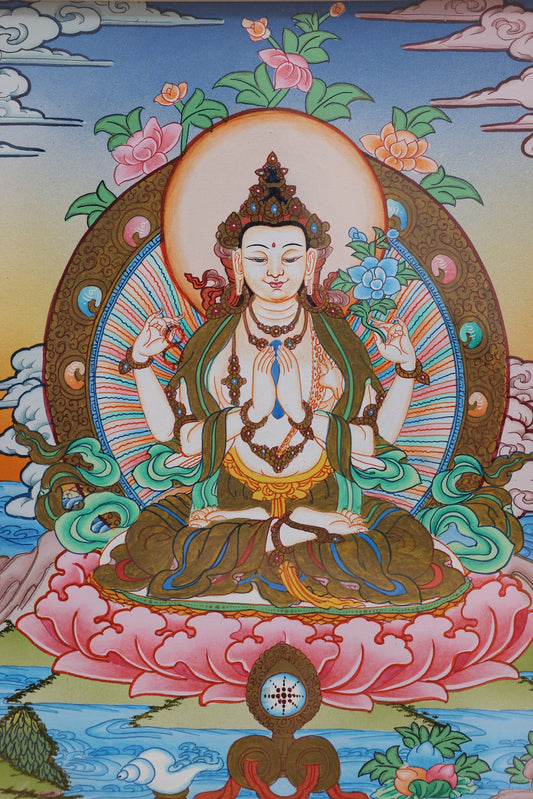
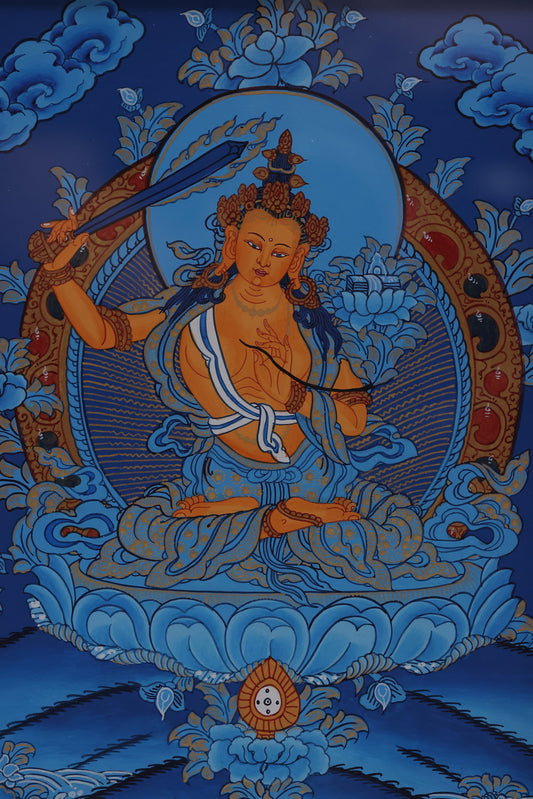
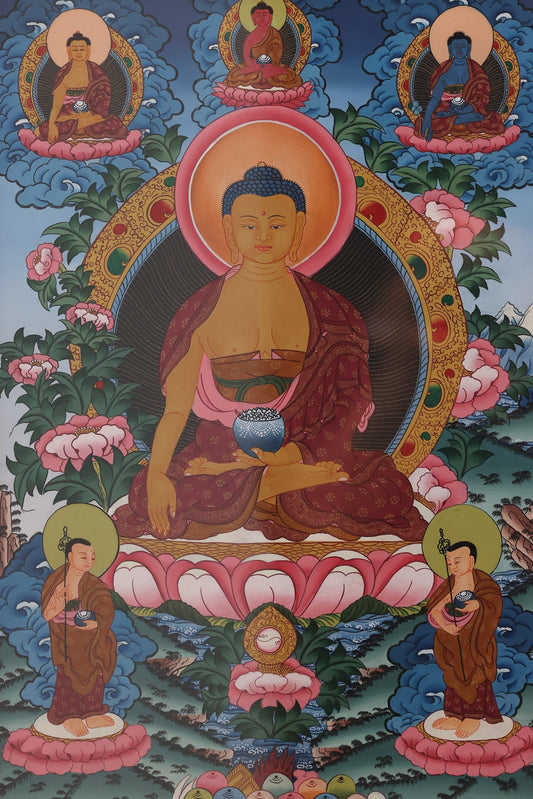
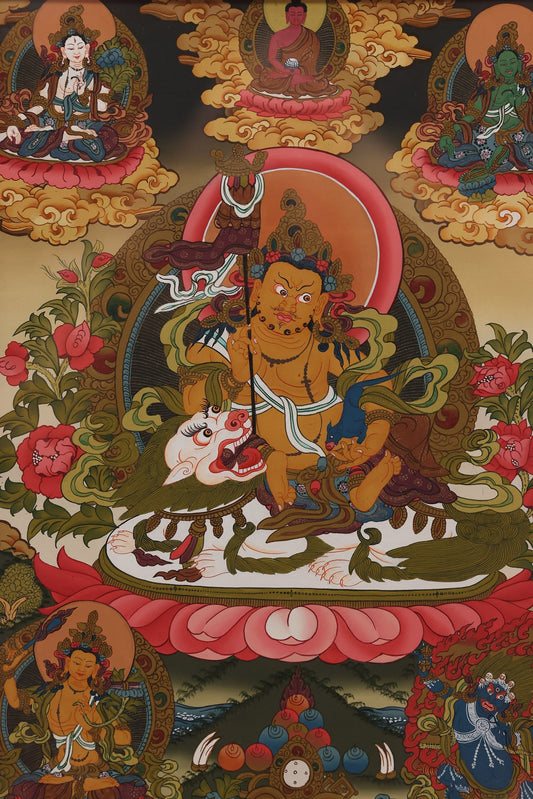
Upper Deities: The top of the painting features Shakyamuni Buddha or Amitayus Buddha. Shakyamuni represents the source of the Dharma, while Amitayus embodies the root essence of longevity teachings. Flanking these figures are Four-Armed Avalokiteshvara (compassion) and Manjushri (wisdom), forming a duality of compassion and wisdom around the Longevity Buddha.
-
Side and Lower Attendants:
-
Left: White Tara (with seven eyes), symbolizing comprehensive observation of suffering and alleviating adversity, a core member of the Three Longevity Deities responsible for relieving illness through compassion.
-
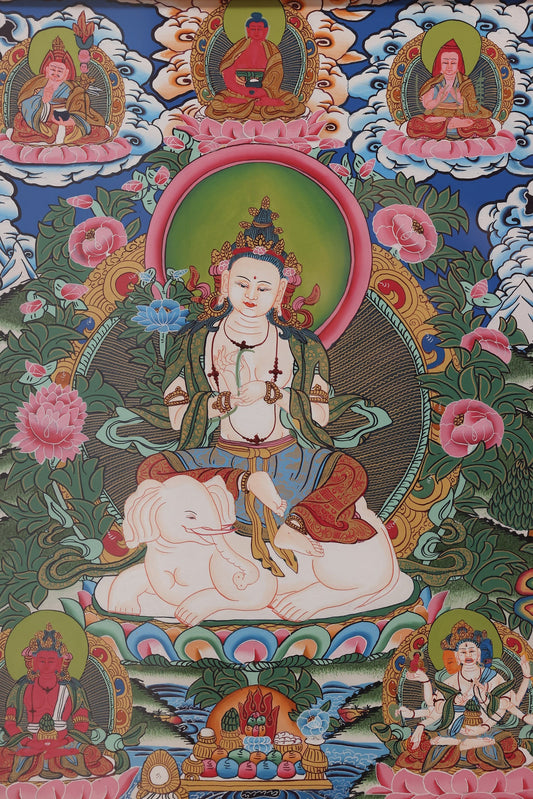
Right: Usnisavijaya (Three-faced, Eight-armed), holding a vase and dharmachakra, whose vow removes karmic obstacles and prevents untimely death.
-
Below: Yellow Jambhala (holding a treasure mouse, symbolizing wealth to sustain life) and protective deities such as Mahakala, representing the removal of obstacles.
-
These attendants are carefully organized according to ritual hierarchy: the Longevity Buddha provides the root longevity power, White Tara alleviates illness, Usnisavijaya removes obstacles, and Yellow Jambhala nourishes life. Together, they form a protection system from life extension to daily fulfillment, reflecting the practical wisdom of Tibetan Buddhism in responding to needs through compassionate skillful means.
IV. Artistic Craftsmanship: The Mastery and Devotion of the Mentang School
This thangka exemplifies the Mentang School, merging ritual precision, natural materials, and artisanal techniques, with each process representing an offering of devotion:
-
Canvas and Base Preparation: Handmade Tibetan cotton canvas is coated repeatedly with bovine bone glue and white clay, then polished with stone. This treatment produces a stiff canvas similar to parchment, preventing pigment seepage and ensuring durability for centuries. Master painters refer to this as “building a house for the Buddha,” performed alongside chanting, reflecting reverence for sacred images.
-
Natural Pigment System:
-
Vermilion red for the principal deity comes from Tibetan cinnabar mines, refined for 49 days using the “water-float method” until powdery fine;
-
Background blue is derived from Ali copper ore, green from Chamdo malachite, with lightfastness exceeding ISO 7, ensuring over 300 years of color retention;
-
Gold accents use 24K gold leaf mixed with a small amount of ox gall for adhesion. Under butter lamp light, the gold appears “warm gold at dawn, red gold at noon,” as if the Buddha’s radiance flows.
-
-
Painting Techniques:
-
Line Work: Fine wolf hair brushes outline the image, following canonical proportions (face length 1/10 of body, eye width equals nose length), combining strength and delicacy, reflecting Mentang style’s solemnity and vitality.
-
Shading: Layers of vermilion transitioning to coral red are applied in over ten passes, blending naturally to represent “life flow.”
-
Composition: Mandala-style central layout, principal deity at the golden ratio point, attendants scaled by status, creating a “celestial” sacred atmosphere.
-
-
Ritual Completion: A living lama performs the “eye-opening” ceremony (dotting the eyes with vermilion, inscribing the Longevity Buddha Heart Mantra on the back), transforming the thangka from art to a spiritually empowered object, completing its transcendence from material to spiritual essence.
V. Conclusion: Highland Philosophy of Life in Thangka Art
The Longevity Buddha Thangka is both a religious practice tool and a mirror of Tibetan culture: it uses vermilion to express the warmth of life, the vase to symbolize nourishment of virtue, the attendant deities to form a protective network, and Mentang craftsmanship to convey highland wisdom of coexisting with nature through faith.
Under the light of butter lamps, the gold leaf glimmers subtly. What we see is not merely a painting—it is a civilization’s persistent prayer for dignity and completeness of life. This prayer is embedded in every mineral pigment, every devoted line, and flows through the Tibetan people’s pursuit of the eternal within the finite.
The Longevity Buddha Thangka embodies the essence of Tibetan culture and Buddhist art while offering modern viewers a spiritual guide to health, wisdom, and inner peace. Displaying or meditating upon it allows one to experience the highland sacred art’s beauty and receive spiritual blessings for longevity and prosperity.
#LongevityBuddha #TibetanThangka #BuddhistArt #VermilionThangka #MentangSchool #TibetanCulture #BodhisattvaThangka #ProtectorDeities #BuddhaThangka #SpiritualArt #HealingAndWellness #HomeAltar #MeditationArt #TibetanBuddhism #BlessingsAndLongevity
Tags:
Previous
A Prayer for Life Painted in Snowland Colors Decoding the Cultural Meaning of the White Tara Thangka
Next
Vermilion Mandala of Blessings and Longevity: Cultural and Artistic Analysis of the Longevity Buddha Thangka