Hand-Painted Thangka: "Gautama Buddha’s Enlightenment" – The Beauty of Awakening in Tibetan Art’s Thousand-Year Legacy
wudimeng-Nov 28 2025-
0 comentarios
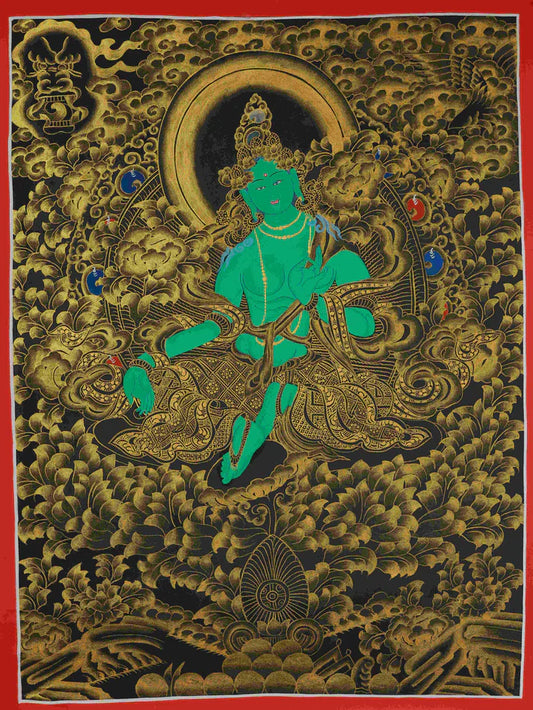
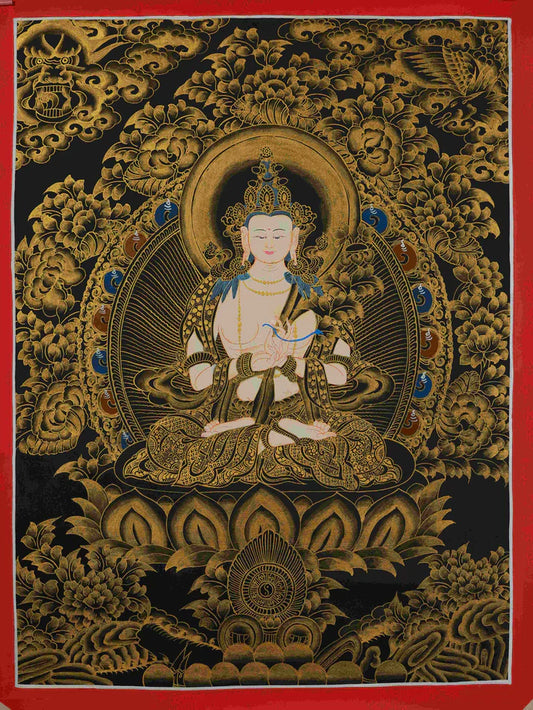
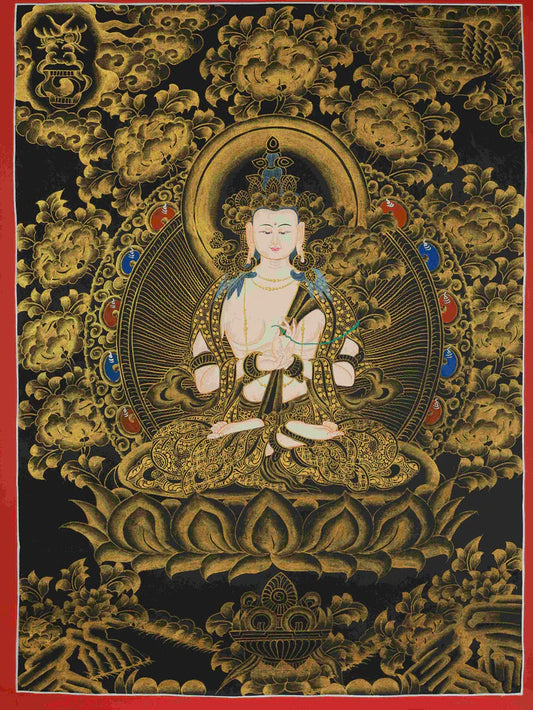
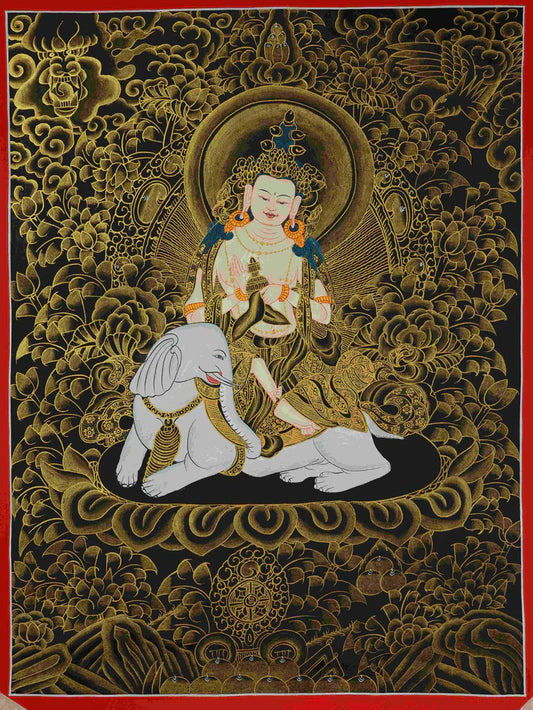
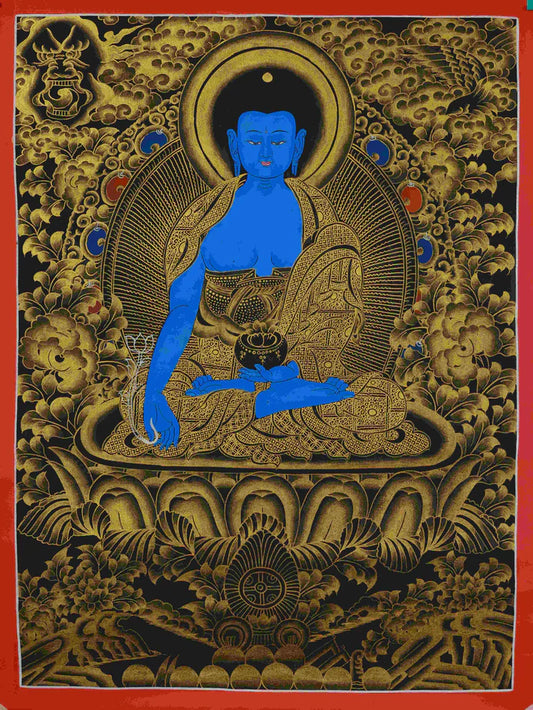
When a hand-painted thangka unfurls, what you see isn’t just color and line—it’s a “Buddha realm code” woven onto cotton by Tibetan monks, using mineral pigments, gold leaf, and devotion. Today, we’re exploring this Gautama Buddha’s Enlightenment Thangka: a living example of Tibetan Buddhism’s “art as a vessel for the Dharma.” What sacred details are often overlooked? And why does it deserve to be the spiritual anchor in your space?
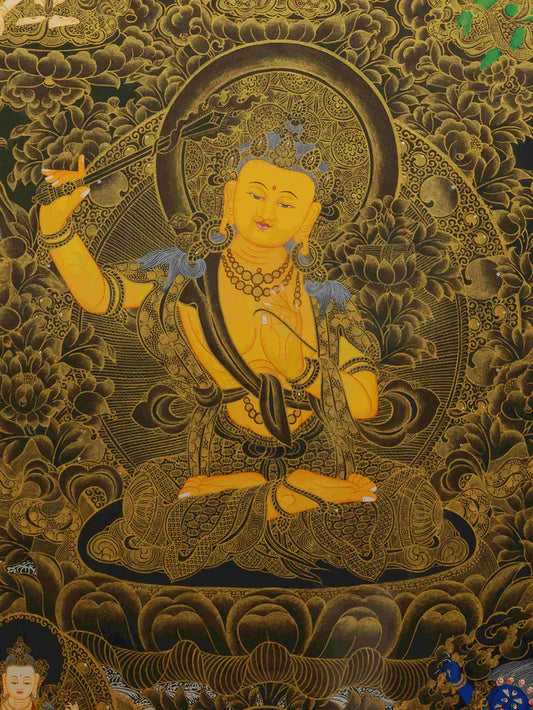
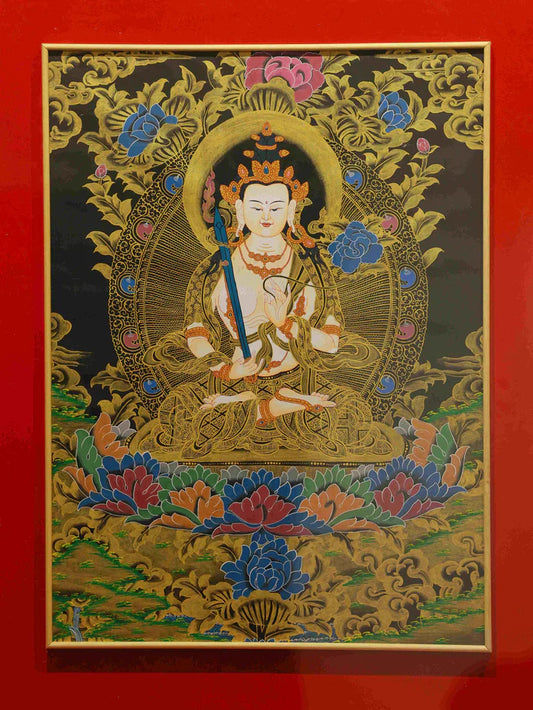
Look closely: Buddha sits cross-legged (full lotus position) atop a double-layered red lotus, left hand cradling a alms bowl filled with nectar, right hand resting gently (a variation of the Bhumisparsha Mudra—“earth-touching gesture”). This isn’t just a pose; it’s the moment of enlightenment—when Buddha vanquished inner demons and attained perfect awakening beneath the Bodhi Tree.
In Tibetan Buddhism:
- The alms bowl (holding a wish-fulfilling gem) symbolizes the union of wisdom and merit;
- The downward hand gesture declares, “The earth bears witness to my enlightenment”;
- His full moon face, long earlobes, and spiral-curled hair are part of the 32 Marks of a Great Man—every line tells the story of transcending the mundane to reach awakening.
Many see thangkas as “ornate,” but their beauty is never random. This hand-painted work embodies the thousand-year order of Tibetan art:
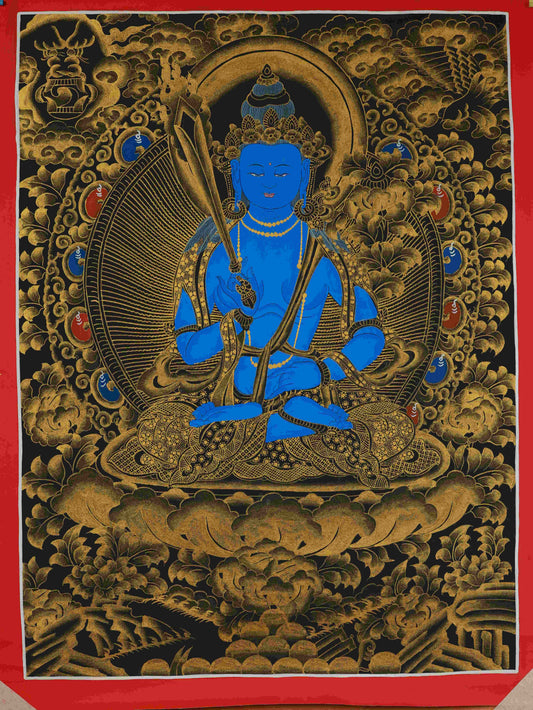
The thangka unfolds in layers, like an onion, with Buddha at its core:
- The innermost green nimbus (around his head) represents the purity of Buddha-nature;
- The radiating body aura symbolizes Buddha’s light illuminating the world;
- The red lotus seat signifies rising untainted from the mire of samsara—even the peony and scrollwork in the background decorate a “pure Buddha realm.”
This central layout isn’t just an aesthetic choice; it’s a tangible expression of Tibetan belief that Buddha is the heart of the universe.
The crimson robes, emerald nimbus, and sapphire background use natural mineral pigments (cinnabar, turquoise powder, etc.)—they don’t just last centuries without fading; they carry meaning:
- Red = the warmth of compassion;
- Green = the purity of Buddha-nature;
- Gold = the perfection of awakening.
Every hue is visible faith.
In an era of mass-produced art, this fully hand-painted thangka is a relic of “slow art”:
- Before painting, the artist chants, purifies their hands, then spends months grinding pigments and rendering lines—Tibetan thangkas are never “products” but blessed ritual objects;
- Hung in a study or tea room, it’s not just “wall decor” but a spiritual anchor in chaos—each glance is a quiet reminder of awakening.
This Gautama Buddha’s Enlightenment thangka follows the Menri School style (one of Tibet’s most classic thangka traditions). Use these 3 rules when selecting a thangka:
-
Check the pigments: Natural minerals (like real gold leaf) have a rich, grounded luster; synthetic pigments look “flat and artificial”;
-
Examine the details: Does Buddha’s appearance (earlobe length, spiral curls) follow iconographic rules? Authentic thangkas use every detail as religious language;
-
Feel the “warmth”: Hand-painted lines have breath and personality—unlike the rigid uniformity of prints.
When you hang this thangka, it’s not just “exotic decor.” It’s a thousand years of Tibetan faith, months of an artist’s devotion, and the power of Buddha’s enlightenment—all taking root in your space.