Blue Thangka: "Samantabhadra Bodhisattva’s Vow of Great Action" – The Beauty of "Vow in Motion" in Tibetan Blue Hues
wudimeng-Nov 28 2025-
0 comentarios
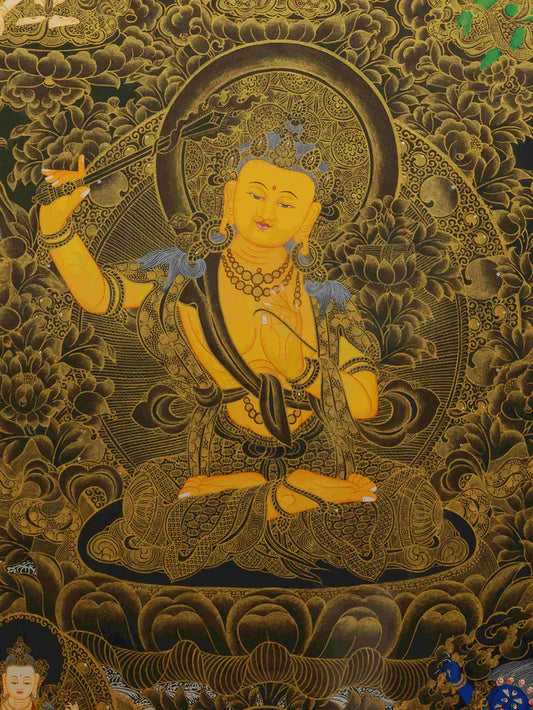
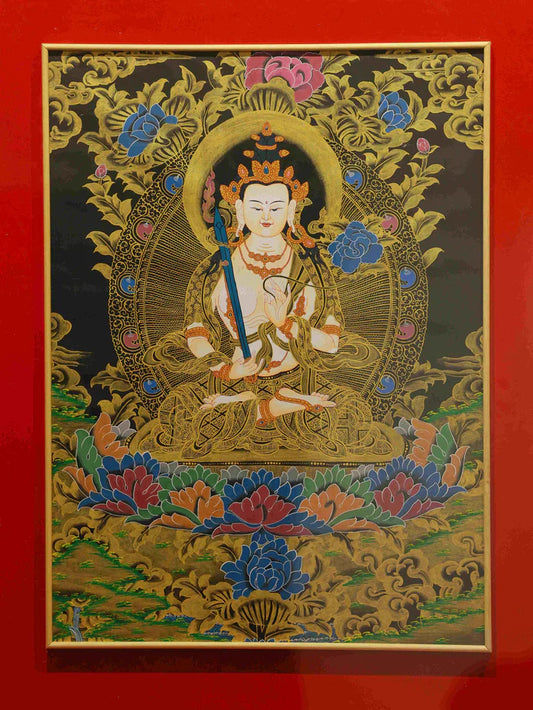
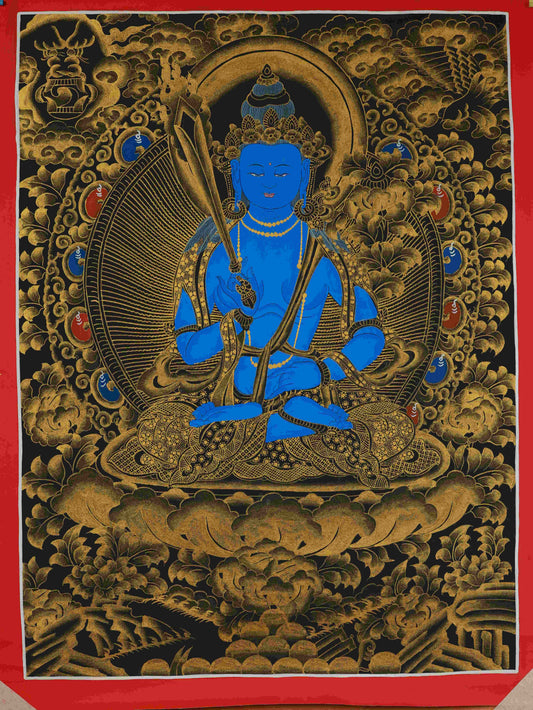
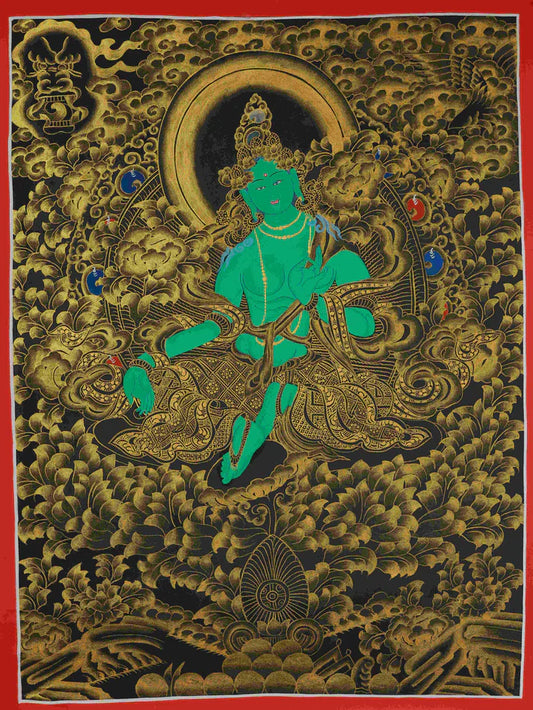
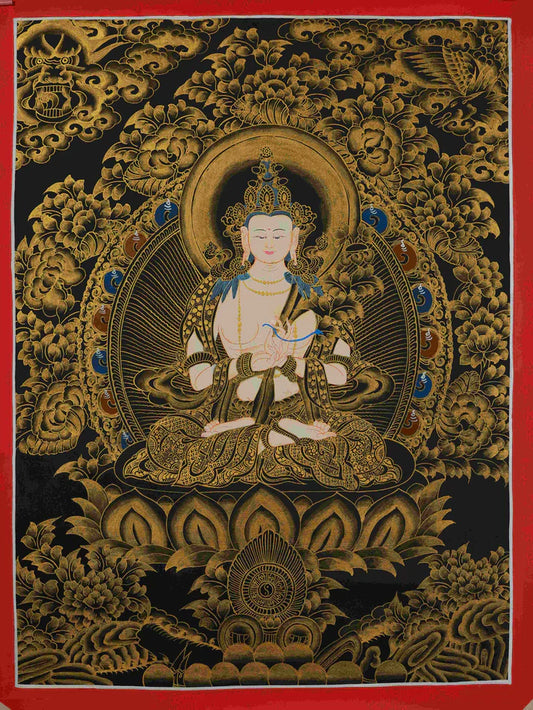
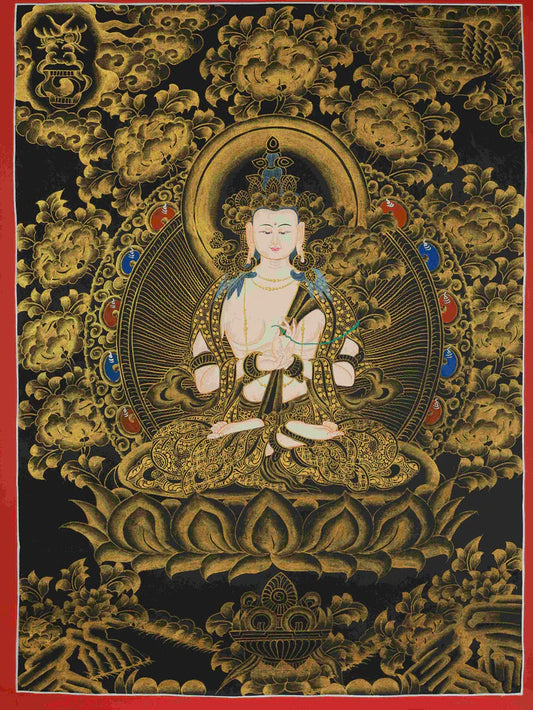
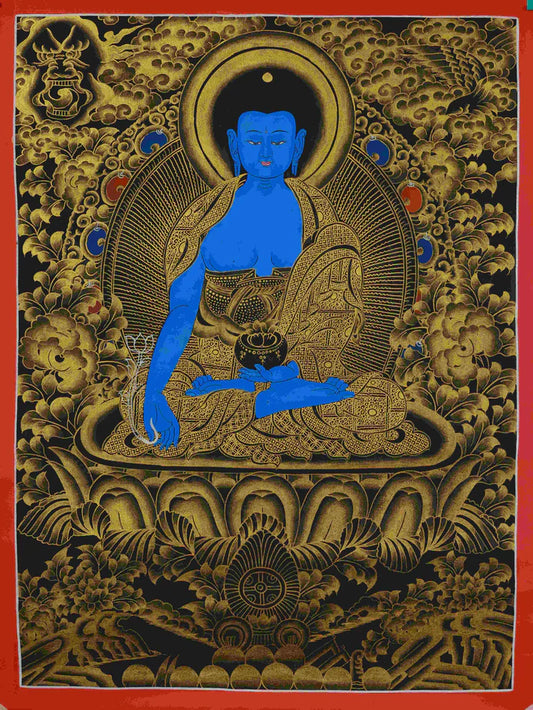
When a hand-painted blue thangka unfurls before you, you’ll be struck by its sweeping sapphire tones—not just pigment, but the "Buddha-realm base color" ground from lapis lazuli powder by Tibetan artists, a tangible expression of Samantabhadra Bodhisattva’s vow to "extend his aspirations across all realms." Today, we’re diving into Samantabhadra Bodhisattva’s Vow of Great Action: a piece that holds the "cool-toned romance" of Tibetan blue thangkas, and the life lesson of "living one’s vows through action."
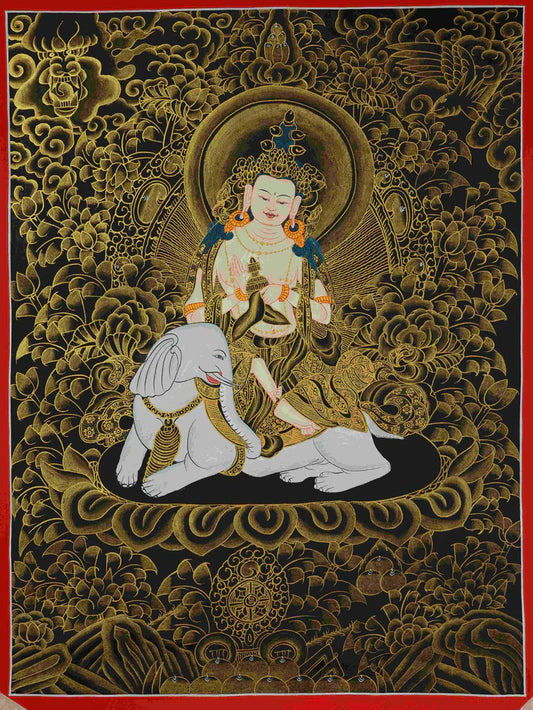
Look closely: the central figure sits atop a six-tusked white elephant, a five-Buddha crown dangling with jewels, hands forming a mudra as if speaking softly—this is no "quiet bodhisattva." This is Samantabhadra, the embodiment of great action in Tibetan Buddhism.
In Tibetan faith, Samantabhadra represents "dedicated practice":
- The six-tusked white elephant beneath him—each tusk corresponds to the Six Perfections (generosity, morality, patience, diligence, meditation, wisdom)—a metaphor for "treading the world with wisdom as one’s feet";
- His crown, inlaid with the Five Dhyani Buddhas, symbolizes "crowning oneself with the wisdom of all Buddhas"; even the celestial robes wrapped around him are not decoration—they are marks of a "being of perfect merit."
This blue wraps around the warmth of "vows made tangible."
Many see blue thangkas as "serene," but every detail of this piece tells a story of "warm intentions wrapped in cool hues":
The "central figure + four attendant bodhisattvas" layout anchors Samantabhadra as the "core":
- The main figure occupies half the canvas, supported steadily by the six-tusked elephant—symbolizing the "steadfastness of one who acts on vows";
- The four attendant bodhisattvas (Manjushri, Avalokiteshvara, etc.) in the corners act as "echoes of vow"; holding scriptures or lotuses, they create a "wisdom-action" dialogue with Samantabhadra’s "action";
- The scrollwork and clouds in the background, wrapped in sapphire, evoke the image of "vows spreading across all realms."
This isn’t just composition—it’s a map of faith where "vow-action is the core, and all beings practice together."
The blue in this thangka is ground from natural lapis lazuli powder—Tibetans say "lapis lazuli is the color of Buddha’s eyelashes." Its value lies not in price, but in meaning:
- Sapphire represents "sky and deep sea," mirroring Samantabhadra’s "boundless vows";
- Gold trim symbolizes "the light of wisdom," while the elephant’s white represents "the purity of vow-action";
- Even the light blue robes of the attendants are "ripples of vow."
This blue is "grinding faith into powder, then painting it into a path."
In today’s fast-paced world, this hand-painted blue thangka is an anti-haste gift:
- The artist first grinds lapis lazuli (2 hours per gram of powder), then spends months outlining and filling in colors—a blue thangka is never just a "painting," but "vows woven into the fabric";
- Hung in a living room or study, it’s not a "cold decoration": every glance at the six-tusked elephant reminds you that "vows are lived, not spoken"; every touch of the sapphire hue calms restlessness—it’s a slow reminder from a "vow-walker" for modern people.
Samantabhadra Bodhisattva’s Vow of Great Action is a classic Tibetan blue thangka. Use these 3 rules when selecting one:
-
Check the "depth" of the blue: Natural lapis lazuli blue has "weight," like the deep sea; synthetic blue is "floaty," like plastic;
-
Check the elephant’s "tusks": The six-tusked elephant’s tusks must be clear—this is the ritual symbol of the Six Perfections; a missing tusk means it’s not a "true Samantabhadra";
-
Check the "softness" of the lines: Hand-painted robes have "breath"; printed lines are "stiff"—a good thangka is a "warm ritual object."
When you hang this blue thangka on your wall, the lapis lazuli hue wraps around the room’s restlessness: it’s the wind of Tibet, Samantabhadra’s vow, and a reminder that "every step is a vow"—this is art that "nurtures life."