1. Theme: Visualization of Faith – Nyingma Tradition’s “Central Refuge”
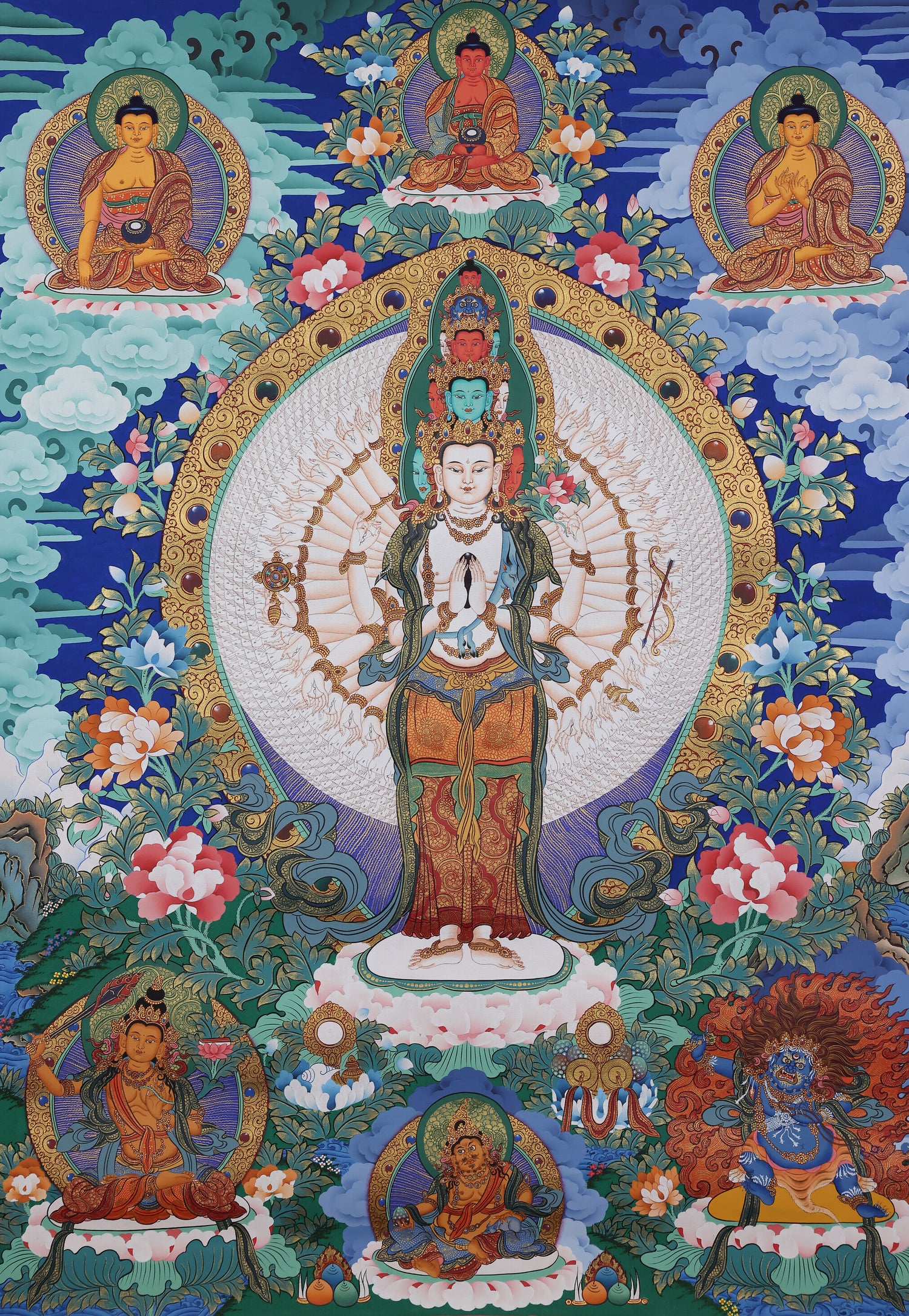
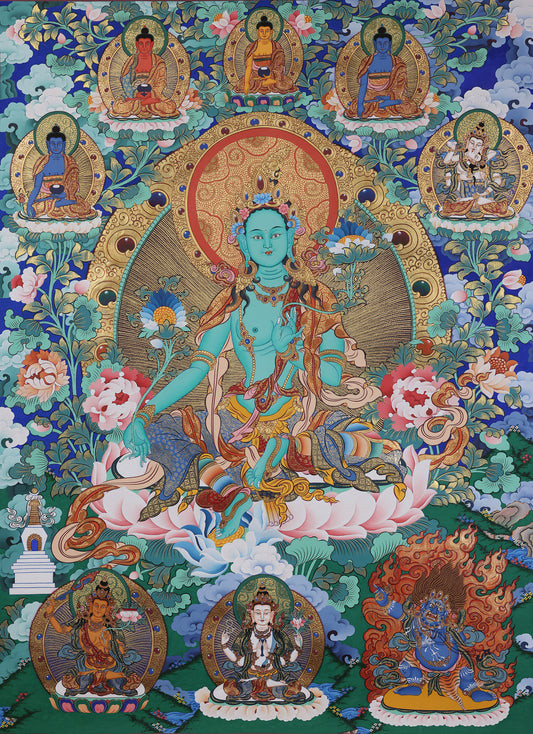
The core theme of this thangka is the Guru Rinpoche (Padmasambhava) Refuge Mandala, one of the most iconic “aggregated faith” images in the Nyingma school of Tibetan Buddhism. In the Tibetan Buddhist context, a “Refuge Mandala” is not a mere depiction of a single deity. It consolidates the Buddhas of the Three Times, historical lineage masters, yidams, bodhisattvas, and dharmapalas into one sacred composition, forming the ultimate field of merit for practitioners’ visualization and offerings. Its essence is to center on Guru Rinpoche, concentrating all extraordinary merits and blessings into a single mandala, allowing devotees to connect their body, speech, and mind with the lineage system.
The deeper logic of this theme resonates with Guru Rinpoche’s status as the founder of Tibetan Buddhism: in the 8th century, he entered Tibet, subdued the local Bon spirits, and integrated the exoteric and esoteric teachings to establish Samye Monastery and ordain the “Seven Monk Disciples.” This Refuge Mandala embodies both veneration for Guru Rinpoche himself and devotion to the Dzogchen lineage he established. For Nyingma practitioners, visualizing this mandala is equivalent to taking refuge simultaneously in the Three Jewels, the Guru, the Yidam, the Dakini, and the Dharmapalas, making it the most auspicious shortcut for spiritual practice.
2. Main Deity: Iconography and Symbolism of Guru Rinpoche
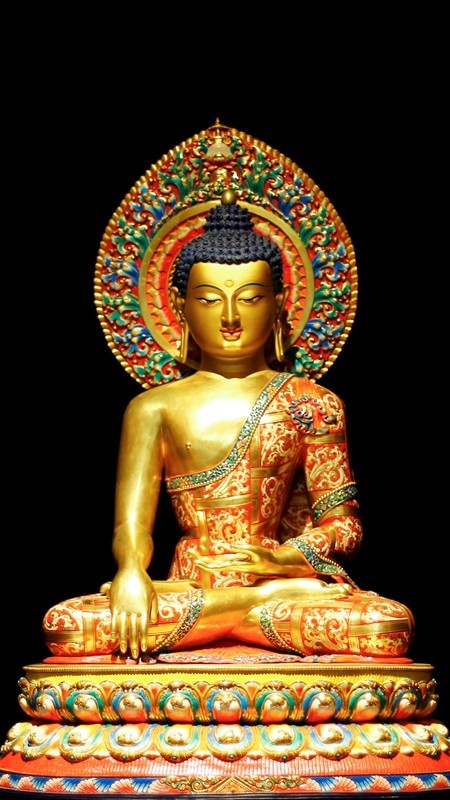
The central figure is Guru Rinpoche, depicted in strict accordance with the Sutra of Measurement for Images and Nyingma ritual prescriptions. Every detail visually encodes the esoteric teachings.
Form and Attire
Guru Rinpoche wears the Lotus Hat (Ushnisha-style crown), symbolizing both the Buddha’s enlightenment and his ability to subdue and guide sentient beings. He wears a cross-collared monk’s robe representing exoteric discipline and a red-and-blue brocade outer robe: red for wrathful subjugation of obstacles, blue for compassionate reception of beings, expressing the esoteric “union of wisdom and compassion.” His complexion is rosy white, eyes slightly furrowed yet peaceful, embodying the “union of wrathful and gentle” aspect that subdues obstacles while guiding beings.
Implements and Mudras
-
Left Hand Holding a Gabhara Bowl: filled with immortal wisdom nectar, symbolizing liberation from cyclic existence through the wisdom of emptiness; the bowl is often adorned with vajra patterns representing an indestructible bodhicitta.
-
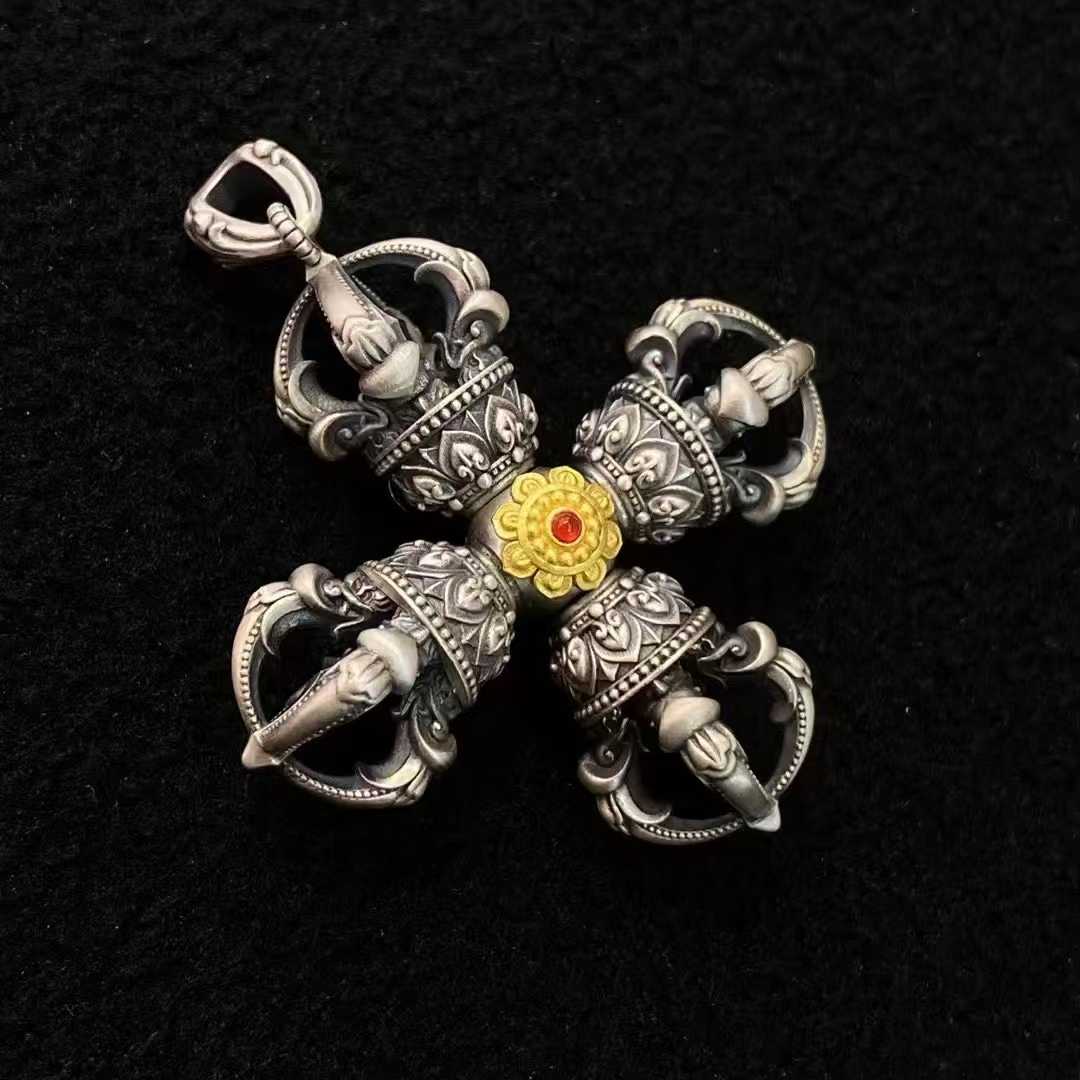
Left Arm Holding the Khatvanga Staff (Sky Staff): the central ritual implement of Guru Rinpoche, composed of a cross vajra, vase, three human heads, and flaming trident. The cross vajra represents the five elements; the vase symbolizes perfect nectar; the three heads signify the elimination of the three poisons and the union of the trikaya (Dharma, Sambhogakaya, Nirmanakaya); the flaming trident destroys all obstacles.
-
Right Hand Holding a Five-Pronged Vajra: forming a wrathful mudra pointing to space; the five prongs represent the Five Wisdom Buddhas, symbolizing the use of Buddha’s wisdom to overcome obstacles in practice.
Lotus Throne and Halo
Guru Rinpoche is seated in a Royal Dance Posture (semi-lotus) on a double-layered lotus throne: the lower pink lotus symbolizes a pure mind “untainted by the mud of samsara,” and the upper white lotus signifies the purity of enlightenment. Beneath the lotus is a sun-and-moon cushion, representing the dispelling of ignorance and extinguishing of defilements. His head and body halos are painted with gold leaf and mineral pigments: the inner red flame pattern symbolizes wisdom burning away defilements, the outer rainbow cloud pattern signifies the celestial pure land, and the gold border highlights the sanctity of the deity.
3. Attendant Deities: Lineage and Protective Circle
The attendant deities surrounding the central figure form the lineage chain and dharmapala network:
-
Upper Deity: typically Amitabha Buddha, representing Guru Rinpoche’s Dharmakaya source, symbolizing the ultimate nature of enlightenment.
-
Left Attendant: Shingkhar Lama (Jikpo), Guru Rinpoche’s companion, representing the exoteric lineage transmission.
-
Right Attendant: Yeshe Tsogyal, Guru Rinpoche’s main disciple and consort, representing the skillful means of esoteric practice and the origin of the Nyingma Dakini lineage.
-
Lower Deities and Offerings: lotus base and offerings symbolize worldly and transcendental offerings; wrathful dharmapalas such as Vajrakila ensure the protection of practice and removal of obstacles.
4. Painting Technique: Nepali Newar – Menri School Fusion
This thangka is a fusion of Nepali Newar and Tibetan Menri school painting, reflecting the perfect combination of devotion and artistry.
Canvas Preparation
Six-step traditional process: washing, stretching, applying bone glue, applying white clay base, coarse polishing, fine polishing. Each step is dried before the next, resulting in a paper-like smooth surface, ensuring pigment adhesion and symbolizing the accumulation of merit through artistic labor.
Pigments and Gold Leaf
Natural mineral pigments are used: azurite, malachite, cinnabar, gold leaf:
-
Azurite and malachite are refined through multiple steps for smooth tonal layering.
-
Cinnabar is wet-ground for days; gold leaf is ground into paint, mixed with gum and saffron, applied with a gemstone-tipped brush, producing luminous, enduring gilding.
These pigments are believed to imbue the thangka with spiritual blessings, making it a conduit between the mundane and the divine.
Techniques and Shading
-
Linework: iron-wire outlining + fine floating lines; main deity and implements in firm iron-wire lines, flowing continuously; background clouds and flowers in delicate floating lines.
-
Shading: combination of dry and wet shading; skin tones softly layered, robes thickly shaded to create depth, resulting in a vivid and solemn appearance.
Eye-Opening Ceremony
The final step, “opening the eyes”, is performed by a master painter or lama, with incense and recitation, dotting the pupils with ink. This ritual transforms the thangka from an artwork into a living spiritual object, capable of blessing devotees.
5. Cultural Significance: The “Encyclopedia of Tibetan Faith”
This thangka is not merely a painting but a visualization of Tibetan Buddhist faith:
-
It documents the Nyingma lineage, practices, and core teachings.
-
Its composition, mineral-and-gold palette, and line techniques represent the pinnacle of Newar-Menri school fusion.
-
Practitioners use it for visualization of Guru Rinpoche, connecting to blessings and spiritual liberation.
In a modern context, it also serves as a living testament to Tibetan cultural heritage, preserving centuries-old iconography and craft while visually conveying the union of wisdom and compassion central to Tibetan Buddhism.
#GuruRinpoche #Padmasambhava #TibetanThangka #HandPaintedThangka #RefugeMandala #NyingmaTradition #BuddhistArt #TibetanBuddhism #SpiritualPractice #LineageVisualization #NepaliNewarArt #MenriSchool #EsotericBuddhism #MeditationArt #SacredArt