Blog Post: A Deep Dive into a Nepalese Hand-Painted Manjushri (Samantabhadra) Thangka: The Avatamsaka Sacred Realm and Millennial Artistry of Tibetan Buddhism

$599.00 USD
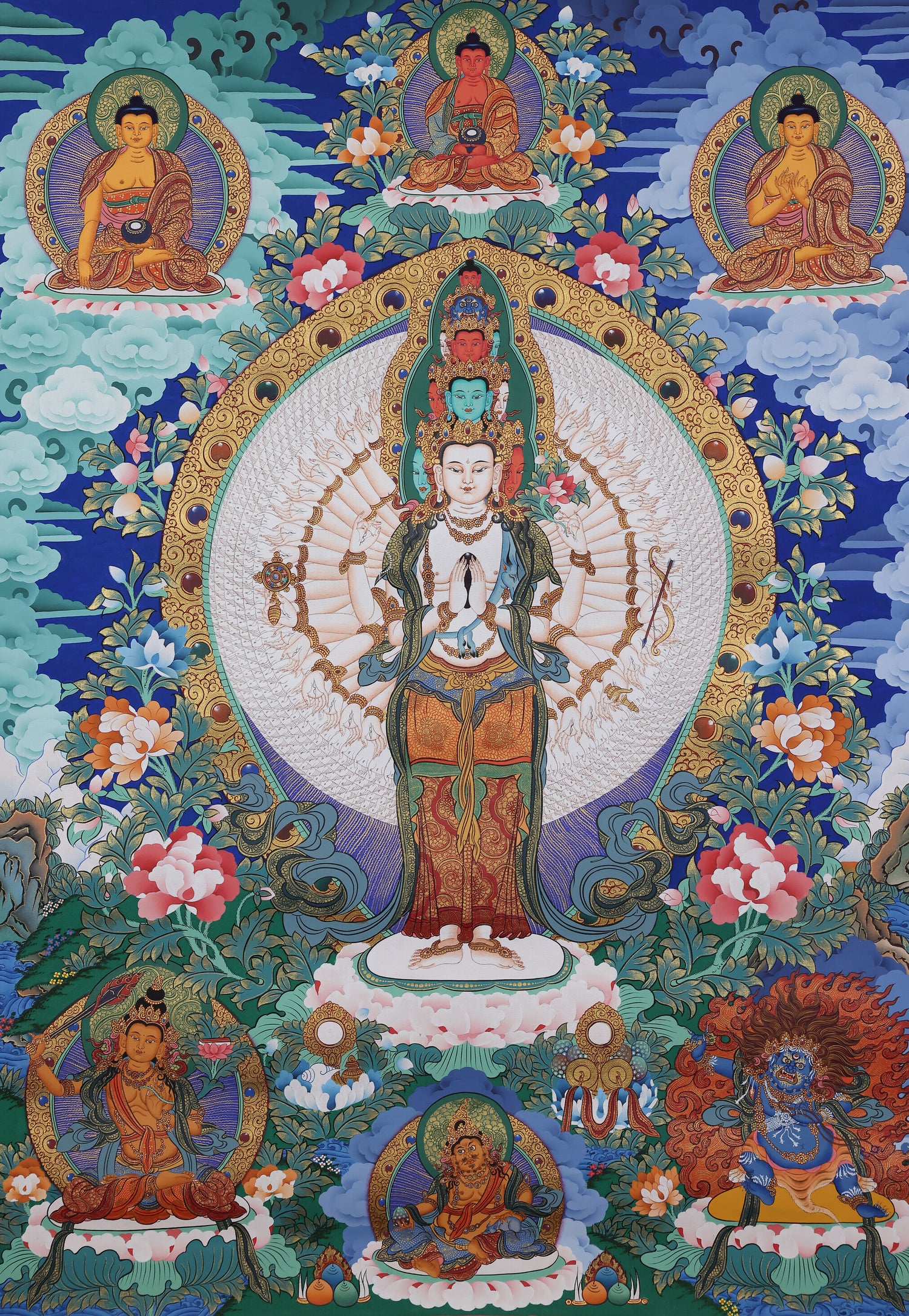
Thangka name: Cai Tang Puxian Bodhisattva
size: 42cm×60cm
origin: Nepal
Ask a Question

Hurry Up! Only 100 left in stock!

Estimate delivery times: 12-26 days (International), 3-6 days (United States).

Return within 45 days of purchase. Duties & taxes are non-refundable.

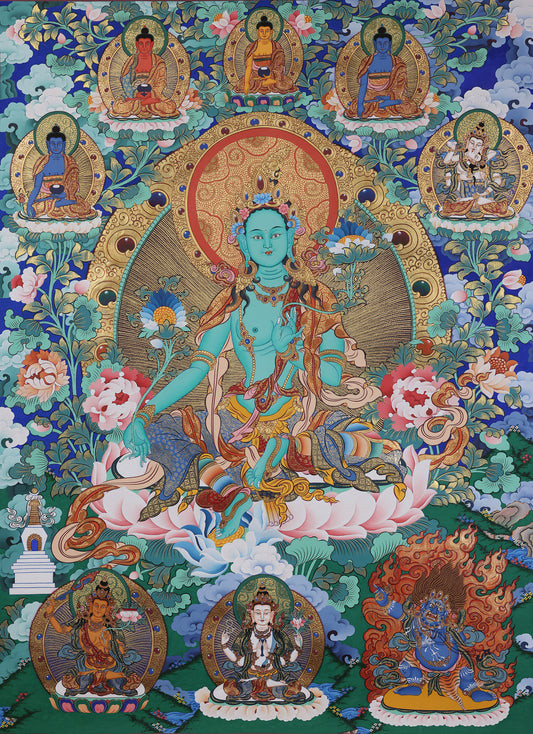
Color thangka painting of Samantabhadra Bodhisattva in Tibetan Buddhist culture, symbolizing wisdom and enlightened practice
Blog Post: A Deep Dive into a Nepalese Hand-Painted Manjushri (Samantabhadra) Thangka: The Avatamsaka Sacred Realm and Millennial Artistry of Tibetan Buddhism
$599.00 USD
537 Products
192 Products
46 Products
11 Products
When a Samantabhadra thangka painted with mineral pigments unfurls, the deep blues of azurite, emerald greens of malachite, and crimson reds of cinnabar are more than just color—they are the symbiosis of Tibetan Buddhist doctrine and Nepalese millennial craftsmanship. This 42×60cm hand-painted thangka, crafted by a Nepalese Newari school artisan, centers on the "Avatamsaka Trinity," weaving religious ritual, natural gifts, and artistic precision into a single cloth.

I. Theme: The "Virtue of Principle and Practice" in the Avatamsaka Sacred Realm

In Tibetan Buddhist context, Samantabhadra embodies the "perfection of practice"—in the Avatamsaka Sutra, he and Manjushri (perfection of wisdom) attend Vairocana Buddha, forming the core of the "Avatamsaka Trinity." This thangka’s choice of Samantabhadra as the main deity is a visual expression of the "unimpeded vows" spiritual philosophy: for Tibetan devotees, Samantabhadra’s form is an anchor for "manifesting principle through practice"; for Nepalese artisans, this theme is a classic vessel for Sino-Nepalese Buddhist cultural exchange.

Every detail aligns with doctrine: the main deity’s six-tusked white elephant mount corresponds to the "Six Perfections" (generosity, discipline, patience, diligence, meditation, wisdom); the ruyi scepter (or vase) he holds symbolizes "vows fulfilled"; even the pink peonies (not native to Tibet, but a Gandhara-influenced motif in Newari art) metaphorize "majestic merit."

II. Deity System: Balancing Ritual and Vitality

(1) The Main Deity: Samantabhadra’s Nepalese Ritual Iconography

The central Samantabhadra blends Tibetan Iconometric Canon and Newari style:

  • Form: A soft, rounded face (Newari "infant-like" feature) with high brow bones and curved eyes; milky white skin symbolizes purity. His celestial robes, layered with mineral pigments in blue and red, are edged with 24K gold leaf for pearls and coral ornaments—honoring the "adorned bodhisattva" ritual while showcasing the Newari school’s opulent "color-rich adornment."
  • Symbols: His right hand forms the gesture of granting wishes; his left holds a vase. The six-tusked white elephant mount rests in a reclining pose—its curled trunk is a Newari symbol of "auspicious tameness," and the emerald pendant on its body reflects the Newari artisan’s unique take on "jeweled majesty."
  • Aura and Lotus Seat: A reddish-orange flame nimbus (wisdom light) surrounds his head; a boat-shaped aura of blue and gold (a classic Tibetan form) frames his body. The multi-layered pink lotus seat, set against green grass and flowing water patterns, merges the doctrine of "lotus-born purity" with the Newari compositional logic of "nature enclosing the main deity."

(2) Attendant Deities: The Avatamsaka Realm’s Configuration Logic

The attendant deities at the thangka’s corners form a complete sacred system:

  • Two Buddhas Above: The red-bodied Shakyamuni (Saha World ruler) at the top left, and the blue-bodied Akshobhya (Eastern Pure Land ruler) at the top right—simplified with Newari "small form, round aura" to complement the main deity without overshadowing it.
  • Two Attendants Below: Manjushri (sword in hand) at the bottom left, and Avalokiteshvara (lotus in hand) at the bottom right—extensions of the Avatamsaka Trinity and core figures of the "Four Great Bodhisattvas," their "willow-like gentle postures" embody Newari art’s vitality.
  • Border Ornaments: Blue cloud patterns and pink peony motifs, influenced by Indian art in Newari painting, symbolize "auspicious majesty."

III. Craftsmanship: Millennial Heritage in Mineral Pigments

This thangka uses pure mineral and earth pigments, adhering to Nepal’s highest standards of manual craftsmanship:

(1) Pigments: Gifts of the Earth and Sacred Blessing

  • Core Mineral Colors: Azurite (blue) and malachite (green) are sourced from northern Nepalese mountains, processed through four steps (crush, soak, grind, settle) to layer hues (first blue, second blue), ensuring rich, fade-resistant color. Cinnabar (red) and realgar (yellow) come from Himalayan veins; white clay is local kaolin—mixed with 牛皮胶 (cowhide glue) in "weather-dependent ratios" (1:3 at 50% humidity) to balance adhesion and transparency.
  • Special Materials: 24K gold leaf is ground into powder, applied via "glue, sprinkle, polish with agate knife" to create a mirror-like luster. Coral and pearl powder detail small features (e.g., the elephant’s eyes), aligning with the religious belief that "jewels in art equal blessing."

(2) Creation Process: 40 Days of Newari Precision

As a first-grade Nepalese thangka, its creation takes 40–70 days:

  1. Cloth Preparation: Thick cotton cloth is coated 5–6 times with cowhide glue and white clay, then polished smooth with pebbles (a key Newari step: "canvas quality defines detail precision").
  2. Sketching and Outlining: After charcoal positioning, wolf hair brushes dip ink to outline with "nail-head rat-tail" and "orchid leaf" strokes—slender and fluid.
  3. Coloring and Gradation: "Background first, main deity last," using "dot-dyeing" to layer 3–5 coats (e.g., Samantabhadra’s skin tone transition) for three-dimensional gradation.
  4. Gold Outlining and Consecration: Gold powder outlines details; after monk-led chanting blessings, the seed syllables "Om Ah Hum" (symbolizing Buddha’s body, speech, mind) are written on the back—transforming the artwork into a ritual object.

IV. Style: The Fusion of Newari and Tibetan Aesthetics

This thangka is a quintessential fusion of Newari and Tibetan thangka styles:

  • Composition: The main deity occupies 60% of the space, with attendants at the corners—upholding the Tibetan "main deity supremacy" religious logic while using Newari "balanced density" aesthetics to avoid clutter.
  • Color: High-contrast "blue-red-yellow" hues, with the natural luster of minerals (e.g., azurite’s gem-like blue) enhancing sacredness—aligning with Tibetan tradition of "colors as doctrinal metaphors."
  • Form: Strictly following the Iconometric Canon proportions, yet softened by Newari "curved forms" to balance divinity and humanity, moving beyond the rigidity of Tibetan thangkas.

Conclusion: A Mobile Temple, a Cross-Cultural Treasure

This Nepalese Samantabhadra thangka is both a visual carrier of Tibetan Buddhism’s Avatamsaka doctrine and a living heritage of Newari craftsmanship. The eternal colors of mineral pigments connect the Himalayan earth to devotees’ spiritual worlds; the fused iconography witnesses millennia of Sino-Nepalese Buddhist art exchange. It is both a "mobile temple" and a cross-cultural artistic treasure.
# Nepalese Thangka #Samantabhadra Thangka #Tibetan Buddhist Art #Newari Painting School #Mineral Pigment Thangka #Avatamsaka Trinity #Hand-Painted Thangka #Buddhist Iconography Art #Thangka Craft Analysis #Religious Art Collection
Discover the perfect Tibetan Buddhist Thangka that matches your wishes, lifestyle, and space. Each Thangka carries spiritual meaning and brings blessings when placed correctly.

1. Define Your Intention

Wealth & Success → Yellow Dzambhala (Wealth Deity)

Compassion & Peace → Avalokiteshvara, Green Tara

Wisdom & Learning → Manjushri

Health & Healing → Medicine Buddha

Longevity & Family Protection → White Tara

2. Choose by Identity

Entrepreneurs & Business Owners → Wealth Deities for prosperity.

Students & Scholars → Wisdom Deities for focus and clarity.

Healers & Yoga Practitioners → Medicine Buddha for energy and balance.

Families & Homemakers → Tara Deities for harmony and safety.

Collectors & Art Lovers → Rare Mandalas or Masterpiece Thangkas.

3. Match Your Space

Home Shrine / Meditation Room → Medium Thangkas (60–80 cm).

Office / Business Hall → Large Thangkas for prosperity and authority.

Living Room / Study → Decorative Thangkas for peace and beauty.

4. Authentic Craftsmanship

Hand-painted with natural mineral pigments and fine canvas, each Thangka reflects Tibetan artistry and spiritual power. Verified sources ensure quality and respect for tradition.

✨ Choose your Thangka with heart — it’s not just art, but a blessing for your life.

Different people have different needs, and choosing the right Thangka can provide spiritual support, protection, good fortune, and blessings. Below are Thangka recommendations for various roles:

1. Entrepreneurs

  • Needs: Wisdom, wealth, health, career success.
  • Recommended Thangkas:
    Manjushri: Enhances decision-making and business wisdom.
    Wealth Deity: Brings wealth and prosperity.
    Medicine Buddha: Supports health and reduces stress.
    Mahakala: Protects business from competition and challenges.

2. Successful Individuals

  • Needs: Inner peace, family harmony, longevity.
  • Recommended Thangkas:
    Amitabha Buddha: Brings inner peace and tranquility.
    Avalokiteshvara (Guanyin): Promotes family harmony and happiness.
    Amitayus (Long Life Buddha): Prays for good health and long life.
    Manjushri: Continues to enhance wisdom.

3. Housewives/Husbands

  • Needs: Family harmony, protection, health.
  • Recommended Thangkas:
    Avalokiteshvara: Increases family happiness and harmony.
    Protector Deities: Safeguards the family from external disturbances.
    White Tara: Blesses the family with health.

4. Students and Scholars

  • Needs: Wisdom, focus, academic success.
  • Recommended Thangkas:
    Manjushri: Boosts learning, memory, and wisdom.
    Sakyamuni Buddha: Helps with concentration and spiritual practice.
    Jixiang Tianmu: Brings academic good luck and exam success.

5. Artists and Creative Professionals

  • Needs: Inspiration, creativity, artistic achievement.
  • Recommended Thangkas:
    Manjushri: Stimulates creative thinking and inspiration.
    Vajrapani: Helps overcome creative blocks.
    Maitreya: Brings a relaxed and optimistic attitude, easing stress.

6. Travelers and Adventurers

  • Needs: Protection, good luck, success in adventures.
  • Recommended Thangkas:
    Hayagriva: Provides strong protection during travels and clears obstacles.
    Mahakala: Brings good fortune and protection, especially for adventurers.
    Vajrasattva: Helps overcome difficulties and challenges during the journey.

7. Elderly Individuals

  • Needs: Health, longevity, spiritual peace.
  • Recommended Thangkas:
    Amitayus: Prays for long life and good health.
    Medicine Buddha: Promotes healing and physical well-being.
    Avalokiteshvara: Brings compassion and inner peace in later years.

8. Corporate Executives

  • Needs: Leadership, wisdom, teamwork, and business success.
  • Recommended Thangkas:
    Manjushri: Enhances leadership skills and decision-making.
    Wealth Deity: Brings success and prosperity to the business and team.
    Avalokiteshvara: Promotes harmony and balance within the team.

9. Health and Fitness Enthusiasts

  • Needs: Good health, vitality, energy.
  • Recommended Thangkas:
    Medicine Buddha: Enhances physical health and vitality.
    White Tara: Brings health and rejuvenation.
    Vajrasattva: Clears health challenges and boosts energy.

10. Politicians

  • Needs: Leadership, wisdom, peace.
  • Recommended Thangkas:
    Manjushri: Enhances leadership abilities and decision-making.
    Vairocana Buddha: Helps maintain inner peace and wisdom.
    Avalokiteshvara: Promotes societal peace and family harmony.

For all orders exceeding a value of 100USD shipping is offered for free.

Returns will be accepted for up to 10 days of Customer’s receipt or tracking number on unworn items. You, as a Customer, are obliged to inform us via email before you return the item.

Otherwise, standard shipping charges apply. Check out our delivery Terms & Conditions for more details.

Returns will be accepted for up to 10 days of Customer’s receipt or tracking number on unworn items. You, as a Customer, are obliged to inform us via email before you return the item, only in the case of:

– Received the wrong item.
– Item arrived not as expected (ie. damaged packaging).
– Item had defects.
– Over delivery time.
– The shipper does not allow the goods to be inspected before payment.

The returned product(s) must be in the original packaging, safety wrapped, undamaged and unworn. This means that the item(s) must be safely packed in a carton box for protection during transport, possibly the same carton used to ship to you as a customer.

Recently Viewed

Don't forget! The products that you viewed. Add it to cart now.

Pairs well with

Enhance your selection with perfectly matched accessories and complementary products..

People Also Bought

Here’s some of our most similar products people are buying. Click to discover trending style.