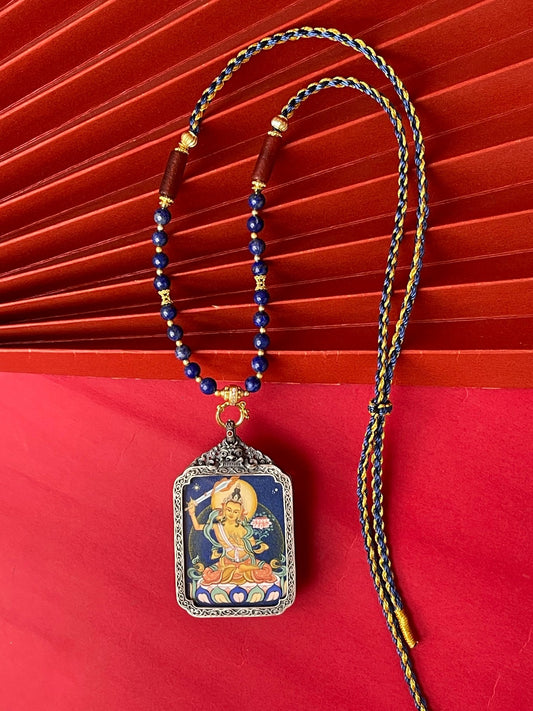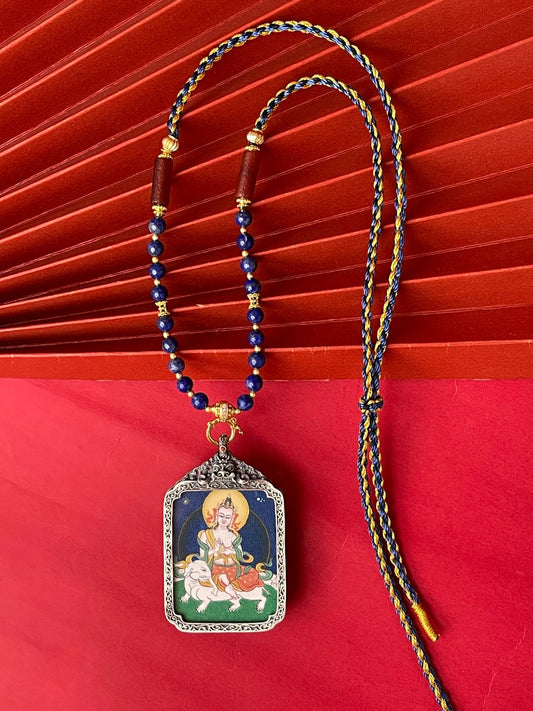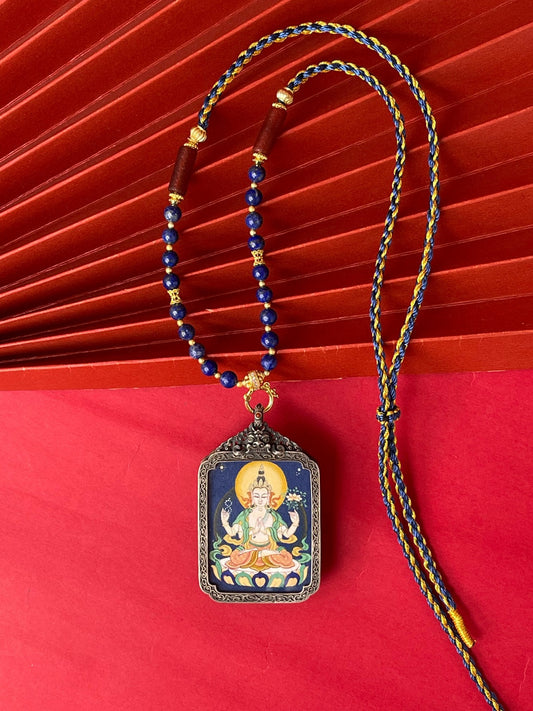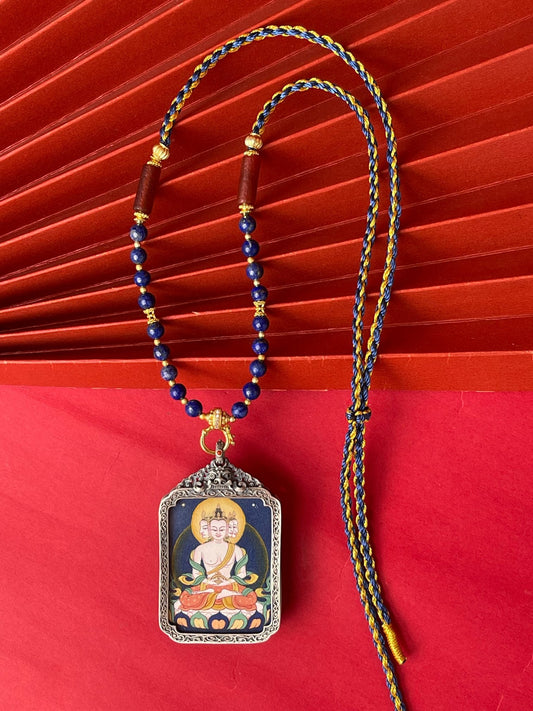

Why Choose a Vajrasattva Pendant?
Vajrasattva is the principal deity of purification in Tibetan Buddhism. He is invoked to purify negative karma, repair broken vows, and remove obstacles. A Thangka pendant of Vajrasattva can support daily purification practice and serve as a meaningful gift for someone who values the Dharma. This article is a practical guide: what to look for when choosing a pendant, how to assess quality and lineage, and when gifting one is appropriate.
What to Look For: Iconography and Materials
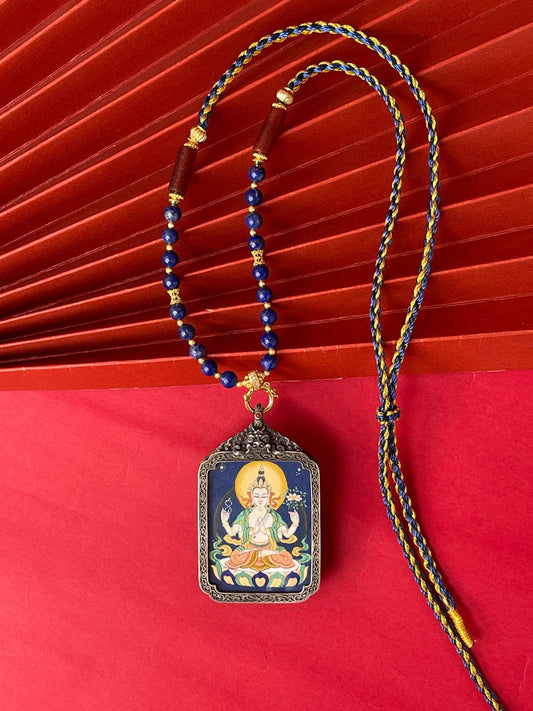
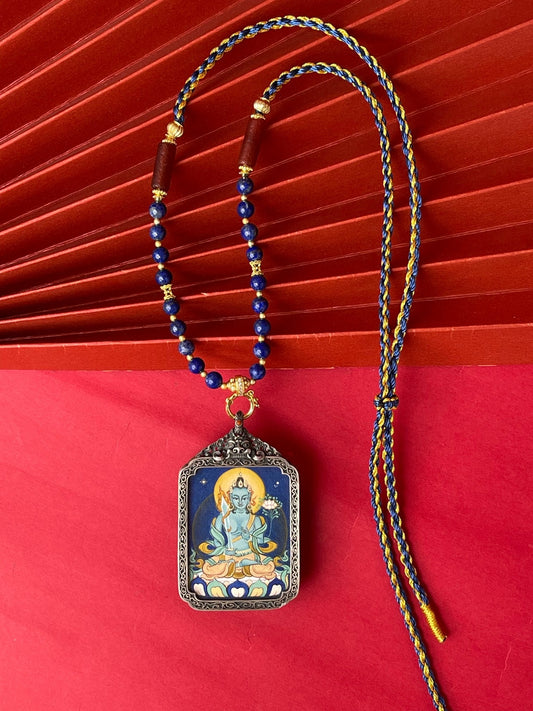
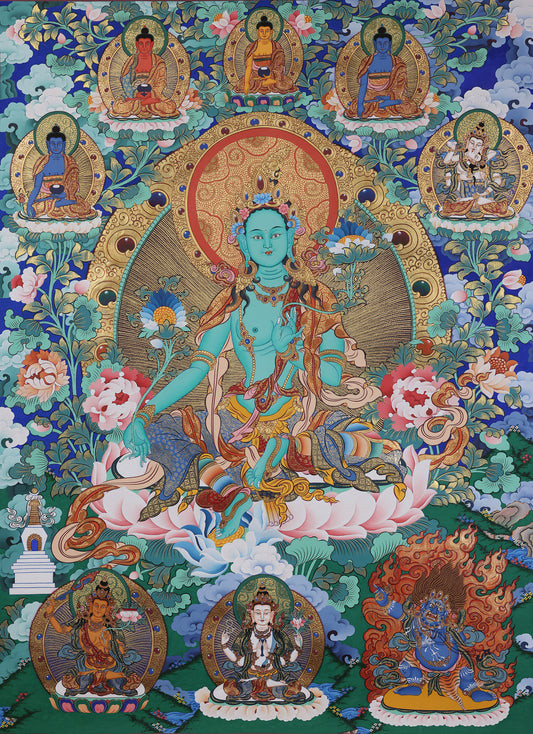
A correct Vajrasattva image shows him with a white body (purity), seated in the vajra posture, holding a vajra at his heart in his right hand and a bell in his left. The vajra and bell together represent the union of method and wisdom. When choosing a pendant, check that the white body is clear, the vajra and bell are recognizable, and the gold linework is careful. Ask whether the painting uses natural mineral pigments and whether the artist belongs to a recognized lineage; this helps you assess both authenticity and durability.
Assessing Lineage and Craftsmanship
Tibetan Thangkas follow iconometric and ritual guidelines. Painters are trained within a lineage, and the deity’s form, implements, and colors are specified. A pendant from a clear lineage is more likely to be an accurate support for practice. When buying, prefer sources that can explain the painter’s training and the use of mineral pigments. A 925 silver setting protects the painting and is standard for quality pendants.
When to Gift a Vajrasattva Pendant
A Vajrasattva Thangka pendant can be a meaningful gift for someone who practices or is interested in Tibetan Buddhism, especially purification practice (e.g. the 100-syllable mantra). It is suitable for practitioners who want a daily reminder of purification and renewal. When gifting, you can briefly explain Vajrasattva’s role so the recipient can relate to the pendant with respect and intention.
Wearing and Caring for the Pendant
The recipient can wear the pendant daily, avoiding shower, swimming, and heavy exercise. When not worn, it can be kept in a soft pouch or on a shrine. No elaborate ritual is required; what matters is respect and the intention to connect with purification practice. The pendant can support recitation of the 100-syllable mantra or Vajrasattva’s heart mantra if the person has received these teachings.
Conclusion
Choosing a Vajrasattva Thangka pendant involves attention to iconography, materials, and lineage. When these are in place, the pendant can be a lasting support for purification practice and a thoughtful gift for a practitioner. If you are buying for yourself or for someone else, start by understanding Vajrasattva’s role, then select a pendant that reflects solid craftsmanship and a clear lineage.
#Vajrasattva #TibetanThangka #KarmaPurification #925Silver #PurificationAmulet #SacredJewelry #TibetanBuddhism #ThangkaPendant #GiftGuide
Tags:
Previous
Six-Armed Mahakala Thangka Pendant: The Great Protector and Remover of Obstacles
Next
Yellow Jambhala Thangka Pendant: The Wealth Bestowing Deity