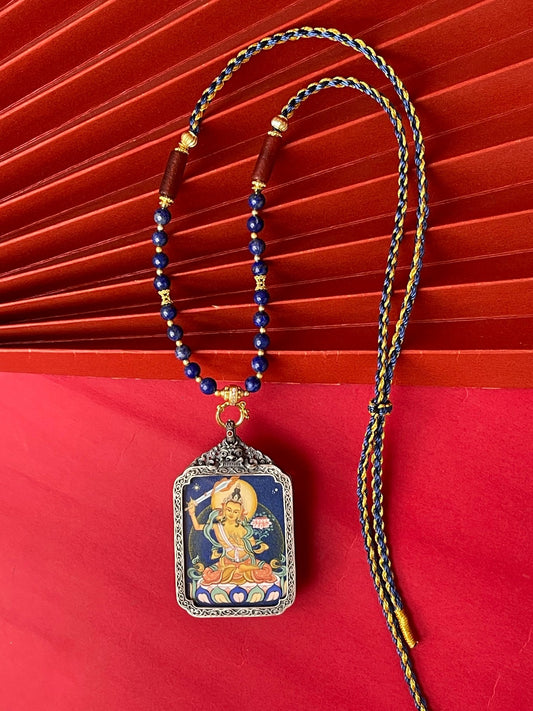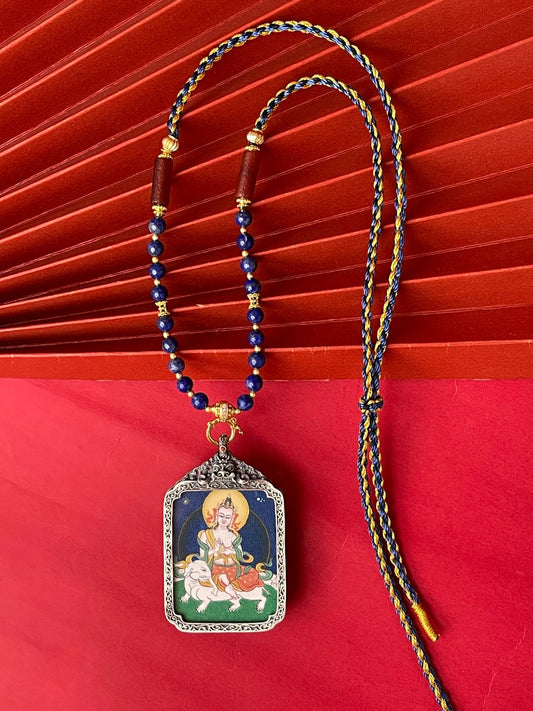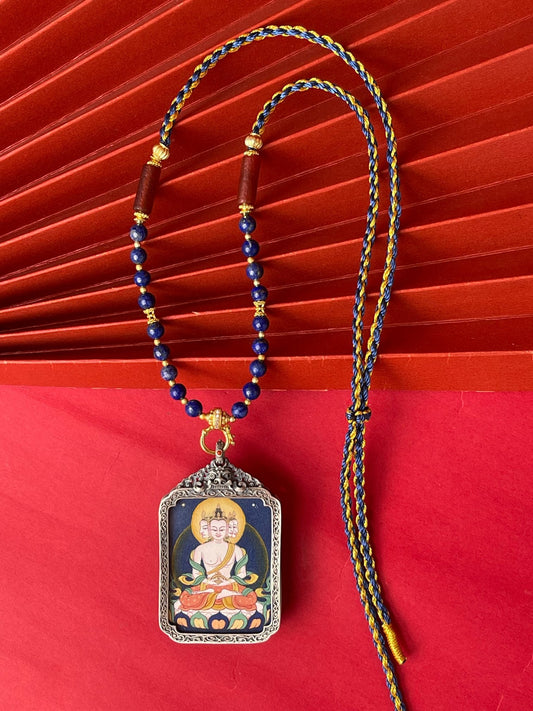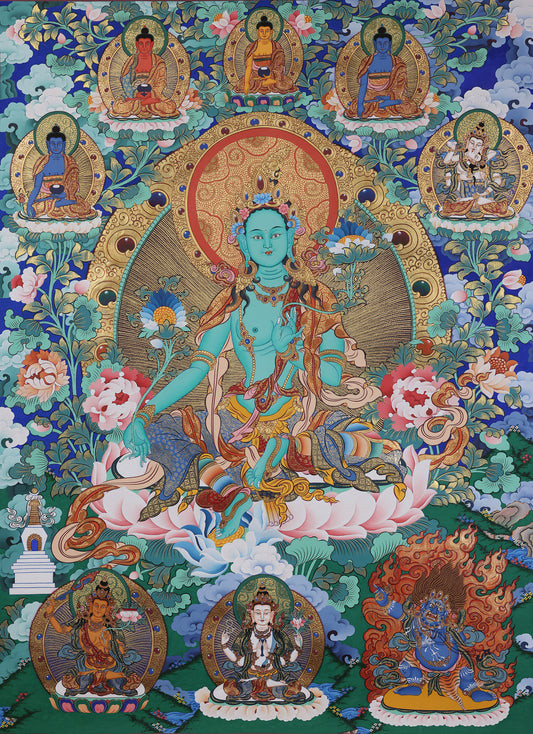
The Four-Armed Avalokiteshvara Thangka Pendant: A Nepalese Symbol of Universal Compassion

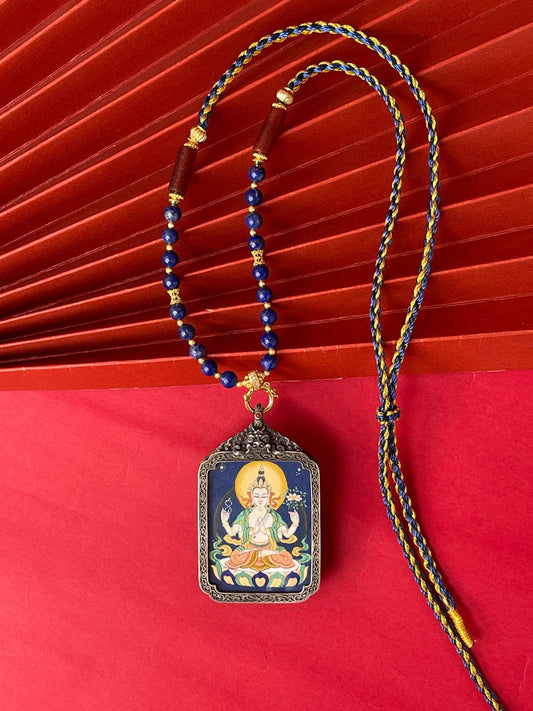
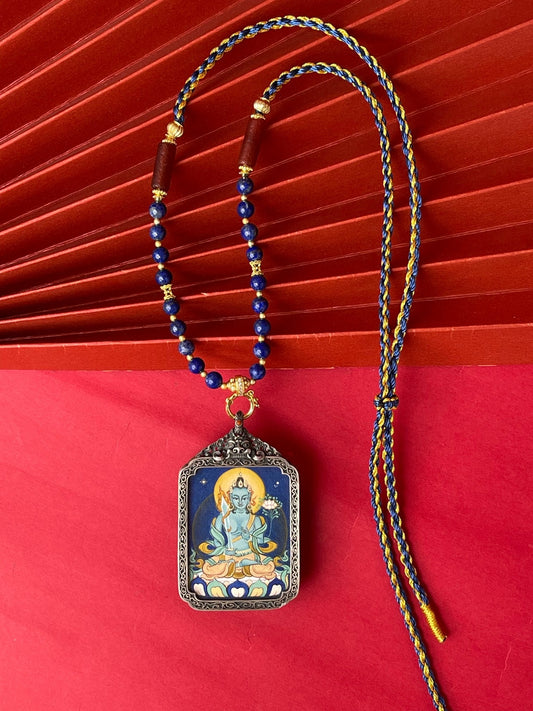
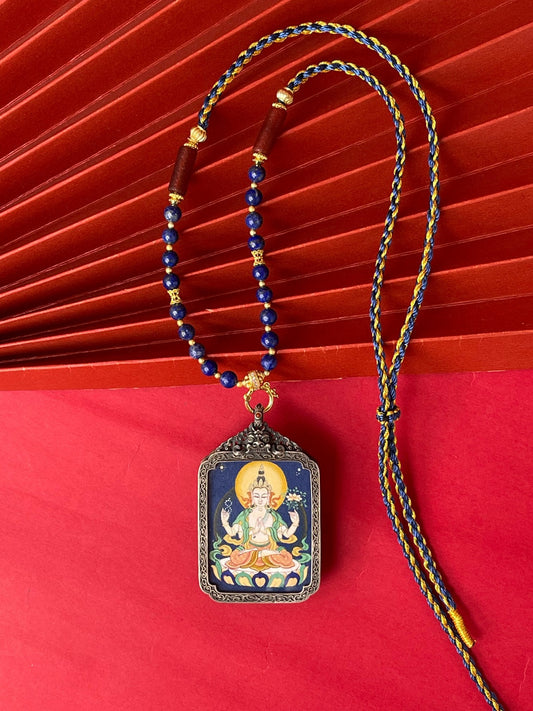
Slip a four-armed Avalokiteshvara thangka pendant around your neck, and you’re not just wearing a piece of jewelry—you’re carrying a millennia-old Tibetan Buddhist icon of compassion, handcrafted by Nepalese Newari artisans, and protected by a titanium steel case designed for modern life. This 3.5×4.5cm portable shrine (called a gau in Tibetan) is more than an accessory; it’s a daily reminder of Chenrezig’s boundless love for all sentient beings.
First: What Is the Four-Armed Avalokiteshvara (Chenrezig)?
Before diving into the artistry, let’s ground ourselves in the heart of this pendant: the deity himself. Here are the key details that make this piece sacred and unique:
-
Deity Identity: Avalokiteshvara, known as Chenrezig in Tibetan, is the Bodhisattva of Universal Compassion—the being who vows to alleviate suffering for every living creature before attaining full enlightenment.
-
Origin: Handcrafted in Nepal’s Bhaktapur Valley, the birthplace of UNESCO-recognized Newari thangka art.
-
Size: 3.5×4.5cm, following the traditional dimensions of agau—small enough for daily wear, yet large enough to honor Chenrezig’s iconography.
-
Protection: Titanium steel case (rust-resistant, airtight seal) that preserves the delicate thangka without compromising its sacredness.
In Tibetan Buddhism, a gau is a portable altar, not a mere ornament. It’s meant to keep the deity’s energy close, serving as a touchstone for compassion in everyday moments—whether you’re navigating a stressful workday, comforting a friend, or practicing meditation.
The Symbolism of Chenrezig’s Four Arms: Compassion in Action
Every detail of Chenrezig’s four-armed form is intentional, rooted in Tibetan Buddhist scripture and rendered with precision by Newari artisans. Here’s what each element means for you:
The Four Arms & Their Implements
Chenrezig’s extra arms aren’t just decorative—they represent the many ways compassion manifests:
-
Top Right Arm: Crystal Rosary: Used to count repetitions of his sacred mantra (Om Mani Padme Hum). It symbolizes the consistency of compassion—showing up for kindness, even when it’s hard.
-
Top Left Arm: Wish-Fulfilling Lotus/Gem: A symbol of hope and relief. It represents Chenrezig’s ability to grant comfort to those suffering, whether emotional, physical, or spiritual.
-
Lower Hands: Anjali Mudra: The prayer gesture, a sign of reverence and readiness to listen. It’s a reminder that compassion starts with being present—for others, and for yourself.
The Tear-Shaped Eyes: Grief as Compassion
One of Chenrezig’s most iconic features is his tear-shaped eyes. They don’t signify despair—they represent his deep empathy for the suffering of all beings. This detail challenges a common myth: compassion isn’t about being “positive” all the time; it’s about acknowledging pain and choosing kindness anyway.
Green Hues & Lotus Throne
The pendant’s green background (made from natural plant pigments) symbolizes healing, while the lotus throne reminds us that compassion grows even in difficult circumstances—like a lotus blooming from mud. It’s a metaphor for transforming suffering into kindness.
Why Newari Craft Makes This Pendant Irreplaceable
Mass-produced “Chenrezig pendants” flood the market, but they lack the soul and authenticity of a Newari-handcrafted thangka. Here’s why the artistry of Bhaktapur’s artisans matters:
10+ Years of Training (Scripture First, Paint Second)
Newari artisans don’t just learn to paint—they study Buddhist scripture for a decade before picking up a brush. They must understand Chenrezig’s vow of compassion to render his expression correctly: soft, not passive; sorrowful, yet hopeful. This isn’t art for art’s sake—it’s a spiritual practice.
Natural Pigments: Durability Meets Sacredness
The green hues come from ground plant materials, the gold scrollwork from burnished gold leaf (polished with agate stones), and the subtle glows from mineral pigments. These materials don’t fade—your pendant will retain its vibrancy for decades, carrying Chenrezig’s energy through every season of life.
Iconometric Precision: No Detail Left to Chance
Artisans follow ancient texts like the Sadhana Mala to calibrate every proportion: the spacing of Chenrezig’s arms, the curve of his robes, even the size of his crown jewels. A misaligned arm or uneven rosary bead isn’t just a mistake—it disrupts the deity’s symbolic balance. This precision ensures your pendant is acanonical representation, not a stylized knockoff.
Titanium Steel Gau: Tradition for Modern Life
Traditional gau cases are made of wood or copper—beautiful, but fragile. They scratch, tarnish, and warp if worn daily. The titanium steel case solves this problem without losing cultural respect:
-
Daily Wear-Friendly: Rust-proof, scratch-resistant, and airtight—wear it to work, the gym, or while traveling without worrying about damaging the thangka.
-
Cultural Alignment: The case’s engraved lotus border (one of the Eight Auspicious Symbols) echoes Chenrezig’s throne, keeping the pendant’s spiritual integrity intact.
-
Blessing-Ready: Many wearers have their pendant blessed by a Tibetan monk (a lung ceremony), turning it into a personal healing amulet. The airtight case preserves this sacred energy.
Who This Pendant Is For (It’s Not Just for Buddhists)
You don’t need to practice Tibetan Buddhism to connect with Chenrezig’s compassion. This pendant resonates with anyone who:
-
Navigates Grief or Anxiety: Chenrezig’s energy offers comfort, reminding you that suffering isn’t permanent—and you’re not alone.
-
Strives to Be Kind: It’s a daily nudge to practice compassion—for others, and for yourself (we all need that reminder).
-
Loves Meaningful Art: It’s a wearable piece of UNESCO heritage, with a story that sparks conversations about empathy.
In Himalayan culture, Chenrezig pendants are gifted to those facing hardship (grief, illness) or celebrating connection (weddings, friendships). They’re not just gifts—they’re promises of compassion.
Why This Pendant Stands Out from “Spiritual Jewelry”
Let’s be honest: There’s no shortage of “compassion-themed” jewelry online. But this pendant is different:
-
Authenticity: It’s a canonical Chenrezig, hand-painted by artisans who honor his tradition—not a watered-down trend.
-
Durability: The titanium case lets you carry it every day, turning it into a part of your routine, not a “special occasion” piece.
-
Depth: Every detail tells a story about empathy. It’s not just pretty—it’s a reminder of what it means to be human.
At its core, the four-armed Avalokiteshvara thangka pendant is a bridge between ancient wisdom and modern life. It carries Chenrezig’s boundless compassion in a durable, portable form—inviting you to embrace kindness, heal from suffering, and walk through the world with an open heart. In a time when division feels loud, this little pendant is a quiet, powerful reminder: compassion is our greatest strength.
#FourArmedAvalokiteshvara #ChenrezigThangka #NepaleseHandmadeGau #TibetanBuddhistCompassion #EmotionalHealingPendant #UniversalCompassionAmulet
Tags:
Previous
What Is an Akashagarbha Thangka Pendant? The Nepalese Treasure of Spiritual Wealth
Next
Tibetan Yellow Jambhala Thangka Pendant: A Collectible Gem of Buddhist Art & Craftsmanship