Nepalese Blue Thangka of Shakyamuni Buddha: Faith and Craft in Tibetan Buddhist Art (Analysis of a 20×30cm Hand-Painted Mineral Pigment Thangka)

$499.00 USD
Thangka: Lantang Shakyamuni
size: 20cm×30cm
origin: Nepal
Ask a Question

Hurry Up! Only 100 left in stock!

Estimate delivery times: 12-26 days (International), 3-6 days (United States).

Return within 45 days of purchase. Duties & taxes are non-refundable.

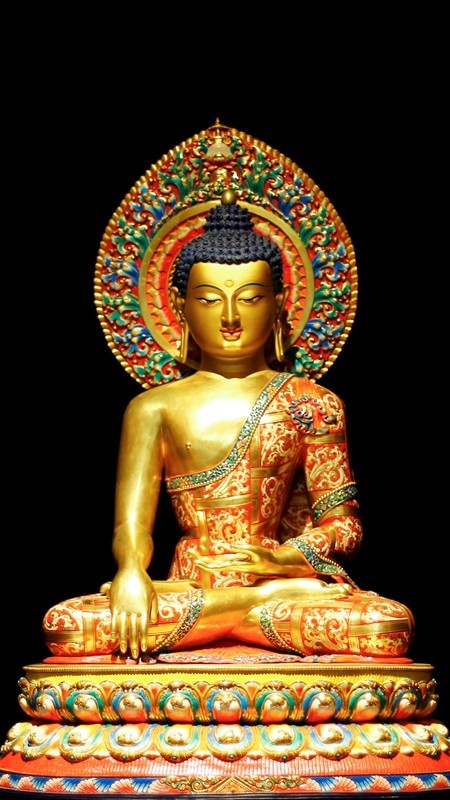
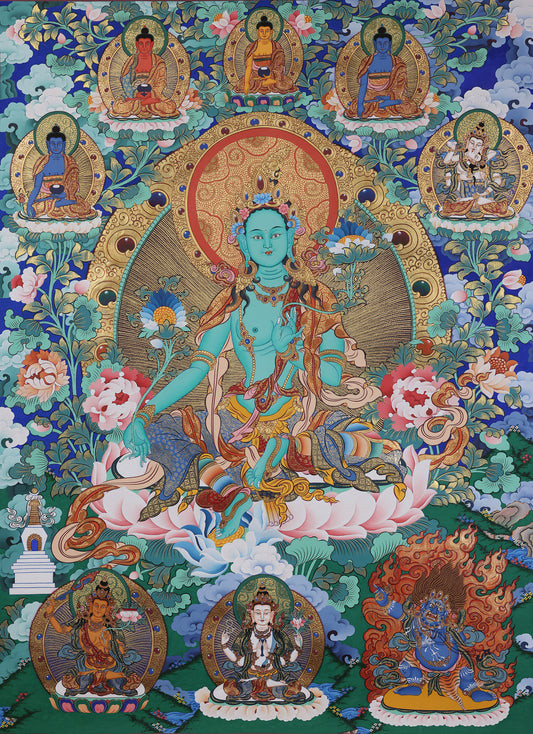
Traditional Tibetan Buddhist blue thangka portraying Shakyamuni Buddha in serene expression
Nepalese Blue Thangka of Shakyamuni Buddha: Faith and Craft in Tibetan Buddhist Art (Analysis of a 20×30cm Hand-Painted Mineral Pigment Thangka)
$499.00 USD

1. "Mobile Dharma" in the Palm: The Spiritual Foundation of the Nepalese Blue Thangka

When this 20×30cm blue thangka unfolds in your palm, you touch not just the weight of mineral pigments, but a tangible vessel of "root guru faith" in Tibetan Buddhism. This hand-painted thangka of Shakyamuni from Nepal, set against a deep lapis lazuli blue background, is a classic example of the "blue thangka" genre in Nepalese art—and the choice of blue is a dual echo of faith and geography: in Tibetan Buddhism, blue symbolizes the "emptiness of the Dharma realm" and the profundity of wisdom; for Nepal, this hue is a spiritual totem of Lumbini, Shakyamuni’s birthplace.
As a "portable thangka," the 20×30cm size is tailored to Tibetan Buddhist practitioners’ daily meditation needs. Unlike the large thangkas enshrined in monasteries, its theme is deliberately simplified to the "Enlightenment Form of Shakyamuni"—this "subtraction" is no omission, but a way to focus practitioners’ visualization on the core of the "root guru’s awakening": the moment Buddha attained enlightenment under the Bodhi tree and realized the "Four Noble Truths." It is both the starting point of the Dharma and the spiritual anchor for every believer’s pursuit of "liberation from suffering."

2. The Main Deity’s Iconography: Symbiosis of Tibetan Proportions and Newari Aesthetics

The central figure of Shakyamuni in this thangka strictly adheres to the Iconometric Canon while bearing distinct marks of the Nepalese Newari school. Every detail is a fusion of "religious symbol" and "artistic aesthetics":

1. Physique: Visual Translation of the Thirty-Two Marks

  • Complexion and Hair Bun: The face features the warm orange-gold tone unique to the Newari school, corresponding to the "golden body hue" among the Thirty-Two Marks of a Buddha; the cranial protuberance (ushnisha) wrapped in dark blue spiral hair (mineral-pigmented) signifies "perfect wisdom"; the "urna" (cranial protuberance) dotted between the brows with white mineral pigment embodies Buddha’s "transcendent vision" and "all-pervading compassion."
  • Robes and Mudra: The Buddha wears a "right-shoulder-bared" monastic robe, its folds outlined in gold paste with Newari-style scrollwork—aligning with the monastic precept of "simplicity" while hinting at "worldly majesty" through ornate lines; the hands form the Dhyana Mudra (left hand supporting the alms bowl, right hand resting atop it), the posture in which Buddha attained enlightenment. The Dharma Wheel motif on the bowl directly symbolizes "turning the wheel of Dharma."

2. Lotus Throne and Aura: Visual Vessels of Spiritual Realms

  • Double-Layered Blue Lotus Throne: The upper upward-opening and lower downward-opening lotus petals are a "standard" in Tibetan Buddhist iconography, symbolizing enlightenment "untainted by worldly defilement"; the Dharma Wheel decoration at the base echoes the bowl’s motif, reinforcing the idea of "eternal Dharma."
  • Nimbus and Aura: The inner light blue nimbus represents "perfect wisdom," while the outer radiating golden aura (in gold paste) symbolizes "Buddha’s light pervading all"; the surrounding scrollwork and cloud motifs, classic Newari decorative elements, are more than aesthetic filler—they are visual metaphors for the "pure land realm."

3. Attendant Deities: Implicit Expression in Small Nepalese Thangkas

This thangka does not depict a complex retinue of deities, but this is no oversight—it is a tradition of small thangkas in the Newari school:
The 20×30cm canvas is inherently space-constrained, so Newari artists use a "main deity as proxy for the system" strategy, allowing practitioners to mentally conjure the full retinue during visualization: disciple attendants (the Ten Great Disciples) are implied by the "simplicity of the robe"; bodhisattva attendants (Manjushri, Samantabhadra) are hinted at by the main deity’s "wisdom marks" (ushnisha, urna); protector attendants (the Eight Classes of Spirits) are hidden in the border cloud motifs.
This "implicit retinue" preserves the thangka’s simplicity and majesty, while focusing the practitioner’s attention entirely on the main deity—for a portable thangka, "spiritual focus" matters more than "visual complexity."

4. Craftsmanship: The Mineral Pigment Code of Nepalese Traditional Art

The "texture" of this thangka stems from Nepal’s millennium-old hand-painting techniques, with every step steeped in traditional care:

1. Canvas: Balancing Flexibility and Color Absorption

The base is coarse cotton cloth, repeatedly coated (5-6 times) with a mixture of cowhide glue and chalk, then polished smooth with a 鹅卵石 (cobblestone)—this process ensures the small 20×30cm canvas neither warps under heavy pigments nor fails to absorb the rich hues of mineral paints.

2. Pigments: The Timeless Magic of Minerals

All pigments are mineral or earth-based, made through painstaking "slow craftsmanship":
  • Blue: Lapis lazuli from local Nepalese sources is crushed, ground (for over 48 hours with a horn mortar and pestle), and layered for purification; only the finest top layer is used for the background and lotus throne.
  • Gold: Gold leaf is mixed with honey and bone glue to make gold paste, used for outlining folds and decorations—this gold does not fade over time, but grows warmer with oxidation.
  • Other Colors: Skin tones use red earth, decorations use malachite, accents use cinnabar; plant pigments (saffron, indigo) are only used for subtle hue adjustments.
It is this use of mineral pigments that allows the thangka to retain its deep, vivid colors for centuries—a "timeless texture" chemical pigments can never replicate.

5. Cultural Subtext: A Millennium of Sino-Nepalese Buddhist Art Dialogue

The value of this thangka extends beyond "beauty" or "faith"; it is a microcosm of Sino-Nepalese Buddhist art exchange:
Nepal is Shakyamuni’s birthplace, and its thangka art (ancient name: bowa) was introduced to Tibet during the reign of Songtsen Gampo, becoming one of the origins of Tibetan Buddhist thangkas. This thangka preserves the Newari school’s "infant-like facial features" and "decorative lines" while integrating Tibetan Buddhism’s "iconometric rules" and "symbol system"—it is a work born from the collision of "artistic genes of Buddha’s homeland" and "spiritual needs of Tibetan Dharma."
From the palm-sized 20×30cm canvas to the spiritual symbols in lapis lazuli blue, this Nepalese blue thangka of Shakyamuni is both "mobile Dharma" and "touchable culture"—in its small frame, we see the spiritual core of Tibetan Buddhism, and the millennial thread of Sino-Nepalese artistic fusion.

#NepaleseBlueThangka #ShakyamuniThangka #TibetanBuddhistArt #NewariSchool #MineralPigmentThangka #HandPaintedThangka #BuddhistArtCollectibles #PortableThangka #LapisLazuliThangka #TraditionalNepaleseArt
Discover the perfect Tibetan Buddhist Thangka that matches your wishes, lifestyle, and space. Each Thangka carries spiritual meaning and brings blessings when placed correctly.

1. Define Your Intention

Wealth & Success → Yellow Dzambhala (Wealth Deity)

Compassion & Peace → Avalokiteshvara, Green Tara

Wisdom & Learning → Manjushri

Health & Healing → Medicine Buddha

Longevity & Family Protection → White Tara

2. Choose by Identity

Entrepreneurs & Business Owners → Wealth Deities for prosperity.

Students & Scholars → Wisdom Deities for focus and clarity.

Healers & Yoga Practitioners → Medicine Buddha for energy and balance.

Families & Homemakers → Tara Deities for harmony and safety.

Collectors & Art Lovers → Rare Mandalas or Masterpiece Thangkas.

3. Match Your Space

Home Shrine / Meditation Room → Medium Thangkas (60–80 cm).

Office / Business Hall → Large Thangkas for prosperity and authority.

Living Room / Study → Decorative Thangkas for peace and beauty.

4. Authentic Craftsmanship

Hand-painted with natural mineral pigments and fine canvas, each Thangka reflects Tibetan artistry and spiritual power. Verified sources ensure quality and respect for tradition.

✨ Choose your Thangka with heart — it’s not just art, but a blessing for your life.

Different people have different needs, and choosing the right Thangka can provide spiritual support, protection, good fortune, and blessings. Below are Thangka recommendations for various roles:

1. Entrepreneurs

  • Needs: Wisdom, wealth, health, career success.
  • Recommended Thangkas:
    Manjushri: Enhances decision-making and business wisdom.
    Wealth Deity: Brings wealth and prosperity.
    Medicine Buddha: Supports health and reduces stress.
    Mahakala: Protects business from competition and challenges.

2. Successful Individuals

  • Needs: Inner peace, family harmony, longevity.
  • Recommended Thangkas:
    Amitabha Buddha: Brings inner peace and tranquility.
    Avalokiteshvara (Guanyin): Promotes family harmony and happiness.
    Amitayus (Long Life Buddha): Prays for good health and long life.
    Manjushri: Continues to enhance wisdom.

3. Housewives/Husbands

  • Needs: Family harmony, protection, health.
  • Recommended Thangkas:
    Avalokiteshvara: Increases family happiness and harmony.
    Protector Deities: Safeguards the family from external disturbances.
    White Tara: Blesses the family with health.

4. Students and Scholars

  • Needs: Wisdom, focus, academic success.
  • Recommended Thangkas:
    Manjushri: Boosts learning, memory, and wisdom.
    Sakyamuni Buddha: Helps with concentration and spiritual practice.
    Jixiang Tianmu: Brings academic good luck and exam success.

5. Artists and Creative Professionals

  • Needs: Inspiration, creativity, artistic achievement.
  • Recommended Thangkas:
    Manjushri: Stimulates creative thinking and inspiration.
    Vajrapani: Helps overcome creative blocks.
    Maitreya: Brings a relaxed and optimistic attitude, easing stress.

6. Travelers and Adventurers

  • Needs: Protection, good luck, success in adventures.
  • Recommended Thangkas:
    Hayagriva: Provides strong protection during travels and clears obstacles.
    Mahakala: Brings good fortune and protection, especially for adventurers.
    Vajrasattva: Helps overcome difficulties and challenges during the journey.

7. Elderly Individuals

  • Needs: Health, longevity, spiritual peace.
  • Recommended Thangkas:
    Amitayus: Prays for long life and good health.
    Medicine Buddha: Promotes healing and physical well-being.
    Avalokiteshvara: Brings compassion and inner peace in later years.

8. Corporate Executives

  • Needs: Leadership, wisdom, teamwork, and business success.
  • Recommended Thangkas:
    Manjushri: Enhances leadership skills and decision-making.
    Wealth Deity: Brings success and prosperity to the business and team.
    Avalokiteshvara: Promotes harmony and balance within the team.

9. Health and Fitness Enthusiasts

  • Needs: Good health, vitality, energy.
  • Recommended Thangkas:
    Medicine Buddha: Enhances physical health and vitality.
    White Tara: Brings health and rejuvenation.
    Vajrasattva: Clears health challenges and boosts energy.

10. Politicians

  • Needs: Leadership, wisdom, peace.
  • Recommended Thangkas:
    Manjushri: Enhances leadership abilities and decision-making.
    Vairocana Buddha: Helps maintain inner peace and wisdom.
    Avalokiteshvara: Promotes societal peace and family harmony.

For all orders exceeding a value of 100USD shipping is offered for free.

Returns will be accepted for up to 10 days of Customer’s receipt or tracking number on unworn items. You, as a Customer, are obliged to inform us via email before you return the item.

Otherwise, standard shipping charges apply. Check out our delivery Terms & Conditions for more details.

Returns will be accepted for up to 10 days of Customer’s receipt or tracking number on unworn items. You, as a Customer, are obliged to inform us via email before you return the item, only in the case of:

– Received the wrong item.
– Item arrived not as expected (ie. damaged packaging).
– Item had defects.
– Over delivery time.
– The shipper does not allow the goods to be inspected before payment.

The returned product(s) must be in the original packaging, safety wrapped, undamaged and unworn. This means that the item(s) must be safely packed in a carton box for protection during transport, possibly the same carton used to ship to you as a customer.

Recently Viewed

Don't forget! The products that you viewed. Add it to cart now.

Pairs well with

Enhance your selection with perfectly matched accessories and complementary products..

People Also Bought

Here’s some of our most similar products people are buying. Click to discover trending style.