Vajrasattva Yab-Yum Thangka: This Hand-Painted Black & Gold Thangka Hides a Tibetan Esoteric Practice Field for "Purifying Karmic Obstacles"
wudimeng-Nov 28 2025-
0 comments
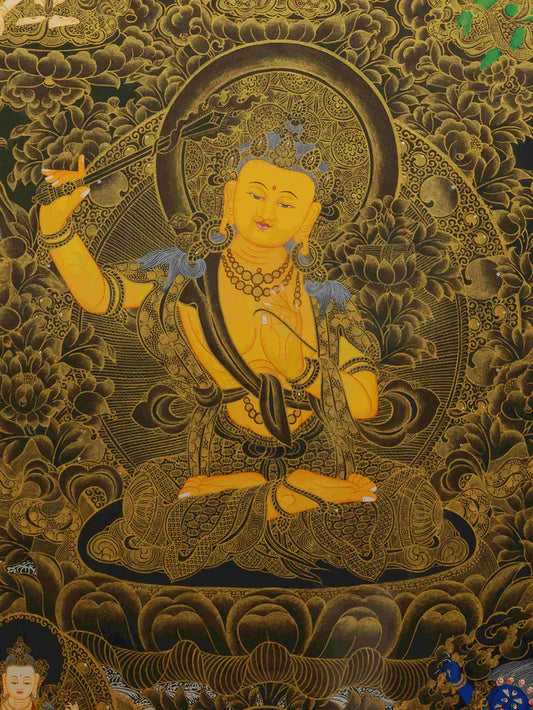
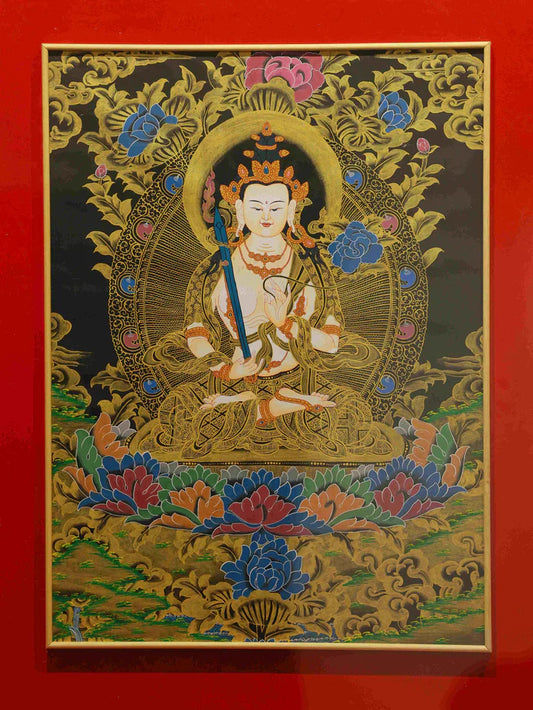
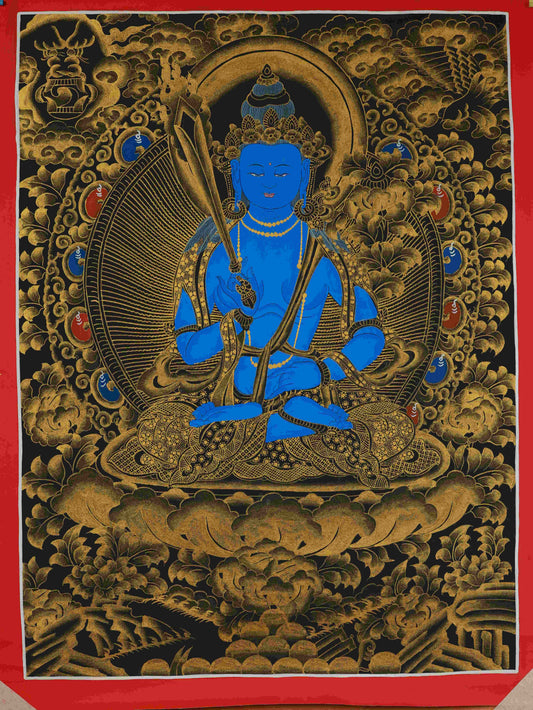
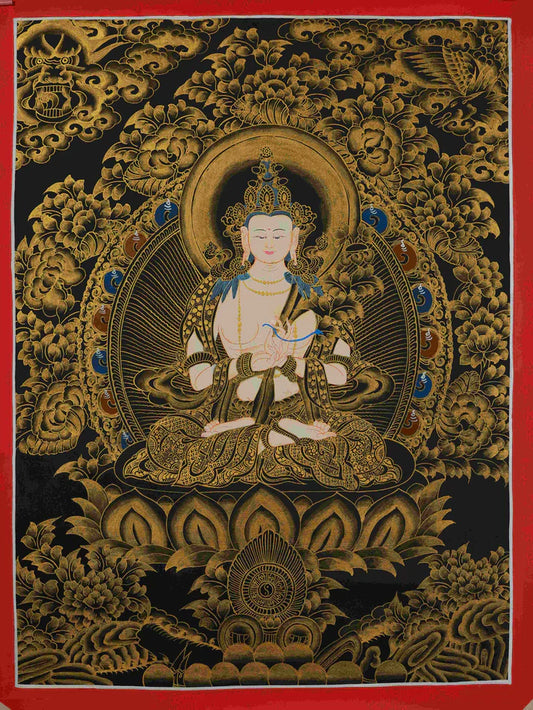
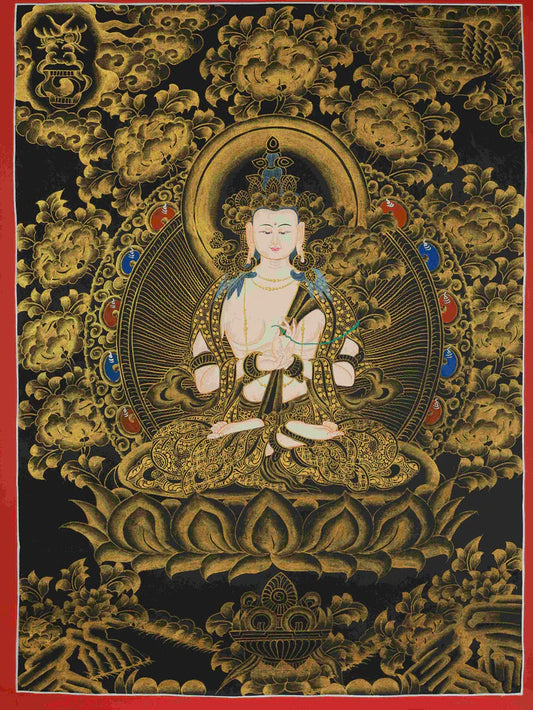
When a hand-painted thangka centered on the "white Vajrasattva + consort yab-yum form" and set against a black-and-gold background unfurls, you’re not just witnessing the pinnacle of Tibetan esoteric art—you’re stepping into the practice universe of "purifying karmic obstacles and realizing non-duality" in Tibetan Buddhism. Today, we break down this Vajrasattva Yab-Yum Thangka: from the yab-yum symbolism to the retinue configuration, why is it the "purification choice" among esoteric thangkas?
You may have seen single-figure Vajrasattva thangkas, but the embracing yab-yum form of Vajrasattva is the core symbol of "non-duality of skillful means and wisdom" in Tibetan esotericism:
-
Deity’s Form: The snow-white body embodies the "pure nature after karmic obstacles are purified"—in Tibetan esotericism, the white Vajrasattva is inherently the bodhisattva of "purifying all karmic sins";
-
Yab-Yum Posture: The "great bliss yoga" pose (the main deity embracing the consort) is not a secular image, but a metaphor for "the union of wisdom (main deity) and skillful means (consort)" in esotericism: only by upholding skillful means with wisdom can one attain the ultimate realization of "non-duality of emptiness and bliss";
-
Four-Armed Ritual Implements: The right upper hand holds a vajra (to shatter afflictions), the left upper hand holds a ghanta (to manifest emptiness), and the arms embracing the consort hold an amrita vase (containing "nectar for purifying karmic obstacles")—each implement is a visual symbol of "practice function."
Even the patterns on the Five-Buddha Crown and the luster of the ornaments are layered stroke by stroke by the artist using gold leaf and natural mineral pigments (white conch powder, lapis lazuli powder)—every rise and fall of the gold lines carries the warmth of "handmade blessing."
The "supporting figures" in this thangka hold the "blessing logic" of Tibetan esotericism:
-
Buddhas Above: The emanation Buddhas/bodhisattvas at the top represent the "wisdom source of the Dharmakaya Buddha"—meaning Vajrasattva’s purifying power stems from the Buddha-nature of ultimate enlightenment;
-
Retinue Group Below:
- The yellow protector (Yellow Jambhala): Symbolizes "the natural fulfillment of merit and resources after karmic obstacles are purified";
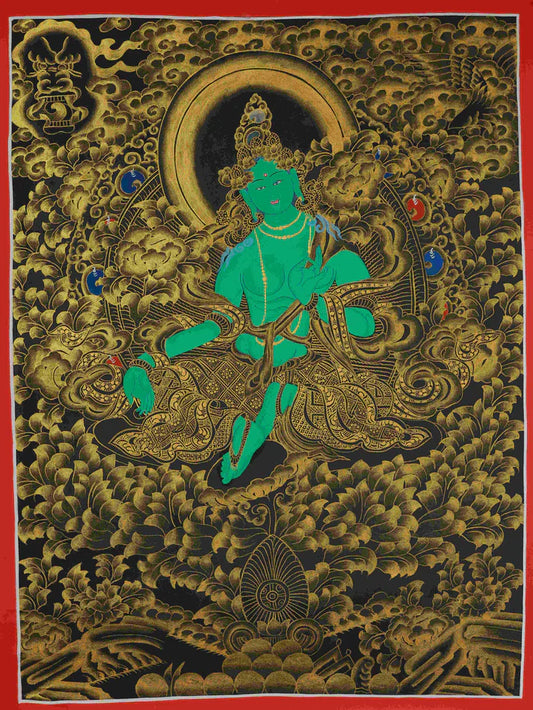
- Green/White Tara: Provide compassionate protection to stabilize the "path of purification";
These retinues are not just decorations—they extend the function of "purifying karmic obstacles" into a comprehensive practice support system of "merit + protection + enlightenment."
The background of this thangka holds the "spatial philosophy" of Tibetan esotericism:
-
Black & Gold Color Scheme: Black is not oppressive; it represents the "void of ignorant afflictions." The gilded cloud patterns and interwoven lotus flowers are "wisdom light and pure beauty"—as the gold patterns unfurl on the black base, it visualizes "wisdom dispelling afflictions and karmic obstacles returning to purity";
-
Lotus Throne & Floral Ornaments: The main deity sits atop a multi-layered lotus throne (the lotus symbolizes "purity rising unsoiled from mud"), while surrounding interwoven flowers (peonies, blue lotuses) blend Tibetan aesthetic opulence with the esoteric concept of "maintaining a pure mind amid worldly life."
More and more practitioners and Tibetan art lovers favor this thangka for its "dual value":
-
Cultural Value: Hand-painted in the Menri school style, its natural mineral pigments resist fading for centuries—making it a "transmissible esoteric art asset";
-
Practice Value: Vajrasattva is inherently the core bodhisattva of "purifying karmic obstacles." The yab-yum form + retinue configuration of this thangka shrinks a "pure dharma hall" into a single artwork: hung in a study or meditation room, it’s both visual art and a practice ritual that "constantly reminds one to maintain a pure mind."
In the market…