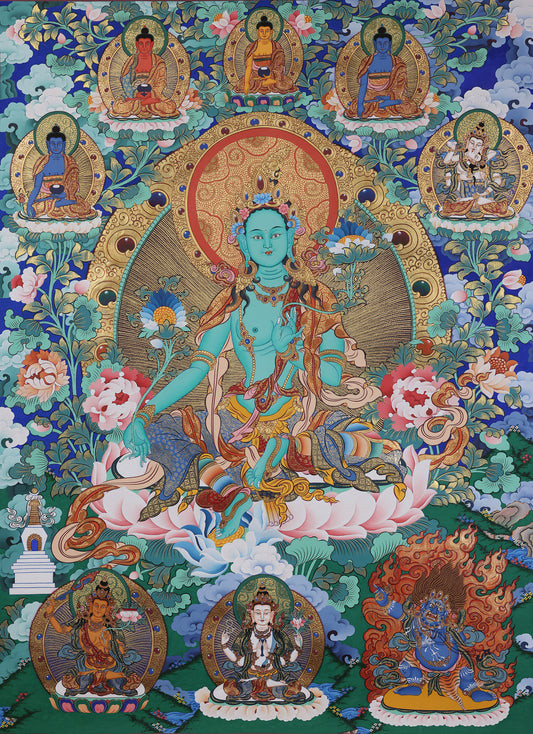

symbolizing the ever-blossoming roots of longevity merit. Behind him radiate two layers of light:
-
An inner orange halo, expressing warmth and compassionate vitality.
-
An outer golden Dharma-wheel aura, symbolizing the eternal continuation of the Buddha’s teachings made possible by Amitayus’s abiding presence.
The halo’s edges are adorned with scrolling vine motifs, a classic Tibetan symbol of unbroken lineage.
III. The Retinue: The Sacred Assembly of the Longevity Pure Land and Its Functional Hierarchy
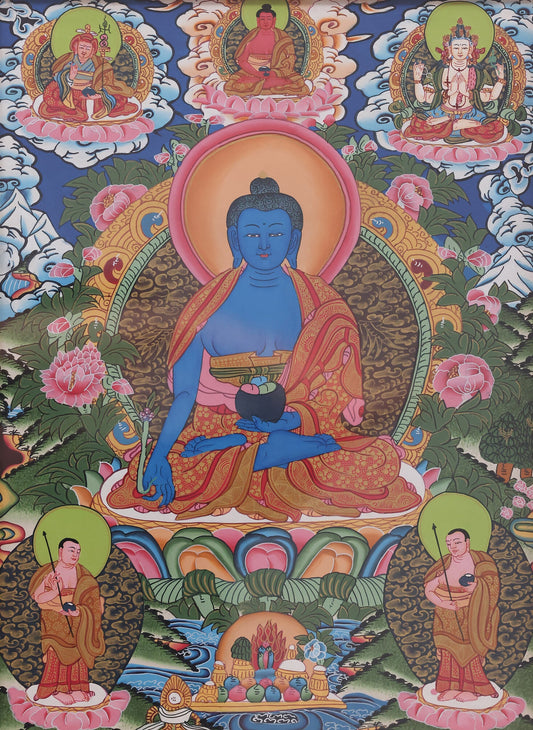
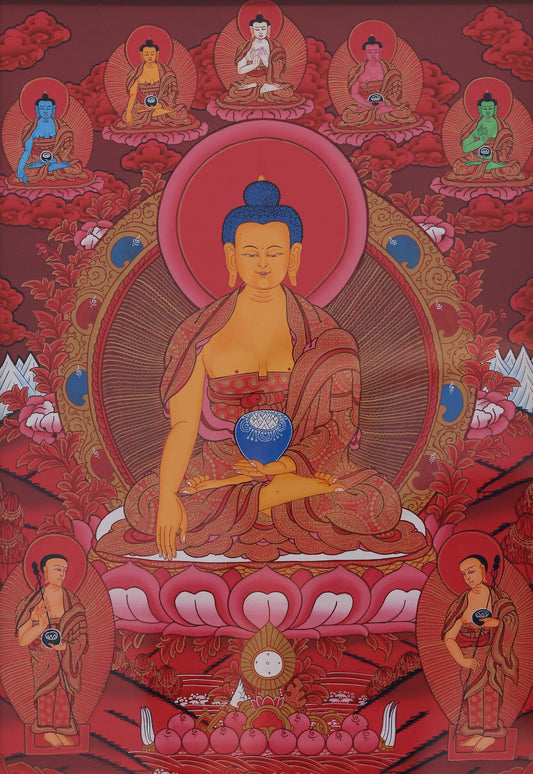
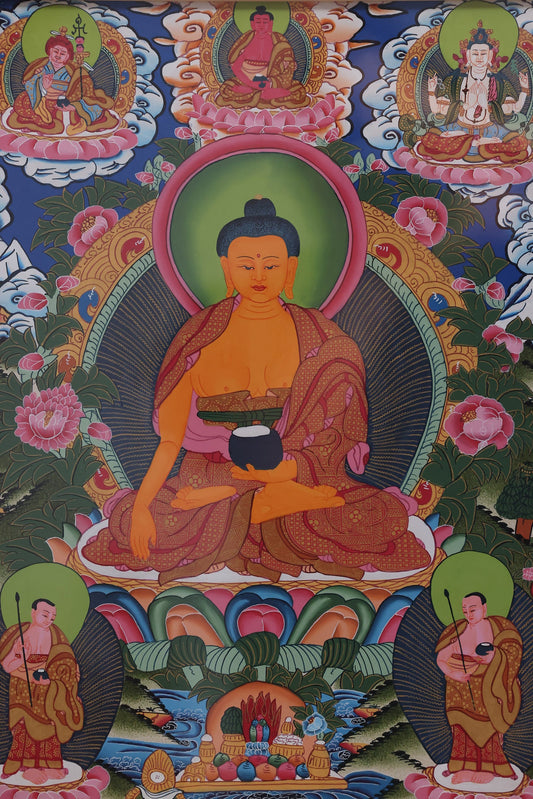
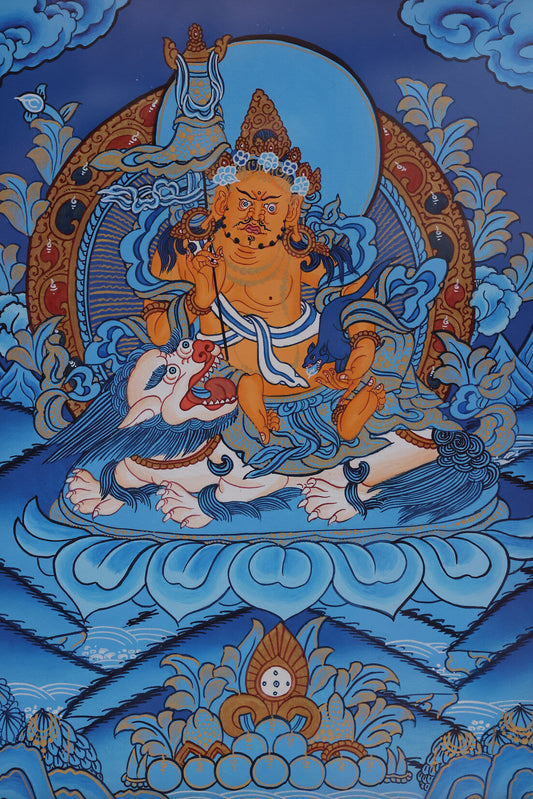
The attendant deities are arranged around Amitayus in a structured hierarchy—Buddha, Bodhisattva, and Longevity Deities—forming a sacred order dedicated to sustaining life and protecting the Dharma.
Upper Deity
Above Amitayus appears Shakyamuni Buddha, a canonical feature in Tibetan longevity Thangkas. This signifies that Amitayus’s longevity vow is the vital support for the continuation of Shakyamuni’s Dharma lineage, reinforcing the principle that longevity practice must be grounded in the Buddha’s teachings.
Attendant Deities
Flanking the principal deity are the two companions of the Three Long Life Deities:
-
White Tara (left), holding a lotus, symbolizes compassionate bestowal of longevity blessings.
-
Ushnishavijaya (right), holding a vase, represents the destruction of short-life karmic obstacles through mantra power.
Together, they function as the active agents of Amitayus’s longevity vow, reflecting the core structure of Gelug longevity rituals.
Sacred Objects and Supporting Figures
-
Longevity Vase and the Eight Auspicious Symbols below the throne signify unbroken longevity merit and the protection of life and lineage through eightfold virtues.
-
Offering Goddesses surrounding the scene present music and offerings, symbolizing the accumulation of longevity merit through joyful devotion.
These figures are not decorative; they are the visual embodiment of the longevity ritual system—from Shakyamuni as the doctrinal foundation, through the Three Long Life Deities’ active vows, to the accumulation of merit by devotees—presenting a complete sacred logic of sustaining life and Dharma.
IV. Painting Craftsmanship: The Union of Sacred Artistry and Longevity Aspiration
This Thangka is a pure hand-painted work in the Menri–Mentsa tradition, known for its ornate colors and intricate detail. Its craftsmanship is itself a spiritual practice of accumulating longevity merit.
Canvas Preparation
A fine cotton canvas undergoes an elaborate process:
five cycles of soaking in yak-hide glue, stretching on a wooden frame, and polishing with jade stone—taking approximately 15 days. Tibetan painters regard this process as preliminary purification of life-shortening karma. The glue is traditionally infused with Tibetan medicinal herbs associated with longevity, symbolizing karmic harmonization.
Pigment Preparation
Only natural mineral and plant pigments are used:
-
Red from cinnabar and safflower
-
Gold from 24K gold leaf ground to under 5 microns
-
Blue from lapis lazuli
-
Green from malachite
Pigments are mixed in a 4:1 ratio with hide glue, ensuring durability for centuries and symbolizing the unchanging nature of longevity vows.
Painting Techniques
-
Line Drawing: Executed with fine wolf-hair brushes using centered strokes, producing dense, refined lines characteristic of the Mentsa style. The intricacy reflects the diligence required to accumulate longevity merit.
-
Color Application: Multi-layered heavy-color shading (four to five layers) creates luminous depth, especially in Amitayus’s red body, evoking the splendor of the Pure Land of Longevity.
-
Opening the Eyes (Consecration Stage): The most sacred step, performed with a focused longevity aspiration, using a fine purple brush to render the eyes—imbuing the deity with compassionate presence.
Compositional Logic
The Thangka follows a mandala-style composition, with the principal deity at the center and ritual elements arranged according to liturgical directions. Warm tones dominate, symbolizing longevity energy as a nurturing sun that sustains all beings.
Conclusion: The Thangka as a “Portable Mandala” of Longevity Practice
This Amitayus Pure Land of Longevity Thangka represents the union of art and ritual, functioning as a portable mandala for longevity cultivation.
Its theme narrates the aspiration to extend life and preserve the Dharma; its deities form a complete ritual symbol system; and its craftsmanship embodies spiritual discipline through sacred artistry.
In Tibetan culture, such a Thangka is not merely decorative—it is a living support for visualization, longevity practice, and merit accumulation. Every mineral pigment stroke and every refined line carries the aspiration: may life endure, and may the Dharma remain in the world. This is the profound cultural essence of Tibetan Thangka art—form and spirit united, purpose and practice inseparable.
#AmitayusBuddha
#TibetanThangka
#PureLandOfLongevity
#TibetanBuddhism
#LongevityPractice
#ThreeLongLifeDeities
#BuddhistArt
#HandPaintedThangka
#MenriMentsaStyle
#SacredBuddhistArt
#ThangkaPainting
#SpiritualArt
#BuddhistIconography
#MeditationArt
#HimalayanArt
Tags: