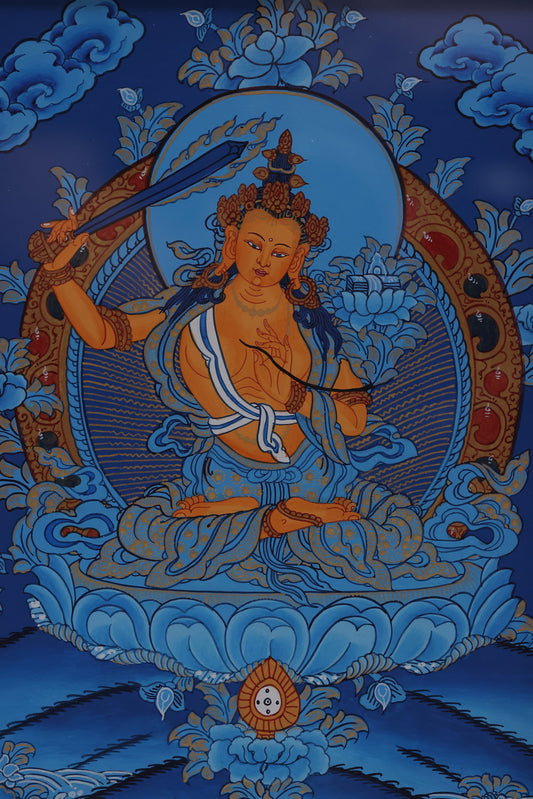
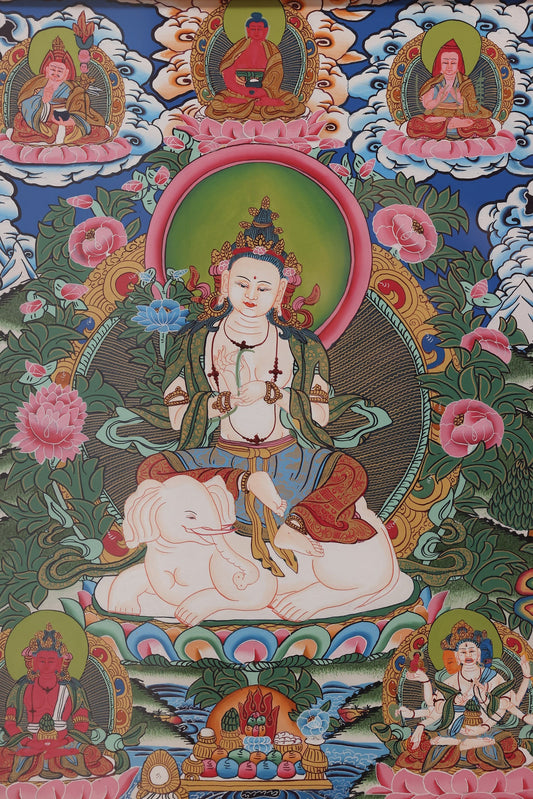
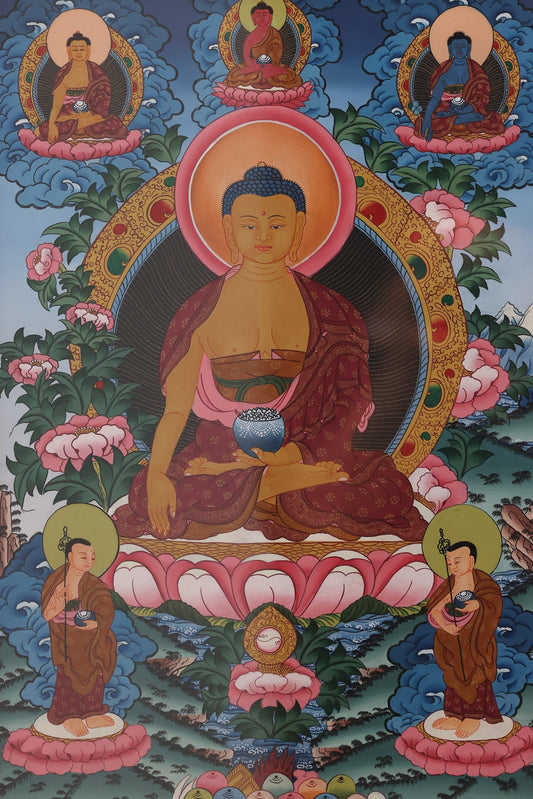
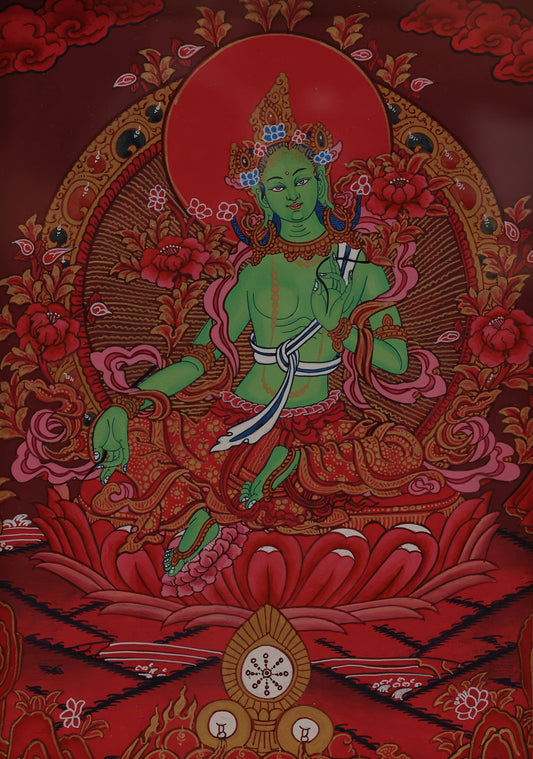
Push open the wooden door of a Tibetan monastery hall, and you’re always caught by the intense colors of a thangka on the wall—its turquoise figure, open lotus seat, and surrounding deities seem to cram an entire Buddha-land’s compassion into pigment.
Today, we’re talking about just such a Tibetan thangka centered on Green Tara: it’s not just a decorative painting, but a "salvation amulet" tucked in Tibetans’ hearts, and a solemn code of Regong art.
Tibetans say Green Tara is "the tear shed from Avalokiteshvara’s left eye"—this turquoise form is compassion made tangible.
As the most widely revered female deity in Tibetan Buddhism, every detail of her carries meaning:
-
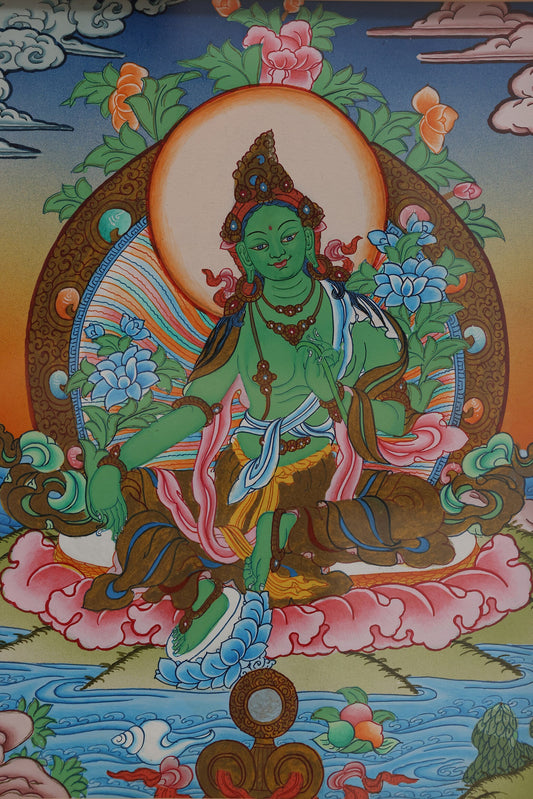
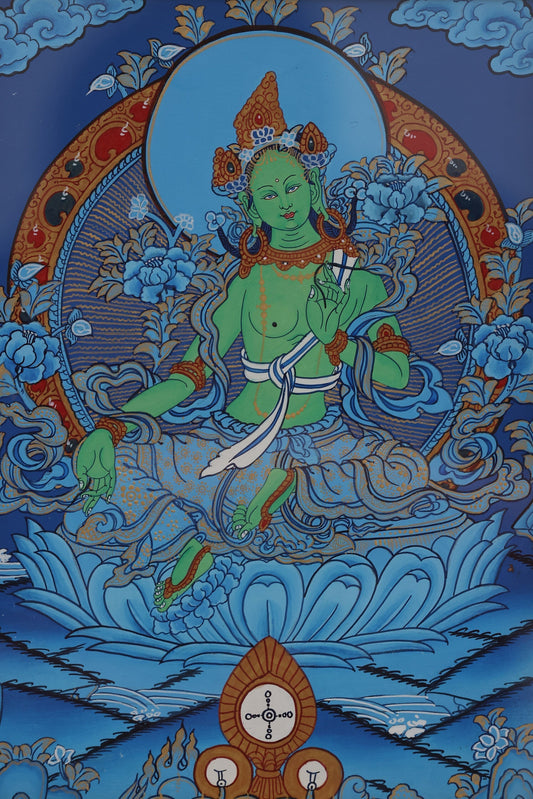
Turquoise Body: Not a random color choice, but a symbol of "subduing the three poisons (greed, anger, delusion)"; it also evokes the summer grasslands of the plateau, brimming with vitality and hope.
-
Lalita Asana (Playful Posture): Her right foot rests lightly on a lotus petal, left foot folded on the lotus throne—combining the stillness of meditation with the readiness to "rise at any moment to meet suffering." To Tibetans, this is the tenderness of "not clinging to nirvana, not abandoning sentient beings."
-
The Utpala Lotus in Her Hand: Half-open, half-closed, it holds "past vows, present salvation, future protection." Even the dewdrops on the stem are painted with fine brushstrokes as "nectar that purifies afflictions."
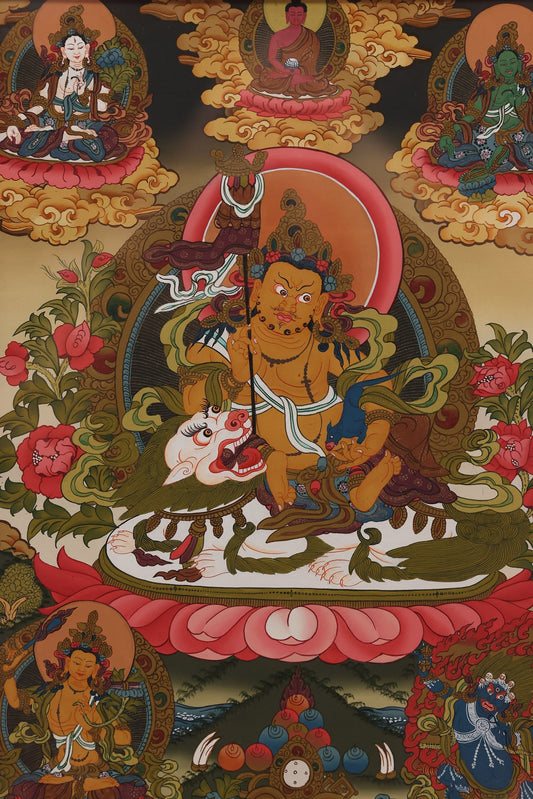
The composition of this thangka hides the "three-realm order" of Tibetan Buddhism—beyond the main deity, every surrounding Buddha and deity is a participant in this compassion.
Above, in the Celestial Realm, several Buddhas sit on lotus thrones: some red-bodied holding alms bowls, others blue-bodied making mudras. They are Green Tara’s "dharma origin" (in Tibetan scriptures, Green Tara is the combined emanation of Amitabha and Avalokiteshvara), like hanging "the fundamental blessing of the Dharma" at the top of the thangka.
On either side of the main deity, attendants of varying hues are faintly visible: perhaps the eight emanations of Tara (corresponding to eight calamities like lion attacks and fires), or fellow vow deities like White Tara and Manjushri. They are Green Tara’s "retinue"—the "second pair of hands" in sentient beings’ suffering.
Below, in the Lower Realm, the fierce blue-bodied protector deity stands out: wreathed in flames, treading on evil. Though seemingly ferocious, it is a "guardian that subdues obstacles"—Tibetans believe the tenderness of compassion always needs the strength of a vajra to protect it.
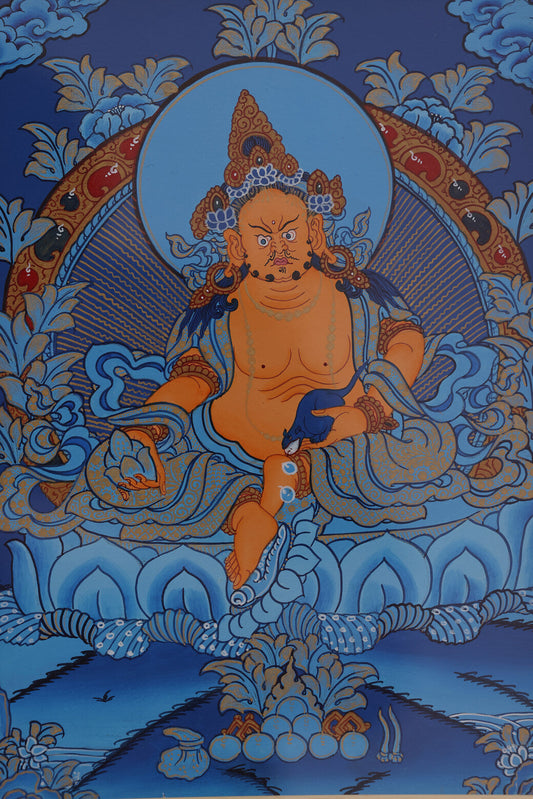
The brushstrokes of this thangka carry the soul of Regong art—monk-painters of Qinghai’s Regong region spend months or years weaving a single act of compassion into cloth.
First, they stretch fine cotton into a canvas, coat it with a base of plaster and oxhide glue, and polish it until it reflects light. Then they apply pigments ground from minerals like lapis lazuli, malachite, and cinnabar—even the harsh plateau sun won’t fade this turquoise hue for a century.
The lines hold strict rules: robe patterns use "iron-wire line drawing," following the proportions of the Iconometric Canon of Buddhist Art; even the curve of a necklace must align with the "compassionate form" in scriptures. The halo behind the main deity is first gilded with gold leaf, then detailed with jewel patterns, making the aura feel like "light from the Buddha-land, illuminating the darkness of the world."
Even the background’s interwoven lotus and cloud patterns are intentional: the number of lotus petals corresponds to the "Six Perfections," and cloud swirls mimic "the wind of the Buddha-land." Tibetan art is never just "beautiful"—it turns every inch of faith into visible solemnity.
Tibetans sew small thangkas into amulets or hang large ones in monasteries—for them, this Green Tara thangka is not "art," but "tangible compassion."
That turquoise hue is the Tara Mantra a mother chants when her child cries at night; those surrounding deities are the courage a traveler clutches while crossing snow-capped mountains; even the lapis lazuli in the pigment feels like the plateau sky, holding the promise: "If you call, I will come."
This is perhaps the magic of thangkas: they turn the solemnity of the Buddha-land into the warmth of Tibetans’ daily lives.
#TibetanThangka #GreenTaraCulture #RegongArt #TibetanBuddhistArt #ThangkaAnalysis