Hand-Painted Tibetan Buddhist Thangka: Faith and Artistic Analysis of the Long Life Trinity

1. Theme: Blessings of the Long Life Trinity
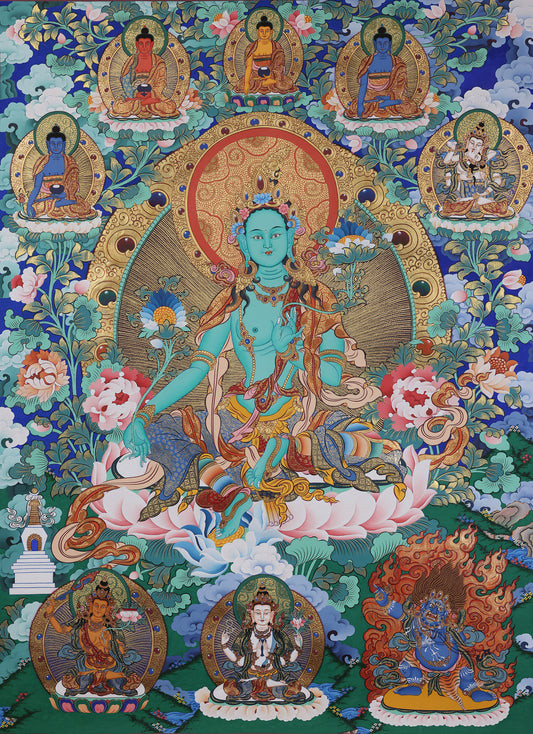
In the Tibetan Buddhist art system, thangkas are not merely visual art; they are vessels of faith and practice. Among them, the Long Life Trinity theme holds special significance, symbolizing longevity, obstacle removal, and the increase of blessings. This hand-painted thangka centers on the Long Life Trinity, perfectly merging faith and art through intricate craftsmanship and ritual layout.
The veneration of the Long Life Trinity originates from the intersection of tantric rituals and the indigenous Tibetan view of life. In Tibet’s harsh highland environment, the desire to prolong life has been deeply rooted in cultural consciousness. Thus, the Long Life Trinity has become one of the most universally approachable deity combinations in Tibetan Buddhism. Ordinary devotees and advanced practitioners alike can receive spiritual comfort and blessings by offering this type of thangka.
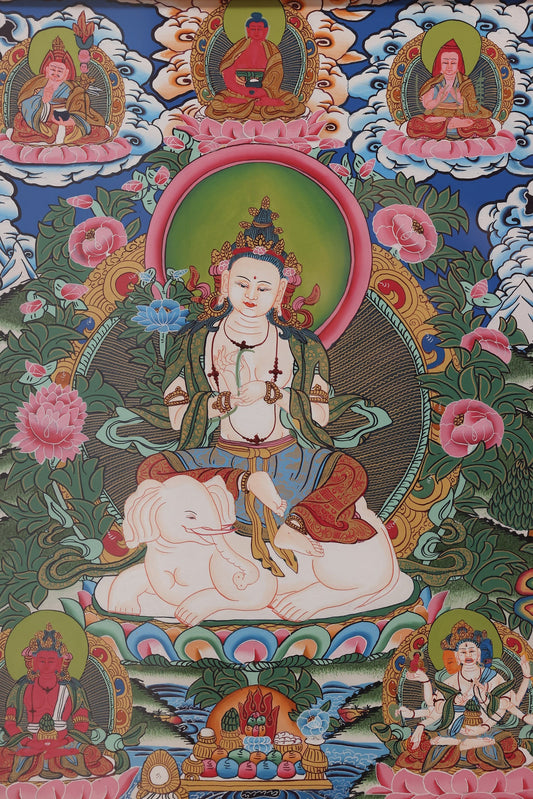
Notably, this thangka positions White Tara as the central deity. Traditionally, the Long Life Trinity places Amitayus Buddha at the center; here, White Tara takes the central position, highlighting her qualities of “rescuing from the eight hardships and swiftly fulfilling wishes”, while following the ritual logic of “three deities converging to amplify blessings”. This composition reflects Tibetan Buddhist practice of putting sentient beings’ needs at the core. Devotees seek not only longevity but also hope that White Tara’s seven-eyed wisdom will illuminate their sufferings, Amitayus’ nectar will purify karma, and Ushnishavijaya’s power will overcome disasters, ultimately achieving peace of body and mind and the growth of both merit and wisdom.
2. Main Deity: Iconography and Symbolism of White Tara
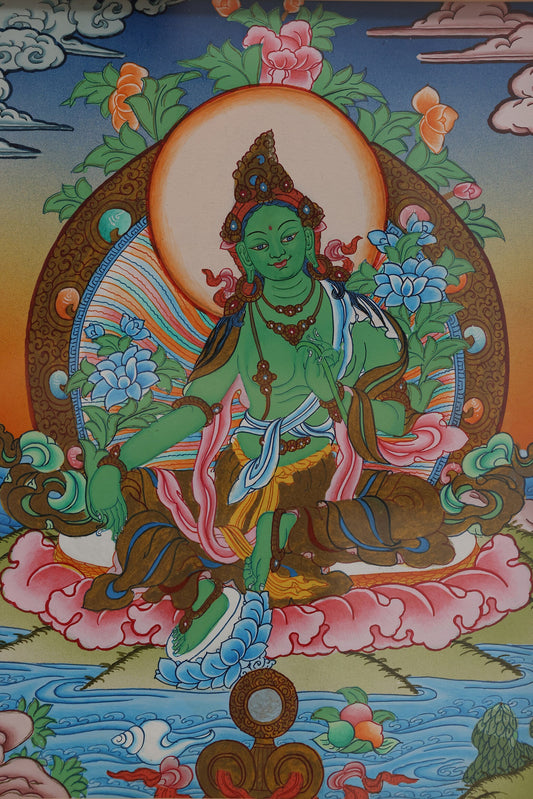
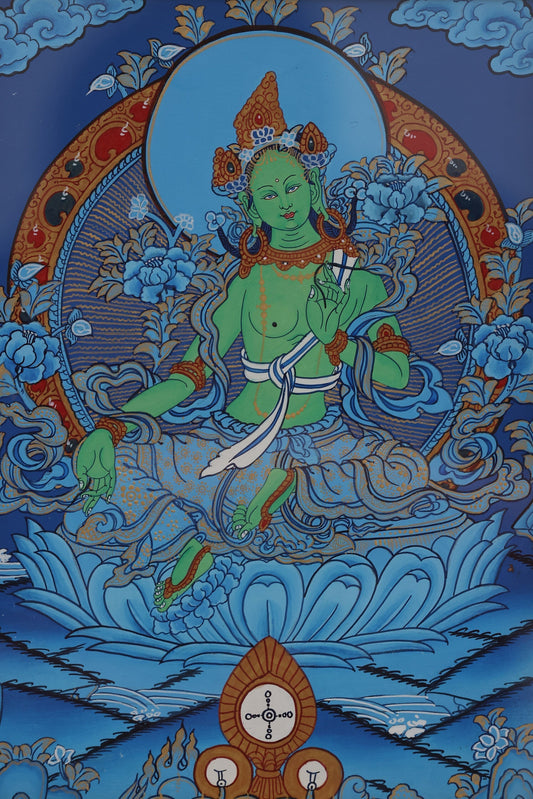
The central deity is White Tara (Tibetan: Dolma Gyalmo), one of the twenty-one forms of Tara, born from a tear of Avalokiteshvara. She embodies compassionate salvation and longevity, and her iconography strictly follows the Sutra on Proportions for Sacred Images and tantric ritual prescriptions.
Physical Characteristics
White Tara’s complexion is pure white like the moon, symbolizing immaculate wisdom. She appears as a sixteen-year-old maiden, representing eternal youth and vitality. Her head is adorned with a seven-leaf floral crown, large earrings, and elaborate jewelry including necklaces, armlets, and anklets, reflecting both the splendor of the celestial body and Tibetans’ aesthetic appreciation of wholeness and perfection.
The most distinctive feature is her seven eyes: in addition to the two normal eyes, she has one on the forehead, two on the palms, and two on the soles of her feet. The forehead eye sees all Buddha lands in the ten directions, and the hands and feet perceive all sentient beings in the six realms, symbolizing universal compassionate awareness, earning her the title “Seven-Eyed Mother.”
Hand Gestures and Attributes
-
Right hand: in the granting-wish mudra (palm outward on the knee), representing the fulfillment of devotees’ prayers.
-
Left hand: holds a lotus stem with the three jewels, extending along the arm to the ear, with the lotus in full bloom, symbolizing nourishment of sentient beings’ wisdom through the nectar of Dharma.
Lotus Seat and Halo
White Tara sits on a multi-layered lotus-moon throne. The lotus signifies liberation from afflictions, while the moon represents coolness and serenity. Her head and body radiate green, pink, and gold halos with outer curling vine patterns, embodying the spiritual principle of Buddha’s light and emphasizing sanctity through the unique color gradation of Regong thangka painting.
3. Attendant Deities: Mandala-Style Protectors and Assembly
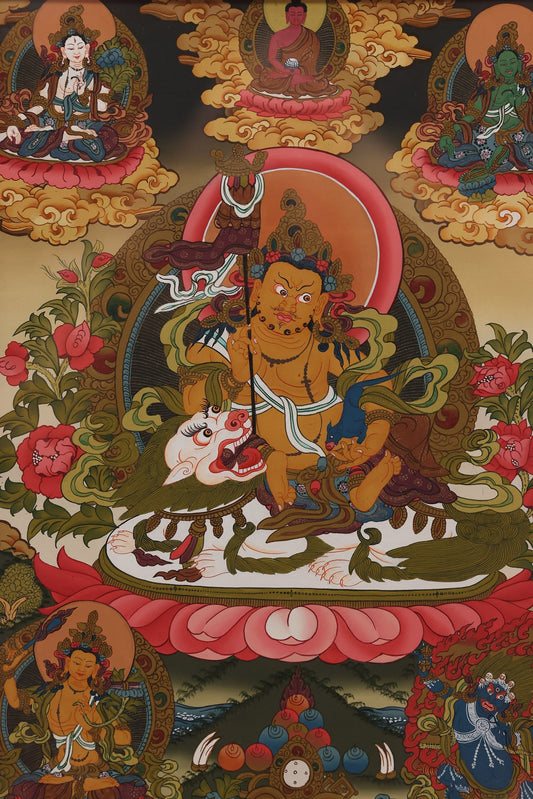
The thangka arranges attendant deities in a mandala layout, illustrating the hierarchy of main deity – attendants – protectors and emphasizing the concentration of blessings.
Top Three Deities
The top usually depicts the other two members of the Long Life Trinity and the lineage master:
-
Red-bodied deity holding a longevity vase: Amitayus Buddha, symbolizing endless life and happiness.
-
Multi-armed deity: Ushnishavijaya, three faces and eight arms representing obstacle removal, blessing, and subjugation of negative forces, holding a longevity vase and the fearlessness mudra to symbolize purification of karma and stability protection.
This arrangement not only emphasizes the Long Life Trinity theme but also reflects the transmission of spiritual lineage in Tibetan Buddhism.
Bottom Attendants and Protector Deities
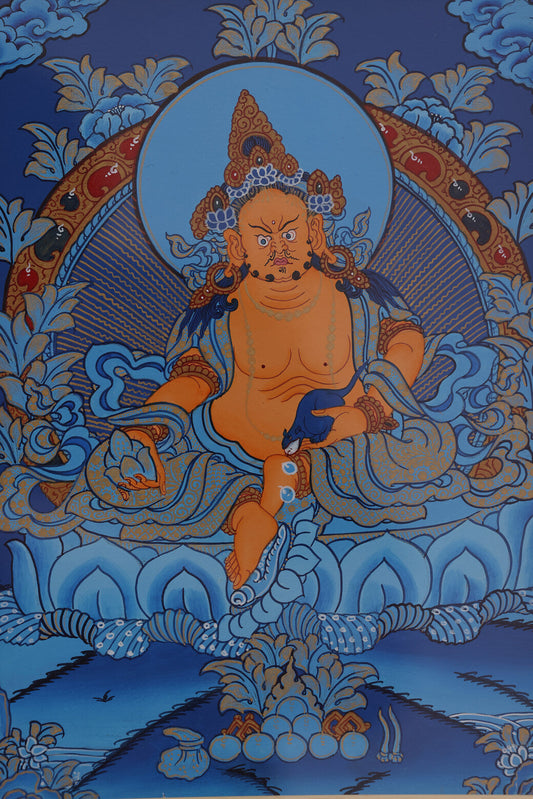
On the lower sides are the Eight Great Bodhisattvas (e.g., Manjushri, Vajrapani), representing wisdom and power, while central and side wrathful protectors (e.g., Vaisravana, wrathful Vajrapani) symbolize destruction of obstacles and Dharma protection. This combination of peaceful main deity + wrathful protector embodies the unity of compassion and power, resonating with Tibetan culture’s response to environmental and societal risks.
4. Painting Technique: Regong Thangka Mineral Pigments and Gilding
This thangka is a Regong-style painting from Qinghai, renowned for rich colors, precise craftsmanship, and elegant gold application.
Canvas Preparation
Pure cotton cloth is coated with 5–7% bovine glue, followed by a layer of white clay or gypsum, polished with river stones for smoothness, ensuring the longevity and adhesion of mineral pigments—the foundation for a thangka that can last over a century.
Pigment System
All pigments are natural minerals and plants:
-
White: Renbu white powder (ground white stone)
-
Blue/Green: Lapis lazuli and green mineral stones
-
Red: Cinnabar or coral powder
-
Yellow: Orpiment and realgar
The thick texture and stable hue of mineral pigments convey eternal Dharma, producing a gemstone-like glow. White Tara’s skin uses white powder mixed with a trace of pearl powder, yielding a luminous, layered effect.
Gold Application
-
Line gilding: fine brushes from cat or weasel hair, mixed with sesame water, delineate halos, ornaments, and details.
-
Gold leaf application: broad brush for base coverage, etched with agate or steel stylus in the Regong “sun” technique, creating contrast between matte and shine, enhancing three-dimensionality.
Technique Features
Combines flat color + shading:
-
Main deity skin layered to express volume
-
Clouds, flowers, and plants flat-colored for decoration
-
Face painting (Opening the Face): arcs eyebrows, delicate eyes, smiling lips, symmetrical seven eyes. Regong thangkas emphasize “one eye sets the soul,” demonstrating the painter’s skill and spiritual power.
5. The Symbiosis of Faith and Art
The Long Life Trinity thangka is more than art—it is a visual manifestation of faith:
-
The theme responds to universal desires for health, longevity, and peace.
-
The arrangement of main and attendant deities reflects Buddhist cosmology.
-
Craftsmanship with mineral pigments and gold embodies eternal Dharma.
From a Tibetan cultural perspective, it serves as both a household altar sacred object and a spiritual-artistic medium. Every pigment stroke and golden line is a dialogue between the artist and faith, making the thangka “visible compassion, tangible blessings.”
Conclusion
The Long Life Trinity thangka is a pinnacle of art and faith in Tibetan Buddhism. It fulfills devotees’ prayers for health, longevity, and family safety, while expressing Tibetans’ profound understanding of life, wisdom, and compassion. Whether for practice, household worship, or collection, it represents timeless spiritual power and supreme artistic achievement.
#TibetanBuddhistThangka #LongLifeTrinity #WhiteTara #RegongThangka #BuddhistArt #HandPaintedThangka #TantricDeities #FaithAndArt #LongevityBlessings #SpiritualArt #BodhisattvaThangka #ProtectorDeities #MineralPigmentThangka #GoldGildingThangka #TibetanCulture #HomeAltar #MeditationArt #SacredArt #ThangkaCollection #BuddhistTradition
Tags:
Previous
Vermilion Mandala of Blessings and Longevity: Cultural and Artistic Analysis of the Longevity Buddha Thangka
Next
Hand-Painted Tibetan Buddhist Mahavairocana Thangka: Mandala of the Dharmadhatu and Artistic Decoding