In Tibetan culture, a true Thangka is far more than a painting.
It is a sacred object meant to be enshrined, contemplated, and revered—a visual embodiment of enlightened compassion and spiritual aspiration.
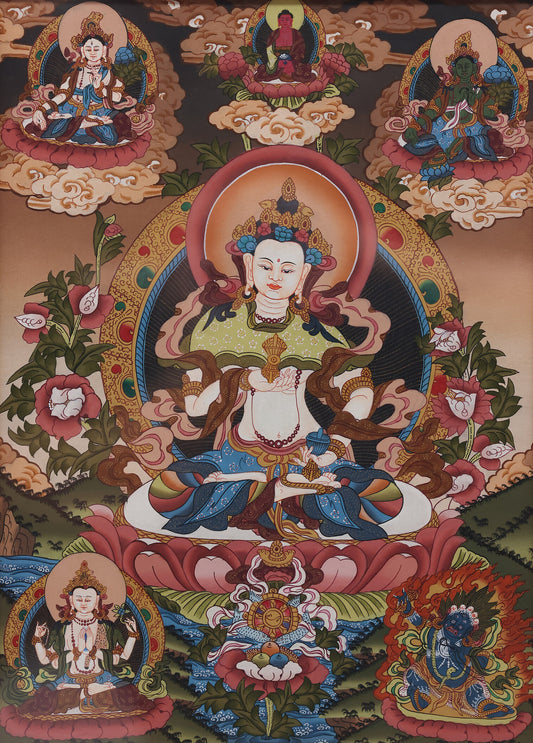
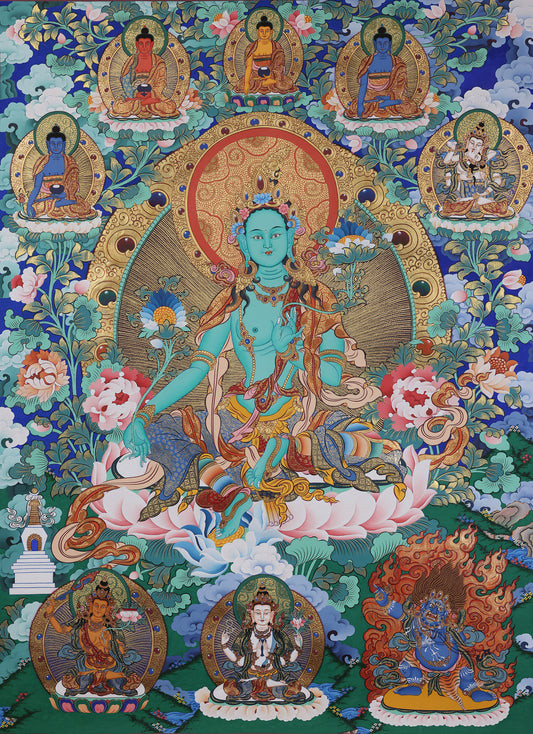
This hand-painted White Tara Thangka, centered on the core Tibetan Buddhist themes of longevity and compassion, represents a classical example of traditional Tibetan scroll painting. Its composition, iconography, and craftsmanship strictly follow ritual guidelines while conveying the Tibetan people’s profound prayers for life, well-being, and inner peace.
It is often described as a “portable shrine” and a “mandala formed through color.”
I. Core Theme|The Compassionate Blessings of the Three Deities of Longevity
The central theme of this Thangka is “White Tara with the Longevity Deities”, belonging to the Tibetan Buddhist tradition of auspicious blessing Thangkas that cultivate both merit and wisdom.
In Tibetan Buddhism, White Tara is believed to be an emanation of the tear shed from the left eye of Avalokiteshvara (Chenrezig). She embodies boundless compassion, the alleviation of suffering, and the bestowal of long life and health.
Together with Amitayus (Buddha of Infinite Life) and Ushnishavijaya, she forms the revered “Three Deities of Longevity”, one of the most widely venerated blessing groups in Tibetan religious life.
The composition reflects the Tibetan Buddhist cosmological principle of “the central deity governing all directions.”
The main deity occupies the center, while attendant deities are arranged around her—symbolizing both spiritual hierarchy and the radiating reach of enlightened power across all realms of existence.
To enshrine this Thangka is not merely to pray for long life, but to seek the removal of obstacles, the increase of wisdom, and inner stability—aspirations deeply rooted in the lived experience of life on the Tibetan Plateau.
II. The Main Deity|Iconography and Symbolism of White Tara
At the center of the painting appears White Tara (Tibetan: Drolma Karpo), depicted in strict accordance with classical Buddhist iconometric texts. Every detail conveys precise spiritual meaning.
Physical Form
Her body is pure white, symbolizing immaculate compassion and freedom from defilement.
She is distinguished by her Seven Eyes—one on the forehead, two on the palms, and two on the soles of the feet—representing her all-seeing awareness and her unwavering vigilance toward the suffering of all sentient beings.
Posture and Hand Gestures
White Tara sits in full lotus posture upon a double lotus throne:
the lotus signifies purity beyond worldly defilement,
the moon disc beneath her symbolizes clarity and serenity.
Her right hand forms the Gesture of Supreme Giving, expressing the fulfillment of wishes.
Her left hand holds a blue utpala flower and forms the Gesture of the Three Jewels, symbolizing the nourishment of beings through the Dharma.
Ornamentation
Her jeweled crown, pearl garlands, and flowing celestial garments are not worldly adornments, but visual expressions of enlightened compassion skillfully manifesting to guide beings.
White Tara’s image functions not only as sacred art but as a meditative support—through contemplation of her seven eyes, practitioners cultivate a mind of all-embracing compassion and calm awareness.
III. Attendant Deities|A Structured Network of Spiritual Protection
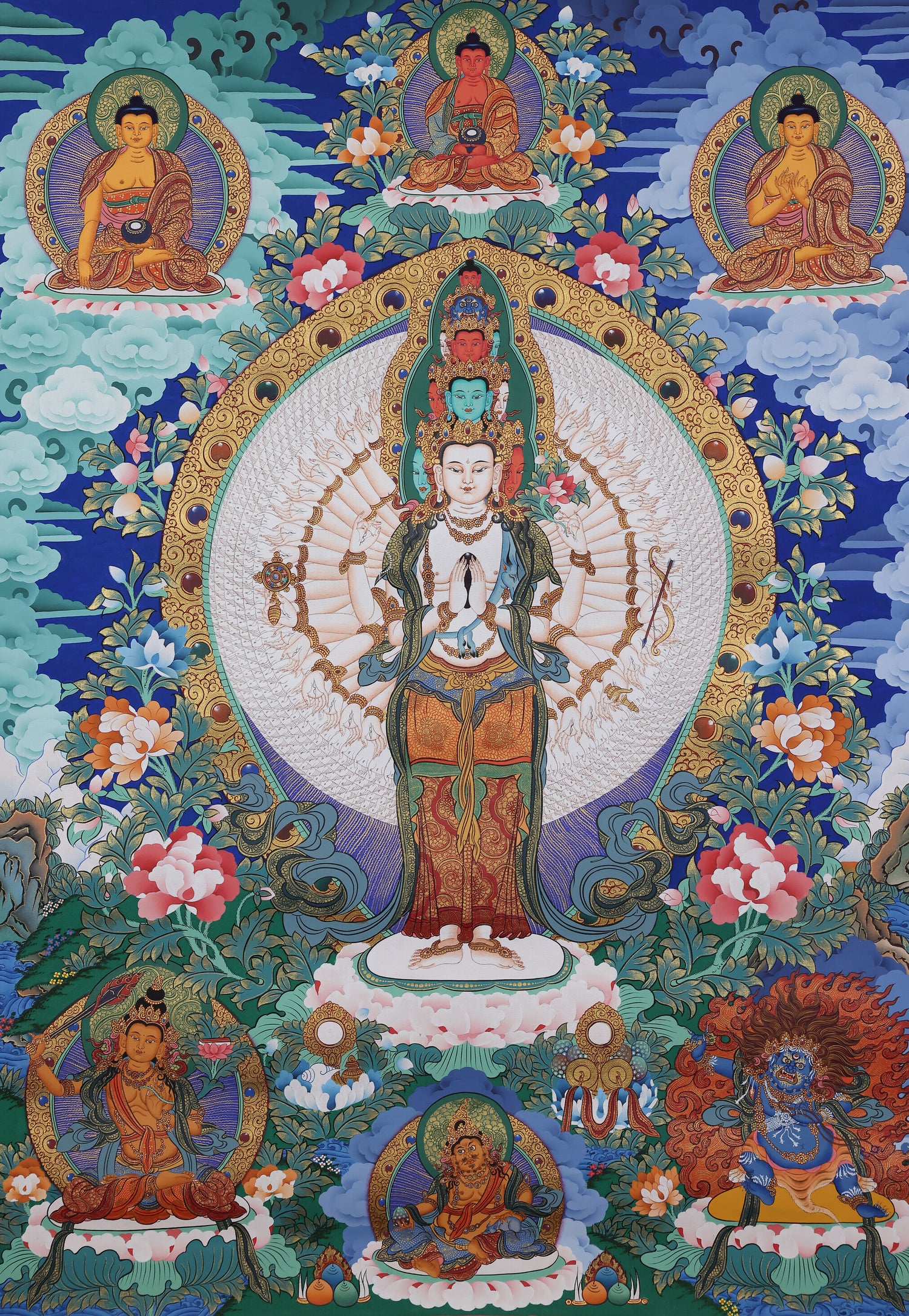
The surrounding deities form a complete and hierarchical system of blessings, each occupying a precise ritual role.
Upper Deities
At the top commonly appear Shakyamuni Buddha, Amitayus, and Ushnishavijaya.
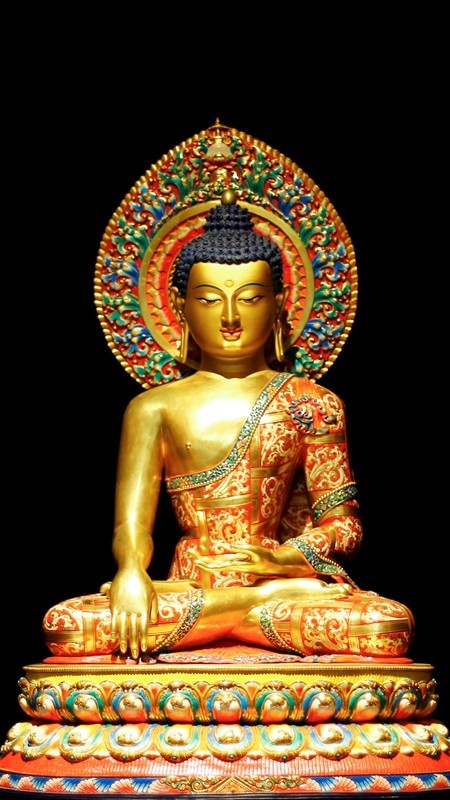
Shakyamuni represents the source of the Dharma;
Amitayus embodies life extension and vitality;
Ushnishavijaya holds a nectar vase symbolizing purification and karmic renewal.
Lower Attendants
The lower section may feature Yellow Jambhala or Green Jambhala, representing material abundance and sustenance, as well as forms of Tara who rescue beings from specific dangers—echoing White Tara’s essential function as a savior from suffering.
Side Attendants
Flanking the central deity are often Four-Armed Avalokiteshvara and Manjushri, symbolizing compassion and wisdom. Together with White Tara, they complete the Buddhist ideal of “the union of compassion and insight.”
This arrangement is governed by ritual logic rather than artistic preference—
the main deity provides the fundamental blessing, while the attendants address specific human needs such as longevity, protection, and prosperity.
IV. Painting Craftsmanship|A Sacred Covenant Between Nature and Devotion
This Thangka is created using traditional Tibetan hand-painting techniques, combining natural materials with centuries-old ritual discipline.
Canvas Preparation
Hand-woven cotton cloth is coated with layers of animal-glue and mineral gesso, then polished with stone. This process creates a resilient surface that resists aging and preserves color brilliance for generations.
Natural Mineral Pigments
All colors are derived from earth and plants:
white from highland clay,
red from cinnabar or coral powder,
blue and green from lapis lazuli and malachite refined through water-floating methods.
Gold details are rendered using 24K gold powder, producing a luminous surface that subtly shifts under different lighting—evoking the presence of sacred radiance.
Painting Technique
Extremely fine lines are drawn with wolf-hair brushes, adhering to canonical iconometric proportions.
Color transitions are achieved through layered shading techniques, creating depth, softness, and a sense of living presence.
Ritual Completion
From selecting auspicious days for pigment preparation to the final “eye-opening” consecration ceremony, the Thangka is ritually empowered, transforming it from an artwork into a living sacred image.
A Sacred Artwork to Enshrine, A Blessing to Pass On
A White Tara Thangka is not merely an object of beauty—it is a vessel of prayer, compassion, and spiritual continuity.
It embodies the aspiration for long life, the cultivation of wisdom, and the quiet strength of inner peace.
Whether placed in a shrine, meditation space, or preserved as a meaningful heirloom, this Thangka radiates the timeless blessings of Tibetan Buddhism—
a gentle yet enduring light of compassion flowing from the snowlands to the modern world.
#WhiteTara
#WhiteTaraThangka
#TibetanBuddhism
#TibetanThangka
#BuddhistArt#Longevity
#Healing
#Compassion
#SpiritualProtection
#Blessings#MeditationArt
#SacredArt
#BuddhistMeditation
#SpiritualAwakening
#MeditationArt
#SacredArt
#BuddhistMeditation
#SpiritualAwakening#HandPaintedThangka
#TraditionalThangka
#MineralPigments
#SacredPainting