This Hand-Painted Vairocana Thangka Hides Dual Blessings: “Cosmic Perfection + Worldly Good Fortune”

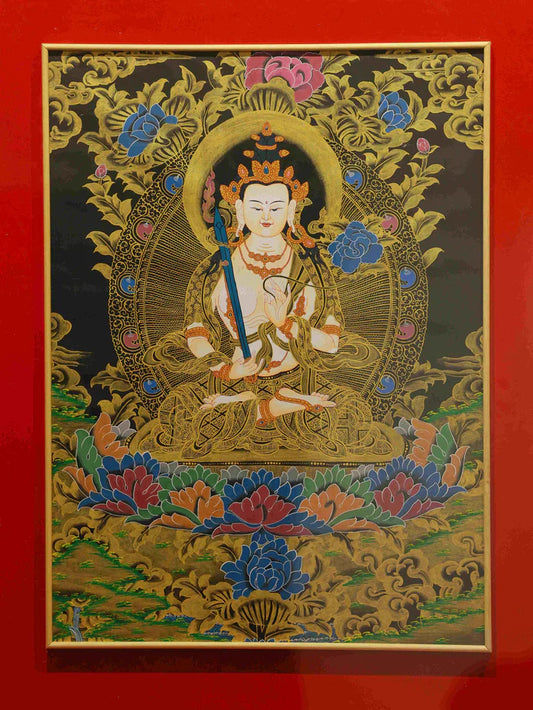
When the warm orange backdrop wraps around the pure white central deity, you’ll know: this isn’t just a Buddha painting—it’s a living Tibetan Buddhist vessel that weaves “cosmic perfection” into daily good fortune. Every flower, every wisp of cloud, is a wish for inner purity and a thriving life.
1. This Isn’t Just a Regular “Buddha Image”: The Pure White Deity Is the “Living Embodiment of Perfection”
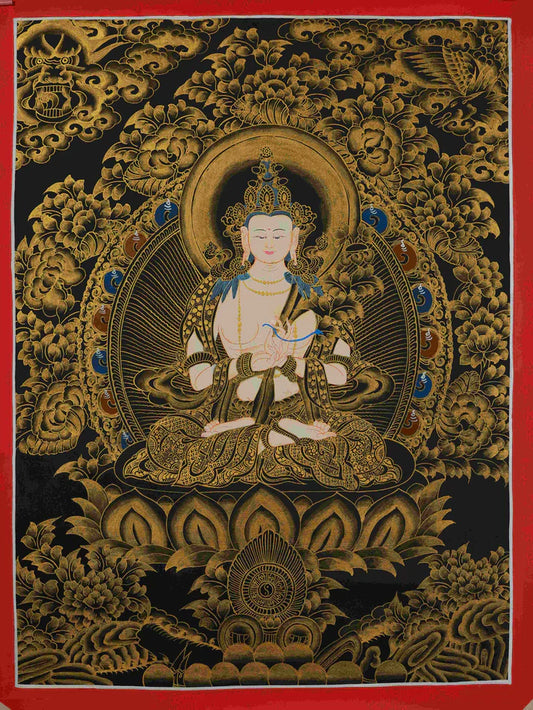
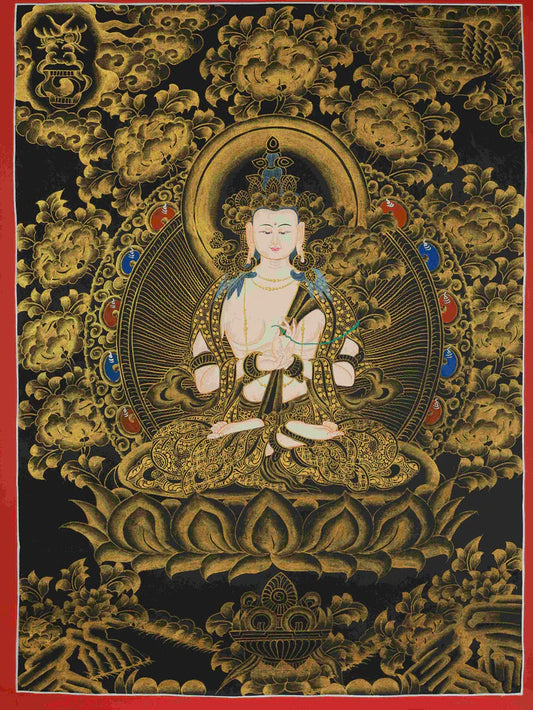
The Vairocana (or Samantabhadra Buddha) at the core is the thangka’s “perfection hub”:
• Pure white form = a code for cosmic purity: In Tibetan Buddhism, Vairocana’s white body symbolizes “unstained dharma realm and perfect wisdom”—he’s not an unapproachable Buddha, but a perfection guide who helps you “tame inner chaos and return to purity.”
• Multi-faced/three-body form = gentle inclusivity of all needs: The deity’s multi-faced design is a metaphor: “Whether you seek pure wisdom or life stability, his perfect blessings cover it all”—it’s like saying: “All your hopes are held in this perfection.”
• Lotus bud mudra = a “pending gift of wisdom and merit”: The lotus bud he cradles in his hands is a promise: “Wisdom will bloom slowly, and merit will fill gradually”—it’s not “overnight success,” but “steady, solid perfection.”
2. The Thangka’s “Hidden Blessings”: Warm Tones + Auspicious Patterns = “Planting Perfection in Daily Life”
What makes this thangka touching is its “warm orange wrapping the white deity, auspicious patterns surrounding him” layout—it’s like a “perfection incubator”:
• Warm orange backdrop = a “prosperous carpet for life”: The orange-red background isn’t random; it’s a visual wish for “a warm, thriving worldly life.”
• Peonies + clouds = a “double insurance for good fortune”: The peonies (prosperity), clouds (auspiciousness), and treasure bowls (merit) around the deity are a code that “perfect dharma translates to daily luck”—hanging it at home feels like laying a “good fortune mat” under your days.
• Lotus throne = a “stabilizer for inner purity”: The deity sits atop a lotus, representing balance: “Even amid life’s bustle, you can hold onto inner purity”—perfection isn’t “escaping life,” but “abiding in purity within life.”
3. The “Perfection Power” in Details: Hand-Painted Colors = “Painting Blessings Into Daily Moments”
The thangka’s value lies in every handcrafted, warm detail:
• “Concentration of perfection” in mineral pigments: The deity’s white is blended from natural minerals, and the warm orange backdrop is layered by the artist stroke by stroke—every hue holds the focus of “may you be perfect,” a warmth no machine can replicate.
• “Weight of blessing” in golden patterns: The gold-powder lines in the halo and robes symbolize the highest blessing in thangka tradition—every golden stroke turns perfect power into something visible, right beside you.
4. Why Choose a “Hand-Painted Vairocana Thangka”?
Machine-printed “Buddha art” can never match the “perfection connection of hand-painting”:
• It’s a “perfection switch for life”: Hang it in your living room as a guardian of “family good fortune”; hang it in your study as an anchor for “inner purity”—every glance is an invitation: “Let perfect power smooth out your life.”
• It’s a “wisdom charm for balance”: When life feels chaotic and your heart flutters, fix your eyes on the pure white deity—it’s like hearing: “It’s okay. In perfection, both purity and good fortune exist.”
Final Thought: The Essence of a Vairocana Thangka Is “Perfection = Living Well”
The most touching thing about this thangka isn’t “mysterious miracles”—it simply tells you: Perfection isn’t “empty detachment from life”; it’s “holding inner purity while living a thriving life.”
It’s not an exhibit on a high shelf, but a “perfection companion beside you”—every time you see that white form and orange glow, you know: “Perfection is here, and so are life’s purity and good fortune.”
Balises:
Précédent
This Hand-Painted Blue Wrathful Protector Thangka Hides a Powerful Shield: “Obstacle-Clearing Barrier + Scripture Blessings”
Suivant
This Hand-Painted Red Amitayus Thangka Hides Dual Blessings: “Longevity Nectar + Dual Deity Protection”