This Hand-Painted Manjushri Thangka Hides the Bright Blessing: “Wisdom Sword Cuts Through Troubles”
wudimeng-Nov 29 2025-
0 commentaire
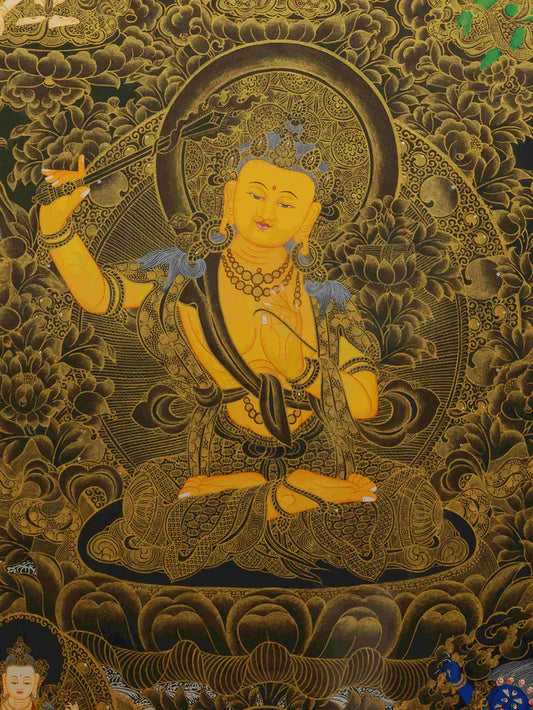
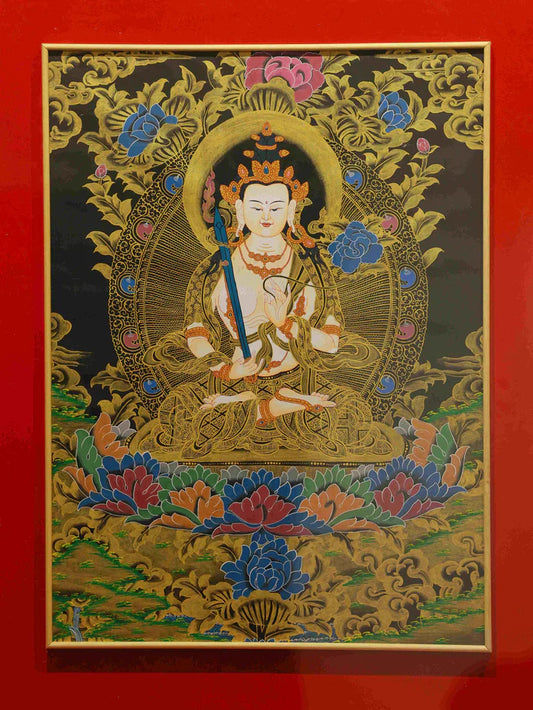
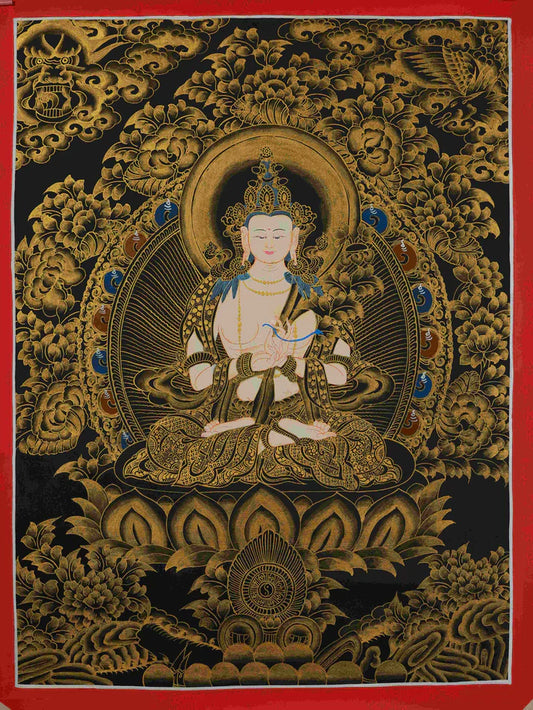
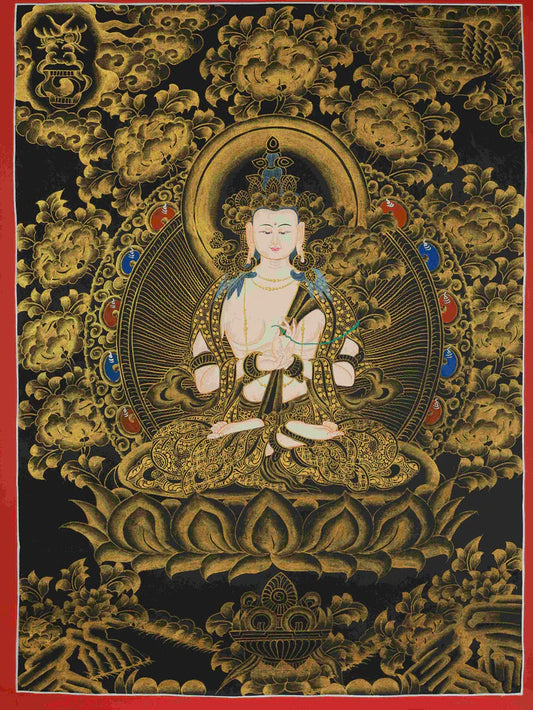
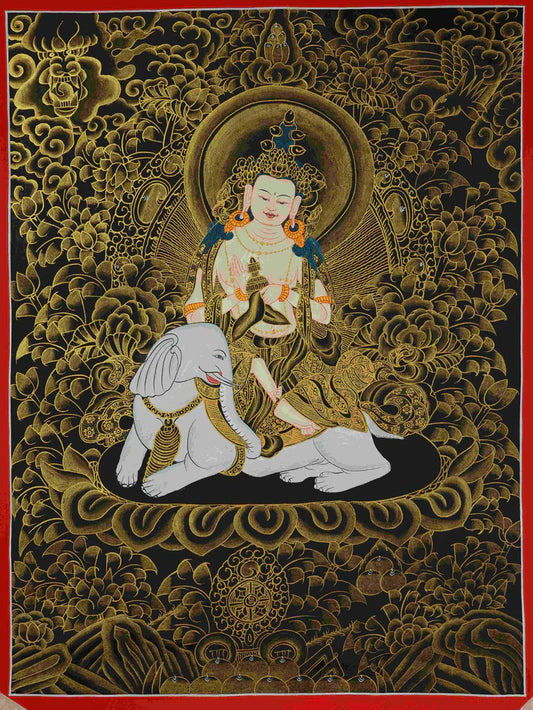
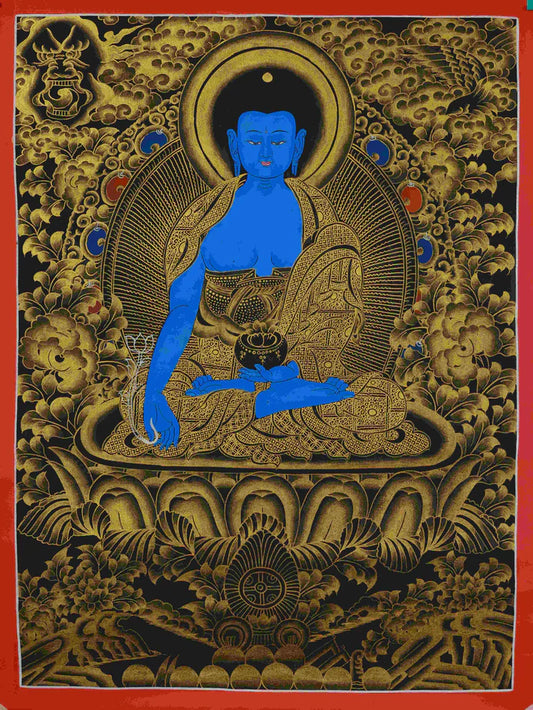
The moment you lay eyes on this black-and-gold thangka, your gaze locks onto the vivid yellow Manjushri at its center—not just decor, this is a living Tibetan Buddhist vessel of blessing: using wisdom as a sword to slice through life’s troubles. Every golden stroke is a wish to “break through confusion and ignite inner light.”
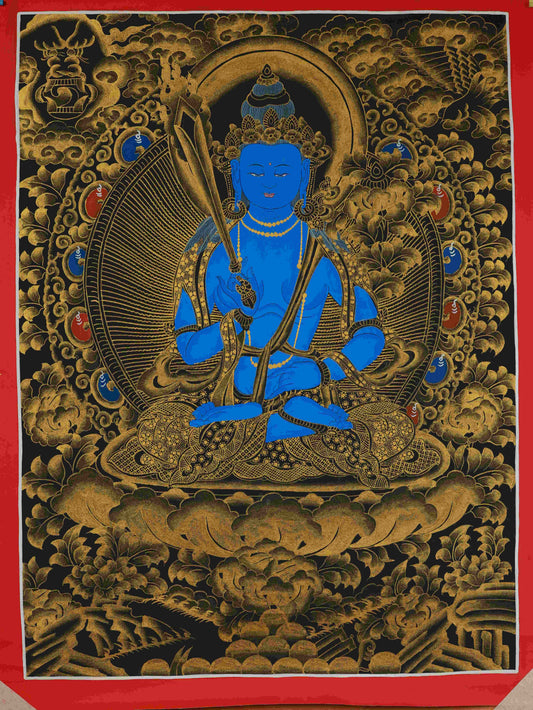
The Manjushri (Tibet’s foremost bodhisattva of wisdom) at the core is the thangka’s “wisdom hub”:
-
Yellow form is a “wisdom code”: Manjushri’s yellow body symbolizes “wisdom shining universally”—he’s no distant deity, but a wisdom guide who helps you “sort out life and cut through tangles.”
-
Wisdom Sword is a “trouble-cutter”: The wisdom sword raised in his right hand is Manjushri’s signature tool—it represents “using wisdom as a blade to chop through your confusion, anxiety, and obsessions.”
-
Fearless Mudra is a “comfort promise”: The gesture of his left hand is a vow to “grant you peace”—it says: “Don’t worry; wisdom will handle your troubles, and life will settle down.”
What makes this thangka striking is its “black base wrapped in gold, yellow deity at the center” layout—it’s like a “wisdom spotlight”:
-
Dark background = a “container for troubles”: The near-black base is a metaphor for “gathering all the chaos and confusion in your life here.”
-
Golden patterns + yellow bodhisattva = “wisdom light”: Golden flowers and clouds wrap around Manjushri, and his yellow form glows against the dark backdrop—like “wisdom’s light piercing the chaos in your life.”
-
Lotus throne = a “pure foundation for wisdom”: Manjushri sits atop a lotus, meaning “this wisdom is untainted—no mixed motives, just clarity on what truly matters.”
The thangka’s value lies in every handcrafted detail:
-
“Weight of wisdom” in gold powder: Artists outline all patterns with pure gold powder (in thangka tradition, “gold patterns” symbolize the highest blessing)—every golden line turns Manjushri’s wisdom into something visible, tangible.
-
“Warmth of wisdom” in mineral pigments: Manjushri’s yellow is blended from natural minerals, and the dark base is hand-layered—every stroke carries the focus of “may you gain wisdom,” a spiritual connection no machine can replicate.
Machine-printed “bodhisattva art” can never match the “wisdom blessing of hand-painting”:
-
It’s a “wisdom switch for life”: Hang it in your study as a “wisdom charm to sort work thoughts”; hang it in your living room as a “calming anchor to dissolve household stress”—every glance is an invitation: “Let Manjushri’s wisdom help you untangle life.”
-
It’s a “trouble-cutter”: When you’re tangled or lost, fix your eyes on the wisdom sword—it’s like a reminder: “Don’t get stuck in trivialities; use wisdom to cut through confusion and move forward.”
The most touching thing about this thangka isn’t “mysterious miracles”—it simply tells you: Life’s confusion, anxiety, and obsessions can all be resolved with “wisdom.”
It’s not an exhibit on a high shelf, but a “wisdom companion by your side”—every time you see that yellow form and golden glow, you know: “Don’t fear; wisdom is here, and troubles can be solved.”