Hand-Painted Yellow Manjushri Thangka: A Tibetan Spiritual Treasure That Brings "Wisdom’s Light" Into Your Home
wudimeng-Nov 28 2025-
0 commentaire
Have you ever seen wall decor that carries its own aura of wisdom?
This hand-painted Yellow Manjushri Bodhisattva Thangka isn’t just a regular wall piece—it’s a spiritual vessel centered on "wisdom awakening" in Tibetan Buddhism, and a one-of-a-kind cultural treasure that infuses any space with a "pure, resonant energy." Today, we’ll break down the "beauty and spirit" of this thangka, and explain why discerning collectors are scrambling to get their hands on hand-painted Manjushri thangkas.
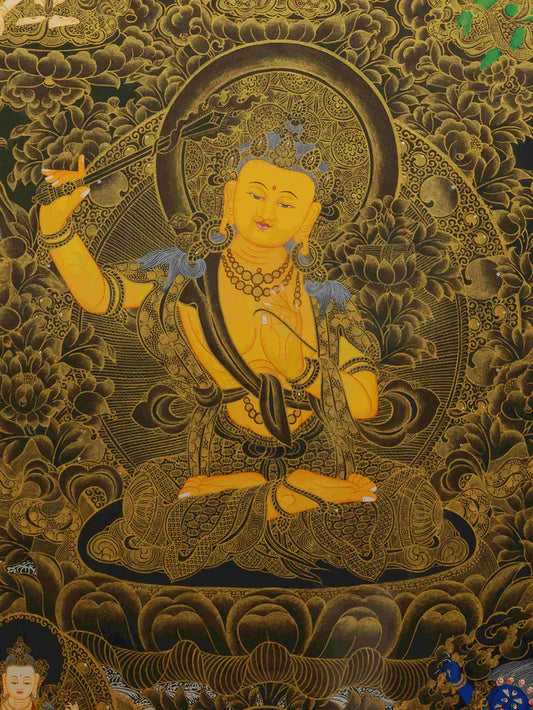
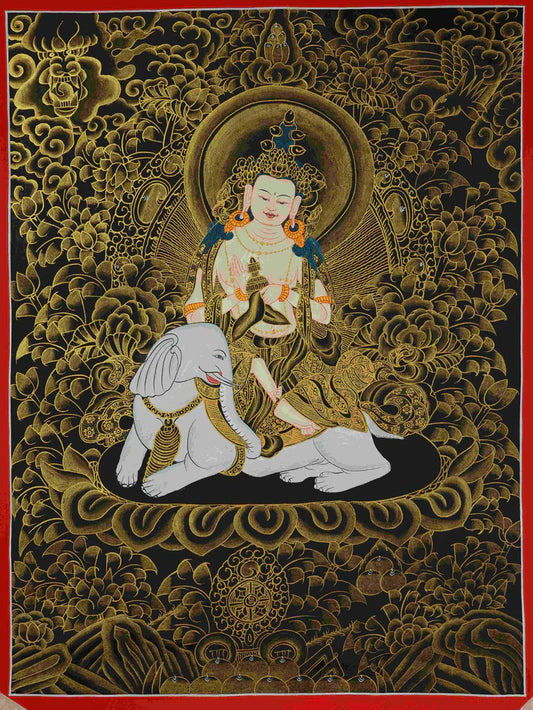
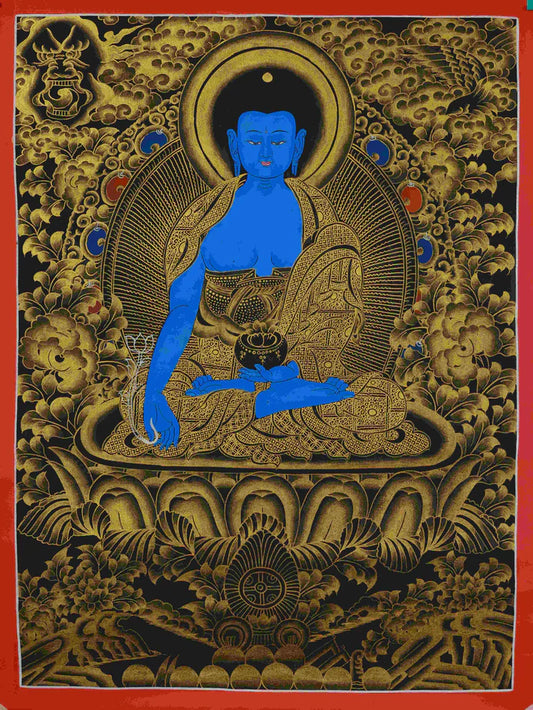
At the center of the painting is the one-faced, two-armed Yellow Manjushri Bodhisattva—the embodied form of "wisdom" in Tibetan tradition:
- His golden-yellow form glows like sunlight wrapped around him. Tibetans say this represents "the radiance of wisdom," capable of clearing mental "fog"—whether you’re stuck on a work project or tangled in life’s worries, just looking at him can calm your mind.
- His right hand holds a Wisdom Sword (the "sharp tool" for cutting through ignorance and afflictions), while his left hand holds a lotus + sutra box (the "soft foundation": the lotus symbolizes purity, and the sutra box holds the Prajnaparamita Sutra—the root of wisdom). Together, they cover both "breaking obstacles" and "nurturing insight."
- Even his smile has meaning: it’s not a casual grin, but a compassionate smile of "seeing the true nature of suffering." Tibetans offer prayers to Manjushri before exams or work challenges, seeking this kind of "clarity."
Don’t just focus on the main figure—every part of this thangka’s background is intentional:
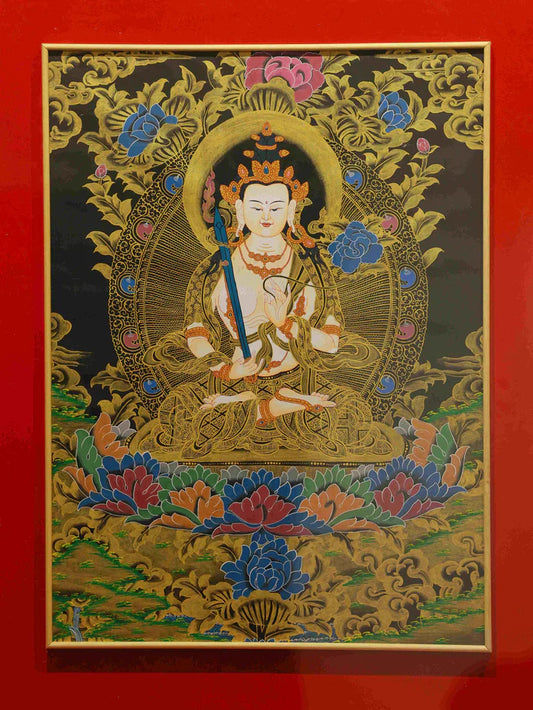
- The golden auspicious clouds above his head: a staple of Tibetan thangkas, symbolizing "auspiciousness surrounding you," keeping troubles at bay.
- The pink lotuses and peonies wrapping around him: lotuses represent "purity," peonies represent "good fortune"—wisdom doesn’t just help you solve problems; it also brings blessings.
- The colorful jewels at his feet: a hallmark of Manjushri’s pure land, symbolizing "abundance brought by wisdom." Displaying it at home feels like laying a "foundation of good luck" for your life.
Printed thangkas are everywhere, but the "soul" of a hand-painted piece can’t be replicated by machines:
- Artists follow strict Tibetan Buddhist rituals: Every color has purpose—gold for wisdom, orange-red for light, even the green of his halo corresponds to "a peaceful aura." A single wrong stroke disqualifies it as an authentic thangka.
- The colors are "alive": Hand-painted pieces use mineral pigments (gold powder, stone green) that develop a rich patina over time, growing warmer and more luminous—unlike printed art that fades or dulls.
- It’s more than decor: Tibetans call thangkas "portable Buddha-lands," and this Manjushri thangka acts like a "wisdom sanctuary." Placed in a study, it calms the mind; hung in a living room, it softens the atmosphere—even just having it around feels like reducing the "chaos" in your space.
-
Professionals or exam-takers: Manjushri is the patron of "wisdom and clarity." Keeping it on your desk or in your workspace helps organize your thoughts, whether you’re drafting a plan or studying.
-
Tibetan culture enthusiasts: Its hand-painted craftsmanship and classic Manjushri form make it a "starter heirloom" for thangka collectors—adding instant cultural weight to any collection.
-
Anyone gifting a meaningful present: Unlike luxury goods, this thangka is a "blessed heirloom"—perfect for a business friend (for "wisdom to overcome challenges") or a student (for "clarity in exams"). Those in the know will recognize its true value.
Pro Tip: Keep hand-painted thangkas in a dry, well-ventilated area (avoid direct sunlight or humidity)—it will grow more spiritually resonant as it ages.
This Yellow Manjushri Thangka is a double winner of "beauty" and "purpose": it blends the vivid charm of Tibetan hand-painting with the blessing of "wisdom breaking obstacles."