Hand-Painted Amitayus Thangka: The "Longevity & Good Fortune" Code in Tibetan Art
wudimeng-Nov 28 2025-
0 commentaire
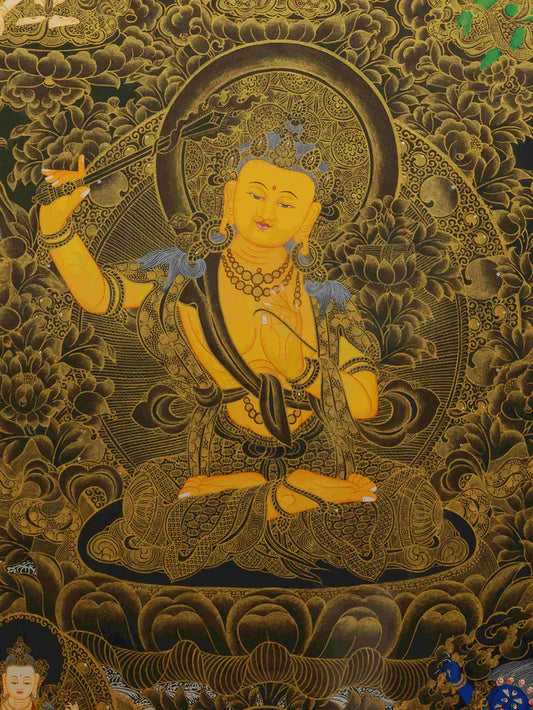
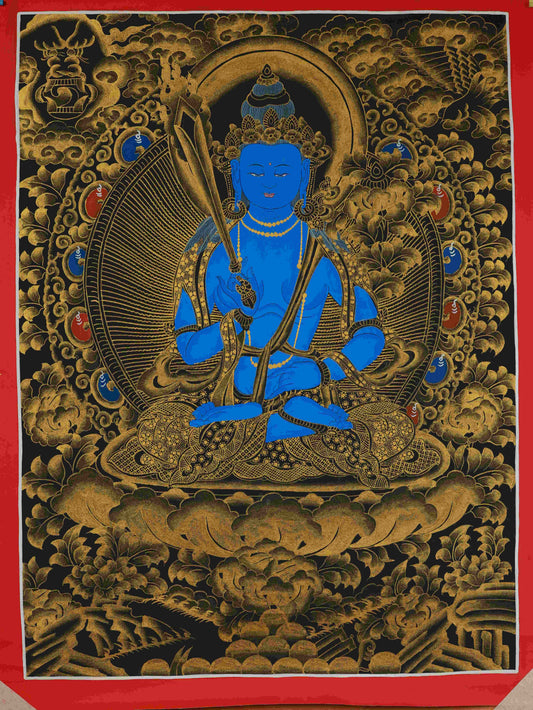
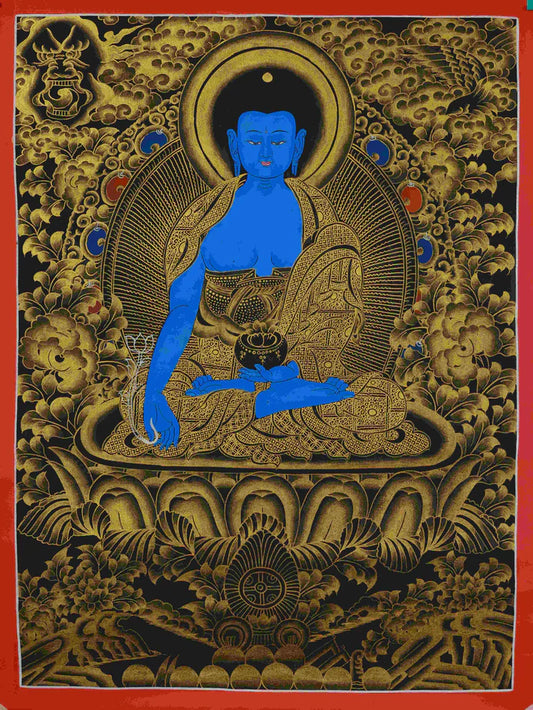
When a vivid, intricately hand-painted thangka is placed before you, it’s more than just a painting—it’s a millennia-old "blessing for life" from Tibetan Buddhism. Today, we’re sharing this hand-painted Amitayus (Longevity Buddha) thangka: a living heritage of Tibetan art, and a "totem of longevity and good fortune" you can weave into your daily life.
Your eye will first be drawn to the vibrant crimson main deity—this isn’t a random color choice. Crimson is the iconic hue of Amitayus in Tibetan Buddhism, symbolizing "vitality and compassion" and serving as a visual representation of "immortal life."
Look closer at the deity’s details:
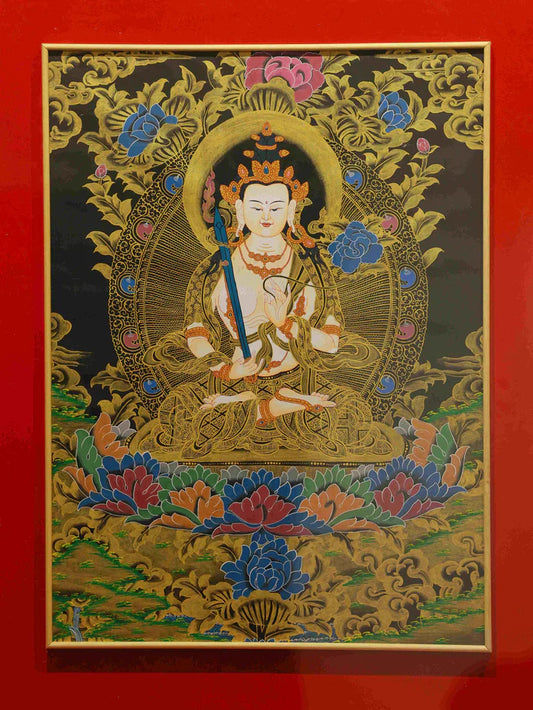
- Their hands form the Dhyana Mudra (meditation gesture), palms gently cradling a longevity vase (often containing a "wish-fulfilling tree," believed by Tibetans to "sustain life’s good fortune").
- Adorned with a Five-Buddha Crown and bejeweled ornaments, the deity embodies the dignity of a "Sambhogakaya Buddha" while carrying the wish for "perfect wisdom and abundant blessings."
Every line and symbol is a "blessing code" hand-painted by Tibetan artisans following millennial traditions.
Thangkas on the market range from printed to semi-hand-painted, but the core value of full hand-painting lies in "warmth" and "intention":This thangka takes its artist at least 30 days to complete, using mineral pigments (cinnabar, gold leaf, etc.) layered to build depth—the crimson comes from ground cinnabar (the "color of life"), and the gold from real gold leaf (the "color of eternity"), making the pigments themselves carriers of "natural blessing energy."
Its "practicality" also resonates with modern needs:
- Hung in a living room or study, it’s both a "visual focal point" and a "longevity blessing" woven into daily life;
- As a gift, it offers more "cultural depth" than ordinary decor—you’re gifting not just an object, but the "ritual of good fortune" passed down in Tibet.
This thangka uses a mandala-style symmetrical composition (central to Tibetan Buddhism):
- The main deity sits at the exact center, representing the "core of life";
- Surrounding golden auspicious clouds (called "dharma clouds" in Tibet) and blooming lotuses and peonies create the serenity of a "pure land"—lotuses symbolize "purity," while peonies represent "prosperity," elevating "longevity" from mere "existence" to "fulfilling living."
Even the "Seven Jewel Pond" (the landscape base at the bottom) is painted to match descriptions of the "Western Pure Land" in the Amitayus Sutra—this isn’t just decoration; it frames "longevity" within a worldview of "life’s perfection."
If you’re looking to collect a hand-painted thangka, don’t just judge by "bright colors":
-
Check the hue and iconography: Amitayus must have a crimson body and hold a longevity vase—deviations mean it’s an "amateur piece";
-
Examine pigment texture: Mineral pigments have a "rich, not flat" crimson, and gold leaf shows "natural light variations" (printed pieces have uniform, "industrial colors");
-
Look for the artist’s signature: Full hand-painted thangkas bear the artist’s "cinnabar signature" (in Tibetan script)—this is the "certificate of the artisan’s intention."
This hand-painted Amitayus thangka is a vessel for "weaving blessings into life" in Tibetan art—it’s not just wall decor, but a daily "reminder of life: may you live long, and live fully."
If you want to bring this "Tibetan longevity blessing" home, our hand-painted thangkas come with an artist’s certificate. Click "Inquire Now" below to view the artist’s painting process video.