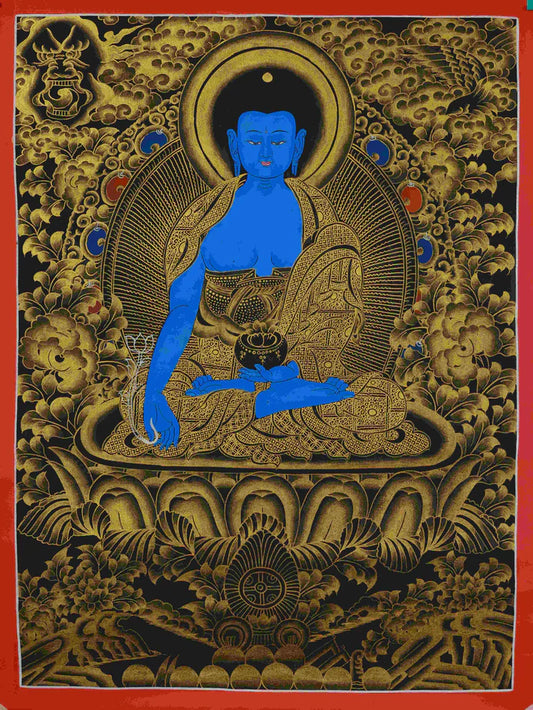
Blue Manjushri Thangka: This Hand-Painted Black & Gold Thangka Holds the Eastern Aesthetic Code of "Wisdom Dispels Ignorance"
wudimeng-Nov 28 2025-
0 commentaire
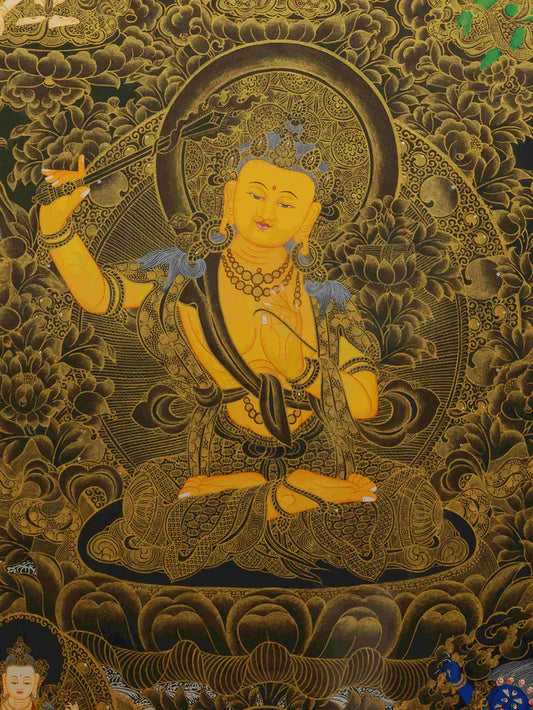
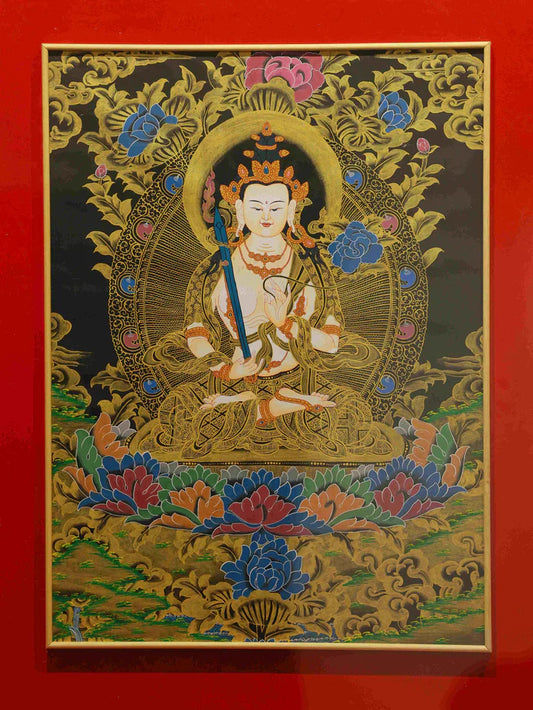
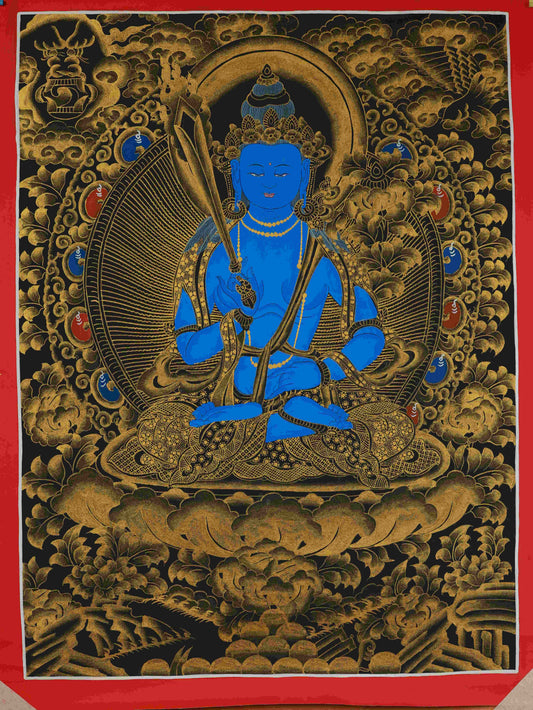
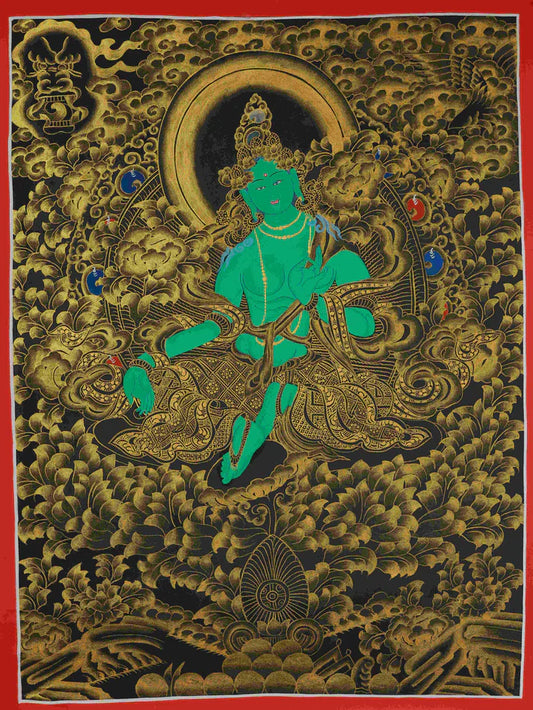
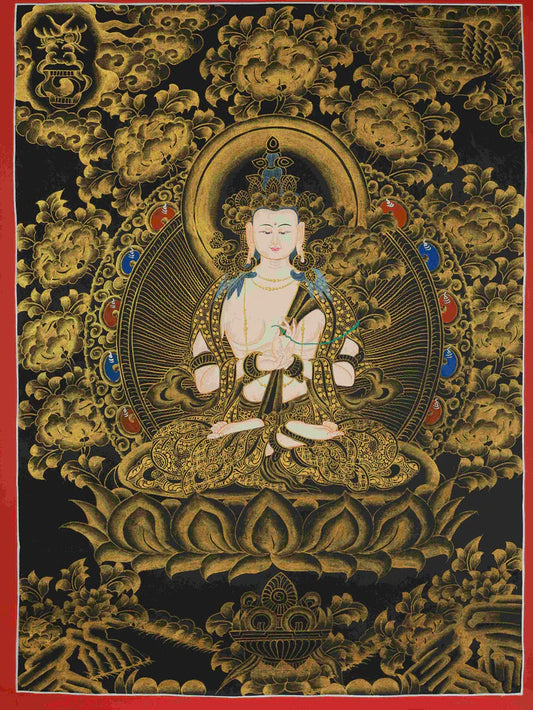
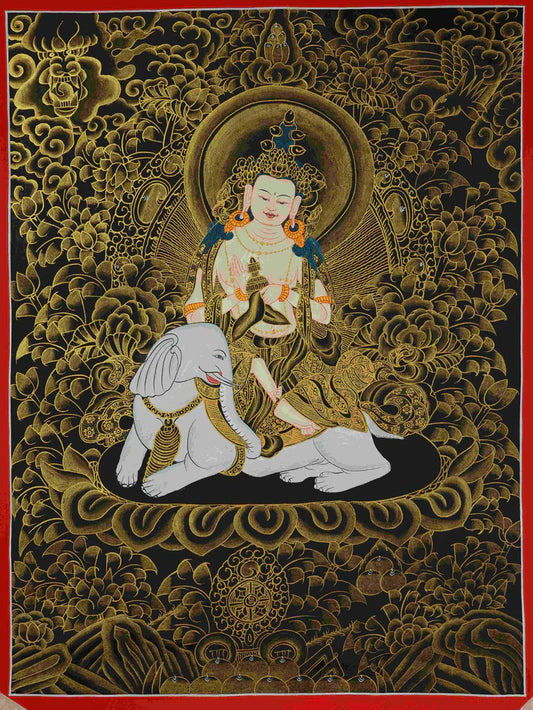
When a hand-painted thangka, rooted in lapis lazuli blue and framed by black and gold, unfolds before you, you’re not just seeing the pinnacle of Tibetan art—you’re gazing into the spiritual universe of the "Bodhisattva of Wisdom" in Tibetan Buddhism. Today, we break down this Blue Manjushri Bodhisattva Thangka: from color symbolism to spatial storytelling, why is it the "wisdom choice" among collectible thangkas?
You may have seen White Manjushri or Yellow Manjushri, but the lapis lazuli-hued Blue Manjushri is the most "obstacle-breaking" figure among the "Five Manjushris" in Tibetan esotericism:
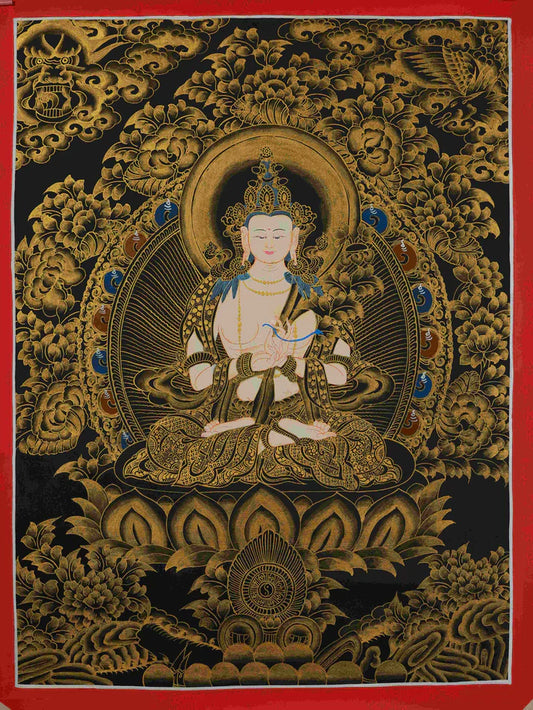
- Its body takes the deep blue of lapis lazuli, which symbolizes the "Dharmakaya Wisdom" in Tibetan culture—embracing all like the void, yet capable of dispelling all ignorance and afflictions;
- Seated in a half-lotus (lalita asana) posture atop a layered lotus throne, one hand gently holds a blue lotus (with a Prajnaparamita sutra scroll hidden in the bloom), while the other rests naturally. It exudes bodhisattva 庄严 (solemnity) while embodying the zen of "wisdom unbound by form."
Even the gems on the Five-Buddha Crown and the patterns of the ornaments are layered stroke by stroke by the artist using natural mineral pigments (gold leaf, lapis lazuli powder)—every curve of the gold lines is proof of "handmade warmth."
The background of this thangka holds the "spatial philosophy" of Tibetan art:
-
Black background + gilded cloud patterns: Black isn’t oppressive; it represents the "void of ignorant afflictions." The flowing golden clouds are "wisdom light"—as the gold patterns unfurl on the black base, it’s a visual metaphor for "wisdom dispelling darkness";
-
Lotus throne + landscapes + stupa: The lotus throne symbolizes purity ("rising unsoiled from mud"), and the ripples beneath it echo "wisdom dissolving afflictions." The distant Tibetan stupa and landscapes blend "worldly life" with "enlightened pure land"—this tells us: wisdom isn’t an abstract ideal detached from life, but a way to see one’s true nature amid the hustle and bustle of the world.
Why are more people hanging Blue Manjushri thangkas in their studies or tea rooms?
-
Cultural value: It’s a handcrafted work of the Menri school, with natural mineral pigments that resist fading for centuries—an "art asset to pass down";
-
Spiritual meaning: Manjushri is the "Bodhisattva of Wisdom," and Blue Manjushri specifically corresponds to "breaking obstacles and opening wisdom." Whether you glance at it while reading or working, or use it as space decor, it’s a life ritual "rooted in wisdom."
There are many imitations on the market—here are this piece’s core distinguishing features:
-
Layered blue body: The blue of natural lapis lazuli powder is "deep yet translucent," not the harsh hue of industrial pigments;
-
Handmade traces in gold lines: Each gold pattern varies slightly in thickness (machine replicas are perfectly uniform);
-
Lotus petal details: The edges of the petals have gradient coloring, not rigid blocks of color.
If you want to bring a "visual symbol of wisdom" into your life, this hand-painted Blue Manjushri thangka is a dual choice of aesthetic and spiritual value—after all, there are few objects that can hold both "Eastern aesthetics" and "inner calm."