Hand-Painted Guru Rinpoche "Shijun Sanzun" Thangka: A Living Blessing of "Lineage & Protection" from Tibetan Buddhism
wudimeng-Nov 28 2025-
0 comentarios
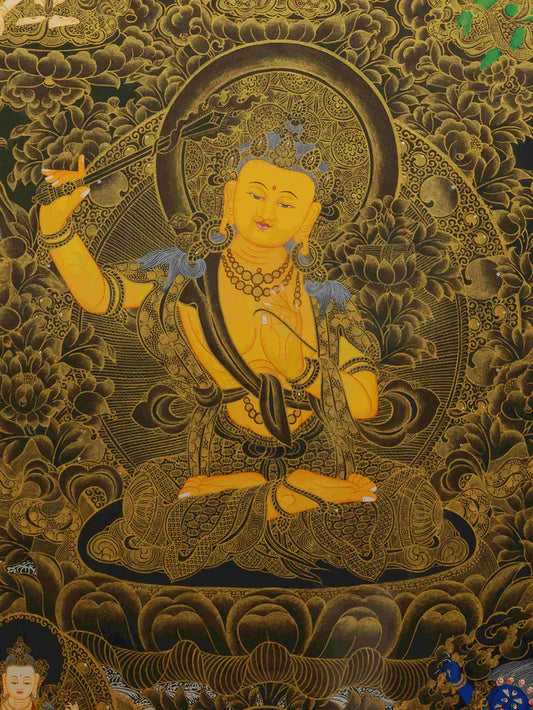
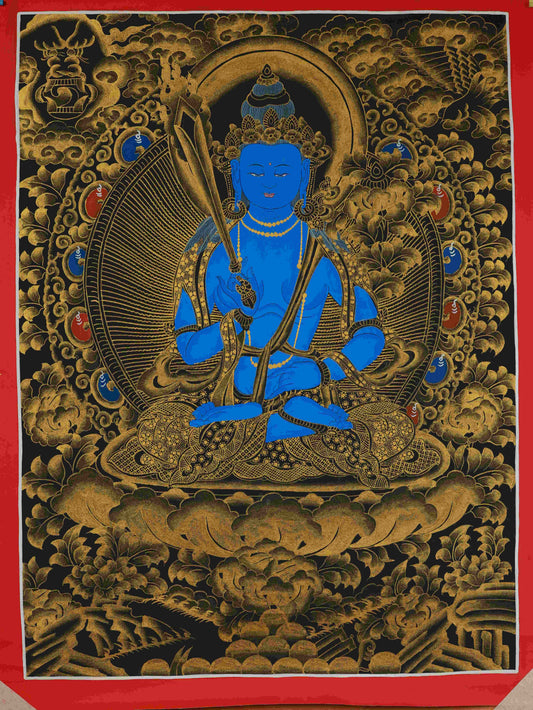
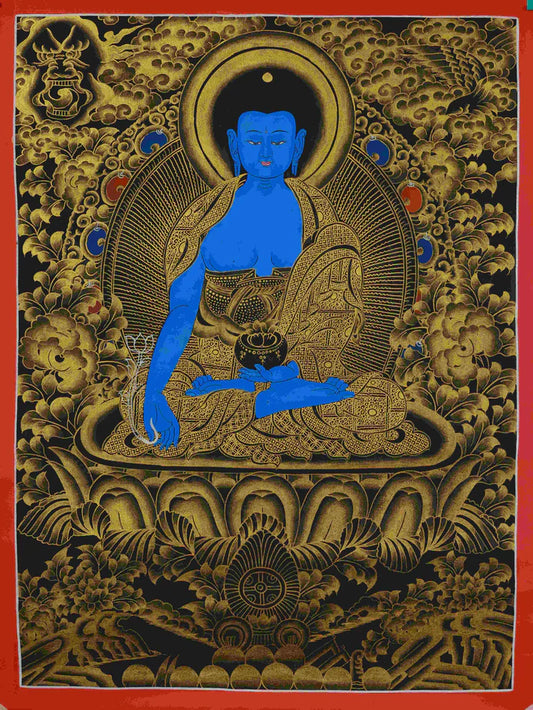
When a hand-painted thangka—rich with mineral pigment luster and intricately layered color—unfolds, it’s more than Tibetan art: it’s a millennial lineage totem of “esoteric-exoteric transmission, wisdom, and protection” in Tibetan Buddhism. Today, we’re sharing this Guru Rinpoche “Shijun Sanzun” Thangka—a core spiritual vessel of the Nyingma school, and a “lineage amulet” you can weave into daily life.
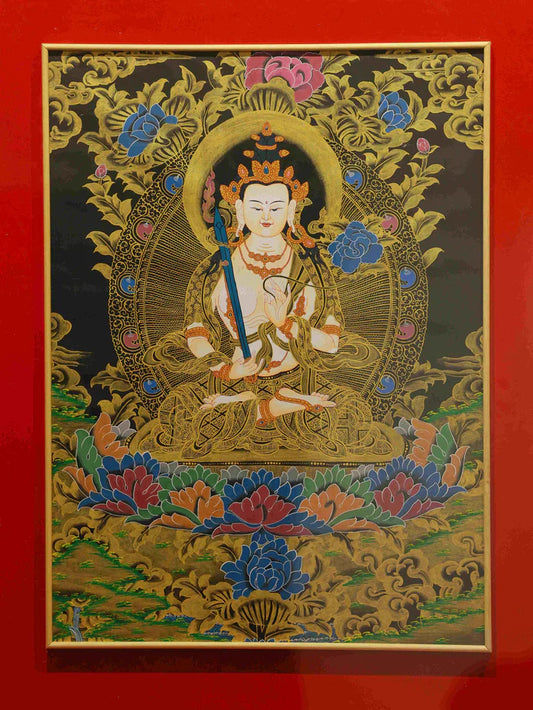
Struck by the central figure’s compassionate authority? This is Guru Rinpoche, Tibet’s “Second Buddha”—every detail of this thangka is a symbol of “protection and dharma transmission”:
-
Lotus Hat & Khatvanga: The lotus hat (adorned with a vajra, a mark of blessings from all Buddhas) and the skull-topped khatvanga (wrapped in mantra threads) aren’t “intimidating”—they’re a wise deterrent, representing “vanquishing the three poisons (greed, anger, delusion) and subduing all negative forces.”
-
Kapala Bowl & Mudra: His left hand holds a kapala bowl (containing a longevity vase filled with wisdom nectar, symbolizing the continuity of both life and spiritual life), while his right hand forms the varada mudra (palm outward)—a gesture that says, “I grant you good fortune, and the courage to overcome obstacles.”
-
Sahara Robe: The red-and-green robe reflects Guru Rinpoche’s identity as an Indian master who spread dharma in Tibet—it embodies the compassion of “harmonizing worldly blessings with sacred wisdom.”
There are many Guru Rinpoche thangkas on the market, but the soul of a full hand-painted piece lies in the warmth of “cinnabar brushstrokes + mineral pigments”:The Tibetan artist behind this thangka spent 45 days layering lapis lazuli, cinnabar, and real gold leaf: lapis lazuli’s blue represents “calm wisdom,” cinnabar’s red stands for “compassionate vitality,” and gold leaf’s glow carries “divine 庄严”—the pigments themselves are natural vessels of blessing.
Its practicality aligns perfectly with modern spiritual needs:
- Hung in a study or shrine, it’s a “lineage anchor”—glancing at Guru Rinpoche during a work setback feels like receiving the “protective power of ancient masters”;
- As a heirloom gift, it carries more weight than jewelry: you’re gifting not just art, but a family spiritual totem of “esoteric-exoteric transmission and the continuity of wisdom and blessings.”
The thangka’s “central deity-retinue-pure land” hierarchy embodies the Nyingma school’s “dharma-spreading DNA”:
-
Small Deity Above: The crimson Buddha at the top is Amitayus (Longevity Buddha), echoing the longevity vase in Guru Rinpoche’s bowl—it symbolizes, “Cultivate wisdom, and live long enough to pass it on.”
-
Attendants Below: The Shijun Sanzun Lineage:
- On the left, Shantarakshita (holding a vase)—founder of Tibet’s first monastery, Samye—represents the “foundation of exoteric dharma”;
- On the right, Yeshe Tsogyal (Guru Rinpoche’s consort, palms pressed) represents the “union of esoteric wisdom and skillful means”;
Together with Guru Rinpoche, they form the “Shijun Sanzun”—the core symbol of Tibetan Buddhism’s “esoteric-exoteric integration and benefiting all beings.”
-
Pure Land Scenery: Beneath Guru Rinpoche’s lotus throne, lush green mountains and a sacred pool (echoing Guru Rinpoche’s abode, Zangdok Palri) are framed by pink peonies and golden auspicious clouds—translating “sacred lineage” into daily life, turning “wisdom and protection” into wall decor.
Stop judging by “bright colors”—a genuine, high-quality thangka meets these standards:
-
Check Ritual Items: The lotus hat, khatvanga, and kapala bowl are non-negotiable—missing any means it’s an “amateur piece”;
-
Examine Pigment Texture: Mineral lapis lazuli has a “deep, paper-soaked blue,” real gold leaf glows with “subtle layers”; printed pieces have flat, “industrial colors”;
-
Look for the Cinnabar Signature: Full hand-painted thangkas bear the artist’s Tibetan cinnabar signature—a “certificate of the artisan’s vow.”
This hand-painted Guru Rinpoche “Shijun Sanzun” thangka is a vessel for weaving “Tibetan lineage and protection” into life: it’s not just decor, but a daily reminder when you look up: “May you inherit wisdom, attain both blessings and wisdom, and be free of obstacles.”
Our hand-painted Shijun Sanzun thangkas come with an artist’s certificate. Click “Inquire Now” to view the painting process video and bring this “lineage amulet” home.