Twenty-One Manifestations, Myriad Compassion: An In-Depth Interpretation of the Twenty-One Taras' Wisdom and Power

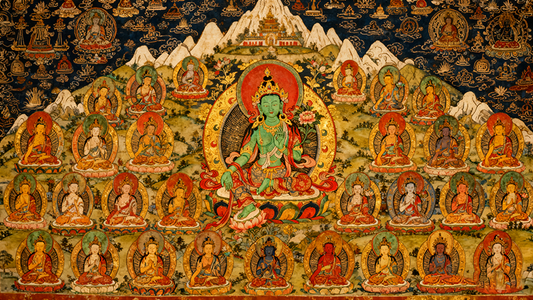
In the belief system of Tibetan Buddhism, Tara is the embodiment of compassion and hope. With her core vow of "delivering sentient beings from suffering," she has warmed countless hearts across millennia. As the most well-known twenty-one manifestations of Tara, the Twenty-One Taras embody compassion in diverse forms—adorned in colorful robes, holding various ritual implements, or making specific mudras (hand gestures). Each form corresponds to unique merits aimed at resolving particular sufferings of sentient beings, such as warding off disasters, enhancing wisdom, bestowing blessings, and safeguarding peace. The "twenty-one manifestations" of the Twenty-One Taras are essentially the concrete embodiment of "myriad compassion." This article will guide you into the sacred world of the Twenty-One Taras, detailing each Tara's iconic features and core merits, as we explore this timeless spiritual power. Who is Tara? The Embodiment of Compassion and the Origin of the Twenty-One Taras Before delving into the interpretation of the Twenty-One Taras, we must first clarify the core meaning of "Tara." Tara, derived from the Sanskrit word meaning "liberator" or "savior mother," is a highly influential female Bodhisattva figure in Tibetan Buddhism. She is regarded as the incarnation of Avalokiteshvara Bodhisattva's compassion. According to legend, Avalokiteshvara Bodhisattva wept upon witnessing the profound suffering of sentient beings; his tears fell to the earth and transformed into lotus flowers, from which Tara emerged. The core of Tara's belief lies in "swift deliverance." Unlike other Bodhisattvas who focus on "ultimate liberation," Tara prioritizes responding to the immediate sufferings and needs of sentient beings, earning her the titles of "Swift and Courageous Mother" and "Saving Mother." The formation of the Twenty-One Taras is closely linked to the transmission of Buddhist scriptures and integrated with Tibetan cultural characteristics. Scriptures such as "Praise to the Twenty-One Taras" and "The Origin of Tara" clearly record that the Twenty-One Taras are twenty-one distinct manifestations of Tara, manifested to adapt to the different capacities and needs of sentient beings. These twenty-one manifestations are not independent entities but rather different facets of Tara's compassion and wisdom—like the seven colors of the rainbow refracted from sunlight, they share the same essence yet each has its own focus. In Tibet, the belief in the Twenty-One Taras
permeates every aspect of life, from daily chanting and prayers to grand religious ceremonies. Her image is omnipresent, serving as a "spiritual sanctuary" for sentient beings.
For modern practitioners and cultural researchers, interpreting the Twenty-One Taras is not only a window into understanding religious culture but also a source of strength for navigating life. The "merits" associated with each Tara essentially reflect humanity's aspiration to overcome suffering and pursue noble qualities. Next, we will detail the unique characteristics of each of the Twenty-One Taras.
The Twenty-One Taras: A Detailed Interpretation of Their Images and Merits
The Twenty-One Taras are typically categorized based on their core identifiers of color, mudra, and ritual implements, each carrying specific symbolic meanings. Below, following the common traditional order, we will elaborate on the key features and core merits of each Tara to facilitate clear distinction and understanding.
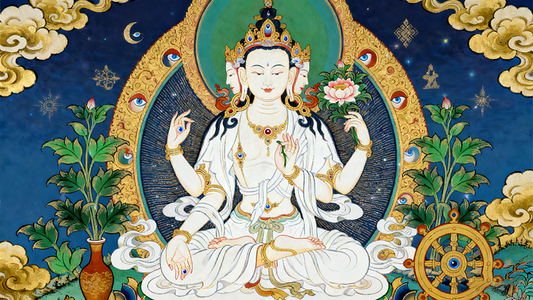
1. White Tara: The "Compassionate Mother of Salvation" for Warding Off Disasters and Extending Life
**Core Image**: White Tara is the most well-known among the Twenty-One Taras. Her body is as pure white as moonlight, symbolizing purity and undefiledness. She wears a five-Buddha crown, with a gentle and compassionate face. Her eyes are half-closed, embodying both the observation of worldly suffering and the tranquility of meditation. White Tara's most distinctive feature is her "seven eyes"—one in each eye, the palm of each hand, and the sole of each foot—earning her the title of "Seven-Eyed Buddha-Mother," symbolizing her ability to perceive all sufferings and needs of sentient beings. She sits cross-legged on a lotus throne, with her right hand forming the "Varada Mudra" (wish-fulfilling mudra, palm outward, fingers hanging down), symbolizing her readiness to respond to the prayers of sentient beings. Her left hand forms the "Dhyana Mudra" (meditation mudra), holding a vase filled with nectar, from which a lotus blooms, symbolizing nourishment and rebirth.
**Core Merits**: White Tara's core merits are "warding off disasters" and "extending life." She can eliminate obstacles such as illnesses, disasters, and karmic creditors for sentient beings, while also prolonging lifespan and enhancing blessings and wisdom. In Tibet, pregnant women often pray to White Tara for a safe delivery, elderly people seek her blessings for longevity and health, and ordinary practitioners recite White Tara's mantra to attain inner peace and external smoothness. The "seven eyes" of White Tara signify that her compassion and wisdom know no bounds—no matter what predicament a sentient being is in, they will be touched by her gaze and receive deliverance.

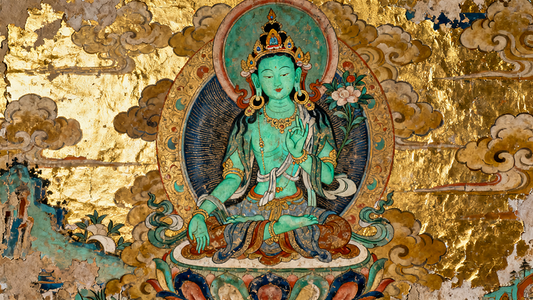
2. Green Tara: The "Swift and Courageous Delivering Mother" for Fulfilling Wishes and Advancing Careers
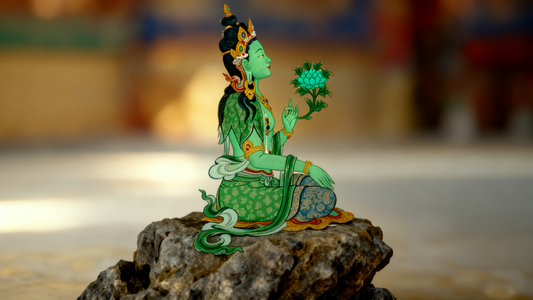
**Core Image**: Green Tara is the "action-oriented" one among
the Twenty-One Taras. Her body is a vibrant emerald green, symbolizing vitality and dynamism, like the early spring grasslands brimming with vigorous life force. Her posture is more agile; instead of sitting cross-legged, she assumes a "lilasana" (playful posture) on the lotus throne—her left leg is folded, her right leg is slightly bent with the toe touching the ground, as if ready to rise and deliver sentient beings at any moment. Adorned with a treasure crown, earrings, necklaces, and other jewels, Green Tara's right hand forms the "Abhaya Mudra" (fear-dispelling mudra, palm outward, fingers upturned), symbolizing the dispelling of sentient beings' fears. Her left hand holds a blooming blue lotus (utpala), its stem coiling around her arm and the flower blooming beside her shoulder, symbolizing the blossoming of compassion and wisdom.
**Core Merits**: Green Tara's core merits are "fulfilling wishes" and "aiding careers." Renowned for her "swiftness and courage," she responds quickly to the prayers of sentient beings, helping practitioners overcome career obstacles, interpersonal conflicts, and obstacles on the path of cultivation. Whether pursuing academic progress, career advancement, or resolving urgent life dilemmas, praying to Green Tara will bring powerful blessings. In Tibetan Buddhism, Green Tara is regarded as the "Mother of Careers." Her emerald green color symbolizes "growth"—not only the growth of one's career but also the maturation of one's mind and the enhancement of wisdom.

3. Red Tara: The "Mother of Love and Compassion" for Enhancing Positive Affinities
**Core Image**: Red Tara's body is a bright crimson, symbolizing passionate compassion and life force, like a blazing flame—warm and powerful. Her posture is similar to Green Tara's, often in a playful posture on the lotus throne. Wearing a treasure crown and adorned with ornaments, her face wears a smile, exuding approachability. Her right hand forms the Abhaya Mudra, and her left hand holds a blue lotus. In some statues, a small bird perches on the flower, symbolizing the transmission of messages and connection. Red Tara's color does not represent secular "romantic love" but rather "pure compassion," like a mother's selfless love for her children.
**Core Merits**: Red Tara's core merits are "enhancing positive affinities" and "resolving resentment." She can help sentient beings eliminate conflicts and estrangement in interpersonal relationships, fostering mutual tolerance and understanding. She is particularly suitable for those seeking to improve family, romantic, or colleague relationships. Additionally, Red Tara's blessings enable sentient beings to cultivate "compassionate hearts," learning to treat others with kindness and thus attracting more positive affinities. It is important to note that the "affinities" associated with Red Tara refer to "positive affinities," not secular "greed-driven love." Her essence is to guide sentient beings to interact with others with a pure mind.

4. Yellow Tara: The "Mother of Prosperity" for Bestowing Blessings and Attracting Wealth
**Core Image**: Yellow Tara's body is a golden yellow, symbolizing wealth and nobility, as pure and precious as gold.
She sits cross-legged on a lotus throne, wearing a five-Buddha crown and adorned with treasures, her face dignified and serene. Her right hand forms the Varada Mudra, often holding a "wish-fulfilling gem" (mani pearl) in her palm, symbolizing the "wish-fulfilling jewel" that can satisfy all desires. Her left hand forms the Dhyana Mudra, holding a "golden wheel," which symbolizes the perfection of the Dharma and the endless circulation of wealth. Yellow Tara's statue often conveys a sense of abundance and stability, representing the state of "abundant blessings and wisdom."
**Core Merits**: Yellow Tara's core merits are "enhancing blessings" and "attracting wealth." She can alleviate the suffering of poverty for sentient beings, bestowing material prosperity and spiritual contentment, while also increasing their blessings and good roots. In Tibet, practitioners engaged in livelihoods such as merchants and farmers often pray to Yellow Tara for abundant financial resources and stable livelihoods. The "wealth" bestowed by Yellow Tara is not limited to money but also includes "intangible wealth" such as health, wisdom, and popularity. She guides sentient beings to understand that "wealth is an aid to cultivation, not an end in itself," encouraging practitioners to use wealth with a pure mind to benefit both themselves and others.

5. Black Tara: The "Protective Mother" for Subduing Demonic Obstacles
**Core Image**: Black Tara's body is deep black, symbolizing the "subjugation of all karmic obstacles and afflictions." Her black color does not represent "evil" but rather, like the night that embraces all things, symbolizes "fearlessness" and "determination." Her image is more majestic: she wears a skull crown (symbolizing the subjugation of ego-clinging), adorned with snake-like ornaments (symbolizing the subjugation of afflictions), with wide-open eyes and a sharp gaze that seems to pierce through all illusion. Sitting cross-legged, Black Tara holds a "vajra axe" in her right hand, symbolizing the sharp blade that severs afflictions, and a "skull cup" in her left hand, filled with nectar, symbolizing the transformation of afflictions into enlightenment through wisdom. In some statues, she stands on a demon symbolizing "ignorance," representing the subjugation of all obstacles.
**Core Merits**: Black Tara's core merits are "subduing demons" and "removing obstacles." She can subdue both the "inner demons of afflictions" (such as greed, anger, and delusion) and the "outer demons of obstacles" (such as evil forces, accidents, and cultivation obstacles) for sentient beings. She is particularly suitable for invocation when facing major predicaments or intense threats. Black Tara's blessings are not "overcoming violence with violence" but rather helping sentient beings see the essence of afflictions through "wisdom" and "courage," thereby eliminating obstacles at their root. She symbolizes the power of "upholding light even in darkness," serving as a "spiritual shield" for practitioners facing difficulties.

6. Blue Tara: The "Mother of Wisdom" for Enhancing Wisdom and Dispelling Delusion
**Core Image**: Blue Tara's body is sky blue, symbolizing clear wisdom and the all-encompassing nature of emptiness. Wearing a treasure crown, her face is serene, and her eyes are
as clear as the blue sky, seeming to reflect the true nature of sentient beings. Sitting cross-legged, Blue Tara's right hand forms the "Dharmachakra Mudra" (turning the Dharma wheel mudra, palm outward, thumb and index finger touching), symbolizing the proclamation of Buddhist wisdom. Her left hand holds a roll of "palm-leaf scriptures," inscribed with Sanskrit texts, symbolizing the transmission of the Dharma and the source of wisdom. Her lotus throne is often accompanied by "auspicious clouds," symbolizing that wisdom can transcend all secular constraints.
**Core Merits**: Blue Tara's core merits are "enhancing wisdom" and "dispelling delusion." She can help sentient beings eliminate "ignorance" (delusion), awakening the light of wisdom. She is particularly suitable for students, scholars, and practitioners seeking to improve memory, comprehension, and insight. When facing life choices, praying to Blue Tara helps sentient beings see the essence of things and make wise decisions. On the path of cultivation, she guides sentient beings to dispel "wrong views" and establish correct faith. Blue Tara's sky blue color signifies that "wisdom is as vast as the void, embracing all and illuminating all."

7. Purple Tara: The "Pure Mother" for Purifying Karmic Obstacles
**Core Image**: Purple Tara's body is deep purple, symbolizing "purification" and "transcendence," as noble and mysterious as a violet. Wearing a five-Buddha crown and light ornaments, her face combines compassion with dignity. Sitting cross-legged, her right hand forms the Varada Mudra, palm downward, symbolizing the sprinkling of pure compassion. Her left hand holds a "purple lotus" with closed petals, symbolizing "guarding the original mind" and "purifying karmic obstacles." The imagery of a "lotus pond" beneath her lotus throne symbolizes that karmic obstacles, like turbid water, can be purified into pure nectar through her blessings.
**Core Merits**: Purple Tara's core merits are "purifying karmic obstacles" and "alleviating negative retribution." She can help sentient beings eliminate the negative karma of "body, speech, and mind" accumulated in the past, reducing the suffering and obstacles brought by karmic obstacles. For those who often feel "impure in body and mind" or "in low spirits," praying to Purple Tara can purify their body and mind, restoring a pure state. When facing the manifestation of "karmic retribution," she guides sentient beings to face it with a repentant heart, thereby reducing the intensity of negative retribution. Purple Tara's deep purple color signifies "transcending secular defilement and returning to the purity of the original mind."

8. Pink Tara: The "Amiable Mother" for Enhancing Popularity
**Core Image**: Pink Tara's body is pink, symbolizing "gentle compassion" and "amiable power," like a blooming peach blossom, bringing warmth and approachability. Wearing a treasure crown, her face wears a smile, with slightly raised lips and soft eyes, exuding great affability. In a playful posture, her right hand forms the Abhaya Mudra, palm outward, symbolizing the bestowal of a sense of security to sentient beings. Her left hand holds a "pink rose" (or blue lotus) in full bloom, symbolizing the "blossoming of positive affinities." The imagery of "butterflies" beside her symbolizes harmonious and beautiful
interpersonal relationships.
**Core Merits**: Pink Tara's core merits are "enhancing popularity" and "resolving conflicts." She can help sentient beings improve interpersonal relationships, gaining the love and trust of others. She is particularly suitable for those in professions that require frequent interaction with people, such as salespeople, teachers, and managers. In the family, praying to Pink Tara can resolve disputes among family members, creating a harmonious atmosphere. In social settings, she helps sentient beings overcome social anxiety and build good networks. Pink Tara's pink color signifies that "compassion is as gentle as the spring breeze, melting the barriers between people."

9. Green-Robed Tara: The "Mother of the Road" for Protecting Travelers
**Core Image**: Green-Robed Tara shares a similar color with Green Tara but focuses more on "protection" in her imagery. Her body is light green, wearing a close-fitting green robe and a simple treasure crown, with a more unadorned and practical appearance. Standing on a lotus flower, her posture is upright, as if ready to embark on a journey of deliverance at any moment. Her right hand forms the Varada Mudra, and her left hand holds a "lotus branch" with a "peace bell" hanging from it—the sound of the bell symbolizes "warning of danger and protecting safety." Her firm gaze looks into the distance, symbolizing her concern for the safety of traveling sentient beings.
**Core Merits**: Green-Robed Tara's core merits are "protecting safe travel" and "eliminating travel obstacles." She can safeguard sentient beings from dangers such as car accidents, getting lost, and natural disasters during their journeys. She is particularly suitable for those who often travel on business or for pleasure. In ancient times, Tibetan merchant caravans and pilgrims would carry thangkas or amulets of Green-Robed Tara to ensure a smooth journey; in modern times, drivers also pray to her for safe driving. The light green color of Green-Robed Tara signifies that "the journey is as smooth as a green channel, far from all obstacles."

10. White-Robed Tara: The "Mother of Medicine" for Healing Illnesses
**Core Image**: White-Robed Tara's body is pure white, wearing a plain white monk's robe and a simple bun, resembling a compassionate healer. Sitting cross-legged, her right hand forms the Varada Mudra, holding a "medicine vase" in her palm filled with nectar that can cure all illnesses. Her left hand holds a "medicinal herb" (such as mugwort or saffron), symbolizing the healing power of nature. Her serene face and caring eyes convey the impression of diagnosing and treating illnesses for sentient beings.
**Core Merits**: White-Robed Tara's core merit is "healing physical and mental illnesses." She can eliminate physical diseases (such as chronic illnesses, acute illnesses, and intractable diseases) and heal psychological traumas (such as anxiety, depression, and fear) for sentient beings. When ill, praying to White-Robed Tara can help alleviate suffering and aid in recovery through treatment. When facing psychological pressure, she provides spiritual comfort, helping sentient beings restore inner peace. White-Robed Tara's plain white
appearance signifies "the purity of healing, free from all utilitarianism."

11. Vajra Tara: The "Warrior Mother" for Strengthening Faith
**Core Image**: Vajra Tara's body is dark blue, wearing "vajra armor" and a vajra crown, resembling a fearless warrior. Sitting cross-legged, she holds a "vajra pestle" in her right hand, symbolizing the unshakable faith in the Dharma. Her left hand holds a "vajra bell," whose sound symbolizes awakening the awareness of sentient beings. With wide-open eyes and a firm gaze, she embodies unyielding resolve in the face of difficulties.
**Core Merits**: Vajra Tara's core merits are "strengthening faith" and "overcoming setbacks." She helps sentient beings maintain firm faith in the face of life's hardships and cultivation bottlenecks, preventing them from being defeated by setbacks. For those who tend to retreat and lack perseverance, praying to Vajra Tara enhances inner courage and resilience. When facing "temptations from the external world," she helps sentient beings uphold their original mind and not deviate from the right path. Vajra Tara's vajra armor symbolizes that "faith is as firm as a vajra, able to withstand all external disturbances."

12. Umbrella Tara: The "Protective Mother" for Shielding Against Disasters
**Core Image**: Umbrella Tara's body is yellow. Her right hand holds an "auspicious umbrella," which is open, symbolizing "shielding against all disasters." Her left hand forms the Varada Mudra, holding a mani pearl in her palm. Sitting cross-legged, the shadow of the umbrella covers the entire lotus throne, symbolizing the omnipresence of her protection. Umbrella Tara's image is dignified and stable, conveying a sense of "being protected."
**Core Merits**: Umbrella Tara's core merits are "shielding against disasters" and "avoiding dangers." Like an umbrella, she protects sentient beings from external disasters (such as wars, natural disasters, and harm from evil people) and internal afflictions (such as anxiety, fear, and sorrow). In turbulent environments, praying to Umbrella Tara brings a stable life; when facing an uncertain future, she gives sentient beings the confidence of "having support." Umbrella Tara's auspicious umbrella symbolizes "compassionate protection that embraces all sufferings of sentient beings."

13. White Umbrella Tara: The "Pure Umbrella Mother" for Purifying Auras
**Core Image**: White Umbrella Tara's body is pure white. Her right hand holds a "white umbrella" with an undefiled surface, symbolizing "purifying auras." Her left hand holds a lotus flower, with a bright pearl resting on it. Similar in appearance to Umbrella Tara, she focuses more on "purification" rather than "shielding." The white umbrella is like a "filter," capable of purifying negative energies in the surroundings.
**Core Merits**: White Umbrella Tara's core merits are "purifying environmental auras" and "eliminating negative energies." She can purify negative auras in living and working environments, dispelling harmful energies caused by "poor feng shui" or "interpersonal conflicts." Additionally, she purifies the "aura" of sentient beings themselves, freeing them from the state of "being entangled in negative energies." For those who
often feel "physically and mentally exhausted" or "emotionally low," praying to White Umbrella Tara helps restore a fresh and clean physical and mental state.

14. Flower Tara: The "Beautiful Form Mother" for Enhancing Beauty and Kindness
**Core Image**: Flower Tara's body is colorful (mainly pink, yellow, and green), like blooming flowers, symbolizing "beauty, kindness, and vitality." Wearing a flower crown and adorned with flower garlands, she holds a branch of blooming "hundred flowers" in each hand, sitting cross-legged on a lotus throne, surrounded by various flowers, radiating beauty.
**Core Merits**: Flower Tara's core merits are "enhancing beauty and kindness" and "cultivating virtues." She helps sentient beings attain a beautiful appearance and a gentle temperament, while also fostering virtues such as "compassion, tolerance, and kindness." For those pursuing both external beauty and inner virtue, praying to Flower Tara harmonizes one's external appearance with inner character. She also guides sentient beings to discover beauty in life and cultivate a "grateful heart" and a "joyful heart." Flower Tara's colorful image signifies that "life is as brilliant as a hundred flowers, full of beauty and kindness."

15. Fragrance Tara: The "Delightful Mother" for Fragrancing Body and Mind
**Core Image**: Fragrance Tara's body is pale yellow, emitting a faint fragrance (symbolizing "the fragrance of virtues"). Her right hand holds a "fragrant flower," and her left hand holds a "fragrance box." Sitting cross-legged, her smiling face brings physical and mental joy. Beneath her lotus throne is a "fragrant pool" filled with fragrant dew, symbolizing the fragrance of body and mind.
**Core Merits**: Fragrance Tara's core merits are "fragrancing body and mind" and "attracting positive affinities." She enables sentient beings to emit a natural fragrance from their bodies (symbolizing the "external manifestation of virtues") while filling their hearts with "joy" and "peace," thereby attracting positive affinities. Praying to Fragrance Tara can help improve issues such as "bad breath and body odor" while fostering "pleasant words and deeds," earning the love of others in interpersonal interactions. The fragrance of Fragrance Tara signifies that "virtues spread like fragrance, benefiting those around."

16. Lamp Tara: The "Light Mother" for Illuminating the Path Forward
**Core Image**: Lamp Tara's body is orange, like a burning lamp, symbolizing "light" and "hope." Her right hand holds a "bright lamp" with a glowing flame that illuminates the path ahead. Her left hand forms the Varada Mudra, palm outward, symbolizing the bestowal of bright guidance. Sitting cross-legged, the light of the lamp covers the entire lotus throne, signifying that her light knows no bounds.
**Core Merits**: Lamp Tara's core merits are "illuminating the path forward" and "dispelling confusion." She helps sentient beings find their way forward during life's "dark periods," such as career slumps, loss of direction, and setbacks, eliminating inner confusion and perplexity. For those at a crossroads in life,
praying to Lamp Tara brings clear guidance; for practitioners, she illuminates the "path of cultivation," helping sentient beings dispel the "darkness of ignorance." Lamp Tara's orange color signifies that "light is as warm as a lamp, dispelling all cold and darkness."

17. Moon Tara: The "Tranquil Mother" for Cooling Body and Mind
**Core Image**: Moon Tara's body is silvery white, as cool and gentle as moonlight, symbolizing "tranquility" and "serenity." Wearing a moon crown and light ornaments, she sits cross-legged with a "bright moon" behind her, its soft light spreading around, symbolizing cooling blessings. Her right hand forms the Dhyana Mudra, and her left hand holds a "moonlight flower," whose petals bloom under the moonlight, symbolizing "growing in tranquility."
**Core Merits**: Moon Tara's core merits are "cooling body and mind" and "dispelling restlessness." She helps sentient beings eliminate inner "heat" (such as anger, anxiety, and impatience), bringing peace and serenity. When facing excessive pressure and emotional outbursts, praying to Moon Tara restores inner calm; when suffering from insomnia at night, her blessings relax the body and mind, bringing sound sleep. Moon Tara's silvery white color signifies that "the coolness of moonlight soothes all restlessness and unease."

18. Sun Tara: The "Energy Mother" for Abundant Vitality
**Core Image**: Sun Tara's body is golden yellow, as radiant and bright as the sun, symbolizing "vitality" and "energy." Wearing a sun crown and golden ornaments, she sits cross-legged with a "sun" behind her, its brilliant light shining everywhere, symbolizing endless energy. Her right hand holds a "sun disc," and her left hand forms the Varada Mudra, palm outward, symbolizing the bestowal of energy and hope.
**Core Merits**: Sun Tara's core merits are "replenishing energy" and "dispelling laziness." She helps sentient beings eliminate physical fatigue and mental apathy, restoring full vitality and a positive mindset. For those who often feel "physically and mentally exhausted" or "lacking motivation," praying to Sun Tara receives energy blessings, enabling them to re-engage in life and work. In cultivation, she helps sentient beings overcome "laziness" and persist in practice. Sun Tara's golden yellow color signifies that "energy is as abundant as the sun, never exhausted."

19. Treasure Tara: The "Mother of Blessings and Wisdom" for Bestowing Blessings
**Core Image**: Treasure Tara's body is golden yellow, adorned with various treasures (such as gold, silver, coral, and agate). Wearing a treasure crown, she sits cross-legged, holding a "treasure ritual implement" in each hand—her right hand holds a mani pearl, and her left hand holds a "treasure vase" filled with various treasures, symbolizing abundant blessings. The imagery of "treasures" beneath her lotus throne symbolizes endless blessings and wisdom.
**Core Merits**: Treasure Tara's core merits are "bestowing blessings" and "enhancing blessings and wisdom." She helps sentient beings attain material prosperity and spiritual wisdom,
achieving "abundant blessings and wisdom." Unlike Yellow Tara, Treasure Tara focuses more on "accumulating blessings." She guides sentient beings to understand that "blessings originate from good deeds," encouraging them to accumulate blessings through kind actions. Praying to Treasure Tara not only brings external wealth but also cultivates the wisdom of "cherishing and using blessings well."

20. Suffering-Rescuing Tara: The "Emergency Mother" for Swift Deliverance from Hardships
**Core Image**: Suffering-Rescuing Tara's body is red, with a more urgent posture—she stands on a lotus flower, feet slightly apart, as if ready to leap down from her throne to deliver sentient beings at any moment. Wearing a treasure crown, her eyes are wide open with an urgent gaze. Her right hand forms the Abhaya Mudra, and her left hand holds a "lotus branch" with a "suffering-rescuing rope" tied to it, symbolizing "pulling sentient beings out of suffering."
**Core Merits**: Suffering-Rescuing Tara's core merits are "swift deliverance from hardships" and "emergency protection." She is the "swiftest in deliverance" among the Twenty-One Taras, specializing in responding to the "urgent prayers" of sentient beings—such as natural disasters like fires, floods, and earthquakes, or emergencies like life-threatening situations and sudden illnesses. Sincerely praying to Suffering-Rescuing Tara during such times brings immediate blessings and deliverance. Her red color symbolizes "urgency and enthusiasm," and her suffering-rescuing rope signifies that "no matter what suffering a sentient being is trapped in, they will be pulled out by her."

21. Universal-Deliverance Tara: The "Collective Mother" Embracing All
**Core Image**: Universal-Deliverance Tara is the "collective incarnation" of the Twenty-One Taras. Her body is colorful, integrating the iconic features of the other twenty Taras—she wears a five-Buddha crown, adorned with various treasures, with the imagery of "thousands of hands and thousands of eyes" behind her (symbolizing the ability to deliver countless sentient beings simultaneously). Her hands form the "Samadhi Mudra" (concentration mudra), holding a wish-fulfilling gem in her palm, symbolizing the ability to satisfy all wishes of sentient beings. Her grand lotus throne symbolizes the embrace of all sufferings of sentient beings.
**Core Merits**: Universal-Deliverance Tara's core merit is "embodying the collective merits of all Taras." She can simultaneously bestow all blessings upon sentient beings, such as warding off disasters, enhancing blessings, increasing wisdom, and rescuing from hardships. She is particularly suitable for invocation when one cannot clearly define their needs. Universal-Deliverance Tara symbolizes the "perfection of Tara's compassion." Her embracing image conveys to sentient beings: no matter what predicament you are in or what wish you hold, you will receive a response in Tara's compassion. She is the "core" of the Twenty-One Taras and the "ultimate spiritual sanctuary" for sentient beings.

The Modern Significance of the Twenty-One Taras: From Belief to Life Force
In modern society, many may regard the belief in the Twenty-One Taras as "religious superstition." However, if we step beyond the framework of religion and interpret it from a "cultural and spiritual" perspective, we will find that the images and merits of the Twenty-One Taras essentially reflect humanity's pursuit of "noble qualities" and aspiration to "overcome suffering." Qualities such as White Tara's compassion, Blue Tara's wisdom, Vajra Tara's courage, and Green Tara's initiative—these are precisely the spiritual forces we need in life.
For practitioners, praying to Tara is not "relying on external forces" but rather awakening one's inner "compassion and wisdom" through "chanting and visualization." The blessings of Tara are essentially the "manifestation of one's own inner merits." For example, when we pray to Blue Tara for enhanced wisdom, we are actually reminding ourselves to "maintain a clear mind and take the initiative to learn and think." When we pray to Vajra Tara for strengthened faith, we are encouraging ourselves to "face setbacks without retreating and uphold our original intention."
For cultural enthusiasts, the artistic statues, classic scriptures, and inheritance stories of the Twenty-One Taras are important components of Tibetan Buddhist culture. Her images integrate artistic forms such as painting and sculpture, and her merits carry the life wisdom and spiritual pursuit of the Tibetan people. Studying the Twenty-One Taras means touching a vivid cultural heritage.
Regardless of whether we have religious beliefs, we can draw strength from the "myriad compassion" of the Twenty-One Taras. They tell us: suffering is inevitable in life, but as long as we have compassion, wisdom, and courage in our hearts, we will surely overcome difficulties and move toward light. As stated in "Praise to the Twenty-One Taras": "With an urgent heart to deliver sentient beings, swiftly eliminate all obstacles to fulfill wishes, dispel all fears—now I bow to the Swift and Courageous Mother." This "swift and courageous" compassion is the core reason why the Twenty-One Taras can still touch people's hearts across millennia.
Conclusion: Walk the Path of Life with a Compassionate Heart
The "twenty-one manifestations" of the Twenty-One Taras are twenty-one expressions of compassion; their "myriad merits" are twenty-one aspirations of humanity for a beautiful life. From the seven-eyed gaze of White Tara to the thousand-handed protection of Universal-Deliverance Tara, each Tara conveys the spirit of "caring for sentient beings and facing suffering directly."
In this era full of uncertainty, we may not carry Tara's thangka like ancient practitioners, but we can integrate the "spiritual qualities" of Tara into our lives: treat others with White Tara's compassion, make choices with Blue Tara's wisdom, pursue goals with Green Tara's initiative, and face setbacks with Vajra Tara's courage. When we embody these qualities ourselves, we become "our own Tara"—able to illuminate ourselves and warm others.
Finally, may the compassion and wisdom of the Twenty-One Taras, like sunlight and rain, nourish every heart that pursues beauty, guiding us to always hold hope and move forward bravely on the path of life.
Etiquetas:
Anterior
The Immediate Embodiment of Compassion: An Introduction to Tara in Tibetan Buddhism
Próximo
Green Tara: The Swift Echo of Buddhas' Compassion, the Ultimate Reliance in Crisis