Product Specifications
-
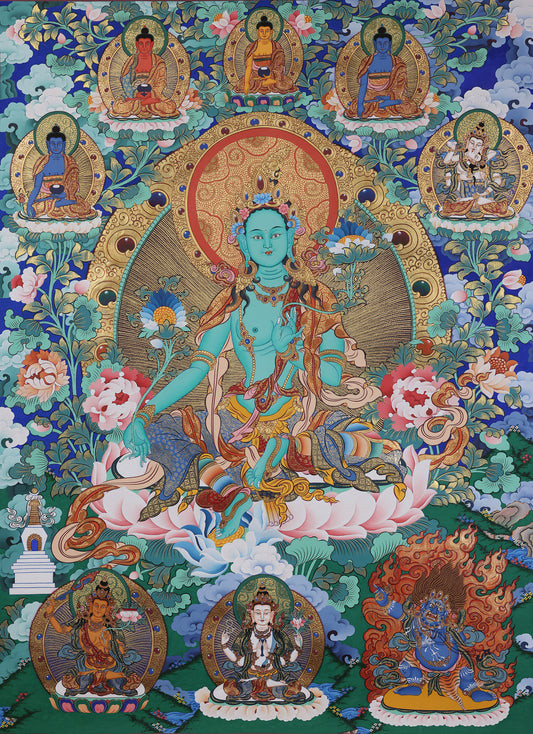
Main Deity: Samantabhadra Bodhisattva (Universal Worthy Bodhisattva)
-
Origin: Nepal (Bhaktapur Newari Artisan Craft)
-
Dimensions: 3.5cm × 4.5cm (Traditional "Gau" Shrine Size)
-
Housing: Titanium Steel Case (Rust-Resistant, Sealed Encasement)
1. Religious Significance: Samantabhadra in Tibetan Buddhism
Samantabhadra (known as "Kuntu Zangpo" in Tibetan) is one of the Two Great Bodhisattvas (paired with Manjushri), embodying "universal virtuous practice"—the foundation of spiritual progress in Mahayana Buddhism. His iconography in this pendant aligns with Tibetan esoteric teachings:
-
Form & Mount: Seated atop a white elephant (with six tusks)—the elephant symbolizes "unshakable resolve" in practice, while six tusks represent mastery of the Six Perfections (generosity, morality, patience, diligence, concentration, wisdom). His green robes and bejeweled crown reflect his status as a "Sambhogakaya" (enjoyment body), accessible to practitioners who uphold virtuous conduct.
-
Mudra & Symbolism: His right hand holds a lotus (or wish-fulfilling gem), signifying the fruition of virtuous deeds; the left hand rests in his lap (or forms the "Dhyana Mudra"), representing the calm focus needed to sustain practice. The circular aura behind him (rendered in gold leaf) symbolizes the "pervasiveness of his virtuous influence"—benefiting all sentient beings.
-
Cultural Role: In Tibetan Buddhism, Samantabhadra is the "Bodhisattva of Practice"—he is believed to guide practitioners in integrating Buddhist teachings into daily life, turning ordinary actions into merit.
For practitioners, wearing this pendant connects them to Samantabhadra’s "universal virtue," supporting their commitment to consistent, compassionate practice.
2. Nepalese Newari Craft: Preserving Samantabhadra’s Iconographic Orthodoxy
Nepal’s Bhaktapur Valley is the birthplace of Himalayan thangka iconography, and Newari artisans are renowned for their strict adherence to Samantabhadra’s canonical form:
-
Iconometric Precision: Artisans follow the Sadhana Mala and Iconometric Texts to ensure every detail—from the elephant’s six tusks (evenly spaced) to the lotus in Samantabhadra’s hand (perfectly petaled)—aligns with his "universal virtue" identity. The ratio of the bodhisattva’s form to the elephant mount is calibrated to reflect "virtue guiding resolve."
-
Linework & Color Symbolism: Newari artisans use fine squirrel-hair brushes to render Samantabhadra’s soft, serene expression—contrasting with the bold lines of the elephant’s form (to emphasize resolve). The background’s floral motifs (lotus, peony) are painted with overlapping, vibrant strokes to represent the "blossoming of virtue," while gold scrollwork (burnished with agate stones) highlights his "radiant influence."
-
Heritage & Tradition: Newari thangka craft is a UNESCO-recognized intangible cultural heritage; this pendant’s hand-painted details (e.g., the subtle gradient of the elephant’s white tusks) reflect a tradition passed down through family workshops for over 1,000 years—each piece carries the legacy of generations of artisans.
3. Titanium Steel Gau Case: Modernizing the Sacred Portable Shrine
As a "gau" (portable shrine), this pendant’s titanium steel case merges traditional ritual function with contemporary practicality:
-
Durable Protection: Titanium steel resists corrosion, scratches, and tarnish—solving the fragility of traditional wooden or copper gau. Its airtight seal shields the delicate thangka from moisture, dust, and UV damage, preserving the Newari artisans’ brushwork for decades (unlike synthetic prints, which fade quickly).
-
Cultural Alignment: The case’s engraved "Six Perfections Border" (echoing Samantabhadra’s core teachings) honors his role as the "Bodhisattva of Practice," while the compact 3.5×4.5cm size follows the Tibetan tradition of carrying gau as a "constant reminder of virtuous conduct"—small enough to wear daily, yet large enough to showcase the thangka’s detail.
-
Wearability: Designed for modern life, the case attaches easily to necklaces or bags without compromising the thangka’s sacredness. It allows the wearer to keep Samantabhadra’s guidance close, whether working, commuting, or engaging in daily activities.
4. Spiritual & Practical Value: Virtue, Practice, and Cultural Connection
For Spiritual Practitioners
-
Practice Aid: The pendant serves as a visualization focal point for Samantabhadra’s sadhana (ritual practice). Pairing it with his mantra (Om Samantabhadra Hum) helps practitioners cultivate the Six Perfections, turning routine actions (e.g., kindness to others) into merit that advances their spiritual path.
-
Daily Reminder: It acts as a "virtue compass"—Samantabhadra’s form reminds the wearer to uphold compassionate, diligent conduct in daily life, even amid chaos.
For Cultural Enthusiasts
-
Wearable Heritage: The pendant offers a respectful entry into Tibetan Buddhist culture, with Samantabhadra’s form sparking curiosity about the "Two Great Bodhisattvas" (virtue and wisdom) and their complementary roles.
-
Gifting Significance: In Himalayan and global Buddhist communities, Samantabhadra pendants are given to mark milestones (e.g., starting a spiritual practice, graduating) or to support loved ones in pursuing goals—symbolizing wishes for consistent effort, virtuous growth, and spiritual progress.
5. Unique Selling Points: Orthodox, Durable, and Meaningful
In a market flooded with generic "spiritual jewelry," this pendant stands out for three key reasons:
-
Iconographic Orthodoxy: Hand-painted by Newari artisans who train for 10+ years in esoteric iconography—unlike mass-produced pieces, it adheres to the exacting standards of Tibetan Buddhist scripture, ensuring it carries the "guiding power" of Samantabhadra’s true form.
-
Practical Sacredness: The titanium steel case lets the wearer carry a canonical Samantabhadra thangka daily, rather than a decorative replica—turning a "jewelry piece" into a functional, sacred reminder of virtuous practice.
-
Depth of Meaning: Every element (the six-tusked elephant, the lotus, the green robes) tells a story about "progress through consistent virtue"—making the pendant not just an accessory, but a tangible commitment to growth.
This Samantabhadra Bodhisattva thangka pendant bridges ancient Himalayan tradition and modern life: It carries the "universal virtue" of a revered bodhisattva in a durable, portable form, inviting the wearer to embrace consistent, compassionate practice and navigate life’s journey with purpose and resolve.
#SamantabhadraThangka #NepaleseHandmadeGau #UniversalWorthyBodhisattvaPendant #TitaniumSteelGauShrine #TibetanBuddhistVirtueAmulet #SixPerfectionsThangka #PortableBodhisattvaShrine