Nepali Hand-Painted White Tara Thangka: A Deep Dive Into Tibetan Buddhist Symbolism & Artistry

$599.00 USD
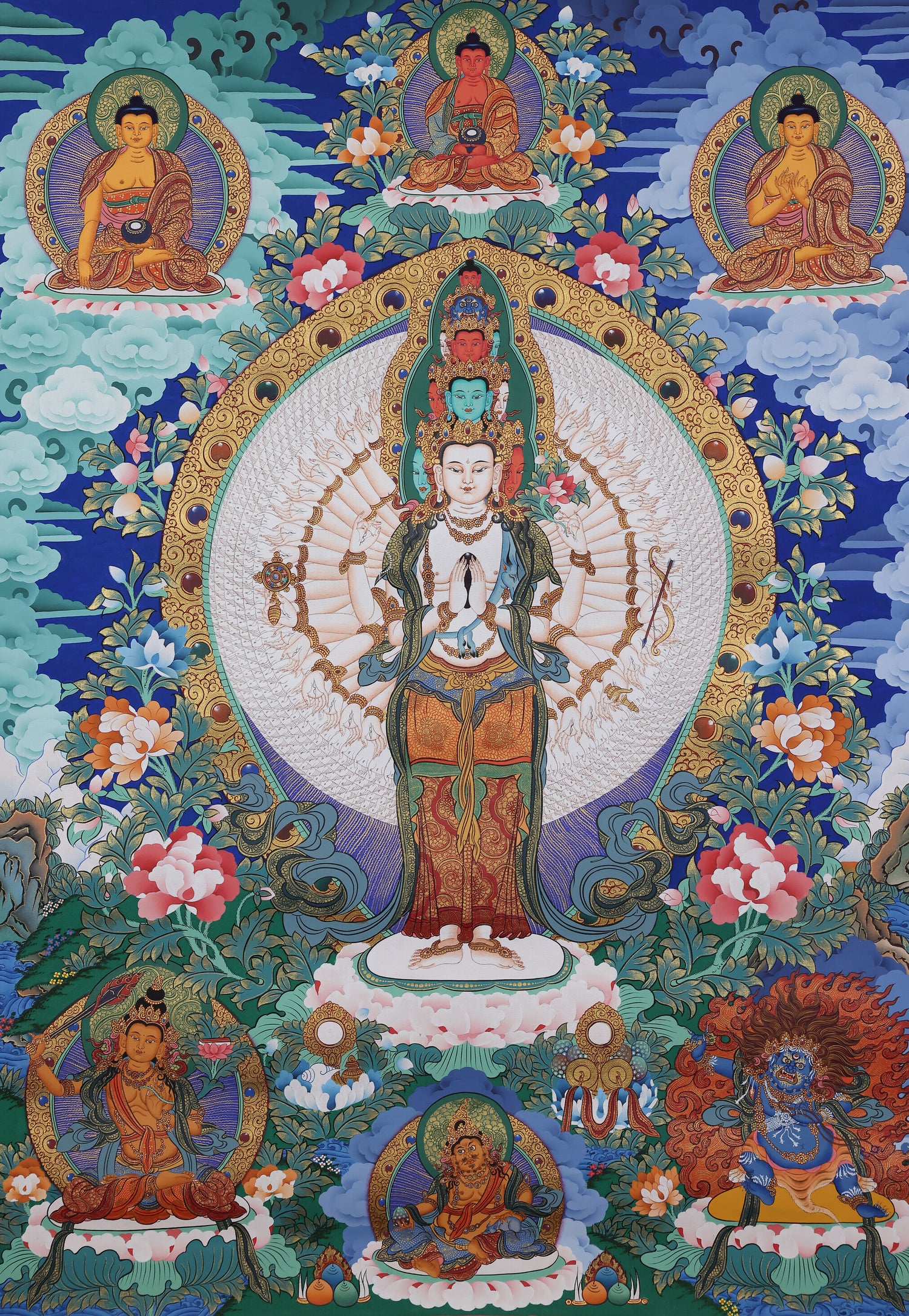
Thangka name: Colorful Tang White Tara
size: 45cm×66cm
origin: Nepal
Ask a Question

Hurry Up! Only 100 left in stock!

Estimate delivery times: 12-26 days (International), 3-6 days (United States).

Return within 45 days of purchase. Duties & taxes are non-refundable.

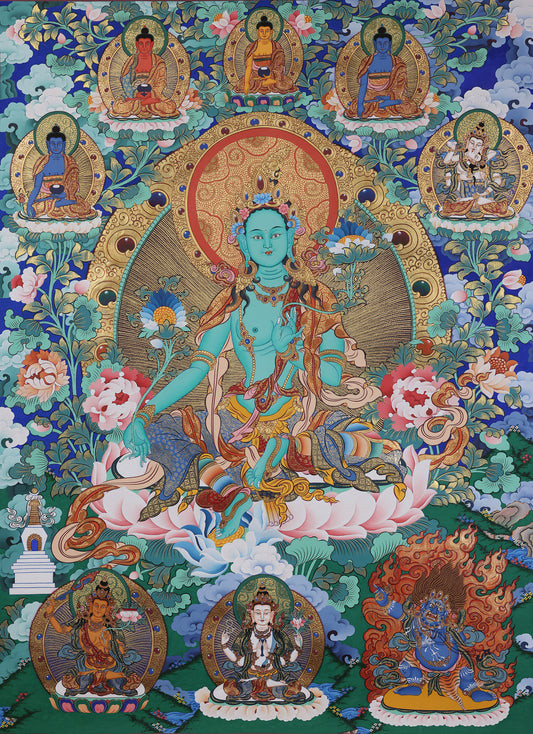
Hand-painted Tibetan White Tara thangka depicting the goddess of longevity and compassionate blessings
Nepali Hand-Painted White Tara Thangka: A Deep Dive Into Tibetan Buddhist Symbolism & Artistry
$599.00 USD
537 Products
192 Products
46 Products
11 Products
When a vivid, finely lined Nepali hand-painted White Tara thangka unfolds before you, you’re not just looking at a painting—it’s a visual vessel for the Tibetan Buddhist spirit of “compassionate salvation,” a tangible testament to Himalayan cultural fusion, and a crystallization of the Newari school’s thousand-year-old artistic heritage. Today, we use a 45×66cm mineral-pigment thangka to unlock the symbolic and artistic codes behind Tibetan Buddhist thangkas.

I. Theme: The Spiritual Core of “Longevity and Salvation” in White Tara Thangkas

In the Tibetan Buddhist tradition, White Tara (Saraswati Tara) is the emanation of the right eye-tear of Avalokiteshvara (Chenrezig), and together with Green Tara, forms the “Two Principal Taras” among the 21 Taras. Her core symbolism centers on “longevity, healing, and compassionate salvation.” The theme of this Nepali thangka revolves around the “protective cosmos of White Tara”:

  • Spiritual Direction: Known as the “Seven-Eyed Mother Buddha,” White Tara’s seven eyes (on her forehead, palms, and soles) gaze upon the suffering of the six realms, echoing Tibetan Buddhism’s fundamental ethos of “all-pervading compassion”;
  • Functional Role: It serves both as a aid for practitioners to visualize and cultivate longevity, and as a “protective talisman” for household worship—aligning with the spiritual needs of Himalayan communities for “worldly stability”;
  • Cultural Link: Nepal is a key origin point of Tibetan Buddhism (Atisha Dipankara resided here before entering Tibet), so thangkas like this also carry the historical memory of Indo-Tibetan Buddhist cultural exchange.

II. The Main Deity: White Tara’s Iconography—Every Detail Is a Symbol of Faith

The central White Tara in the thangka adheres strictly to the Iconometric Sutras, with each detail holding religious meaning:

  • Physical Symbolism: Her all-white form represents “purification from misfortune”; her visage (like a 16-year-old maiden) embodies “gentle compassion”; her seven eyes (the core identifier) signify “watching over the ten directions and perceiving all sentient suffering”;
  • Implements and Mudras: Her right hand forms the Varada Mudra (palm outward) to “grant blessings and ease”; her left hand holds an utpala lotus (its stem curling to her ear), symbolizing “enlightened purity” and echoing her origin as “an emanation of Avalokiteshvara’s compassion”;
  • Ornamentation: Her floral crown, necklaces, and armlets not only reflect her “celestial maiden” status but also highlight the Nepali thangka’s aesthetic of “opulent solemnity”; the double lotus throne (with upward and downward petals) represents “the pure realm beyond samsara.”

III. Attendant Deities: A Systematic Network of Divine Protection

The attendant deities above and below the main figure are not randomly arranged—they follow the logic of “main deity, dharma lineage, and protection,” forming the Tibetan Buddhist practice structure of “Yidam (meditational deity), Guru, and Dharma Protector”:

  • Three Deities Above: Symbols of Dharma Lineage

    The central Buddha (likely Shakyamuni or Medicine Buddha) holding a bowl represents the “source of the Dharma”; the left deity (possibly Atisha Dipankara) holding a ritual implement is the “disseminator of the Dharma”; the right guru (in monastic robes, forming a mudra) symbolizes “lineage blessings for practice”—this combination emphasizes both the authority of the Dharma and the continuity of practice.
  • Two Deities Below: Complementary Worldly Protection

    The red-bodied deity on the left (likely Hayagriva or Red Dzambhala) governs “demon-subjugation and abundance”; the six-armed deity on the right (likely White Umbrella Goddess or Six-Armed White Tara) represents “warding off calamity”—together with White Tara’s “misfortune-quelling” role, they form a practical loop of “protection and benefit.”

IV. Craftsmanship & Style: The Millennial Heritage of the Newari School

This thangka is a masterpiece of Nepal’s Newari artistic school, whose techniques and style fuse Indian and Tibetan aesthetics with distinct regional traits:

  • Timeless Mineral Pigments

    Natural materials like shell powder (white), cinnabar (red), lapis lazuli (blue), and orpiment (yellow) are mixed with animal hide glue—though labor-intensive (shell powder may be ground for years), these pigments retain vibrant, durable hues, fitting the “transgenerational” purpose of religious art; 24K gold powder, polished with an agate pen, creates a luminous sheen that defines the thangka’s opulence.
  • Artistic Traits of the Newari School
    • Color: High-contrast, saturated tones (royal blue, pink, gold) distinguish deity attributes while reflecting the local preference for “bright, vivid aesthetics”;
    • Composition: Centrally symmetrical and layered, with the main deity at the core, attendants borne on clouds, and background flowers (peonies) and landscapes drawing from Indian Pahari painting to evoke a “divine paradise”;
    • Linework: Delicate, fluid dingtou shuwei (nail-head, rat-tail) outlines lend grace and strength to robes and lotus petals—differing from the starker lines of Tibetan thangkas, embodying the “liveliness” of Newari art.

V. Cultural Value: The Symbiosis of Faith, Art, and Life

For Nepali painters, creating a thangka is a merit-building practice; for communities, it’s a visual anchor of spiritual reliance; for art history, it’s a physical example of Indo-Tibetan cultural fusion and Newari artistic 传承 —this is the thangka’s uniqueness: it is both a “vessel of faith” and an “embodiment of beauty.”

#WhiteTaraThangka #NepaliThangka #TibetanBuddhistArt #NewariArtSchool #MineralPigmentThangka #ThangkaAnalysis #TibetanBuddhistCulture #HimalayanArt #HandPaintedThangka #ReligiousArtwork
Discover the perfect Tibetan Buddhist Thangka that matches your wishes, lifestyle, and space. Each Thangka carries spiritual meaning and brings blessings when placed correctly.

1. Define Your Intention

Wealth & Success → Yellow Dzambhala (Wealth Deity)

Compassion & Peace → Avalokiteshvara, Green Tara

Wisdom & Learning → Manjushri

Health & Healing → Medicine Buddha

Longevity & Family Protection → White Tara

2. Choose by Identity

Entrepreneurs & Business Owners → Wealth Deities for prosperity.

Students & Scholars → Wisdom Deities for focus and clarity.

Healers & Yoga Practitioners → Medicine Buddha for energy and balance.

Families & Homemakers → Tara Deities for harmony and safety.

Collectors & Art Lovers → Rare Mandalas or Masterpiece Thangkas.

3. Match Your Space

Home Shrine / Meditation Room → Medium Thangkas (60–80 cm).

Office / Business Hall → Large Thangkas for prosperity and authority.

Living Room / Study → Decorative Thangkas for peace and beauty.

4. Authentic Craftsmanship

Hand-painted with natural mineral pigments and fine canvas, each Thangka reflects Tibetan artistry and spiritual power. Verified sources ensure quality and respect for tradition.

✨ Choose your Thangka with heart — it’s not just art, but a blessing for your life.

Different people have different needs, and choosing the right Thangka can provide spiritual support, protection, good fortune, and blessings. Below are Thangka recommendations for various roles:

1. Entrepreneurs

  • Needs: Wisdom, wealth, health, career success.
  • Recommended Thangkas:
    Manjushri: Enhances decision-making and business wisdom.
    Wealth Deity: Brings wealth and prosperity.
    Medicine Buddha: Supports health and reduces stress.
    Mahakala: Protects business from competition and challenges.

2. Successful Individuals

  • Needs: Inner peace, family harmony, longevity.
  • Recommended Thangkas:
    Amitabha Buddha: Brings inner peace and tranquility.
    Avalokiteshvara (Guanyin): Promotes family harmony and happiness.
    Amitayus (Long Life Buddha): Prays for good health and long life.
    Manjushri: Continues to enhance wisdom.

3. Housewives/Husbands

  • Needs: Family harmony, protection, health.
  • Recommended Thangkas:
    Avalokiteshvara: Increases family happiness and harmony.
    Protector Deities: Safeguards the family from external disturbances.
    White Tara: Blesses the family with health.

4. Students and Scholars

  • Needs: Wisdom, focus, academic success.
  • Recommended Thangkas:
    Manjushri: Boosts learning, memory, and wisdom.
    Sakyamuni Buddha: Helps with concentration and spiritual practice.
    Jixiang Tianmu: Brings academic good luck and exam success.

5. Artists and Creative Professionals

  • Needs: Inspiration, creativity, artistic achievement.
  • Recommended Thangkas:
    Manjushri: Stimulates creative thinking and inspiration.
    Vajrapani: Helps overcome creative blocks.
    Maitreya: Brings a relaxed and optimistic attitude, easing stress.

6. Travelers and Adventurers

  • Needs: Protection, good luck, success in adventures.
  • Recommended Thangkas:
    Hayagriva: Provides strong protection during travels and clears obstacles.
    Mahakala: Brings good fortune and protection, especially for adventurers.
    Vajrasattva: Helps overcome difficulties and challenges during the journey.

7. Elderly Individuals

  • Needs: Health, longevity, spiritual peace.
  • Recommended Thangkas:
    Amitayus: Prays for long life and good health.
    Medicine Buddha: Promotes healing and physical well-being.
    Avalokiteshvara: Brings compassion and inner peace in later years.

8. Corporate Executives

  • Needs: Leadership, wisdom, teamwork, and business success.
  • Recommended Thangkas:
    Manjushri: Enhances leadership skills and decision-making.
    Wealth Deity: Brings success and prosperity to the business and team.
    Avalokiteshvara: Promotes harmony and balance within the team.

9. Health and Fitness Enthusiasts

  • Needs: Good health, vitality, energy.
  • Recommended Thangkas:
    Medicine Buddha: Enhances physical health and vitality.
    White Tara: Brings health and rejuvenation.
    Vajrasattva: Clears health challenges and boosts energy.

10. Politicians

  • Needs: Leadership, wisdom, peace.
  • Recommended Thangkas:
    Manjushri: Enhances leadership abilities and decision-making.
    Vairocana Buddha: Helps maintain inner peace and wisdom.
    Avalokiteshvara: Promotes societal peace and family harmony.

For all orders exceeding a value of 100USD shipping is offered for free.

Returns will be accepted for up to 10 days of Customer’s receipt or tracking number on unworn items. You, as a Customer, are obliged to inform us via email before you return the item.

Otherwise, standard shipping charges apply. Check out our delivery Terms & Conditions for more details.

Returns will be accepted for up to 10 days of Customer’s receipt or tracking number on unworn items. You, as a Customer, are obliged to inform us via email before you return the item, only in the case of:

– Received the wrong item.
– Item arrived not as expected (ie. damaged packaging).
– Item had defects.
– Over delivery time.
– The shipper does not allow the goods to be inspected before payment.

The returned product(s) must be in the original packaging, safety wrapped, undamaged and unworn. This means that the item(s) must be safely packed in a carton box for protection during transport, possibly the same carton used to ship to you as a customer.

Recently Viewed

Don't forget! The products that you viewed. Add it to cart now.

Pairs well with

Enhance your selection with perfectly matched accessories and complementary products..

People Also Bought

Here’s some of our most similar products people are buying. Click to discover trending style.