Nepalese Painted Thangka of Vaishravana (Wealth King): The Symbiosis of Tibetan Buddhist Wealth Beliefs and Millennia-Old Art

$599.00 USD
Thangka name: Caitang treasure king
size: 45cm×65cm
origin: Nepal
Ask a Question

Hurry Up! Only 100 left in stock!

Estimate delivery times: 12-26 days (International), 3-6 days (United States).

Return within 45 days of purchase. Duties & taxes are non-refundable.

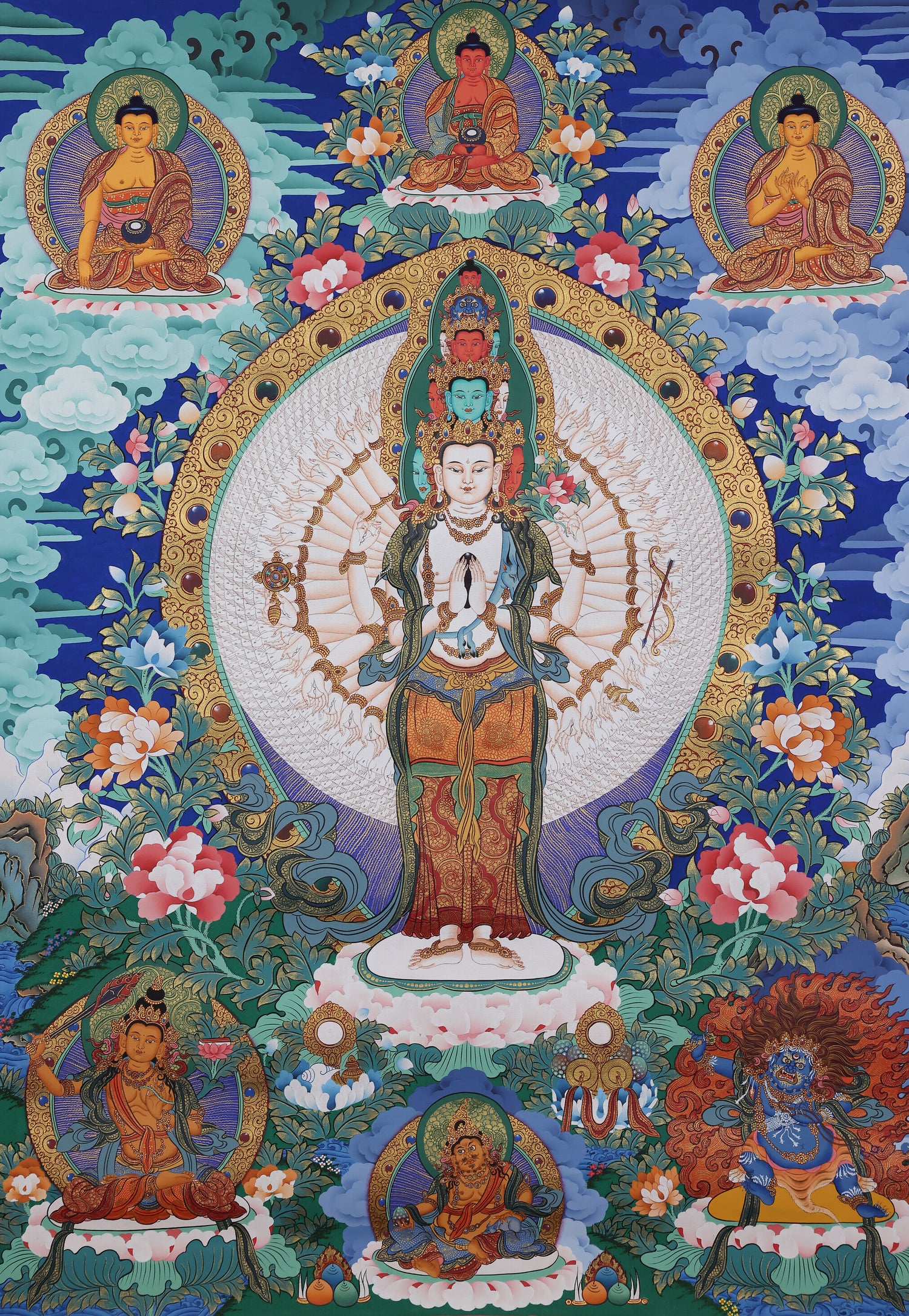
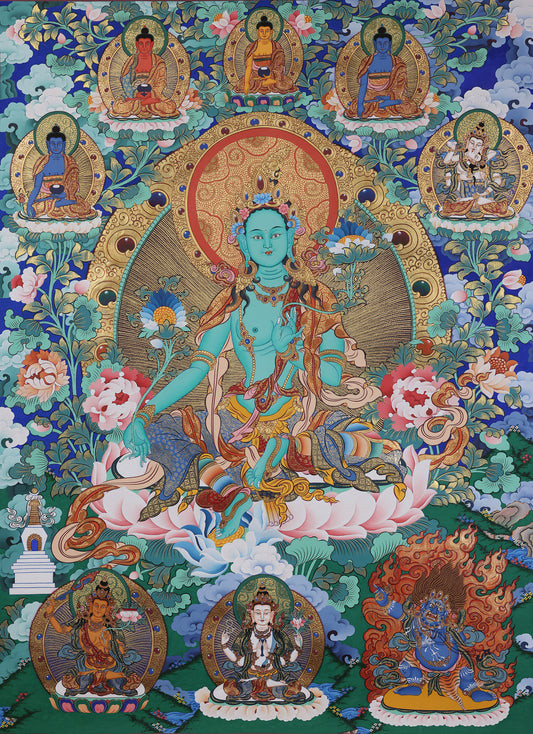
Traditional Tibetan Thangka showing Vaishravana in golden armor, symbolizing power and abundance
Nepalese Painted Thangka of Vaishravana (Wealth King): The Symbiosis of Tibetan Buddhist Wealth Beliefs and Millennia-Old Art
$599.00 USD
537 Products
192 Products
46 Products
11 Products
When a 45×65cm Nepalese painted thangka unfurls in a shrine, the glow of gold leaf and mineral pigments holds more than just the majestic form of Vaishravana; it embodies the profound Tibetan Buddhist doctrine of "using worldly desires to lead beings to Buddhist wisdom." This is the allure of the hand-painted Nepalese Vaishravana thangka: it is both a vessel for secular wealth aspirations and a visual manifestation of religious wisdom.

I. Core Theme: Wealth as a Resource for Practice, Not an End

The central theme of this thangka is the dual guardianship of Vaishravana (also known as Vaisravana in Sanskrit). As the only deity in Tibetan Buddhism who holds both the roles of "Northern Dharma Protector" and "Chief God of Wealth," Vaishravana’s very existence balances worldly needs and transcendental wisdom.

For devotees in Tibet and the Himalayan cultural sphere, worshipping Vaishravana is not merely "seeking prosperity." The doctrine behind the thangka clarifies: wealth is a "resource for spiritual practice," to be guarded by virtuous deeds and used with compassion. The thangka’s composition and imagery concretize this idea: the main deity’s authority, the attendants’ gentleness, the permanence of mineral pigments, and the fluidity of lines together construct the logic that "wealth originates from the Dharma and ultimately returns to virtuous karma."

II. The Main Deity: Divinity and Symbolism in Golden Form

The central Vaishravana in the painting is a model of fusion between Tibetan Buddhist iconometric rules and Nepalese aesthetics:

  • Form and Ritual Implements: His golden body (corresponding to Ratnasambhava Buddha, symbolizing the perfection of merit) is crowned with a five-Buddha crown that unifies the wisdom of the five directional Buddhas. His right hand holds a victory banner, which represents both "stable undertakings" and the "vanquishing of greed." His left hand supports a nüli (treasure-spitting mongoose), whose mouth overflowing with jewels is a symbol of "boundless generosity"—the direct embodiment of his identity as a god of wealth.
  • Mount and Posture: His mount, a red-maned white snow lion, roars proudly; its four paws correspond to the "Four Immeasurables" (loving-kindness, compassion, joy, equanimity), embodying both the authority of a Dharma protector and the core of compassion. Vaishravana assumes a "lalita asana" (relaxed seated posture), which balances ease and dignity, hinting at "mastering wealth freely rather than being bound by it."

III. Attendant Deities: A Complete System of Wealth Protection

The attendants surrounding the main deity are not mere decorations; they visualize the doctrine of the "Eight Treasuries":

  • Three Deities Above: The central top deity (Buddha/Ratnasambhava Buddha) establishes that "wealth originates from the Dharma." The White Tara (holding a lotus, symbolizing purity) and Green Tara (making the gesture of granting wishes) flanking him symbolize the union of "virtuous aspirations and wealth."
  • Two Deities Below: The Yellow God of Wealth (holding a treasure vase) acts as the "executor of wealth," tasked with directly bestowing material resources. The blue-bodied protector (wreathed in flames) is the "guardian of wealth," vanquishing the karmic obstacles of poverty.
  • Implicit System: Though the Eight Wealth Gods are not depicted, the main deity’s treasure-spitting mongoose and the attendants’ treasure-bearing implements implicitly represent the "Eight Treasuries answering to Vaishravana," completing the thangka’s function of wealth protection.

IV. Craftsmanship: Millennia of Heritage in Mineral Pigments

Half the value of this thangka lies in its doctrine, the other in its craftsmanship—the handcrafted techniques of the Nepalese Newari school are a living cultural heritage:

  • Base and Pigments: The cotton-linen canvas is treated repeatedly with glue-alum water and ground white stone powder to ensure it is smooth and opaque. All pigments are natural minerals and earth-based: yellow from realgar and ochre, blue-green from lapis lazuli and malachite, red from cinnabar and saffron, and gold from ground 24K gold leaf (processed through "gold kneading" and "gold dyeing" to create tonal layers). These pigments require weeks of soaking, stone grinding, and mixing with cowhide glue; their resistance to fading aligns with the religious need for thangkas to be "permanent manifestations of the Dharma."
  • Technical Details: Wolf-hair brushes outline lines (double gold lines enhance opulence), wet blending is used for shading (the main deity’s golden body requires three layers of overlapping dyeing), and facial features follow "three sections and five eyes" iconometry while incorporating the Newari style of "handsome neutrality"—gentle yet heroic brows, a slight smile hinting at compassion, exemplifying the principle of "expressing spirit through form."

V. Style: The Beauty of Cultural Fusion in the Newari School

This thangka is a classic example of the Nepalese Newari school, balancing religious solemnity with regional softness:

  • Composition: It adopts a mandala-like structure but abandons strict symmetry; the background, filled with scrollwork and Han-style peony patterns (symbolizing prosperity), embodies flexibility.
  • Color Palette: High-contrast saturated colors (the main deity’s gold, the orange-red nimbus, the blue-green attendants) are unified by gold outlines, achieving opulence without gaudiness.
  • Details: Gemstones on the crown use "highlight dotting" to convey texture, while flowing ribbons employ "curved fluidity" to express dynamism; the snow lion’s softened features balance solemnity and approachability—this is the result of merging Indo-Nepalese artistic roots with Tibetan and Han aesthetics.

Conclusion: A Thangka Is More Than a "Painting"—It Is Living Wisdom

This 45×65cm Nepalese painted thangka was never meant to be a "lucky charm for wealth." It is a vessel for the Tibetan Buddhist ideal of "cultivating both merit and wisdom": the permanence of mineral pigments symbolizes the continuity of merit; the main deity’s dual divinity explains the essence of wealth; the Newari school’s softness makes doctrine accessible in daily life. When we gaze at this thangka, we see not just art, but a life wisdom of "governing wealth with good intentions."
#NepaleseThangka #Vaishravana #TibetanBuddhistArt #NewariSchool #MineralPigmentThangka #WealthBeliefs #PaintedThangkaCraft #ShrineWorshipThangka #HimalayanCulture #ThangkaAnalysis
Discover the perfect Tibetan Buddhist Thangka that matches your wishes, lifestyle, and space. Each Thangka carries spiritual meaning and brings blessings when placed correctly.

1. Define Your Intention

Wealth & Success → Yellow Dzambhala (Wealth Deity)

Compassion & Peace → Avalokiteshvara, Green Tara

Wisdom & Learning → Manjushri

Health & Healing → Medicine Buddha

Longevity & Family Protection → White Tara

2. Choose by Identity

Entrepreneurs & Business Owners → Wealth Deities for prosperity.

Students & Scholars → Wisdom Deities for focus and clarity.

Healers & Yoga Practitioners → Medicine Buddha for energy and balance.

Families & Homemakers → Tara Deities for harmony and safety.

Collectors & Art Lovers → Rare Mandalas or Masterpiece Thangkas.

3. Match Your Space

Home Shrine / Meditation Room → Medium Thangkas (60–80 cm).

Office / Business Hall → Large Thangkas for prosperity and authority.

Living Room / Study → Decorative Thangkas for peace and beauty.

4. Authentic Craftsmanship

Hand-painted with natural mineral pigments and fine canvas, each Thangka reflects Tibetan artistry and spiritual power. Verified sources ensure quality and respect for tradition.

✨ Choose your Thangka with heart — it’s not just art, but a blessing for your life.

Different people have different needs, and choosing the right Thangka can provide spiritual support, protection, good fortune, and blessings. Below are Thangka recommendations for various roles:

1. Entrepreneurs

  • Needs: Wisdom, wealth, health, career success.
  • Recommended Thangkas:
    Manjushri: Enhances decision-making and business wisdom.
    Wealth Deity: Brings wealth and prosperity.
    Medicine Buddha: Supports health and reduces stress.
    Mahakala: Protects business from competition and challenges.

2. Successful Individuals

  • Needs: Inner peace, family harmony, longevity.
  • Recommended Thangkas:
    Amitabha Buddha: Brings inner peace and tranquility.
    Avalokiteshvara (Guanyin): Promotes family harmony and happiness.
    Amitayus (Long Life Buddha): Prays for good health and long life.
    Manjushri: Continues to enhance wisdom.

3. Housewives/Husbands

  • Needs: Family harmony, protection, health.
  • Recommended Thangkas:
    Avalokiteshvara: Increases family happiness and harmony.
    Protector Deities: Safeguards the family from external disturbances.
    White Tara: Blesses the family with health.

4. Students and Scholars

  • Needs: Wisdom, focus, academic success.
  • Recommended Thangkas:
    Manjushri: Boosts learning, memory, and wisdom.
    Sakyamuni Buddha: Helps with concentration and spiritual practice.
    Jixiang Tianmu: Brings academic good luck and exam success.

5. Artists and Creative Professionals

  • Needs: Inspiration, creativity, artistic achievement.
  • Recommended Thangkas:
    Manjushri: Stimulates creative thinking and inspiration.
    Vajrapani: Helps overcome creative blocks.
    Maitreya: Brings a relaxed and optimistic attitude, easing stress.

6. Travelers and Adventurers

  • Needs: Protection, good luck, success in adventures.
  • Recommended Thangkas:
    Hayagriva: Provides strong protection during travels and clears obstacles.
    Mahakala: Brings good fortune and protection, especially for adventurers.
    Vajrasattva: Helps overcome difficulties and challenges during the journey.

7. Elderly Individuals

  • Needs: Health, longevity, spiritual peace.
  • Recommended Thangkas:
    Amitayus: Prays for long life and good health.
    Medicine Buddha: Promotes healing and physical well-being.
    Avalokiteshvara: Brings compassion and inner peace in later years.

8. Corporate Executives

  • Needs: Leadership, wisdom, teamwork, and business success.
  • Recommended Thangkas:
    Manjushri: Enhances leadership skills and decision-making.
    Wealth Deity: Brings success and prosperity to the business and team.
    Avalokiteshvara: Promotes harmony and balance within the team.

9. Health and Fitness Enthusiasts

  • Needs: Good health, vitality, energy.
  • Recommended Thangkas:
    Medicine Buddha: Enhances physical health and vitality.
    White Tara: Brings health and rejuvenation.
    Vajrasattva: Clears health challenges and boosts energy.

10. Politicians

  • Needs: Leadership, wisdom, peace.
  • Recommended Thangkas:
    Manjushri: Enhances leadership abilities and decision-making.
    Vairocana Buddha: Helps maintain inner peace and wisdom.
    Avalokiteshvara: Promotes societal peace and family harmony.

For all orders exceeding a value of 100USD shipping is offered for free.

Returns will be accepted for up to 10 days of Customer’s receipt or tracking number on unworn items. You, as a Customer, are obliged to inform us via email before you return the item.

Otherwise, standard shipping charges apply. Check out our delivery Terms & Conditions for more details.

Returns will be accepted for up to 10 days of Customer’s receipt or tracking number on unworn items. You, as a Customer, are obliged to inform us via email before you return the item, only in the case of:

– Received the wrong item.
– Item arrived not as expected (ie. damaged packaging).
– Item had defects.
– Over delivery time.
– The shipper does not allow the goods to be inspected before payment.

The returned product(s) must be in the original packaging, safety wrapped, undamaged and unworn. This means that the item(s) must be safely packed in a carton box for protection during transport, possibly the same carton used to ship to you as a customer.

Recently Viewed

Don't forget! The products that you viewed. Add it to cart now.

Pairs well with

Enhance your selection with perfectly matched accessories and complementary products..

People Also Bought

Here’s some of our most similar products people are buying. Click to discover trending style.