Product Specifications
- Main Deity: Samantabhadra Bodhisattva (core figure of the "Huayan Three Saints" in Tibetan Huayan Buddhism)
- Origin: Tibet, China
- Dimensions: 3.5cm × 4.5cm (thangka core + vintage silver casing)
- Pigments: Natural mineral pigments (pearl powder, lapis lazuli, malachite, etc.)
- Casing: Vintage aged silver protective shell
- Grade: Collectible-grade thangka jewelry
Meta Description: 3.5×4.5cm Collectible Tibetan Samantabhadra Bodhisattva Thangka Pendant — hand-painted with natural mineral pigments, encased in vintage silver, and rooted in Tibetan Huayan Buddhism. A portable vessel of vows blending cultural heritage with spiritual guidance.
1. Deity Culture: Samantabhadra Bodhisattva’s Symbolic System in Tibetan Huayan Buddhism
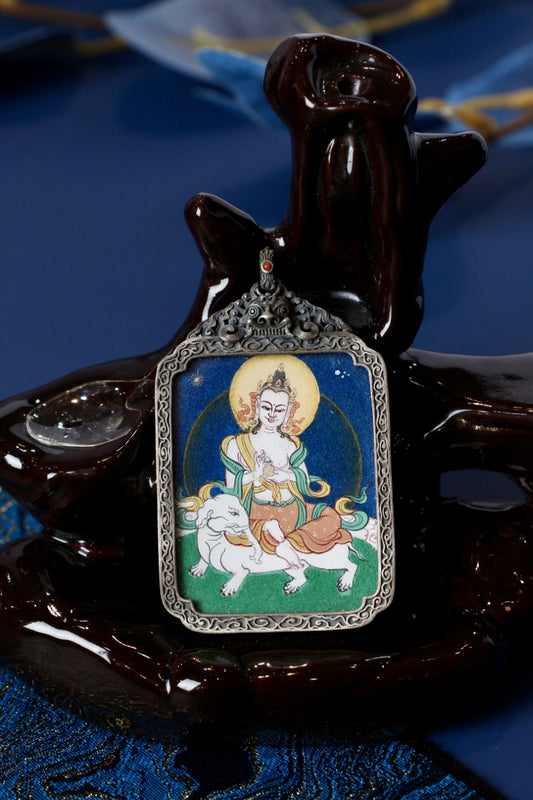
As a core figure of the "Huayan Three Saints" (Vairocana Buddha, Manjushri Bodhisattva, Samantabhadra Bodhisattva) in Tibetan Huayan Buddhism, Samantabhadra embodies the ideal of "great vows in action." In this pendant, the Bodhisattva’s white form (rendered with pearl powder from natural mineral pigments, symbolizing a pure, untainted heart of vows), mount of a six-tusked white elephant (representing "unwavering Bodhi practice"), and holding of a ruyi scepter (signifying "fulfilling sentient beings’ good wishes") strictly adhere to the iconographic rules of the Avataṃsaka Sūtra.
In Tibetan belief, Samantabhadra is revered as the "Bodhisattva of Great Action." His Ten Great Vows (e.g., "extensive offerings" and "adapting to all sentient beings") are believed to grant wearers blessings to "uphold good intentions and fulfill vows." The six-tusked white elephant aligns with Huayan Buddhism’s principle of "manifesting wisdom through action," serving as a spiritual link for believers to integrate Dharma into daily life.
2. Craftsmanship Value: Inheriting Huayan Buddhist Rituals in a Miniature Collectible Thangka
1. Natural Mineral Pigments: Vessels of Vow Energy
This pendant uses natural pigments exclusive to Tibetan Huayan thangkas: white from pearl powder (matching Samantabhadra’s form), blue from ground lapis lazuli (reflecting Huayan Buddhism’s "interdependent origination of the Dharma-realm"), and green from malachite (adorning the elephant and robe patterns, symbolizing vitality and the embodiment of vows). These materials not only follow the ritual of "painting sacred icons with sacred substances" but also resist fading for centuries. For the 3.5×4.5cm surface, artists use 0.1mm-tip brushes to detail the Bodhisattva’s crown and the elephant’s six tusks — precision that strictly follows the Iconographic Measurement Sutra’s "Bodhisattva proportion rules," a hallmark of collectible thangkas.
2. Vintage Silver Casing: Protection Rooted in Huayan Tradition
The vintage aged silver casing is engraved with "six-tusked elephant patterns" (top) and "ruyi motifs" (edges) — sacred symbols in Tibetan Huayan Buddhism. It carries forward the Tibetan "gau" tradition (portable containers for sacred objects), protecting the delicate thangka with metallic hardness. Its aged texture echoes Huayan Buddhism’s philosophy of "vows beyond appearances" while enhancing suitability for daily wear.
3. Cultural Context: Wearing and Honoring the Huayan Thangka Pendant
1. Huayan Wearing Traditions
Per Tibetan Huayan rituals, the Samantabhadra pendant should be worn close to the chest (near the heart chakra), kept free from impurities (e.g., tobacco, alcohol), and blessed through a "vow empowerment ceremony" at a monastery. This practice reflects reverence for the Bodhisattva and aligns the wearer’s body, speech, and mind with the spirit of "adapting to sentient beings and practicing good deeds."
2. Collectible Huayan Standards
As a collectible Huayan thangka, this pendant meets three criteria: 1) strict adherence to Huayan Iconographic Rules (e.g., the Bodhisattva’s ruyi scepter and elephant form); 2) 100% natural mineral pigments (no chemical additives); 3) creation by senior Tibetan thangka artists with Huayan practice backgrounds — distinguishing it from souvenirs with dual cultural and artistic value.
4. Contemporary Value: Huayan Culture in Daily Life
In modern contexts, this 3.5×4.5cm Samantabhadra pendant is both a "Huayan vow symbol" and a "life practice tool." Its compact size fits daily outfits, and the matte vintage silver casing complements styles from ethnic to minimalist. Samantabhadra’s "vow-fulfilling" energy makes it a spiritual anchor for modern people navigating goal confusion or inaction — as Tibetan Huayan Buddhism teaches, "Samantabhadra’s vows are a practical lamp illuminating daily life," and this miniature thangka makes that guidance portable.
#TibetSamantabhadraThangkaPendant3.5x4.5cm
#CollectibleNaturalMineralPigmentHuayanThangka
#VintageSilverTibetanVowPortableRelic
#TibetanHuayanBuddhismCulturalArtJewelry