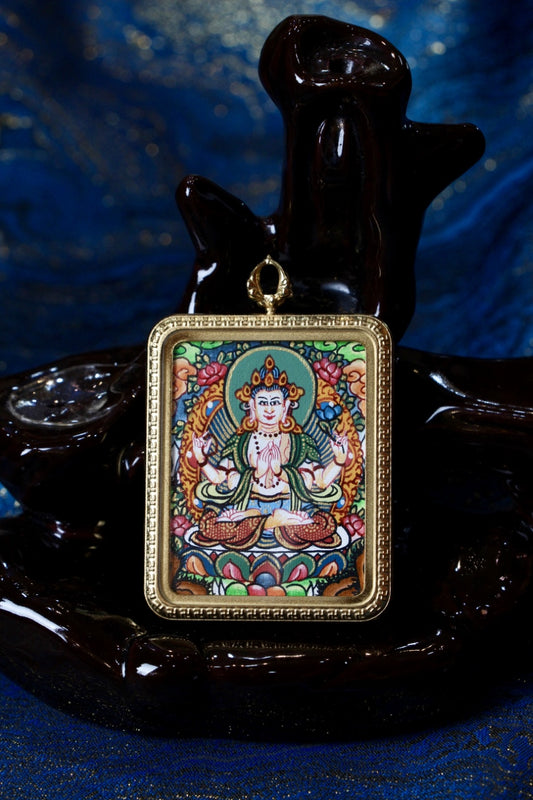
Product Specifications
-
Main Deity: Four-Armed Avalokiteshvara (Chenrezig, Bodhisattva of Compassion)
-
Origin: Nepal (Bhaktapur Newari Artisan Craft)
-
Dimensions: 3.5cm × 4.5cm (Traditional "Gau" Shrine Size)
-
Housing: Titanium Steel Case (Rust-Resistant, Sealed Encasement)
1. Religious Significance: Four-Armed Avalokiteshvara in Tibetan Buddhism
Avalokiteshvara (known as "Chenrezig" in Tibetan) is the most revered bodhisattva in Tibetan Buddhism, embodying universal compassion—the wish to alleviate the suffering of all sentient beings. His four-armed form (a core esoteric representation) carries layered symbolism:
-
Four Arms & Implements:
-
Top Right Arm: Holds a crystal rosary (counting mantras to amplify compassionate intent).
-
Top Left Arm: Holds a lotus (or wish-fulfilling gem) (symbolizing the ability to grant relief from suffering).
-
Lower Hands: Form the Anjali Mudra (prayer gesture) (or hold a vajra and bell)—signifying readiness to respond to the cries of the vulnerable.
-
Cultural Role: In Tibetan tradition, Chenrezig is the "Bodhisattva of Emotional Healing"—he is believed to soothe grief, anxiety, and isolation, and to guide practitioners in extending compassion to themselves and others. The Dalai Lama is considered his earthly incarnation, deepening his cultural significance.
Wearing this pendant connects the wearer to Chenrezig’s boundless compassion, supporting emotional resilience and the practice of loving-kindness.
2. Nepalese Newari Craft: Preserving Avalokiteshvara’s Iconographic Integrity
Nepal’s Bhaktapur Valley is the birthplace of Himalayan thangka art (a UNESCO intangible heritage), and Newari artisans are celebrated for their strict adherence to Chenrezig’s canonical form:
-
Iconometric Precision: Artisans follow the Sadhana Mala and Iconometric Texts to ensure every detail—from the spacing of the four arms (balanced to symbolize inclusive care) to the curve of the rosary beads (uniform, to denote consistent practice)—aligns with his "compassionate guardian" identity. The proportion of his body to the lotus throne is calibrated to symbolize "compassion that elevates, not overwhelms."
-
Linework & Color Symbolism: Newari artisans use fine squirrel-hair brushes to render Chenrezig’s tear-shaped eyes (a signature detail, representing grief for sentient suffering) and soft, flowing robes (symbolizing the flexibility of compassion). The background’s green hues (made from natural plant pigments) represent healing, while gold scrollwork (burnished with agate stones) highlights the radiance of loving-kindness.
-
Heritage & Tradition: Newari artisans train for 10+ years in both art and Buddhist scripture before painting Chenrezig—this pendant’s hand-painted details (e.g., the subtle glow of the wish-fulfilling gem) reflect a tradition passed down through family workshops for over 1,200 years.
3. Titanium Steel Gau Case: Tradition Meets Modern Practicality
As a "gau" (portable shrine), this pendant’s titanium steel case merges traditional sacred function with contemporary utility:
-
Durable Protection: Titanium steel resists corrosion, scratches, and tarnish—solving the fragility of traditional wooden or copper gau. Its airtight seal shields the delicate thangka from moisture, dust, and UV damage, preserving the Newari artisans’ intricate linework (including the fine details of the four arms) for decades.
-
Cultural Alignment: The case’s engraved "Lotus Border" (one of the Eight Auspicious Symbols) echoes Chenrezig’s lotus throne, while the compact 3.5×4.5cm size honors the Tibetan tradition of carrying gau as a "constant compassion companion"—small enough to wear daily, yet large enough to showcase the thangka’s symbolic depth.
-
Wearability: Designed for modern life, the case attaches easily to necklaces or bags without compromising the thangka’s sacredness. It allows the wearer to keep Chenrezig’s healing energy close during stressful moments, difficult conversations, or quiet reflection.
4. Spiritual & Practical Value: Compassion, Healing, and Cultural Connection
For Spiritual Practitioners
-
Practice Aid: The pendant serves as a visualization focal point for Chenrezig’s sadhana (ritual practice). Pairing it with his mantra (Om Mani Padme Hum—the "Six-Syllable Mantra," Tibet’s most sacred chant) amplifies compassionate intent and supports meditation on loving-kindness.
-
Emotional Healing: It is believed that Chenrezig’s presence (through the thangka) soothes grief, anxiety, and self-criticism—making it a trusted companion for those navigating loss or mental health challenges.
For Cultural Enthusiasts
-
Wearable Heritage: The pendant offers a respectful entry into Tibetan Buddhist culture, with Chenrezig’s four-armed form sparking curiosity about the role of compassion in Himalayan traditions.
-
Gifting Significance: In Tibetan and global Buddhist communities, Chenrezig pendants are given to those experiencing hardship (grief, illness) or to mark moments of connection (weddings, friendships)—symbolizing wishes for comfort, empathy, and emotional well-being.
5. Unique Selling Points: Orthodox, Durable, and Meaningful
In a market saturated with generic "compassion pendants," this piece stands out:
-
Iconographic Authenticity: Hand-painted by Newari artisans trained in esoteric scripture—this is the Chenrezig Tibetan Buddhists venerate, not a stylized "trendy" version.
-
Daily-Wear Durability: The titanium case means you can carry this sacred object every day (not just "save it for special occasions").
-
Depth of Symbolism: Every detail (the four arms, tear-shaped eyes, wish-fulfilling gem) tells a story about inclusive care—a message we all need more of in a divided world.
This Four-Armed Avalokiteshvara thangka pendant bridges ancient Himalayan tradition and modern life: It carries Chenrezig’s boundless compassion in a durable, portable form, inviting the wearer to embrace kindness (for themselves and others) and navigate life’s hardships with emotional resilience.
#FourArmedAvalokiteshvara #ChenrezigThangka #NepaleseHandmadeGau #TibetanBuddhistCompassionAmulet #EmotionalHealingPendant