1. Theme: Shakyamuni Buddha’s Enlightenment and Gelugpa Doctrinal Representation
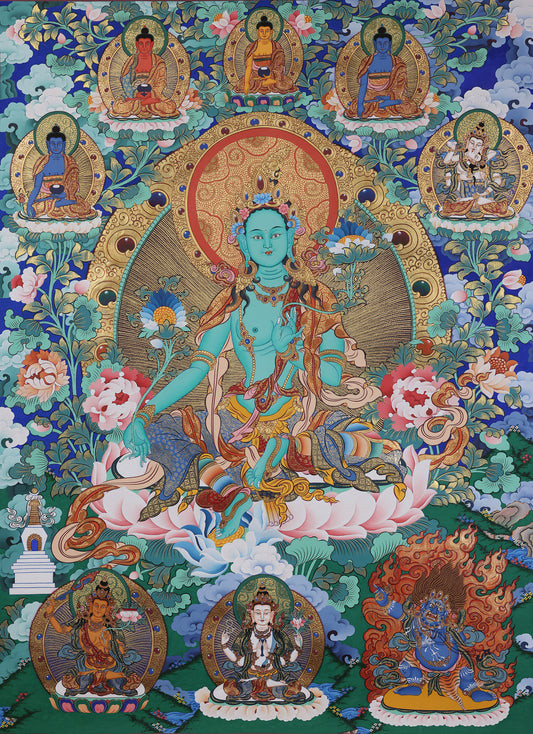
This meticulously hand-painted Tibetan thangka depicts “Shakyamuni Buddha’s First Turning of the Wheel of Dharma at the Deer Park”, a visual embodiment of Tibetan Buddhist faith in the Buddha’s life and the transmission of the Dharma. Within Tibetan Buddhist tradition, the First Turning of the Wheel is far more than a historical event—it symbolizes the Buddha manifesting as a human, transitioning from ordinary being to fully enlightened teacher, thereby opening the door to liberation for all sentient beings.
According to the Dharmacakra Pravartana Sutra, after his enlightenment, Shakyamuni Buddha taught the Four Noble Truths—suffering, its origin, cessation, and the path—to five disciples, marking the official inception of Dharma propagation in the world.
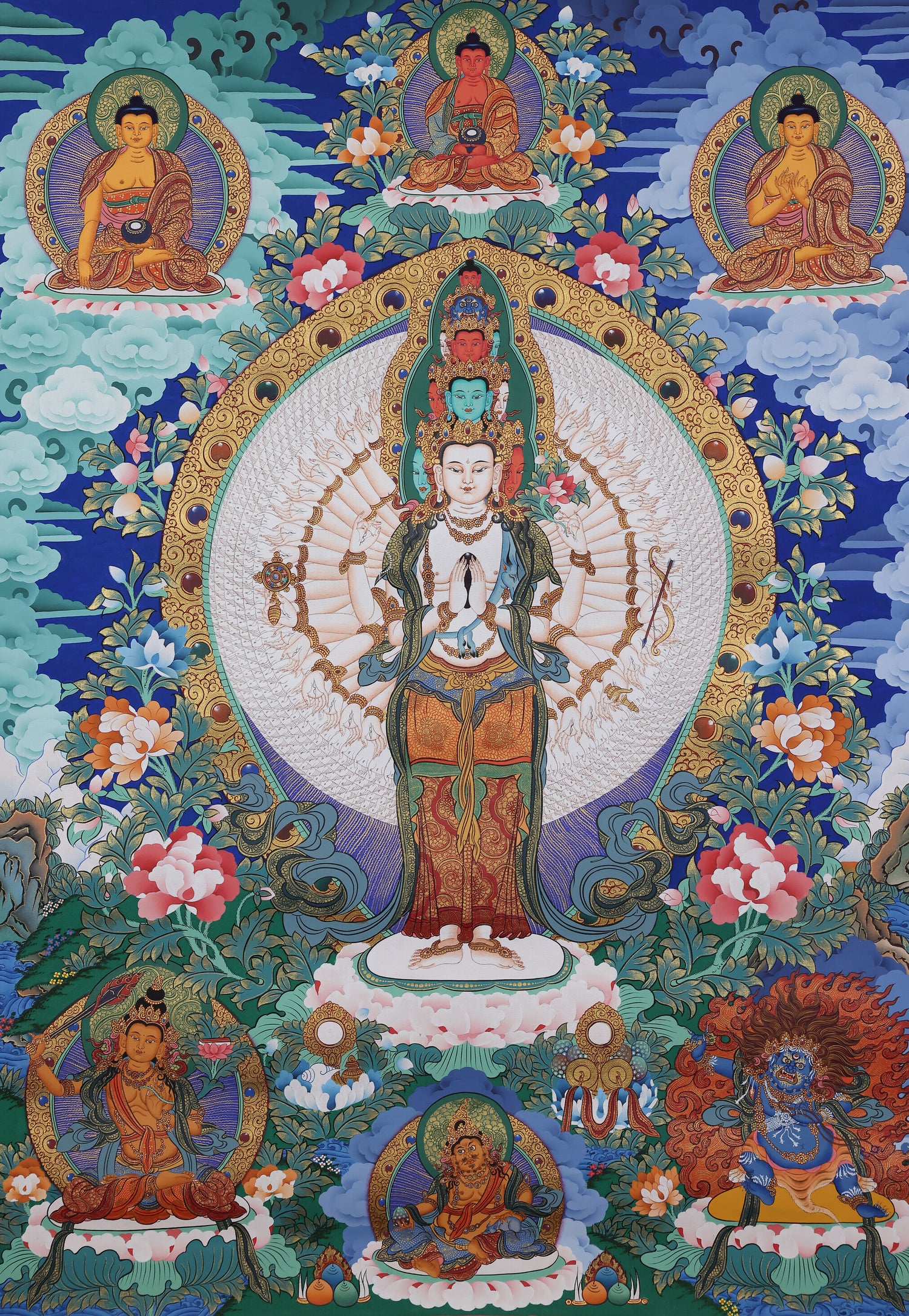
This thangka reflects the Gelugpa school’s emphasis on preserving exoteric teachings, with the central “Teaching Buddha” surrounded by attendants arranged hierarchically. The composition mirrors the Gelugpa approach of textual study and structured, sequential practice, while preserving the Tibetan thangka tradition of visualizing abstract Dharma teachings into tangible objects suitable for contemplation, veneration, and ritual practice.
2. Central Figure: Shakyamuni Buddha – Iconography and Symbolism
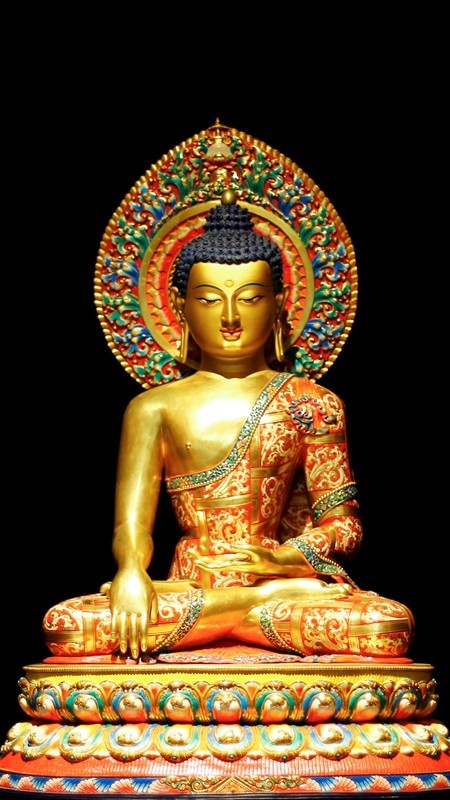
The central figure is Shakyamuni Buddha (Siddhartha Gautama), painted according to the canonical 32 Marks and 80 Minor Characteristics of a Buddha. Every element embodies rich symbolic and philosophical meaning.
Physical Attributes:
-
Ushnisha (cranial protuberance): Blue spiral, symbolizing supreme wisdom and transcendence.
-
Earlobes: Long, reaching the shoulders, representing generosity and renunciation of worldly attachments.
-
Facial Expression: Serene and calm, with slightly lowered eyes and a gentle smile, conveying the Buddha’s compassionate teaching presence.
-
Body Color: Golden, representing the purity of Buddha’s body and the illumination of Dharma throughout the world.
Mudra and Dharma Symbol:
-
Dharmachakra Mudra: Hands positioned in front of the chest, thumbs and index fingers forming circles, holding a dharma wheel decorated with the Eight Auspicious Symbols.
-
The Wheel of Dharma represents the continuous propagation of Buddha’s teachings, while the Eight Auspicious Symbols symbolize virtues such as universal blessings (vase) and the far-reaching sound of Dharma (conch), reflecting both doctrinal meaning and merit.
Lotus Seat and Aura:
-
Buddha sits on a thousand-petaled red lotus, symbolizing purity arising untainted from the defilements of the world.
-
Behind him, a double-layered aura: inner red glow representing compassionate warmth and outer golden dharma wheel halo representing the dissemination of wisdom across the universe. The halo’s curling vine patterns signify the continuity of the Dharma lineage.
3. Attendant Deities and the Sacred Assembly
This thangka portrays a meticulously structured sacred assembly, reflecting the First Turning of the Wheel scene through symbolic hierarchical arrangement.
Upper Deities:
-
Five seated Dhyani Buddhas above the central figure: Vairocana (center), Akshobhya (east), Ratnasambhava (south), Amitabha (west), and Amoghasiddhi (north).
-
They represent the five wisdoms of the Buddha, emphasizing that Shakyamuni Buddha’s teachings manifest all aspects of enlightened knowledge.
Side Disciples:
-
On either side, two of the original five disciples: Kaundinya (first to attain realization) and Assaji (holding a scripture).
-
They symbolize the commencement of the śrāvaka path, highlighting the Buddha’s teaching as a guide for ordinary beings.
Lower Assembly and Offerings:
-
Beneath the lotus, the Wheel of Dharma flanked by two deer symbolizes sentient beings receiving the Dharma and experiencing liberation.
-
Seven Precious Offerings (golden wheel, white elephant, blue horse, etc.) signify worldly peace and abundance.
-
Lotus and treasure vase signify purity and the nourishing taste of Dharma.
These figures and symbols are not mere decoration, but a visual breakdown of the “First Turning of the Wheel” doctrine: from the wisdom of the Dhyani Buddhas to the disciples’ awakening, from the dharma wheel to the benefit of sentient beings, presenting the complete faith logic of “Buddha teaches, beings attain liberation.”
4. Artistic Craftsmanship: Union of Devotion and Skill
This thangka is a Qinzi-style hand-painted masterpiece, one of the three major Tibetan thangka schools, noted for vibrant colors and dense compositions. Its creation embodies both artistic mastery and devotional practice.
Canvas Preparation:
-
Made of coarse linen, soaked four times in bone glue, stretched on wooden frames, and polished with a stone pestle over 15 days for a smooth, durable surface. Tibetan artists consider this process a preparatory meditative practice.
Pigment Preparation:
-
Natural mineral and plant pigments: red from cinnabar, gold from 24K gold leaf, blue from lapis lazuli, green from turquoise.
-
Pigments are mixed with bone glue (4:1 ratio), ensuring centuries-long vibrancy and symbolizing the timeless nature of Dharma.
Painting Techniques:
-
Linework: Fine violet brush strokes outline the figures, alternating side and central strokes for structural emphasis.
-
Layered Coloring: Base ochre overlaid with gold and light yellow to create depth and radiance.
-
Face Opening (“Eye Painting”): Final sacred step; the artist fasts three days to paint eyes conveying both compassion and authority.
Composition Logic:
-
Mandala-style, symmetrical layering: central Buddha with attendants extending outward, visually conveying the propagation of Dharma and the gathering of sacred beings.
-
Dominated by red and gold hues, symbolizing compassion and wisdom, perfectly aligning with the theme of the Teaching Buddha.
5. Conclusion: Thangka as a Living Vessel of Dharma
The Shakyamuni Buddha First Turning of the Wheel Thangka is both art and mobile shrine, uniting aesthetics, faith, and meditative practice. The central Buddha and attendant deities encode the transmission of the Dharma, while the meticulous craftsmanship reflects devotion. In Tibetan culture, such thangkas are not simply decorative; they are tools for visualization, veneration, and accumulation of merit. Every mineral pigment stroke and line conveys the aspiration for the longevity of Dharma and the liberation of sentient beings, epitomizing the union of form and spirit, function and essence inherent in Tibetan thangka culture.
#TibetanBuddhism #Thangka #ShakyamuniBuddha #DharmaWheel #HandPaintedThangka #TibetanArt #BuddhistArt #Gelugpa #BuddhaTeachings #MeditationTools #ReligiousArt #TibetanCulture #VisualizationPractice #SacredArt