Analysis of a Nepali Hand-Painted Thangka of Shakyamuni Buddha: Faith and Craft in Tibetan Buddhist Art

$599.00 USD
Thangka name: Colorful Tang Shakyamuni
size: 45cm×65cm
origin: Nepal
Ask a Question

Hurry Up! Only 100 left in stock!

Estimate delivery times: 12-26 days (International), 3-6 days (United States).

Return within 45 days of purchase. Duties & taxes are non-refundable.

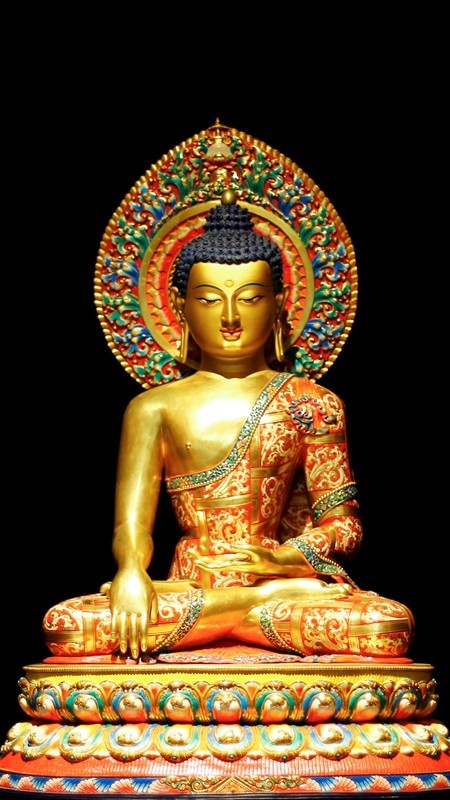
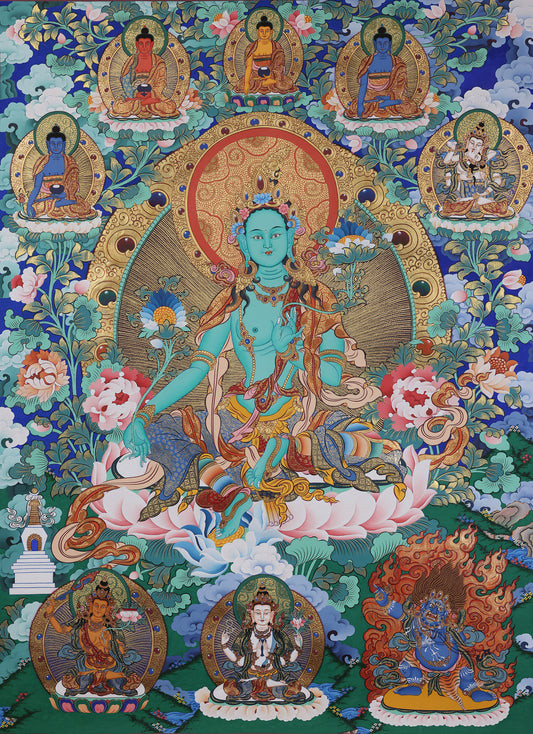
Color Tibetan thangka of Shakyamuni Buddha seated in meditation, symbolizing enlightenment in Tibetan Buddhist culture
Analysis of a Nepali Hand-Painted Thangka of Shakyamuni Buddha: Faith and Craft in Tibetan Buddhist Art
$599.00 USD
537 Products
192 Products
46 Products
11 Products
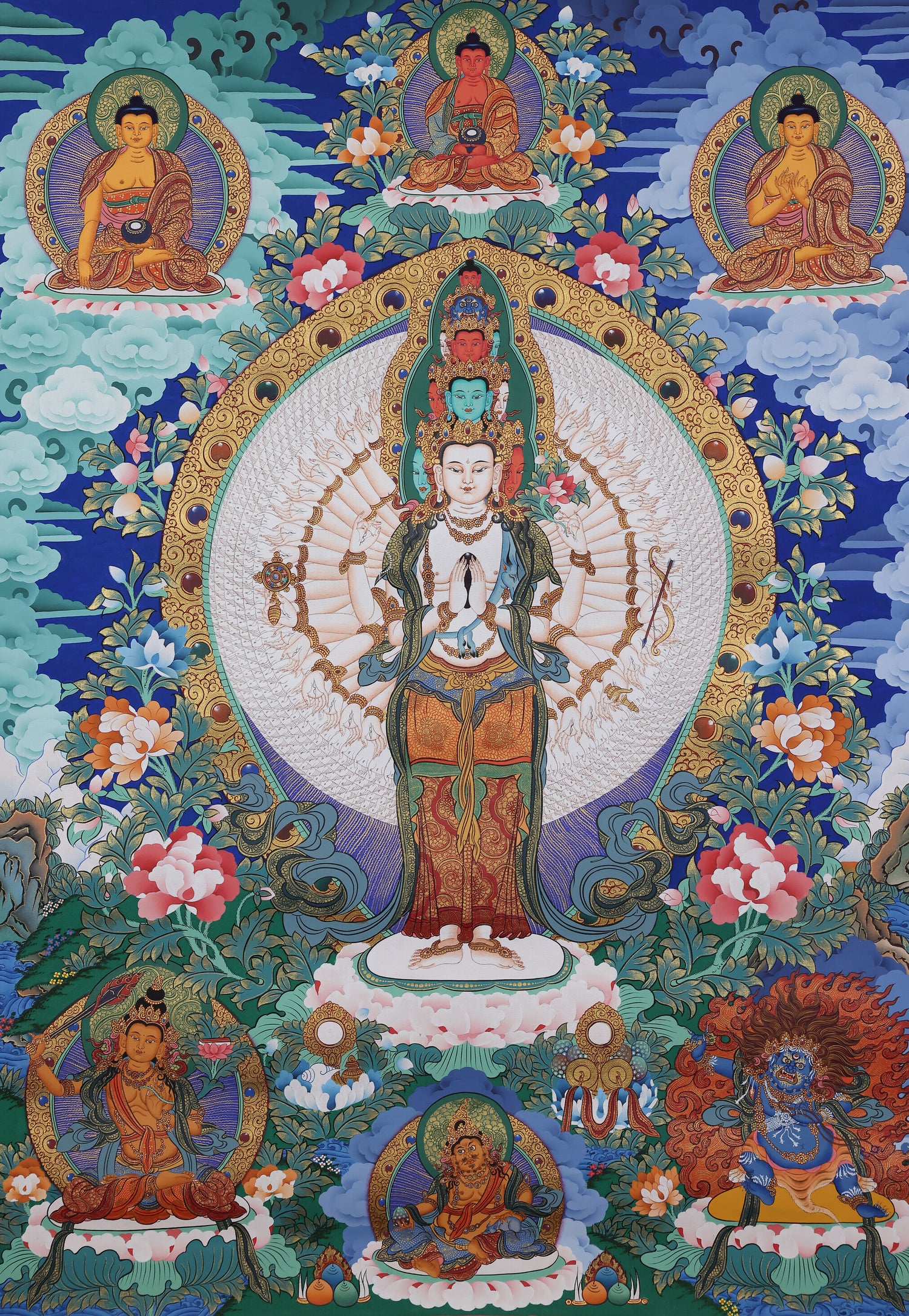
In the spiritual world of Tibetan Buddhism, a thangka is never merely a “painting”—it is “tangible Dharma.” A 45×65cm hand-painted Nepali thangka of Shakyamuni Buddha, rendered in rich mineral and earth pigments with delicate Newari brushwork, weaves faith, craft, and regional culture into every inch of its canvas. Today, we unpack this thangka’s theme, deities, craftsmanship, and style through the lens of Tibetan Buddhism, decoding the sacred and artistic layers beneath its surface.

1. Theme: The “Visualized Dharma Lineage” of the Buddha’s Pure Land

The core theme of this thangka is “Shakyamuni Buddha and Retinue Deities in a Pure Land Manifestation”. In the iconographic tradition of Tibetan Buddhist “principal Buddha thangkas,” this “central figure + retinue” composition not only highlights Shakyamuni’s status as the “enlightened one of this age” but also embodies the sacred hierarchy of “Buddha → Retinue → Sentient Beings.”

From a Nepali cultural perspective, Shakyamuni was born in Lumbini, Nepal—so local thangkas infuse his image with “hometown sanctity.” This work’s central Buddha + surrounding retinue layout adheres to Tibetan Buddhist ritual norms while aligning with Nepal’s “Buddha-centered cosmic order,” representing a deep fusion of faith and regional culture.

2. Central Deity: The Symbolic Code of Shakyamuni’s “Enlightenment Form”

The central figure is Shakyamuni Buddha in his “enlightenment form,” with every detail strictly corresponding to the religious symbols of the Iconometric Sutras:

  • Physical Details: A moon-like face, a raised cranial protuberance (ushnisha, symbolizing perfect wisdom), a cranial hair curl (urna, representing transcendent awareness), and a crimson kasaya (monastic robe) left shoulder bare—retaining the Indian monastic robe tradition while implying “engaging with the world yet transcending it.”
  • Mudra and Implements: Hands form the Dhyana Mudra (meditation gesture), holding a blue vase (filled with nectar, symbolizing nourishing sentient beings’ afflictions with Dharma). Unlike the common Bhumisparsha Mudra (calling the earth to witness enlightenment), this combination emphasizes the Buddha’s “abiding in meditative stability and bestowing peace”—a unique Nepali interpretation of Shakyamuni.
  • Throne Symbolism: A double lotus seat (the lower tier is a Mount Meru lotus platform, representing “abiding in the world without being stained by it”), plump, unfolding petals (symbolizing purity), and base auspicious creatures (lions, makaras) are traditional Nepali artistic motifs for “protective guardianship.”

3. Retinue Deities: The Sacred Layout of the Five Dhyani Buddhas System

The six retinue deities surrounding the central figure belong to Tibetan Buddhism’s “Five Wisdoms Perfection” system (Five Dhyani Buddhas), with identities and symbolism distinct in Newari style:

  • Central Deity: Shakyamuni manifests as Vairocana (the Great Sun Buddha), yellow in color, corresponding to the “Dharmadhatu Wisdom”—the core of the Five Dhyani Buddhas.
  • Four Directions Retinue: Above are Amitabha (western, red, Discriminating Wisdom) and Akshobhya (eastern, blue, Mirror-like Wisdom); left is Ratnasambhava (southern, yellow, Equanimity Wisdom); right is Amoghasiddhi (northern, green, Accomplishment Wisdom).
  • Complementary Deity: The white Vajrasattva at the bottom symbolizes “purifying karmic obstacles and perfecting merit”—a common Nepali thangka element that balances composition and doctrine.

This symmetrical, encircling layout reflects the sacred order of “central Buddha governing the four directions” and aligns with Tibetan Buddhism’s goal of “perfected Five Wisdoms.” Each deity’s independent lotus seat and aura symbolize “individual perfection and collective protection.”

4. Craftsmanship: “Faith in Practice” Through Mineral Pigments

This thangka employs traditional Nepali craftsmanship; every step, from canvas preparation to pigment selection, materializes faith:

  • Canvas Treatment: Handwoven coarse cotton cloth is repeatedly coated with cowhide glue and stone powder, then polished with pebbles—local painters call this “purifying the cloth,” symbolizing the removal of worldly impurities to prepare for the sacred.
  • Pigment Preparation: Mineral pigments (vermilion for red, lapis lazuli for blue, malachite for green) are sourced from the Himalayas, ground for months until “fine as dust”; their colorfastness for centuries corresponds to Buddhism’s “eternal unchanging nature.” Earth pigments (brown, ochre) from Kathmandu Valley clay embody the humble faith of “honoring the sacred with materials from the earth.”
  • Painting Techniques: Linework follows the Iconometric Sutras’ “finger-width proportions”; shading uses the Newari-exclusive “dot-layering method” (creating three-dimensional translucency); 24K gold powder is used for gilding (only on auspicious days), retaining the mineral pigments’ weight while achieving “restrained splendor.”

5. Style: Cultural Fusion in Newari Painting

This thangka belongs to the Nepali Newari style, a fusion of “Paubha painting + Tibetan Buddhist art” with distinct stylistic features:

  • Color Palette: Dominated by red-blue-yellow (corresponding to Tibetan Buddhism’s “space, wind, fire” primary colors), the central Buddha’s warm yellow balances the retinue’s cool tones; the azure sky (symbolizing pure emptiness) and pink lotuses (symbolizing purity in the secular world) echo each other, embodying “unity of worldly and transcendental.”
  • Form Characteristics: Figures have “concentrated features and gentle expressions” (Newari art’s “compassion and purity”), lightweight, body-hugging robes, and texture-rich ornaments (influenced by Indian Pala style).
  • Composition: A mandala-style layout with intentional negative space (avoiding the “crowdedness” of Tibetan thangkas), reflecting the Newari aesthetic of “balanced density and flowing vitality.”

Conclusion

This 45×65cm Nepali thangka is both “visualized Dharma” and a “cultural living fossil”: it carries Tibetan Buddhist doctrine, embodies Nepali craft traditions, and records artistic exchanges between India, Nepal, and Tibet. For practitioners, it is a tool for visualization; for enthusiasts, it is a model of art and faith in symbiosis.

#NepaliThangka #TibetanBuddhistArt #ShakyamuniThangka #NewariStyle #MineralPigmentThangka #ThangkaAnalysis
Discover the perfect Tibetan Buddhist Thangka that matches your wishes, lifestyle, and space. Each Thangka carries spiritual meaning and brings blessings when placed correctly.

1. Define Your Intention

Wealth & Success → Yellow Dzambhala (Wealth Deity)

Compassion & Peace → Avalokiteshvara, Green Tara

Wisdom & Learning → Manjushri

Health & Healing → Medicine Buddha

Longevity & Family Protection → White Tara

2. Choose by Identity

Entrepreneurs & Business Owners → Wealth Deities for prosperity.

Students & Scholars → Wisdom Deities for focus and clarity.

Healers & Yoga Practitioners → Medicine Buddha for energy and balance.

Families & Homemakers → Tara Deities for harmony and safety.

Collectors & Art Lovers → Rare Mandalas or Masterpiece Thangkas.

3. Match Your Space

Home Shrine / Meditation Room → Medium Thangkas (60–80 cm).

Office / Business Hall → Large Thangkas for prosperity and authority.

Living Room / Study → Decorative Thangkas for peace and beauty.

4. Authentic Craftsmanship

Hand-painted with natural mineral pigments and fine canvas, each Thangka reflects Tibetan artistry and spiritual power. Verified sources ensure quality and respect for tradition.

✨ Choose your Thangka with heart — it’s not just art, but a blessing for your life.

Different people have different needs, and choosing the right Thangka can provide spiritual support, protection, good fortune, and blessings. Below are Thangka recommendations for various roles:

1. Entrepreneurs

  • Needs: Wisdom, wealth, health, career success.
  • Recommended Thangkas:
    Manjushri: Enhances decision-making and business wisdom.
    Wealth Deity: Brings wealth and prosperity.
    Medicine Buddha: Supports health and reduces stress.
    Mahakala: Protects business from competition and challenges.

2. Successful Individuals

  • Needs: Inner peace, family harmony, longevity.
  • Recommended Thangkas:
    Amitabha Buddha: Brings inner peace and tranquility.
    Avalokiteshvara (Guanyin): Promotes family harmony and happiness.
    Amitayus (Long Life Buddha): Prays for good health and long life.
    Manjushri: Continues to enhance wisdom.

3. Housewives/Husbands

  • Needs: Family harmony, protection, health.
  • Recommended Thangkas:
    Avalokiteshvara: Increases family happiness and harmony.
    Protector Deities: Safeguards the family from external disturbances.
    White Tara: Blesses the family with health.

4. Students and Scholars

  • Needs: Wisdom, focus, academic success.
  • Recommended Thangkas:
    Manjushri: Boosts learning, memory, and wisdom.
    Sakyamuni Buddha: Helps with concentration and spiritual practice.
    Jixiang Tianmu: Brings academic good luck and exam success.

5. Artists and Creative Professionals

  • Needs: Inspiration, creativity, artistic achievement.
  • Recommended Thangkas:
    Manjushri: Stimulates creative thinking and inspiration.
    Vajrapani: Helps overcome creative blocks.
    Maitreya: Brings a relaxed and optimistic attitude, easing stress.

6. Travelers and Adventurers

  • Needs: Protection, good luck, success in adventures.
  • Recommended Thangkas:
    Hayagriva: Provides strong protection during travels and clears obstacles.
    Mahakala: Brings good fortune and protection, especially for adventurers.
    Vajrasattva: Helps overcome difficulties and challenges during the journey.

7. Elderly Individuals

  • Needs: Health, longevity, spiritual peace.
  • Recommended Thangkas:
    Amitayus: Prays for long life and good health.
    Medicine Buddha: Promotes healing and physical well-being.
    Avalokiteshvara: Brings compassion and inner peace in later years.

8. Corporate Executives

  • Needs: Leadership, wisdom, teamwork, and business success.
  • Recommended Thangkas:
    Manjushri: Enhances leadership skills and decision-making.
    Wealth Deity: Brings success and prosperity to the business and team.
    Avalokiteshvara: Promotes harmony and balance within the team.

9. Health and Fitness Enthusiasts

  • Needs: Good health, vitality, energy.
  • Recommended Thangkas:
    Medicine Buddha: Enhances physical health and vitality.
    White Tara: Brings health and rejuvenation.
    Vajrasattva: Clears health challenges and boosts energy.

10. Politicians

  • Needs: Leadership, wisdom, peace.
  • Recommended Thangkas:
    Manjushri: Enhances leadership abilities and decision-making.
    Vairocana Buddha: Helps maintain inner peace and wisdom.
    Avalokiteshvara: Promotes societal peace and family harmony.

For all orders exceeding a value of 100USD shipping is offered for free.

Returns will be accepted for up to 10 days of Customer’s receipt or tracking number on unworn items. You, as a Customer, are obliged to inform us via email before you return the item.

Otherwise, standard shipping charges apply. Check out our delivery Terms & Conditions for more details.

Returns will be accepted for up to 10 days of Customer’s receipt or tracking number on unworn items. You, as a Customer, are obliged to inform us via email before you return the item, only in the case of:

– Received the wrong item.
– Item arrived not as expected (ie. damaged packaging).
– Item had defects.
– Over delivery time.
– The shipper does not allow the goods to be inspected before payment.

The returned product(s) must be in the original packaging, safety wrapped, undamaged and unworn. This means that the item(s) must be safely packed in a carton box for protection during transport, possibly the same carton used to ship to you as a customer.

Recently Viewed

Don't forget! The products that you viewed. Add it to cart now.

Pairs well with

Enhance your selection with perfectly matched accessories and complementary products..

People Also Bought

Here’s some of our most similar products people are buying. Click to discover trending style.