1. Theme: “Treasure Protecting Mandala of Yellow Jambhala”
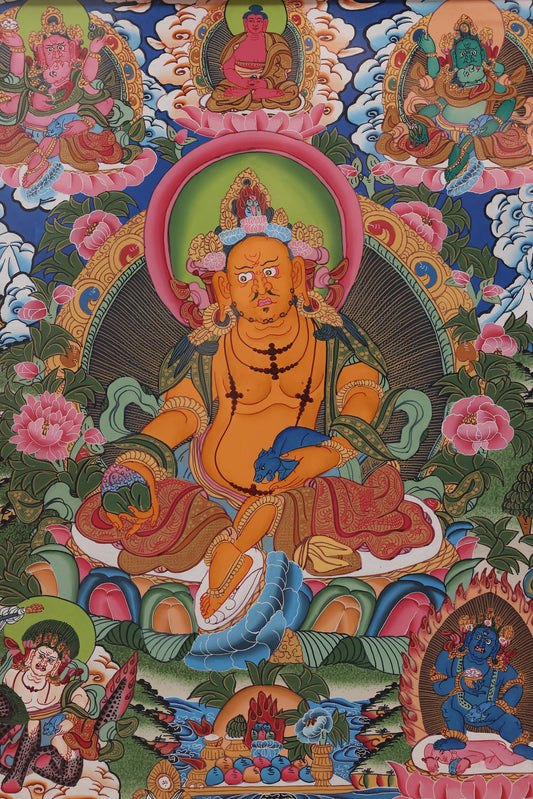
This Thangka centers on Yellow Jambhala, depicted within a treasure-protecting mandala, serving as a visual carrier of Tibetan Buddhism's dual aspiration of worldly success and spiritual liberation. In Tibetan culture, Yellow Jambhala (Tibetan: Zanbu Lu) is not merely a deity of material wealth but the principal of the Five Jambhala deities, embodying the esoteric meaning of alleviating scarcity through wealth while sustaining Dharma through merit.
In the harsh environment of the Tibetan plateau, material security has historically been a pressing concern, making wealth protection a fundamental spiritual need. The devotion to Yellow Jambhala integrates the pursuit of wealth with the accumulation of merit and the protection of the Buddhist teachings, reflecting the Tibetan Buddhist principle of seeking liberation without detachment from worldly responsibilities.
This Thangka structures a mandala around Yellow Jambhala, addressing devotees’ desire for material abundance while simultaneously conveying the ethical use of wealth through the arrangement of attendant deities. Offering or meditating on this Thangka is not merely about seeking riches but receiving Yellow Jambhala’s blessings to acquire wealth while using it to benefit others and support Dharma, ultimately harmonizing worldly achievement with spiritual liberation.
2. Principal Deity: Symbolism and Esoteric Significance of Yellow Jambhala
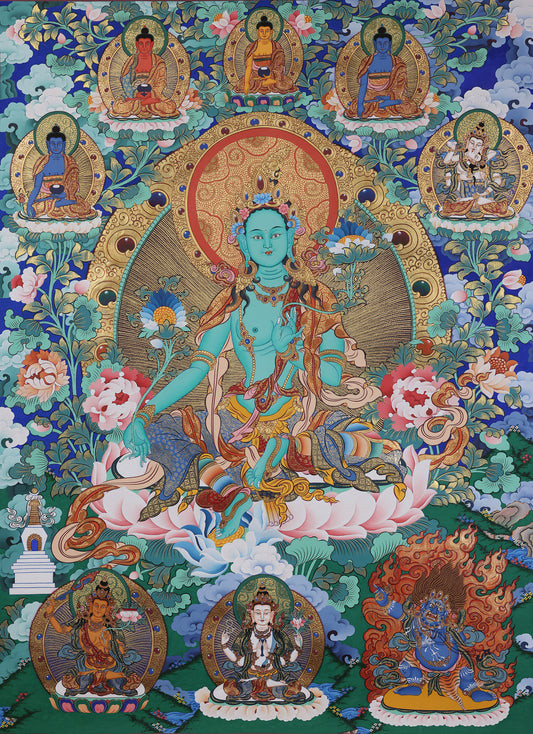
The central deity, Yellow Jambhala, is depicted in strict accordance with the Five Jambhala Iconography Rituals, with each detail conveying both wealth protection and compassionate aid.
Physical Characteristics:
-
Color and Form: Yellow-orange golden skin represents brightness and abundance. The full, exposed torso symbolizes plentiful wealth and completeness, aligning with the esoteric meaning of perfect, undivided nature.
-
Adornments: A five-leaf crown, large earrings, fifty jewel necklaces, armlets, and anklets signify fullness of merit and spiritual wealth, reflecting Tibetan aesthetics of completeness rather than worldly vanity.
-
Facial Expression: Slightly fierce eyes and gentle lips combine power to dispel poverty and compassionate protection, a hallmark of Tibetan Buddhist deity imagery balancing wrath and mercy.
Hand Gestures and Attributes:
-
Right Hand: Fearlessness Mudra, palm outward, symbolizes removing fear of scarcity.
-
Left Hand: Holds the Treasure Mouse (Tibetan: Nülie), often carrying pearls or coins, symbolizing continuous bestowal of wealth, a core attribute of Jambhala iconography.
Seat and Aura:
-
Seated in a lotus-moon throne, where the lotus symbolizes purity from worldly attachments and the moon represents cooling, supportive energy.
-
The halo features green and pink tones overlaid with gold filigree, while the body radiates golden rays on a deep blue background, symbolizing Yellow Jambhala’s wealth blessings illuminating all beings.
3. Attendant Deities: Hierarchy and Function in the Wealth Mandala
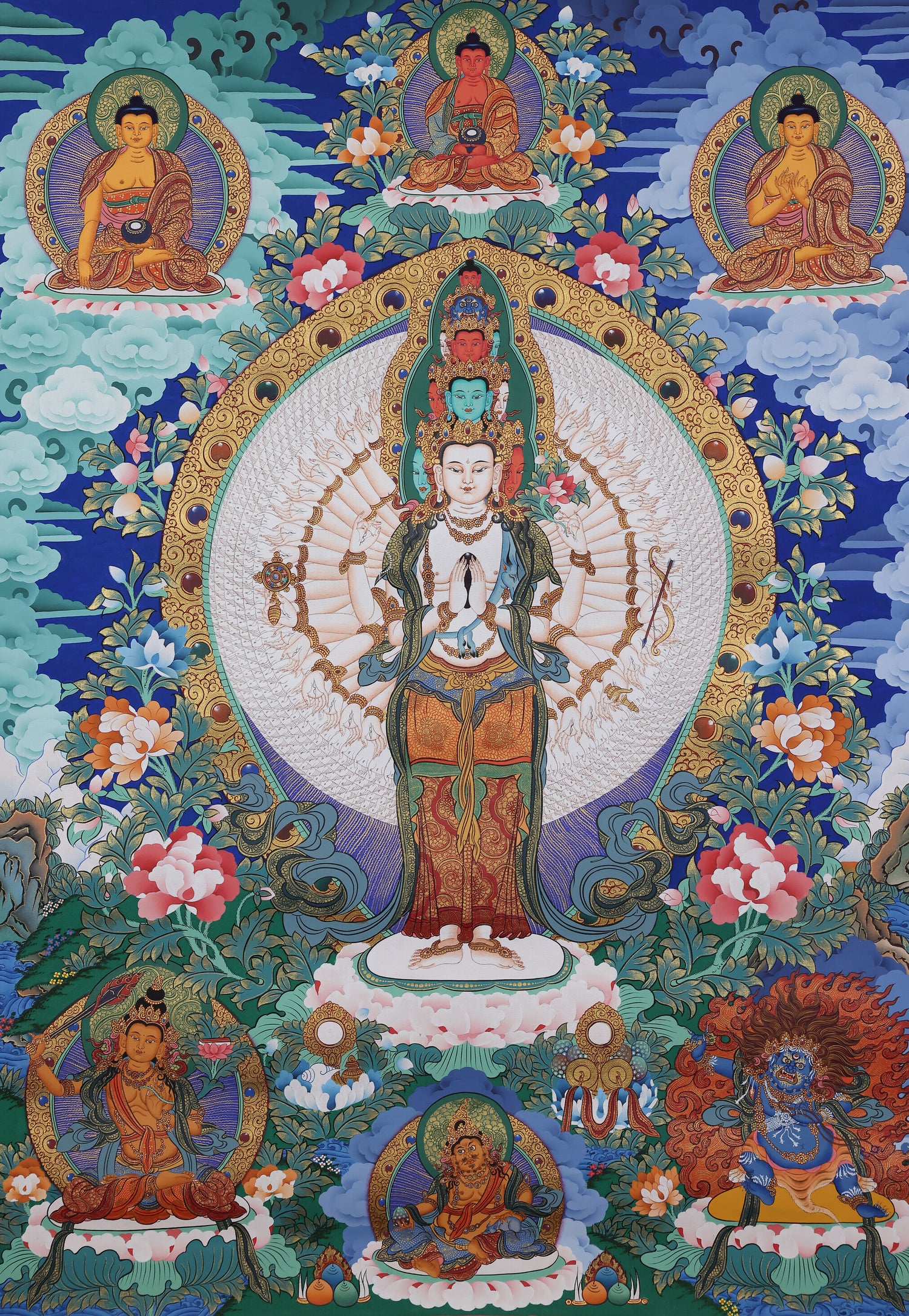
The Thangka arranges the deities in a “central-deity, attendants, protectors” mandala pattern, forming Yellow Jambhala’s treasure-protecting system:
Top Deities: Lineage Masters and the Five Jambhalas
-
Central Top Deity: A red-colored figure representing the lineage master (e.g., Padmasambhava), emphasizing the necessity of spiritual transmission for receiving wealth blessings.
-
Flanking Deities: The other Jambhala deities (Green, White, etc.) correspond to the five elements and directions, forming a comprehensive wealth-protecting network.
Lower Attendants and Protectors: Wealth Guardians and Purification
-
Left Lower Deity: A wrathful protector (e.g., Black Jambhala), signifying dispelling obstacles to wealth and negative influences, complementing Yellow Jambhala’s compassionate support.
-
Right Lower Deity: Usually a youthful or celestial deity, symbolizing skillful and virtuous use of wealth, in alignment with ethical principles.
-
Central Treasure Pile: Depicts jewels, coins, and treasure vases, visually manifesting wealth blessings and the esoteric teaching of using resources wisely.
4. Painting Technique: Rebgong Thangka and the Metaphor of Wealth
This Thangka is a Rebgong Thangka from Qinghai, renowned for merging the Five Sciences of Buddhism with regional aesthetics, where each technique embodies the enduring nature of wealth and merit.
Canvas Preparation:
-
Base Layer: Pure cotton cloth coated with cow bone glue and white clay, polished with pebbles for a mirror-like finish. Symbolically, stable wealth requires a secure foundation, while ensuring pigment longevity for centuries.
Sketching and Proportion:
Pigments: Natural Minerals as Wealth Symbols
-
Yellow: Stone yellow, realgar, or gold powder, representing bright and precious wealth.
-
Blue: Lapis lazuli, symbolizing pure, untainted resources.
-
Red: Cinnabar or coral, indicating energy and accumulated merit.
-
Gold Accents: Enhance the deity’s skin and ornaments, emphasizing abundant blessings and spiritual wealth.
Gold Techniques: Materializing Wealth
-
Gold Leaf Application: Thick base layers on halo, treasure mouse, and treasure pile signify radiant, abundant blessings.
-
Gold Detailing: Fine brushwork on jewels and ornaments represents continuous, precise distribution of wealth.
-
Engraving: Adds depth and dimensionality, illustrating wealth requires skillful management.
Final Touches: Compassionate Wealth Protection
-
Facial Opening: Eyes slightly fierce yet gentle lips convey balance of power and compassion, differentiating Buddhist wealth deities from secular ones.
-
Background Flora and Clouds: Gradients of blue, pink, and green evoke wealth nurtured through virtuous practice, akin to flourishing plants.
Conclusion: Wealth as a Tool for Upholding Virtue
This Thangka transcends being a mere wealth-praying artwork. It embodies Tibetan Buddhism’s philosophy: worldly achievement serves spiritual liberation.
-
Theme: Wealth alleviates scarcity and protects Dharma.
-
Deity: Yellow Jambhala personifies compassionate wealth guardianship.
-
Craftsmanship: Eternal materials reflect the timeless nature of merit and abundance.
For devotees, this Thangka is both a sacred object in home shrines and a meditation aid for acquiring wealth mindfully. Contemplating the treasure-bearing mouse teaches that wealth is the compassionate gift of merit, while touching the gilded details reinforces that true wealth supports Dharma and benefit to others.
Ultimately, this Thangka illustrates the Tibetan Buddhist wisdom of transforming wealth into a spiritual instrument. Wealth is not a goal of attachment but a vehicle for practice and service, bridging artistic devotion and everyday life with spiritual cultivation.
#TibetanBuddhistThangka #YellowJambhala #WealthDeityThangka #BuddhistArt #HandPaintedThangka #RebgongThangka #TantricDeities #MandalaThangka #SpiritualProtection #BuddhistWealthBlessings #HomeShrineDecor #MeditationAid #SacredArt #BuddhistCollectibles #MindfulWealth