The Wisdom of Wealth in Silver Thangka: The Millennium-Old Belief and Contemporary Enlightenment of Yellow Jambhala in Tibetan Buddhism

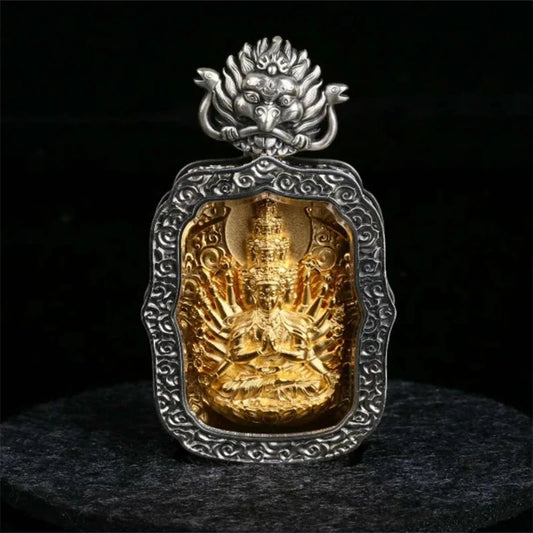
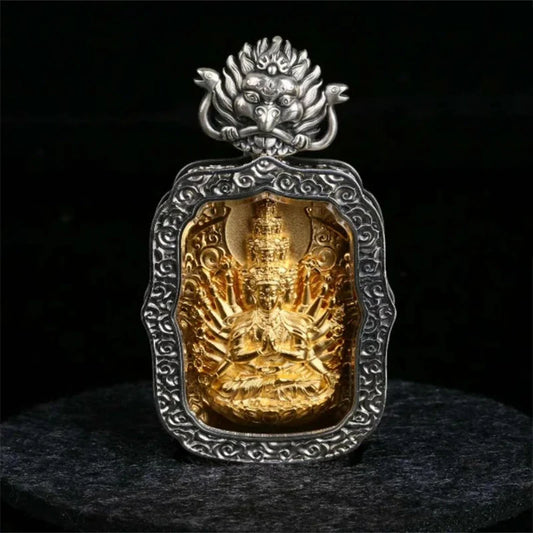
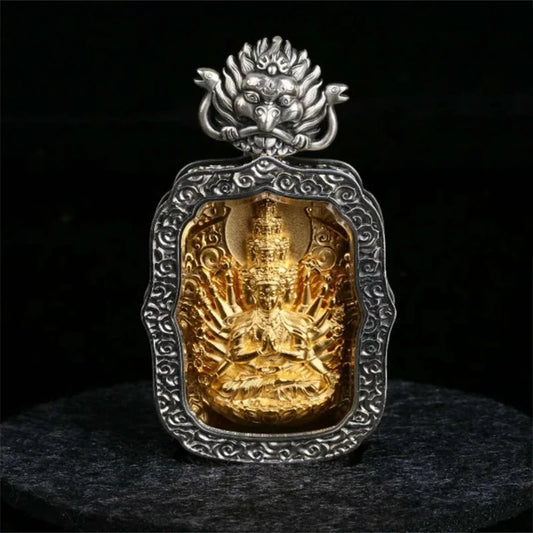
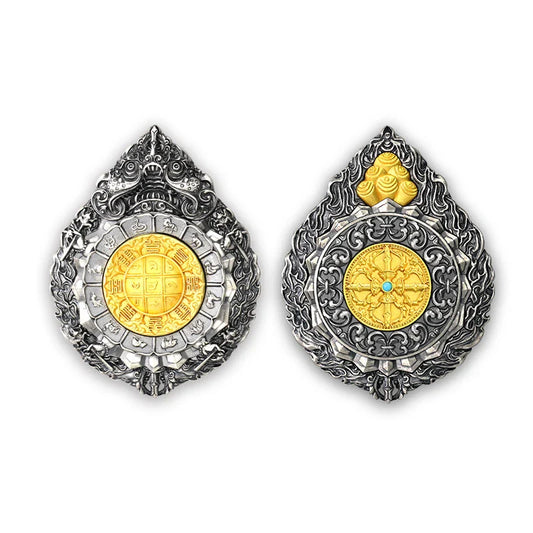
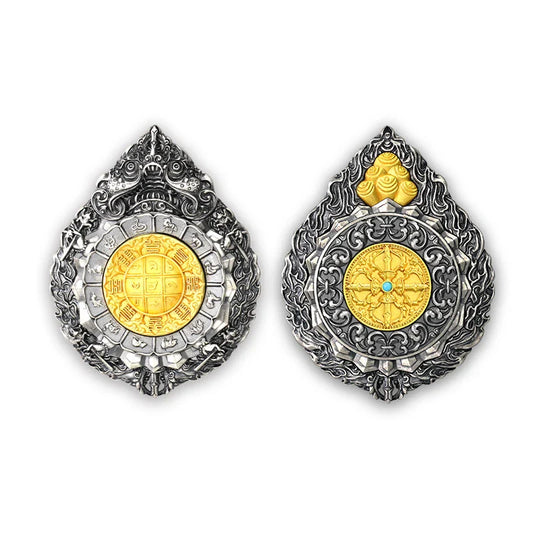
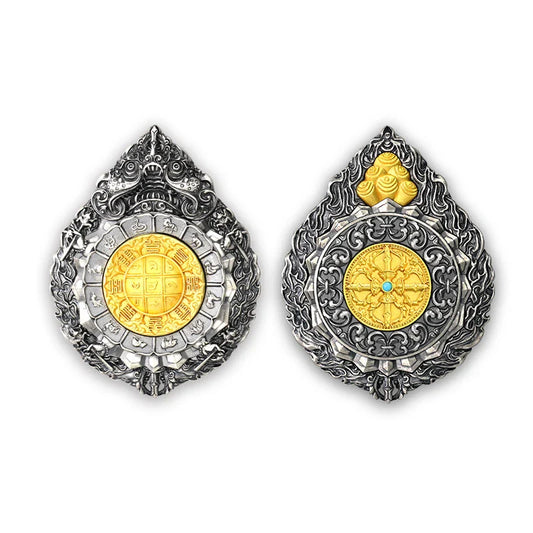
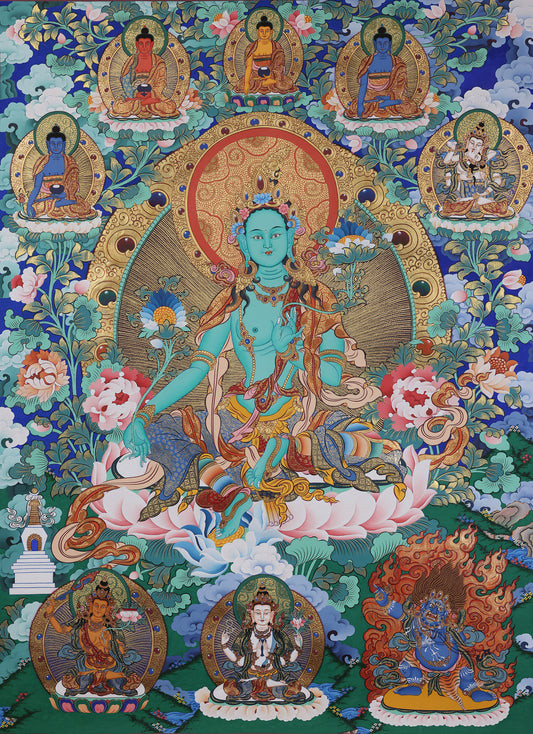
When light hits the gilded lines of this silver Thangka, the treasure-spitting rat at Yellow Jambhala’s belly seems to be spilling jewels—this is not just an ordinary "fortune-attracting painting," but a concrete embodiment of Tibetan Buddhism’s millennium-old philosophy of wealth. In Tibet, almost every monastery’s hall enshrines an image of Yellow Jambhala, and his Thangka is often hung in herders’ tents; this work, with silver foil as its base and cinnabar and lapis lazuli as pigments, seals the dialectical relationship between "wealth" and "spiritual practice" in the religious art of a small frame.
I. From Vulture Peak to Tibet: The Three-Fold Evolution of Yellow Jambhala’s Identity
Yellow Jambhala’s Tibetan name, "Zambala Serpo," itself holds the code to his identity. He is not a "god of wealth" born out of thin air, but a fusion of a Tibetan Buddhist protector deity, an ancient Indian god, and Tibetan local beliefs. His evolutionary history is a microcosm of the localization of Tibetan Buddhism.
1. The Original Protector: Guardian of Vulture Peak
According to Buddhist scriptures, when Shakyamuni Buddha preached the Great Prajñāpāramitā Sūtra at Vulture Peak, demons shattered the mountain with stones. Yellow Jambhala incarnated as a protector and stepped forward, using his divine power to stabilize the sacred mountain. Grateful for his merit, the Buddha instructed him to "protect the poor and destitute, so that they may have sufficient wealth to practice the Dharma peacefully"—this is the origin of his "god of wealth" function: Wealth is not an end, but a "favorable condition" for spiritual practice.
2. Localization of an Indian Deity: From Kubera to Vaishravana
Yellow Jambhala’s prototype can be traced back to Kubera, the god of wealth in ancient Indian Brahmanism, who was later absorbed into Buddhism as Vaishravana (the Northern Heavenly King), one of the Four Heavenly Kings. Tibetan Esoteric Buddhism extracted his "wealth-managing" attribute, stripped him of his armor, and transformed him into a benevolent form, making him the "Vajra of Abundance." This transformation shifted the Heavenly King’s function of "guarding territories" to a folk belief of "guarding the lives of sentient beings."
3. Ethnic Beliefs in Tibet: An Incarnation of Genghis Khan?
In the murals of the Alxa Grottoes from the Yuan Dynasty, Yellow Jambhala first appeared as the main deity, with his attendant gods replaced by patrons from Genghis Khan’s family. This "localization of divine status" transformed Yellow Jambhala from a religious protector into a symbol of "guarding ethnic prosperity and career success"—herders believe he protects livestock, while merchants believe he safeguards journeys. This "secularized" belief made Yellow Jambhala one of the most approachable deities in Tibet.
II. The Visual Code of the Silver Thangka Yellow Jambhala: Every Symbol Is a Metaphor for Practice
Every detail of this silver Thangka follows the strict rituals of the Iconometric Canon of Buddhist Art, with not a single unnecessary stroke. When we understand these symbols, we see not just a "god of wealth," but Tibetan Buddhism’s view of wealth.
1. Core Image: Compassion Hidden in Majesty
- Golden-Yellow Body: Corresponding to the "earth" element in the Five Elements, it symbolizes wealth as stable and inclusive as the earth—not fleeting windfalls, but "merit and resources" that nourish life;
- Large Belly, Small Body: This is not a sign of "gluttony," but a compassionate heart that "embraces the poor and destitute," echoing the life wisdom that "a broad heart brings good fortune";
- Lalita Asana (Easy Pose): Left leg bent, right foot resting on a white conch. The "conch" symbolizes "retrieving treasures from the sea," implying mastering the laws of wealth with wisdom, rather than pursuing profit blindly.
2. Dual Symbolism of Ritual Tools: Balance Between Material and Spirit
- Right Hand Holding a Wish-Fulfilling Gem: The Cintāmaṇi gem can fulfill sentient beings’ reasonable wishes, including material needs like food, clothing, shelter, and transportation, as well as spiritual blessings like "growth in wisdom";
- Left Arm Embracing a Treasure-Spitting Rat: This divine beast, called a "treasure-spitting mongoose," is full of jewels but spills them outward—it symbolizes not "hoarding wealth," but the joy of giving. Tibetan Buddhism holds that "giving is the source of wealth"; a greedy person, even if wealthy, will suffer from a "poor heart."
3. Silver Thangka Craft: A Carrier of Wealth and Devotion
This Thangka uses silver foil as its base, paired with mineral pigments like lapis lazuli and cinnabar. Just 0.15 grams of 24K gold powder must be ground to 0.045mm (half the thickness of a human hair). This "no-expense-spared" craft is itself an expression of faith: Using the most precious materials to paint the god of wealth is not about "seeking fortune," but showing reverence for the "wisdom of wealth" through devotion.
III. The Five Jambhalas System: Yellow Jambhala’s "Wealth Circle"
Yellow Jambhala is the leader of the "Five Jambhalas," but he is never a "solitary god"—the Red, Green, White, and Black Jambhalas together form a "wealth protector system," with each Jambhala corresponding to a different dimension of wealth.
| Jambhala | Body Color | Origin of Manifestation | Core Function | Prerequisite for Practice |
|---|---|---|---|---|
| Yellow | Golden-Yellow | Vaishravana | Maintains merit resources; enriches both material and spiritual life | Generates Bodhicitta (enlightenment mind) and practices generosity |
| Green | Emerald | Akshobhya Buddha (Eastern) | Grants worldly and Dharma wealth; balances material and spirit | Does not cling to the use of wealth |
| White | Pure White | Avalokiteshvara (Bodhisattva of Compassion) | Alleviates poverty; purifies distress caused by scarcity | Uses wealth with a compassionate heart |
| Red | Crimson | Sakya School Esoteric Dharma | Gathers 人缘 (human connections); attracts virtuous wealth; aids collaborative opportunities | Takes benefiting others as the original intention |
| Black | Jet Black | Vajra Akshobhya Buddha | Eliminates karmic obstacles to wealth; turns danger into safety | Avoids greed and stinginess; practices moderation |
The essence of this system is: True "wealth" is the sum of health, human connections, wisdom, and stability. Money alone has never been "abundance" as defined by Tibetan Buddhism.
IV. Contemporary Enlightenment: Yellow Jambhala Teaches Us Not "Fortune-Telling," But "Mind Cultivation"
Today, many people treat Yellow Jambhala’s Thangka as a "fortune-attracting talisman," but they overlook its core doctrine: Yellow Jambhala’s "blessing" is to resolve the "karmic obstacles of poverty," not to satisfy excessive greed. Tibetan Buddhism clearly emphasizes that practicing Yellow Jambhala’s Dharma requires "generating the supreme Bodhicitta"—vowing to use wealth to help others; otherwise, one will not only fail to receive protection but also create negative karma due to attachment.
For modern people, Yellow Jambhala’s wisdom may be even more precious:
- For professionals: The "large belly, small body" reminds us to embrace work pressure; the "treasure-spitting rat" teaches us to share achievements, not hoard benefits;
- For entrepreneurs: The "wish-fulfilling gem" reveals the importance of "reasonable aspirations"—wealth is a result of one’s career, not the goal itself;
- For ordinary people: The conch symbolizing "retrieving treasures from the sea" tells us that wealth requires wisdom and action, not waiting for "good luck."
This silver Thangka of Yellow Jambhala is actually a "mirror": when we look at him, we see our own attitude toward wealth—Is it attachment, or using wealth to cultivate virtue?
V. Thangka Collection: Not "Buying a God of Wealth," But Collecting Culture
Nowadays, there are many "¥99 Yellow Jambhala Thangkas" on the market, but authentic Thangkas (like this silver one) are "mobile temples," and their value has never been "attracting fortune," but culture and craft:
- Craft Value: The gold thread precision of miniature Thangkas reaches 0.045mm, and the facial pupils (only 0.3mm) must be perfectly symmetrical—this craft represents the "limit of human handiwork";
- Cultural Value: Each Thangka must be painted according to rituals and consecrated by high monks, combining religious art with faith;
- Collection Bottom Line: Never buy "cultural and creative products" that alter the deity’s image. Respecting rituals is a sign of reverence for culture.
When we stop treating Yellow Jambhala as a "fortune-attracting tool" and understand the wisdom of "using wealth as a path to enlightenment" behind him, we may realize: True abundance has never been the number in a bank account, but a state of "a broad heart, generous giving, and sufficient wisdom."
#YellowJambhala #TibetanBuddhism #ThangkaArt #WealthPhilosophy #TibetanCulture #IntangibleCulturalHeritage #BuddhistProtector #SpiritualWisdom #SilverThangka #FiveJambhalas
Tags:
Previous
The Wisdom King in Silver Thangka: Manjushri in Tibetan Buddhism – Beliefs and Symbolism
Next
Vairocana Buddha in Tibetan Buddhism: Unpacking the Wisdom and Symbolism of the Dharmakaya Buddha Through a Color Thangka