Sakyamuni in Tibetan Buddhism: The Form, Teachings, and Foundation of Faith in a Gilded Thangka

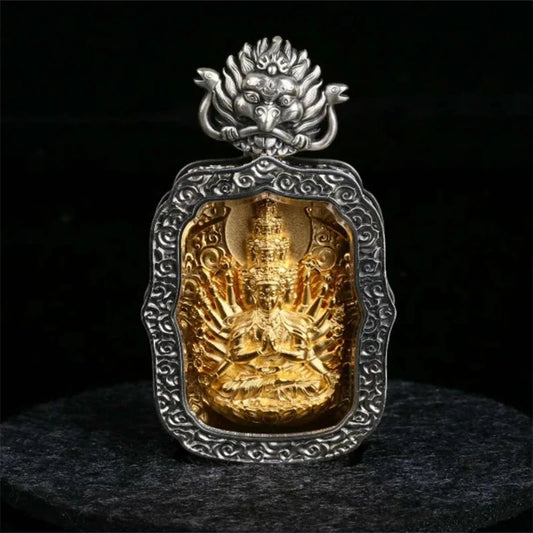
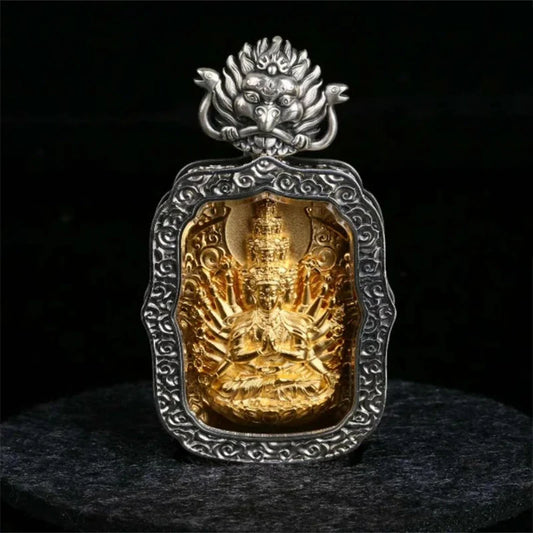
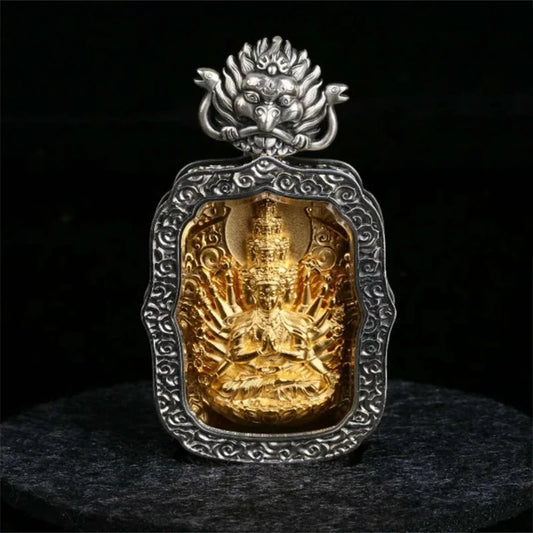
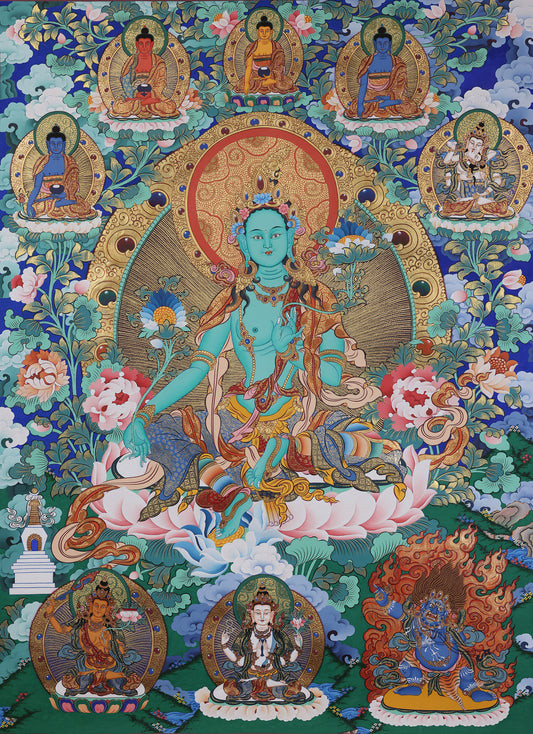
When you gaze at this Tibetan thangka: the black background mirrors the void of a plateau midnight, gilded scriptures coil layer by layer like a galaxy, and at the center sits a Buddha with a deep blue body—this is Sakyamuni, the irreplaceable "Root Teacher" (rLun Po Che) in Tibetan spiritual life.
Unlike the golden-hued Sakyamuni commonly seen in Han Buddhism, Tibetan interpretations of the Buddha hold dual codes of doctrine and art. These codes are not only Tibet’s unique understanding of Sakyamuni but also the key to unlocking the Tibetan Buddhist belief system.
1. The "Root Teacher" of Tibetan Buddhism: Sakyamuni’s Core Status
In Tibetan Buddhist discourse, Sakyamuni is far more than just one of the "past Buddhas"—he is the "Root Teacher," the source of all Dharma, and the shared foundation of both exoteric (Mahayana) and esoteric (Vajrayana) traditions.
Tibetan scriptures define Sakyamuni as "Shakya" (the Able One) and "Muni" (the Silent One): "Shakya" embodies his compassion in delivering sentient beings through Dharma, while "Muni" represents the wisdom he attained in nirvana. This core positioning elevates him beyond a "historical Buddha" to a symbol of the "root of Dharma" in Tibetan faith:
- Source of Exoteric Teachings: Core scriptures prevalent in Tibet—such as the Great Prajnaparamita Sutra, Diamond Sutra, and Four Noble Truths Sutra—are believed to be Sakyamuni’s direct teachings in locations like Jetavana Monastery and Vulture Peak in India. The "Five Great Treatises" (e.g., Abhisamayalamkara and Madhyamakavatara) of Tibetan exoteric Buddhism are also commentaries on Sakyamuni’s Dharma.
- Origin of Esoteric Practices: Many Tibetan Vajrayana teachings (e.g., Kalachakra and Guhyasamaja Tantras) are often linked to masters like Padmasambhava, but their lineage still traces back to Sakyamuni. For example, the Kalachakra teachings are recorded as being expounded by Sakyamuni to the king of Shambhala atop Mount Meru.
This status is also evident in Tibetan monastery architecture: the main halls of key monasteries (e.g., Jokhang Temple and Tashilhunpo Monastery) always enshrine Sakyamuni statues. Daily Tibetan rituals—like circumambulation and prayer—begin with invocations of the "Root Teacher Sakyamuni."
2. Decoding Thangka Symbols: The Tibetan Esoteric Meaning in Sakyamuni’s Form
Returning to the opening thangka, every detail is a "symbolic language" of Tibetan culture, and this blue Sakyamuni is a unique Tibetan encoding of the Buddha:
Black Background with Gilded Script: Symbiosis of Emptiness and Dharma
In the Tibetan thangka tradition, the black background symbolizes "Dharmata Emptiness"—the void of Buddha’s enlightenment, which contains all without attachment. The layered gilded Tibetan scriptures (typically the Heart Sutra or Sakyamuni Mantra) represent "Dharma Light": Emptiness is the essence, and Dharma is the tool to illuminate it. Their coexistence embodies Sakyamuni’s "Union of Compassion and Wisdom."
Deep Blue Body: Symbol of Purity and Dharmakaya
While the golden form common in Han Buddhism represents Buddha’s "Sambhogakaya" (perfect merit body), the deep blue in this thangka connects to Sakyamuni’s "Dharmakaya" (truth body) in Tibetan esotericism. Blue echoes the plateau’s sky and lakes, signifying "purity identical to the void"—it symbolizes that Buddha has eradicated all karmic obstacles, and his Dharmakaya permeates all existence.
Mudra and Lotus Throne: Metaphors of Enlightenment and Purity
Sakyamuni in the thangka holds the Bhumisparsha Mudra (right hand touching the earth): this is the gesture he made when attaining enlightenment under the Bodhi Tree, symbolizing "subduing the demon of the mind"—proving to the earth that he had achieved perfect awakening. The upturned lotus throne he sits on is a classic Tibetan symbol of "rising unsoiled from mud": it represents Buddha’s purity, untainted by worldly afflictions despite being born in the world.
Surrounding Flowers: Embodiments of Compassion
The lotus and peony patterns flanking the Buddha are not mere decorations. In Tibetan context, flowers embody Sakyamuni’s compassion: the lotus represents "renunciant compassion," and the peony represents "worldly compassion." Their placement around the Buddha signifies that his compassion both transcends and integrates with sentient beings’ lives.
3. A Millennium of Transmission: The Journey of Sakyamuni’s Teachings to Tibet
The spread of Sakyamuni’s Dharma from India to Tibet is a millennium-long "rooting story," which has shaped the form of his worship in Tibet:
Tibetan Empire Period: The Foundation of Dharma Introduction
In the 7th century, Songtsen Gampo welcomed Princess Wencheng (from Tang China) and Princess Bhrikuti (from Nepal) to Tibet, who brought Sakyamuni statues (the "Jowo Rinpoche" statue enshrined in Jokhang Temple is the 12-year-old likeness of Sakyamuni brought by Princess Wencheng). Later, masters like Shantarakshita and Padmasambhava entered Tibet, translated scriptures like the Four Noble Truths Sutra, and built Samye Monastery—this was the "rooting moment" of Sakyamuni’s Dharma in Tibet.
Post-Imperial Period: Systematization of Lineages
After the 10th century, Tibet entered the "Later Diffusion Period": Indian masters like Atisha entered Tibet, organized the transmission of Sakyamuni’s teachings, and founded the Kadampa school (the precursor to the Gelug school), systematizing the idea of "centering Sakyamuni’s Dharma." Meanwhile, Tibetan translators completed the translation of the Tibetan Buddhist Canon (Kangyur), with nearly half of its content being Sakyamuni’s direct teachings.
Modern Era: The Continuity of Faith
Even today, Tibet’s reincarnation system is rooted in Sakyamuni’s Dharma—reincarnate lamas first learn his teachings on the Four Noble Truths and Bodhicitta. Tibetan circumambulation of mountains and lakes is also often centered on reciting the Sakyamuni Mantra: "Om Muni Muni Maha Muniye Svaha."
4. Daily Tibetan Life: Sakyamuni Worship Integrated into Daily Routine
In Tibet, Sakyamuni is not a "Buddha confined to temples" but a faith woven into daily life:
Daily Invocations: The Sakyamuni Mantra in Prayer Wheels
Nearly all Tibetan prayer wheels are inscribed with the Sakyamuni Mantra inside. On morning circumambulation routes, you will hear the overlapping chant of "Om Muni Muni"—for Tibetans, invoking the Root Teacher Sakyamuni is a "spiritual ritual" to start the day, representing facing daily life with Buddha’s wisdom and compassion.
Saga Dawa Festival: A Faith Festival Honoring the Buddha
Each Tibetan calendar’s 4th month (Saga Dawa) commemorates Sakyamuni’s birth, enlightenment, and parinirvana. During this month, Tibetans abstain from meat and participate in large-scale circumambulation; Barkhor Street outside Jokhang Temple fills with people holding butter lamps—for them, this is not a "festival" but a practice of following the Root Teacher through action.
Household Shrines: Spiritual Companions in Thangkas
Almost every Tibetan family shrine displays a Sakyamuni thangka (like the one in this article). Daily butter offerings and simple prostrations are not "formalities" but "daily dialogues" with the Root Teacher—Tibetans believe Sakyamuni’s compassion protects their families’ peace.
5. The Shared Foundation of Exoteric and Esoteric Traditions: The Logic of Sakyamuni’s Teachings in Tibetan Practice
Tibetan Buddhism is often labeled as "Vajrayana," but in reality, Sakyamuni’s exoteric teachings are the prerequisite for esoteric practice—this is the core logic of Tibetan spiritual cultivation:
- Cultivating Renunciation with the Four Noble Truths: The first step for Tibetan practitioners is to learn Sakyamuni’s Four Noble Truths (suffering, origin, cessation, path). By understanding "all worldly existence is suffering," they develop the will to "renounce afflictions"—the foundation of all practice; without renunciation, esoteric initiations and practices are considered "water without a source."
- Connecting to Compassion with Bodhicitta: Building on renunciation, Tibetan practitioners learn Sakyamuni’s Bodhicitta teachings: vowing to "attain enlightenment for the sake of all sentient beings." This is the core of Tibetan "Mahayana spirit" and a continuation of Sakyamuni’s "Able One" compassion.
- Esoteric Practice: Rooted in Exoteric Dharma: Tibetan Vajrayana practices (e.g., visualization and mantra recitation) require a foundation in Sakyamuni’s exoteric teachings. For example, Kalachakra practice demands mastery of the Four Noble Truths Sutra; otherwise, the visualized "Buddha form" is merely an image, not a connection to Buddha’s wisdom.
Conclusion: The Root Teacher Beyond Form, A Faith Connecting Past and Present
The blue Sakyamuni in this thangka is never a "decorative image"—he is the Tibetan embodiment of the "Root Teacher": the emptiness in the black background, the Dharma in the gilded script, the purity in the blue form, the mantra in the prayer wheel, and the butter lamp in Saga Dawa.
In the world of Tibetan Buddhism, Sakyamuni has never "departed": he is the Buddha who attained enlightenment in the past, the Root Teacher who protects sentient beings in the present, and the direction that guides practice in the future. This is the warmth of Tibetan faith—rooted in the Root Teacher Sakyamuni, a legacy of compassion and wisdom grows on the plateau.
#SakyamuniInTibetanBuddhism #TibetanGildedThangkaOfSakyamuni #RootTeacherSakyamuniTibetanTransmission #SakyamuniTeachingsInDailyTibetanLife #TibetanBuddhismArtAndFaith #TibetanThangkaArt #BlueSakyamuniThangka #SakyamuniDharmaInTibet #TibetanDailySpirituality #SagaDawaFestivalTraditions #ExotericEsotericBuddhismFoundation
Tags:
Previous
The Wisdom Deity in Black and Gold: Faith and Art of Manjushri in Tibetan Buddhism
Next
Emerald Compassion: The Belief in Green Tara in Tibetan Buddhism and the Art of Color Thangka