Hand-Painted Yellow Manjushri "Wisdom Flame Lotus" Thangka: A Tibetan Wisdom Treasure for Breaking Attachment, Wrapped in Golden Flame
wudimeng-Nov 28 2025-
0 Kommentare
Have you ever seen a thangka where "golden wisdom flame" wraps around "the edge of thought"?
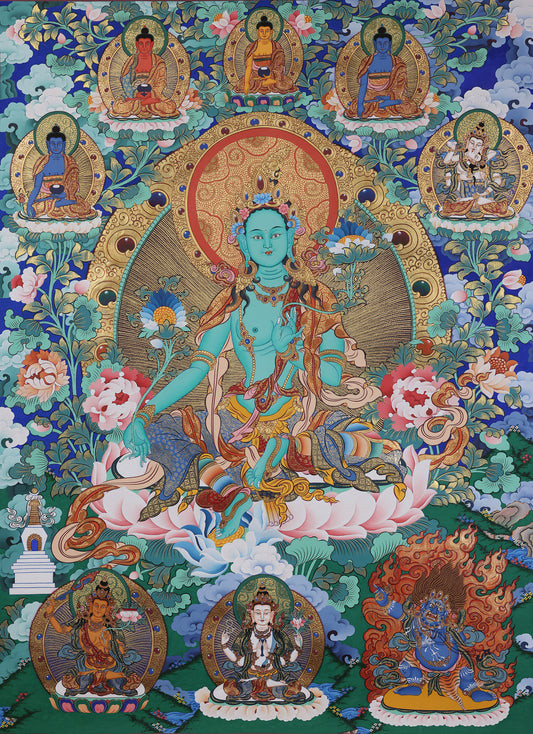
This hand-painted Yellow Manjushri "Wisdom Flame Lotus" Thangka isn’t just wall decor—it’s a spiritual vessel centered on Yellow Manjushri, merging "yellow-body wisdom enhancement + wisdom sword cutting attachment + lotus-bearing enlightenment" in Tibetan Buddhism. It’s a cultural treasure that weaves the power of "dispelling delusion, awakening wisdom, and breaking attachment" into daily thinking. Today, we’ll break down its "wisdom and attachment" to explain why seasoned collectors fight to own it as a "mental wisdom talisman."
At the center of the painting, Yellow Manjushri is the living totem of "enhancing wisdom and cutting attachment" in Tibetan tradition:
- His golden-yellow form is wrapped in a wisdom flame—yellow symbolizes "wisdom enhancement" in Vajrayana Buddhism. This warm golden glow acts like a "wisdom shield," instantly anchoring the core meaning of "dispelling delusion and attachment" at first glance;
- His right hand raises a wisdom sword pointing to the void—this "wisdom blade" is Manjushri’s iconic ritual tool. Tibetans say it "cuts through ignorance and shatters ego attachment." The sword’s sharpness and the golden flame’s warmth create tension, echoing the idea that "breaking attachment with wisdom requires balance of firmness and gentleness";
- His subtle smile hides sharp clarity in his eyes—this isn’t distant divinity, but "the 通透 of a wise one," as if saying: "Breaking attachment isn’t confrontation, but a soft nudge from the wisdom blade wrapped in wisdom flame."
The "craftsmanship and details" of this thangka carve "breaking attachment and awakening wisdom" into every brushstroke:
-
Raised-Gold Wisdom Sword: Tangible Sharpness
The wisdom sword uses the "raised gold line" technique, with its edge slightly protruding from the surface—this is a Tibetan artist’s ingenuity, letting the imagery of "cutting attachment" penetrate from vision to perception, as if the blade could truly slice through the rigid cocoon of thought;
-
Lotus-Stem-Wrapped Prajna Sutra: Pure Wisdom Dual Protection
A lotus stem wraps around his left arm to his ear, with a Prajna Sutra resting on the petals—the lotus symbolizes "unstained pure wisdom," while the sutra represents "the source of wisdom." This implies: "The foundation of breaking attachment is pure wisdom rooted in scriptures, not blind sharpness";
-
Gold-Wrapped Colorful Lotus Pattern Nimbus: Wisdom Perfection
The intertwined lotus patterns in the nimbus use the "gold-wrapped color" technique, with golden flame enclosing red/blue/green vines—this symbolizes "the symbiosis of wisdom with good fortune, eloquence, and health," extending wisdom awakening from "breaking attachment" to "wholeness across life dimensions."
The "soul" of this thangka is the "intellectual density" that production lines can never copy:
-
Intention in Mineral Pigments: Compassionate Wisdom Infused into Patterns
Tibetan artists layer natural pigments (lapis lazuli, malachite, gold leaf) with repeated polishing—each vine pattern requires "color first, then gold." The gold powder carries the intention of "breaking attachment," chanted with Manjushri’s mantra during creation, not just cold pigment;
-
Warm Gold Color Field: Gentle Wisdom Vibe
The base of brown, paired with gold/red/blue accents, avoids the alienation of cool tones—warm gold "softens mental restlessness." Collectors say: "Placing it in the study makes thinking sharp yet gentle, not harsh";
-
Lotus Throne Cross-Legged Pose: The Anchor of Wisdom
Cross-legged on layered lotus petals—the lotus throne symbolizes "freedom from suffering," while the pose represents "the calm of a wise heart." This implies: "The prerequisite for breaking attachment is first anchoring your own wisdom core."
-
Anyone Seeking to Break Mental Rigidity: Manjushri’s wisdom blade + lotus help "shatter ego attachment and delusion in thought";
-
Deep Tibetan Culture Collectors: Gold-wrapped colorful vine technique + Yellow Manjushri iconography is a hallmark of "wisdom-style" thangkas—every pattern is "touchable Buddhist intellectual philosophy";
-
Those Gifting "Wisdom-Awakening Presents": Unlike ordinary gifts, this is an "attachment-breaking blessing wrapped in wisdom flame"—give it to students for "academic wisdom" or entrepreneurs for "breakthrough thinking." Those who understand will enshrine it as a "mental wisdom talisman."
Pro Tip: Keep the hand-painted thangka dry, and dust it gently with a soft cloth—the gold will grow richer over time, just as wisdom deepens with experience.