Nepal Blue Thangka of Black Jambhala: The Wealth Blessing Beliefs and Artistic Codes of Tibetan Tantric Buddhism

$499.00 USD
Thangka name: Blue Tang Black God of Wealth
size: 20cm×30cm
origin: Nepal
Eine Frage stellen

Beeil dich! Nur noch [Anzahl] auf Lager!

Geschätzte Lieferzeiten: 12–26 Tage (International), 3–6 Tage (USA).

Rückgabe innerhalb von 45 Tagen nach dem Kauf. Zölle und Steuern werden nicht erstattet.

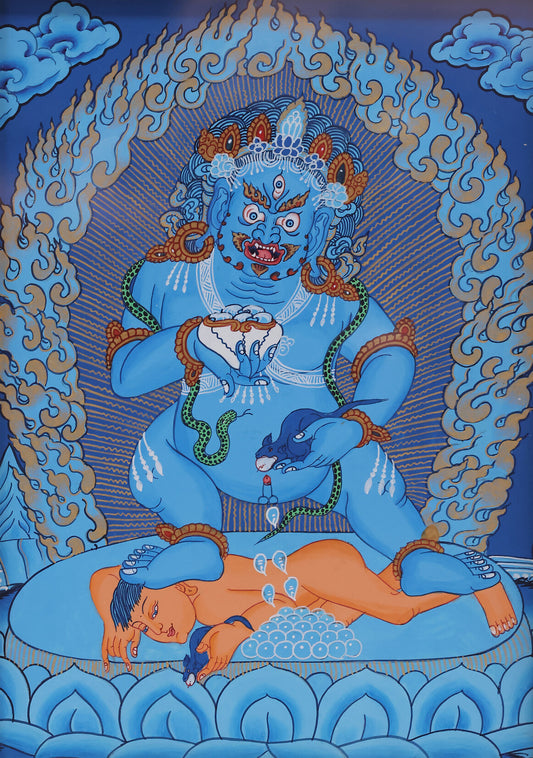
Blue thangka depicting Mahakala, the Black Wealth Deity in Tibetan Buddhist culture, symbolizing protection and prosperity.
Nepal Blue Thangka of Black Jambhala: The Wealth Blessing Beliefs and Artistic Codes of Tibetan Tantric Buddhism
$499.00 USD
When a 20×30cm hand-painted Nepalese thangka is laid out on a desk, the cyan-blue main deity, wide triple eyes, treasure-spitting rat, and coiled serpent are far more than mere visual motifs—they are the spiritual vessel of Tibetan Buddhist Tantrism’s "transforming poverty into abundance" and a living specimen of the fusion of traditional Nepalese art and religious ritual. Today, we use this "Blue Thangka of Black Jambhala" as a lens to decode the wealth wisdom of Tibetan Tantrism and the artistic codes of Nepalese painting.

I. Theme: Not "Seeking Wealth," but "Transforming Greed into Merit"

In Tibetan Buddhism, Black Jambhala (Tibetan: Zang Lha Nag Po) is the "swiftest wealth-bestowing" figure among the Five Wealth Gods, but the core theme of this thangka goes far beyond secular "wealth wishes."
Culturally, Black Jambhala evolved from the ancient Indian god Kubera and was introduced to Tibet by Padmasambhava, becoming a central protector of the Nyingma school. Tantric scriptures define his identity clearly: an "wrathful emanation" of Akshobhya Buddha (the Buddha of the Eastern Pure Land) manifested to free sentient beings in the Saha World from "the suffering of poverty"—here, "wrath" is not anger, but the fearless power to "subdue the obstacles of poverty."
For Nepalese devotees, small thangkas like this are often carried as "vessels of good fortune." Their underlying logic is "supporting the path with wealth": wealth is an aid to spiritual practice, not an end in itself. Black Jambhala’s blessings essentially help sentient beings escape the anxiety of material scarcity, gain a foundation for peaceful practice, and ultimately achieve the Tantric wisdom of "transforming greed into merit."

II. The Main Deity: Every Detail is a Symbolic Code

In this thangka, Black Jambhala appears as a "cyan-blue wrathful form," with all motifs strictly adhering to the Iconographic Measurement Sutras while incorporating Nepalese regional aesthetics:

1. Physique: The Metaphors of Cyan-Blue, Triple Eyes, and Nude Form

  • Cyan-blue body: Replacing the "black" common in Tibetan thangkas with "cyan-blue" is a typical Nepalese variation, symbolizing "ultimate purity without defilement"—freedom from all delusional attachments.
  • Triple wide eyes: The vertical eye on the forehead represents "perceiving the karma of past, present, and future," capable of dispelling the ignorance that obscures wealth.
  • Nude form: Not a secular image, but a Tantric symbol of "unburdened freedom"—only by breaking free from material and desire-based bonds can one attain true "unfettered merit."

2. Ritual Implements: Vessels of Compassion and Power

  • Right hand holding a kapala (skull cup): The cup holds "nectar," symbolizing gathering sentient beings with compassion and transforming "the suffering of afflictions" into "the sweetness of merit."
  • Left hand holding a treasure-spitting rat (Musakha): The rat’s mouth bearing jewels is a concrete symbol of "endless treasures" and the direct embodiment of Black Jambhala’s "wealth-bestowing" nature.
  • Coiled green-patterned serpent: A symbol of the Eight Dragon Kings (who guard underground treasures) and a representation of "subduing the poison of greed and anger"—the serpent’s coils metaphorize "binding afflictions with wisdom."

3. Posture: Balancing Obstacle-Subduing and Abiding

  • Partially standing posture (right leg bent, left leg extended): A Tantric "wrathful standing form," symbolizing taking action to subdue the obstacles of poverty.
  • Treading on an orange human figure: Not "suppression," but a symbol of the "Wealth-Holding Deva" (ruler of worldly wealth), signifying "governing worldly wealth with transcendental wisdom" to prevent wealth from becoming an obstacle to practice.

III. Attendant Deities and Background: Building a Complete Field of Merit

The thangka’s background is not decorative but an extension of the "sacred field":
  • Treasure-spitting rat (Musakha): As a core attendant, the jewels and grains it spits (the "pile of beads" at the bottom of the thangka) represent "unending wealth"; Nepalese artists use lapis lazuli pigment to dot the rat’s eyes, showcasing fine craftsmanship and implying "wisdom to recognize wealth."
  • Flame aura: The scrollwork flame pattern symbolizes the "fire of wisdom," burning away afflictions like poverty and anger.
  • Blue-white cloud patterns: A signature element of Nepalese thangkas, representing "pure emptiness" and implying "good fortune spreading like auspicious clouds."
  • Lotus moon seat: The lotus symbolizes "rising unsoiled from mud," the moon disc symbolizes "cool serenity," and together they signify "pure, undefiled wealth"; the water patterns under the lotus seat correspond to the belief in "Dragon Kings guarding wealth."

IV. Techniques and Style: The Material Expression of Nepalese Tradition

This thangka is painted with mineral and earth pigments, a contemporary continuation of Nepal’s traditional Pauba painting:

1. Natural Pigments: Materials That Bear Sacredness

  • Cyan-blue: Derived from Afghan lapis lazuli, ground into fine powder over years, with rich color that endures.
  • Orange: A mix of realgar and red earth, balancing "warmth" and "wrathful energy."
  • White: Made from shell powder, with pure texture.
  • Animal hide glue is used as a binder to ensure the pigments adhere firmly to the cotton base—using natural materials is not just a technical choice, but a religious ritual of "pure materials bearing blessings."

2. Painting Process: Ritualized Creation

Nepalese thangkas follow a 9-step process:
  1. Base preparation: White cotton is coated with glue and lime paste, then polished repeatedly until the fabric texture disappears (the smooth surface of this thangka reflects fine craftsmanship).
  2. Sketching and linework: Drafts are drawn with charcoal according to the Iconographic Measurement Sutras, then outlines are defined with ink (the main deity’s muscles and serpent patterns are precise and dynamic).
  3. Coloring and gilding: Colors are applied layer by layer (light to dark), with gold powder edging the crown and flame patterns to enhance sacredness.
  4. Eye-opening ritual: The main deity’s eyes are painted last on an auspicious day—a step to "endow the thangka with life," during which the artist chants and meditates to maintain pure intentions.

3. Regional Style: Differences from Tibetan Thangkas

  • Exaggerated forms: The main deity’s stout, full figure aligns with Nepalese aesthetics of "auspicious appearance."
  • Vibrant colors: Contrasts between cyan-blue, orange-red, and gold highlight wrathfulness while boosting visual impact.
  • Intricate details: Fine depictions of crown jewels, serpent scales, and the treasure-spitting rat’s fur reflect the tradition of "valuing meticulousness."
  • Small-size adaptation: The compact composition of 20×30cm suits portable worship or desk display.

Conclusion: A Symbiosis of Belief and Art

This "Blue Thangka of Black Jambhala" is a living vessel of Tibetan Tantric culture in Nepal—it fulfills devotees’ simple wishes for wealth while conveying the core doctrine that "wealth is the manifestation of compassion" through ritual and craftsmanship. Art-historically, Nepal is a key origin of Tibetan Buddhist art; this thangka preserves Pauba traditions while adapting to modern needs, allowing Tantric culture to persist in a life-friendly form.

#NepalThangka #BlackJambhala #TibetanBuddhistArt #MineralPigmentThangka #TantricCulture #ThangkaArt #NepaleseArt #TibetanTantrism #WealthDeity #TraditionalPaintingTechniques
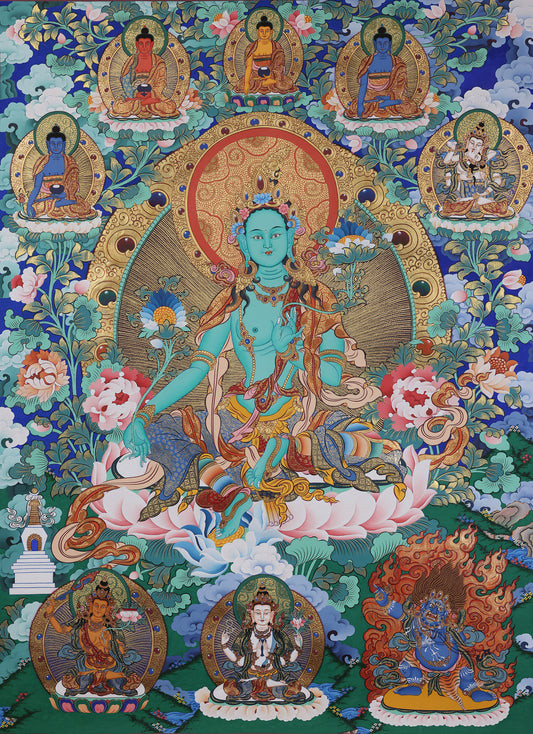
Entdecken Sie das perfekte tibetisch-buddhistische Thangka, das zu Ihren Wünschen, Ihrem Lebensstil und Ihrem Raum passt. Jedes Thangka hat eine spirituelle Bedeutung und bringt Segen, wenn es richtig platziert wird.

1. Definieren Sie Ihre Absicht

Reichtum & Erfolg → Gelber Dzambhala (Gottheit des Reichtums)

Mitgefühl und Frieden → Avalokiteshvara, Grüne Tara

Weisheit & Lernen → Manjushri

Gesundheit & Heilung → Medizinbuddha

Langlebigkeit und Familienschutz → Weiße Tara

2. Wählen Sie nach Identität

Unternehmer und Geschäftsinhaber → Reichtumsgottheiten für Wohlstand.

Studenten und Gelehrte → Weisheitsgottheiten für Konzentration und Klarheit.

Heiler und Yoga-Praktizierende → Medizinbuddha für Energie und Gleichgewicht.

Familien und Hausfrauen → Tara-Gottheiten für Harmonie und Sicherheit.

Sammler und Kunstliebhaber → Seltene Mandalas oder Meisterwerk-Thangkas.

3. Passen Sie Ihren Raum an

Heimschrein / Meditationsraum → Mittlere Thangkas (60–80 cm).

Büro / Geschäftshalle → Große Thangkas für Wohlstand und Autorität.

Wohnzimmer / Arbeitszimmer → Dekorative Thangkas für Frieden und Schönheit.

4. Authentische Handwerkskunst

Jedes Thangka ist mit natürlichen Mineralpigmenten und feiner Leinwand handbemalt und spiegelt tibetische Kunstfertigkeit und spirituelle Kraft wider. Überprüfte Quellen gewährleisten Qualität und Respekt für die Tradition.

✨ Wählen Sie Ihr Thangka mit Herz – es ist nicht nur Kunst, sondern ein Segen für Ihr Leben.

Jeder Mensch hat unterschiedliche Bedürfnisse. Die Wahl des richtigen Thangkas kann spirituelle Unterstützung, Schutz, Glück und Segen bieten. Nachfolgend finden Sie Thangka-Empfehlungen für verschiedene Rollen:

1. Unternehmer

  • Bedürfnisse : Weisheit, Reichtum, Gesundheit, beruflicher Erfolg.
  • Empfohlene Thangkas :
    Manjushri : Verbessert die Entscheidungsfindung und Geschäftsweisheit.
    Gottheit des Reichtums : Bringt Reichtum und Wohlstand.
    Medizinbuddha : Unterstützt die Gesundheit und reduziert Stress.
    Mahakala : Schützt Unternehmen vor Konkurrenz und Herausforderungen.

2. Erfolgreiche Einzelpersonen

  • Bedürfnisse : Innerer Frieden, Familienharmonie, Langlebigkeit.
  • Empfohlene Thangkas :
    Amitabha Buddha : Bringt inneren Frieden und Ruhe.
    Avalokiteshvara (Guanyin) : Fördert Harmonie und Glück in der Familie.
    Amitayus (Langlebens-Buddha) : Betet für gute Gesundheit und ein langes Leben.
    Manjushri : Stärkt weiterhin die Weisheit.

3. Hausfrauen/Ehemänner

  • Bedürfnisse : Familienharmonie, Schutz, Gesundheit.
  • Empfohlene Thangkas :
    Avalokiteshvara : Steigert das Familienglück und die Harmonie.
    Schutzgottheiten : Beschützen die Familie vor äußeren Störungen.
    Weiße Tara : Segnet die Familie mit Gesundheit.

4. Studierende und Wissenschaftler

  • Bedürfnisse : Weisheit, Konzentration, akademischer Erfolg.
  • Empfohlene Thangkas :
    Manjushri : Fördert Lernfähigkeit, Gedächtnis und Weisheit.
    Shakyamuni Buddha : Hilft bei der Konzentration und spirituellen Praxis.
    Jixiang Tianmu : Bringt akademisches Glück und Prüfungserfolg.

5. Künstler und Kreativprofis

  • Bedürfnisse : Inspiration, Kreativität, künstlerische Leistung.
  • Empfohlene Thangkas :
    Manjushri : Regt kreatives Denken und Inspiration an.
    Vajrapani : Hilft, kreative Blockaden zu überwinden.
    Maitreya : Sorgt für eine entspannte und optimistische Einstellung und baut Stress ab.

6. Reisende und Abenteurer

  • Bedürfnisse : Schutz, Glück, Erfolg bei Abenteuern.
  • Empfohlene Thangkas :
    Hayagriva : Bietet starken Schutz auf Reisen und beseitigt Hindernisse.
    Mahakala : Bringt Glück und Schutz, insbesondere für Abenteurer.
    Vajrasattva : Hilft, Schwierigkeiten und Herausforderungen während der Reise zu überwinden.

7. Ältere Menschen

  • Bedürfnisse : Gesundheit, Langlebigkeit, spiritueller Frieden.
  • Empfohlene Thangkas :
    Amitayus : Betet für ein langes Leben und gute Gesundheit.
    Medizinbuddha : Fördert Heilung und körperliches Wohlbefinden.
    Avalokiteshvara : Bringt Mitgefühl und inneren Frieden in späteren Jahren.

8. Führungskräfte

  • Bedürfnisse : Führung, Weisheit, Teamarbeit und geschäftlicher Erfolg.
  • Empfohlene Thangkas :
    Manjushri : Verbessert Führungsqualitäten und Entscheidungsfindung.
    Gottheit des Reichtums : Bringt dem Unternehmen und dem Team Erfolg und Wohlstand.
    Avalokiteshvara : Fördert Harmonie und Gleichgewicht innerhalb des Teams.

9. Gesundheits- und Fitnessbegeisterte

  • Bedürfnisse : Gute Gesundheit, Vitalität, Energie.
  • Empfohlene Thangkas :
    Medizinbuddha : Verbessert die körperliche Gesundheit und Vitalität.
    Weiße Tara : Bringt Gesundheit und Verjüngung.
    Vajrasattva : Beseitigt gesundheitliche Probleme und steigert die Energie.

10. Politiker

  • Bedürfnisse : Führung, Weisheit, Frieden.
  • Empfohlene Thangkas :
    Manjushri : Verbessert Führungsqualitäten und Entscheidungsfindung.
    Vairocana Buddha : Hilft, inneren Frieden und Weisheit zu bewahren.
    Avalokiteshvara : Fördert den gesellschaftlichen Frieden und die Harmonie in der Familie.

Für alle Bestellungen über 100 USD ist der Versand kostenlos.

Rücksendungen werden bis zu 10 Tage nach Erhalt des Kaufbelegs bzw. der Sendungsnummer (bei ungetragenen Artikeln) akzeptiert. Sie als Kunde sind verpflichtet, uns vor der Rücksendung des Artikels per E-Mail zu informieren.

Andernfalls fallen die Standardversandkosten an. Weitere Informationen finden Sie in unseren Lieferbedingungen .

Rücksendungen werden bis zu 10 Tage nach Erhalt des Kaufbelegs oder der Sendungsnummer (bei ungetragenen Artikeln) akzeptiert. Sie als Kunde sind verpflichtet, uns vor der Rücksendung des Artikels per E-Mail zu informieren, nur in folgenden Fällen:

– Den falschen Artikel erhalten.
– Artikel kam nicht wie erwartet an (z. B. beschädigte Verpackung).
– Artikel hatte Mängel.
– Über die Lieferzeit hinaus.
– Der Spediteur gestattet keine Besichtigung der Ware vor der Bezahlung.

Die zurückgesendeten Produkte müssen in der Originalverpackung, sicher verpackt, unbeschädigt und ungetragen sein. Dies bedeutet, dass die Artikel zum Schutz während des Transports sicher in einem Karton verpackt sein müssen, möglichst im selben Karton, in dem sie an Sie als Kunde versendet wurden.

Kürzlich angesehen

Nicht vergessen! Die Produkte, die Sie angesehen haben, legen Sie jetzt in den Warenkorb.

Passt gut zu

Erweitern Sie Ihre Auswahl mit perfekt abgestimmtem Zubehör und ergänzenden Produkten.

Leute kauften auch

Hier sind einige unserer ähnlichsten Produkte, die die Leute kaufen. Klicken Sie hier, um den Trendstil zu entdecken.