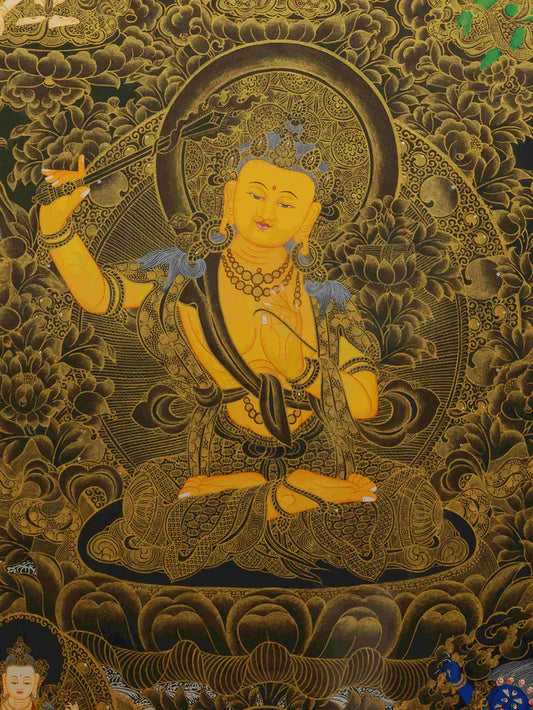
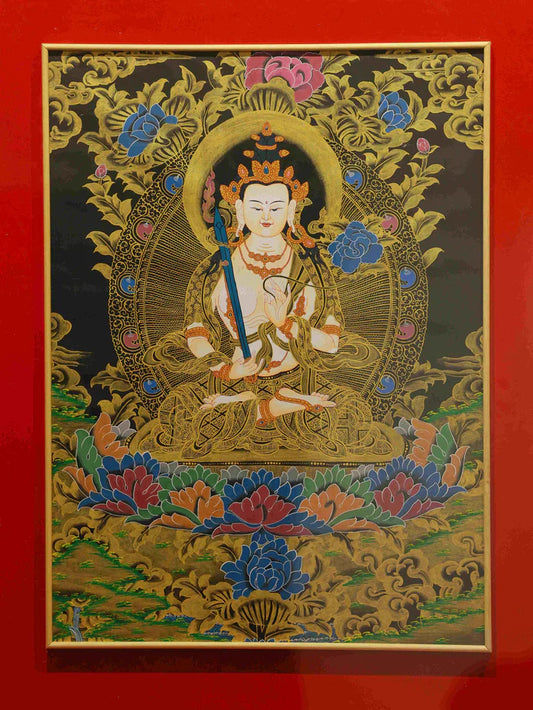
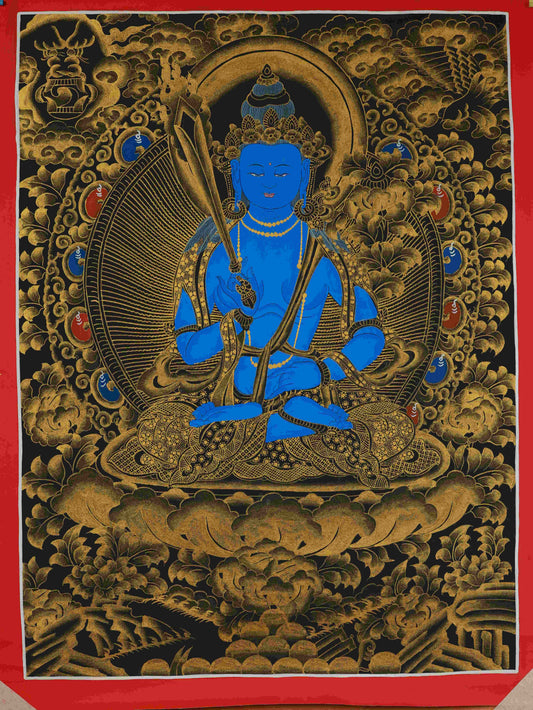
This Hand-Painted Amitabha Buddha Thangka Hides a Dual-Warmth Life Compass: “Compassionate Guidance + Both Present & Ultimate Peace”
wudimeng-Nov 30 2025-
0 comments
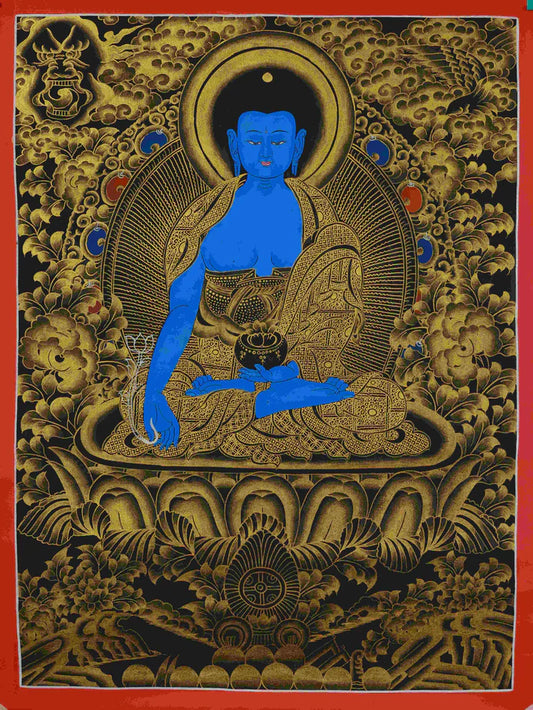
The moment Amitabha’s vase emerges from blue-gold cloud light, you’ll know: this isn’t just a thangka—it’s a living Tibetan Buddhist vessel that weaves “present stability” and “ultimate warmth” into one. Every lotus, every attendant deity, is a two-way compass for sweet days now and peaceful tomorrows.
The Amitabha Buddha at the core is the thangka’s “compassion hub”:
-
Dhyana Mudra + Vase = “double-packaged peace”: In Tibetan Buddhism, his vase-holding pose signals: “I’m handing you both present stability/sweetness and ultimate future peace”—he’s not a Buddha distant in Sukhavati, but a dual-safety net that helps you “weld ‘stable now, secure later’ into daily life.”
-
Pink Form = “warm-toned compassion”: His all-pink body means: “This blessing isn’t cold ritual—it’s soft warmth that can wrap around your daily life.”
-
Pink Lotus Throne = “gentle stability”: Sitting atop a pink lotus means: “No matter how life shakes, his compassion will let you land steadily in warmth.”
What makes this thangka striking is its “Buddha bathed in warm cloud light” layout—it’s like a “double-peace shield”:
-
Pink-Gold Halo = “visualized guidance warmth”: The pink-gold aura behind him is a visual cue: “His guidance isn’t out of reach—it’s warm light that can fill your daily chores and routines.”
-
Bottom Two Deities = “life’s double insurance”:
- Left white-robed bodhisattva (handles daily sweetness): Compassion lands, and small troubles in life are gently dissolved;
- Right blue protector (handles steady paths): You’re guarded, so the roads you want to take won’t be blocked by random obstacles;
-
Peonies + Water = “grounded stability”: Surrounding peonies (prosperity) and the water below (smoothness) mean: “This warmth isn’t fleeting—it’s tangible sweetness you can touch in your days.”
The thangka’s value lies in every handcrafted detail:
-
“Concentration of compassion” in mineral pink: Amitabha’s pink body is blended from natural minerals, and the layered blue-gold clouds are built stroke by stroke by the artist—every shade holds the intention of “may you be warm and unflustered,” a softness no machine can replicate.
-
Gold-Embroidered Vase = “substance of peace”: The intricate gold details on his vase mean: “This dual peace isn’t empty words—it’s something real you can feel in your life.”
Machine-printed “Buddha art” can never match the “dual-warmth connection of hand-painting”:
-
It’s a “dual-warmth switch for life”: Hang it in the living room as a home talisman for “family stability and gathered good fortune”; hang it in the bedroom as an anchor for “peaceful sleep and a calm heart”—every glance is an invitation: “Let Amitabha’s dual compassion be your life’s safety net.”
-
It’s an “anxiety-dispelling charm”: When you worry about unsteady days now or uncertain futures later, fix your eyes on that vase—it’s like hearing: “Don’t rush. The sweetness now and peace later are already waiting for you.”
The most touching thing about this thangka isn’t “mysterious miracles”—it simply tells you: Peace isn’t “panicking over trade-offs”; it’s “sweet days now, warm tomorrows later, and a steady heart all the way.”
It’s not an exhibit on a high shelf, but a “dual-warmth companion beside you”—every time you see that pink form and that lotus, you know: “Dual compassion is here, and so are your stability and ultimate peace.”