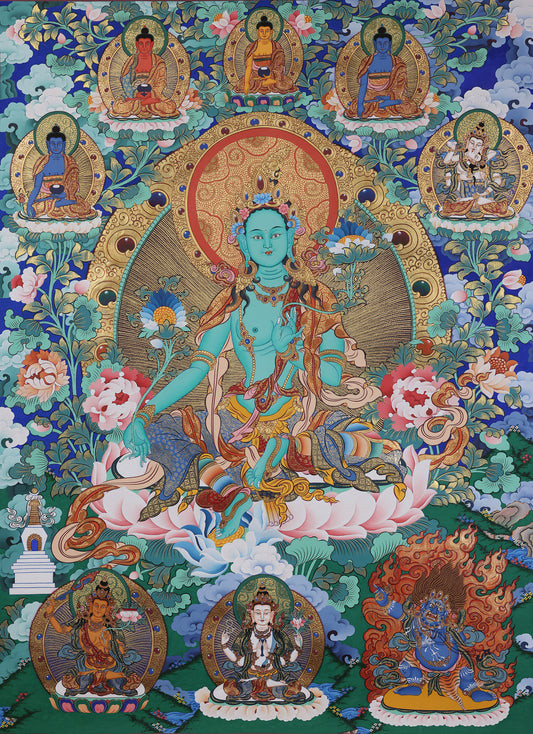
Hand-Painted Shakyamuni Buddha Thangka: Tibet’s "Pure Dharma Art" — Hang "Steady Faith" in Your Home

When a thangka is gently hung in your shrine or living room, it’s never just decor—especially this hand-painted Shakyamuni Buddha Thangka: it’s the "spiritual root" of Tibetan Buddhism, a wish for purity sealed in mineral pigments, and a cultural treasure that infuses your space with an aura of "calm mind and steady life."
Why a Shakyamuni Buddha Thangka Is Tibetan Devotees’ "Spiritual Foundation"
If you step into a Tibetan household, 9 out of 10 will have a Shakyamuni statue—he’s Buddhism’s "fundamental teacher." Tibetan elders say: "Worshipping Shakyamuni isn’t about ‘superpowers’; it’s about ‘having a anchor, staying on the right path, and living steadily.’"
Every detail of Shakyamuni in this thangka radiates "pure Dharma":
• Plain white form, compassion wrapped in soft light: Glowing like moonlit snow, his raised cranial protuberance (ushnisha) shines (a symbol of "perfect wisdom"), and the white curl between his brows (urna) glimmers (seeing through your restlessness). Draped in a simple monk’s robe, he exudes the aura of a "steady anchor" the moment he’s hung.
• Dhyana Mudra, full lotus posture: His hands rest steadily on his lap (the "meditation mudra," which calms inner chaos), and he sits upright in the full lotus position—symbolizing "the Buddha’s Dharma is as stable as a mountain."
• Soft halo, flower-adorned throne: His head and body halos are outlined in pale pink and light gold (not blinding, but a "warm light that wraps around you"), and soft flowers bloom by his lotus throne—"the pure Dharma even makes flowers gentle."
The Companion Deity Team: More Than "Faith" — It "Helps You Feel the Dharma’s Warmth"
This thangka’s "Dharma lineage squad" sets it apart from ordinary Buddha art:
• Top: Attendant Buddhas/Bodhisattvas: The deities on either side are the Buddha’s "Dharma partners"—meaning "the Buddha’s warmth isn’t just from him; all Buddhas and Bodhisattvas help pass it on."
• Bottom: Arhat Disciples: These are Shakyamuni’s closest students (like Shariputra and Maudgalyayana)—standing there, they seem to say: "We’ve received the Buddha’s Dharma, and so can you."
The "Pure Aura" of Hand-Painting Can’t Be Replicated by Machines
You may have seen printed thangkas, but every stroke of this Shakyamuni Thangka is a "living wish for steadiness":
• Pigments from the earth’s "plain hues": Pale green for the background (Tibetans call this "the base color of a calm mind"), light gold for the halo edges (the Dharma’s warmth won’t fade in 100 years), and soft pink for the treasure flowers (purity preserved for millennia).
• Artists paint with reverence: When drawing the Buddha’s face, the intangible cultural heritage artist from Regong, Qinghai, chants, "May the viewer’s heart be calm"; when painting the disciples, they think, "May the viewer’s path stay steady." This piece took 60 days to create—you’re not buying a canvas; you’re buying 60 days of focused steadiness blessings.
Who Should Bring This Thangka Home?
Tibetans say "the Buddha doesn’t discriminate," but this thangka’s "pure aura" shines brightest for:
• Restless minds: Hang it in your bedroom for better sleep and calm during crises;
• Buddhist devotees: Hang it in your shrine as a spiritual foundation, making practice more grounded;
• Those seeking steady lives: Hang it in your living room for less conflict and smoother daily routines.
How to Bring the "Steady Anchor" Home
This hand-painted Shakyamuni Buddha Thangka measures 90×120cm (perfect for shrines/living rooms) and comes in a traditional Tibetan brocade frame (moisture- and dust-resistant—still like new after 10 years).
When you order, we include:
1. A worship guide card: No elaborate rituals—just place a cup of clean water and think, "May my mind and path stay steady."
2. SF Express insured packaging: Wrapped in 3 layers of soft cloth + shockproof foam, we deliver your "Steady Anchor" safely.
3. A handwritten Heart Sutra note from the Regong artist: An excerpt from the Heart Sutra taped to the back of the thangka to lock in calm.
Tags:
Previous
Hand-Painted Manjushri Thangka: Tibet’s "Wisdom-Unlocking Art" — Hang "Clarity & Smoothness" in Your Home
Next
Hand-Painted Manjushri Lineage Thangka: Tibet’s "Gentle Wisdom & Blessings Art" — Hang "Clarity & Abundance" in Your Home